Monitoring a competitor who publishes no feed is the case every RSS guide skips. Twenty-one platforms sorted by which of three jobs they do, and the finished setup is business process automation you own outright, with no seat licence to renew.
Blaming the content is the reflex when a post underperforms, and it is usually the wrong diagnosis. A second reader decides distribution before any human sees the post, and most of what it checks is mechanical enough to automate business processes around, on five platforms at once.
Gloves on, tape measure in hand — nobody types a query. Three voice surfaces for ai automation tools (terminal, Telegram, Discord), 10 TTS and 6 STT providers compared on cost and latency, plus a setup that costs nothing.
Personal Brand for Solopreneurs: Build Trust in 30 Days
Logo, bio and colours are the parts you can finish in a weekend, which is exactly why they get done first and change nothing. What actually decides whether anyone thinks of you gets built somewhere else - a 30-day sequence for a small business with no audience yet.
A personal brand for solopreneurs is not your logo, profile photo, bio, or visual style. Those are packaging.
For a solopreneur, your brand is the place you occupy in someone else's memory when they have a specific problem.
You build that place by doing useful work in public, not by polishing your identity for six weeks.
Below is the working system: position, space, publishing fuel, an audience that can act, daily public work, and a 30-day AI-assisted plan that turns the whole thing into files you can actually use.
"We'll keep you in mind." Every commercial landscaping contractor who has bid a property knows what that sentence means: you were priced, you were polite, and you did not occupy a slot in anyone's memory. Six months later the job goes to whoever came to mind first. That is the mechanism this piece is about. A personal brand is not a logo or a bio -- it is the slot you occupy when one specific problem shows up. What follows builds that slot on purpose: one problem to own, the space where those buyers already are, a publishing rhythm you can hold, and proof that survives being retold.
In Part 1, we made the case that one person is enough. In Part 2, we picked the one thing you will test. This part answers the next question: how do people start associating that thing with you?
Everyone says branding starts with packaging — logo, colors, bio, voice document. Actually, branding starts with the work. The packaging is what people remember after they have already decided you matter.
Here's why this distinction matters: most people who get stuck on personal branding spend a weekend inside Canva, another weekend inside a website builder, and a third weekend wondering why nothing feels clear yet.
I understand the impulse. A logo feels controllable. A bio feels finishable. A template feels like progress.
But a personal brand does not start there.
A personal brand starts when a person encounters your work enough times that a connection forms in their head:
"When I need help with this specific problem, I know who to look for."
That is the whole game.
What Is a Personal Brand for Solopreneurs?
Here is the definition I use:
A personal brand is the memory shortcut people build after repeatedly experiencing your work.
Not your self-description.
Not your aesthetic.
Not your follower count.
A memory shortcut.
When someone says "I need a practical AI workflow," there should be one resource a particular kind of reader thinks of. When someone says "I need a plain-English way to build a one-person business with AI," same thing. That is not because the logo is perfect. It is because the same kind of judgment appears again and again.
The distinction matters because it changes where you spend your first month.
This is the difference between a generic personal brand strategy and a solopreneur personal brand. A creator can sometimes win attention with personality alone. A solopreneur needs trust that can turn into a reply, referral, subscription, or purchase.
The packaging view
The operating view
"I need the perfect profile."
"I need 20 useful public outputs."
"I need to look professional."
"I need to become recognizable for a problem."
"I should define my vibe."
"I should show my judgment repeatedly."
"I need a brand kit."
"I need a publishing loop."
"Branding comes before the work."
"Branding is the residue of the work."
The operating view is less glamorous. It is also the only one I trust.
There is a reason this topic creates so much frustration. In one recent Reddit thread, a solo founder asked: did you hire a designer, use a logo tool, or just improvise? The answers split: some founders spent weeks on branding and delayed launch; others threw something together fast and regretted it later. That is the real beginner trap. The question is framed as "How polished should I be before I start?"
My answer: polished enough that people are not confused, but not so polished that you avoid the public work.
Your first version needs clarity, not perfection.
The most common failure mode looks like this: a creator's first 20 posts spread across tools, productivity, generic opinion, and one tool review. None of them point to the same promise. The pieces are not weak because the typography is bad. They are weak because a stranger cannot tell what problem the creator wants to be remembered for.
The fix is rarely a rebrand. The fix is a review table. List the last 20 outputs, ask what a reader would remember, then cut anything that does not support the same problem. That is why this guide spends more time on outputs, proof, and review loops than on profile polish.
The failure mode I have watched most often is the inverse of this fix. A solo founder spends six weeks on the logo, the website, four social profiles, and a "brand voice document" before publishing anything. By the time they open LinkedIn to write the first post, the energy is gone. The polish was real work, just not the kind that compounds. Three months later, the project is quietly abandoned and the next "personal brand" starts over from scratch. This is not a rare path. For most beginners, it is the default.
Personal Branding for Solopreneurs in 2026: A Market Snapshot
The opportunity for a clear personal brand is bigger in 2026 than at any point in the last decade. So is the noise around it.
" download style="background:#333;color:#fff;padding:8px 16px;border-radius:6px;text-decoration:none;font-size:13px;white-space:nowrap">下载 PDF
shows the United States led with 1,953 newly funded AI companies in 2025, and more than half of U.S. private AI investment was generative-AI related at $163.6B. Translation: the supply of self-described "AI experts" keeps rising, and so does the supply of confused buyers trying to sort signal from noise.
The search-side signal: a 2026 spot check for "personal brand for solopreneurs" mostly returns step-by-step guides (CommentRocket, Trusted Voice, LinkMate, Tonika Bruce, Analytics That Profit, Hapx Digital, and others). The common pattern is platform tactics: LinkedIn algorithm hacks, post frequency rules, profile optimization formulas.
None attach the framework to a working file system you can run in 30 days. None ground their advice in real revenue numbers from the operators they cite. The gap is not "more advice." The gap is a working operating system that turns the strategy into files. That is what this guide is.
Foundation #1: Position Your Personal Brand Around One Problem
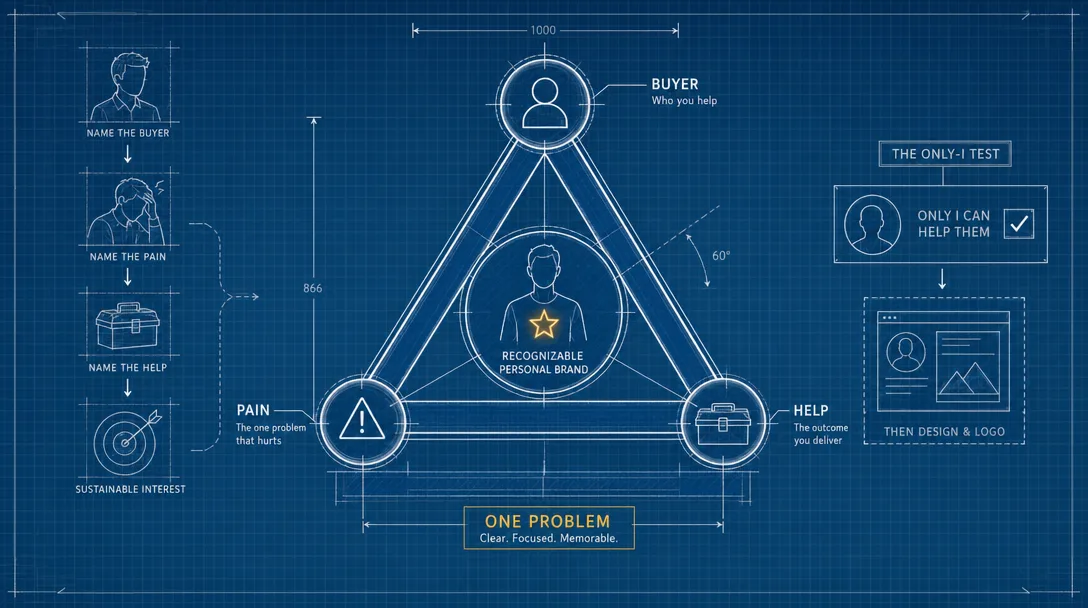
If you want a personal brand as a solopreneur, do not start with "Who am I?"
Start with this:
What problem should people associate with me?
That question sounds small, but it removes half the fog.
"I help people with AI" is too broad.
"I help non-technical solopreneurs use AI tools to turn ideas into shipped assets" is workable.
"I write about marketing" is too broad.
"I help boutique consultants turn their weekly client work into trust-building LinkedIn posts" is workable.
"I talk about productivity" is too broad.
"I help solo operators build a 90-minute weekly content system they can keep using when client work gets busy" is workable.
The problem must be specific enough that a real person can recognize themselves.
Use this test:
Question
Weak answer
Strong answer
Who is it for?
Founders
Solo service founders making their first $5K/month
What pain do they feel?
They need branding
Buyers do not understand why they should trust them
What do you help them do?
Build a brand
Turn repeated client lessons into public proof
Why you?
I care about it
I have done the workflow and can show the mistakes
What should they remember?
Nice content
"This person helps me become easier to trust."
You do not need the final answer today. You need a first draft you can test in public.
That is why I prefer the phrase sustainable interest over passion.
Passion is private. Sustainable interest is public.
Passion
Sustainable interest
Starts with what you like
Connects what you like with what others need
Can disappear after a month
Can hold your attention for years
Does not require an audience
Requires a real group of people with a problem
Sounds like "I love this"
Sounds like "I can help these people with this"
Often creates identity pressure
Creates a repeatable work path
That last line matters.
If your "brand" depends on being in love with the topic every morning, it will collapse the first time life gets busy. A sustainable interest survives ordinary weeks. You can still work on it when the post does not perform, when the comments are quiet, when the first version looks rough.
Here are three exercises I would run before touching design.
Exercise 1: the "only I" sentence
Complete this sentence:
Only I can help ____ do ____ because ____.
Bad version:
Only I can help creators grow online because I understand content.
Better version:
Only I can help non-technical creators turn messy AI experiments into weekly workflows because I have spent years replacing theory with working systems.
It does not need to sound elegant. It needs to expose your angle.
If you cannot fill the sentence, ask five smaller questions:
What do people already ask me to explain?
What have I learned the hard way?
What boring process do I understand better than most beginners?
Which group do I naturally empathize with?
What would I keep studying even if nobody liked the first ten posts?
The answer usually hides in the overlap.
Exercise 2: the 2x2 space map
Pick two dimensions that matter in your field.
For personal branding, the dimensions might be:
beginner vs advanced
visual polish vs working system
B2B vs creator economy
short-form content vs long-form authority
personal story vs tactical how-to
Draw a 2x2.
Then place existing creators, consultants, newsletters, and products into the boxes.
You are not looking for a category nobody has touched. That rarely exists. You are looking for a box where the audience is real but the current advice feels thin.
Example:
Visual polish
Work system
Beginner
logo, bio, Canva templates
30-day public work loop
Advanced
brand identity systems
category design, audience flywheel
For this article, the empty box is obvious: a beginner work system.
Most beginner branding advice starts with identity. This course starts with public work.
Exercise 3: value plus topic
Choose one value and one topic.
Then combine them.
Value
Topic
Possible position
Plain English
AI workflows
AI workflows for non-technical solopreneurs
Frugality
Creator business
Build a creator business before buying tools
Honesty
Personal branding
Personal branding without turning into a motivational poster
Systems
Content
Weekly content systems for busy solo operators
Curiosity
Niche research
Public learning as a business engine
This is how a crowded field opens up.
You do not need to invent a new topic. You need a defensible angle.
Foundation #2: Find the Space Your Audience Already Lives In
Position answers what you want to be known for.
Space answers where that recognition can actually happen.
This is where many solopreneurs waste energy. They pick a topic, then immediately copy the dominant format in that topic.
If everyone in your field writes long LinkedIn essays, you write long LinkedIn essays. If everyone makes YouTube tutorials, you make YouTube tutorials. If everyone runs a newsletter, you start a newsletter.
Sometimes that works. Usually it makes you invisible.
The question is not "Where is everyone?"
The question is:
Where is my audience present, but the current format or angle is underserved?
Here are nine ways to find space in a crowded category.
Strategy
What it means
Example angle
Opposite position
Take the credible counter-view
"Stop polishing your brand. Ship 20 useful outputs first."
Extreme focus
Serve a narrow group
Personal branding for solo consultants, not everyone
New format
Use an underused medium
Turn text-heavy advice into teardown videos
Reframe the category
Rename the job to change the lens
"Trust system" instead of "personal brand"
Contrarian but useful
Disagree with a common habit
"Do not post daily until you know the problem."
Influencer service
Help visible people for free
Create teardown threads for respected operators
Curation
Become the filter
Weekly examples of great solo founder positioning
Platform switch
Move a topic to a different channel
Bring B2B lessons to YouTube Shorts or podcasts
Value mashup
Combine topic with a clear value
Frugal personal branding for people with no design budget
Curation is underrated.
If you do not know what to create yet, start by collecting the best work in your field and adding judgment. Not "here are ten links." That is lazy. Real curation says:
why this example works
who should copy it
who should ignore it
what pattern appears across the examples
what mistake beginners keep making
Curators become memory shortcuts too.
People are drowning in information. A reliable filter is a brand.
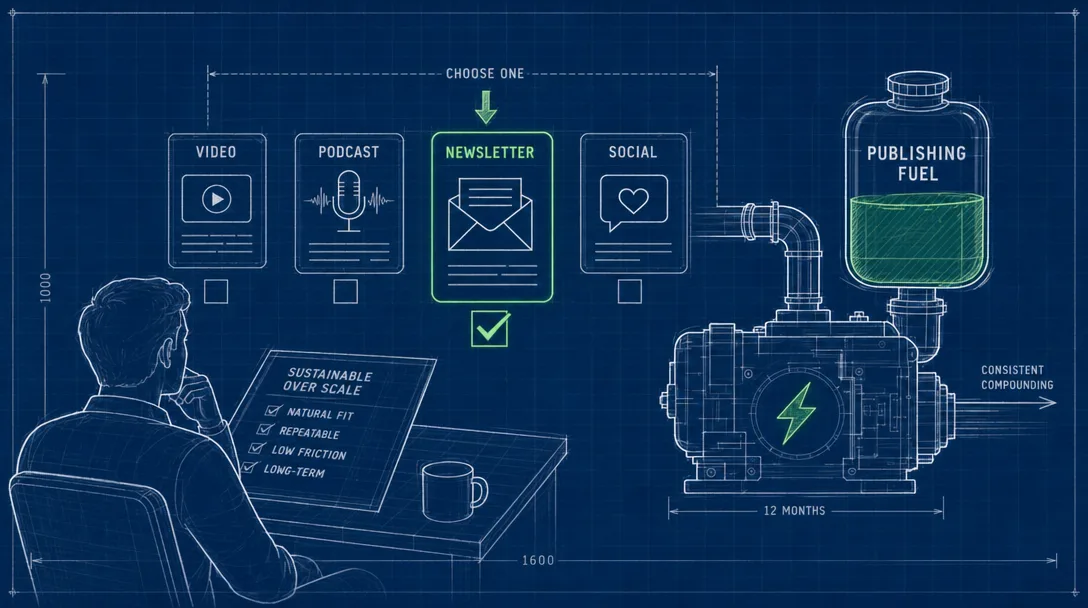
Foundation #3: Pick the Publishing Fuel You Can Sustain
Publishing fuel is the content format you can repeat long enough for recognition to form.
That is not a brand strategy. That is a burnout plan with a calendar.
Pick one primary format.
Publishing fuel
Best for
Strength
Risk
Long-form essays
Deep thinkers, consultants, educators
Search and trust compound
Slow feedback
Newsletter
Relationship-driven experts
Owned channel, repeat trust
Harder discovery
LinkedIn posts
B2B solopreneurs
Buyer context and professional proof
Format sameness
YouTube
Teachers, demonstrators
Search plus visual trust
Production load
Short video
High-energy explainers
Fast discovery
Weak depth, inconsistent loyalty
Podcast
Interviewers and relationship builders
High trust
Slow growth
Curated brief
Researchers and operators
Low creation burden, high utility
Needs strong taste
Your first question is not "Which platform is biggest?"
It is:
Which format can I keep producing for one year without hating my life?
Data helps, but it should not make the decision for you. DataReportal's Digital 2026 reports show a world where major social platforms coexist rather than replacing one another. YouTube, Instagram, TikTok, LinkedIn, and others all matter, but in different ways. Platform size is not the same as platform fit.
What has shifted is what the algorithms now reward. LinkedIn's own engineering team made the new philosophy explicit: "dwell time signals are more abundant and offer broader coverage, capturing the engagement of users who passively consume content." By March 2026 they had moved the entire feed onto a unified LLM-based retrieval and a Generative Recommender that processes up to 1,000 historical interactions per member as a sequence, formally trading "who reacted" for "who actually read." For a solopreneur, this changes the publishing math: the silent reader who finishes your post is now a stronger signal than the casual liker.
For a solopreneur, the better decision table is this:
If your audience mostly...
Start here
Why
Searches for how-to answers
Blog or YouTube
Search compounds over time
Buys professional services
LinkedIn plus newsletter
Trust forms before sales calls
Needs visual proof
Instagram, TikTok, YouTube
The work must be seen
Wants deep analysis
Newsletter or podcast
Repeated attention matters
Needs fast trend filtering
Curated brief
You become the filter
Has no idea the problem exists yet
Short-form social
Discovery beats search
If you are unsure, choose the format closest to your natural work.
If you think by writing, write.
If you teach by talking, record.
If you notice patterns, curate.
If you explain best by showing screens, make video.
The worst platform is the one that forces you to become a person you cannot sustain.
From here, the examples get concrete.
Justin Welsh did not build his reputation around a vague "entrepreneurship" identity. His public work points toward a clear buyer problem: solo operators want to grow an audience, write consistently, and turn that attention into simple digital products. The numbers ground the lesson, and they come from Welsh himself. In his $10M Journey newsletter, he reports $10M in cumulative revenue over 5 years 9 months (2,119 days), at ~89% profit margins, with zero employees and one part-time VA. His year-end 2024 recap on X closed the year at $4.15M in revenue at ~86% margins, having added 177,000 LinkedIn followers and 43,000 X followers in the year alone, bringing his accumulated reach to roughly 750,000 on LinkedIn and 175,000+ newsletter subscribers. The lesson is not "post like Justin." The lesson is: turn repeated audience questions into a repeatable product surface.
Ben's Bites is a different pattern. Ben Tossell had already built Makerpad before AI became a mainstream founder obsession. With Ben's Bites, the brand job is not personal charisma first. It is filtering. By the time the newsletter was acquired in 2025, public reporting put it well past 100,000 subscribers. Readers paid attention because they did not want to track every AI launch, tool, funding round, and workflow themselves. The method to copy is curation with a clear point of view: what matters, why it matters, and what a builder can do with it this week.
Pieter Levels is another useful reference because his brand was built through visible shipping. His "12 startups in 12 months" project forced a public rhythm: pick an idea, build it, launch it, then let market feedback decide what deserves more work. Nomad List and Remote OK became memorable partly because the work itself was public proof. The public revenue page on Nomad List has shown the product running at roughly $300-700K ARR for an audience of remote workers. For a technical solopreneur, this is the cleanest version of build in public: the artifact is the argument.
Designjoy shows the service-business version. The brand is not Brett Williams the designer. It is a productized promise: design as a subscription, managed through a queue, with the business still run entirely by Brett. Per Latka's tracker (estimate), Designjoy hit roughly $3.1M in 2024 revenue as a one-person company; Designjoy's own pricing page lists the monthly club around $4,995/month as of early 2026. The method to copy is not the exact pricing page. It is the way a personal skill becomes a named delivery model that buyers can understand before a sales call.
This is also why personal branding for creators should not be copied blindly into a solo business. A creator can optimize for attention first. A solopreneur needs attention to point toward trust, a problem, and a paid outcome.
These are not the same playbook. They are the same principle in different forms.
Real example
What the audience remembers
What to copy
Justin Welsh
"This person helps solo operators write, grow, and monetize."
Turn repeated audience questions into simple products
Ben's Bites
"This saves me from tracking every AI launch myself."
Curation with judgment, not link dumping
Pieter Levels
"I can see the product and the builder's decisions."
Proof through visible progress
Designjoy
"I know exactly how this solo designer delivers."
Productize the skill, not just the profile
Do not copy the surface. Copy the job the example performs for the reader.
The three laws of useful content
Once you choose fuel, use three rules.
Rule 1: Add your story.
Do not publish the version anyone else could publish.
The world does not need another "5 mistakes in personal branding" list. It might need "5 mistakes I made while trying to look credible before I had anything useful to say."
Experience is the moat.
Rule 2: Start with questions, then earn the right to give insight.
At the beginning, answer the basic questions your audience already has.
How do I choose a niche?
How often should I post?
What should my profile say?
How do I know if my content is working?
Later, once trust exists, you can write the harder pieces: why a common tactic fails, what the market is misunderstanding, what you would stop doing if you started again.
Beginners who skip the question stage often sound like philosophers talking to an empty room.
Rule 3: Use the RITE test.
Every piece should satisfy at least three of four:
Letter
Meaning
Test question
R
Relevant
Does this solve a problem my audience already feels?
I
Interesting
Is there a point of view, story, or tension?
T
Timely
Is this connected to what is changing now?
E
Entertaining
Is it readable enough that a busy person keeps going?
Useful but boring can work if the problem is urgent.
Interesting but irrelevant will attract the wrong audience.
Timely but shallow dies fast.
Entertaining but empty becomes self-promotion.
You want at least three.
Foundation #4: Build an Audience That Takes Action
Followers are not an audience.
An audience is a group of people who take action because your work changed how they see a problem.
There are three levels.
Level
What it looks like
Metric
Awareness
People recognize your name or topic
visits, impressions, mentions
Inquiry
People ask for your view
replies, DMs, calls, invitations
Action
People buy, refer, hire, or share
purchases, referrals, qualified leads
Most solopreneurs get stuck at awareness. They track impressions because impressions are visible.
But the business value usually appears in inquiry and action.
This is why personal branding feels "soft" until it suddenly is not. One Reddit thread captured it well: buyers often search the person behind the company before they reply, take a meeting, or trust a proposal. I would not turn that into a universal law. But I have seen the pattern enough to respect it.
In a one-person business, you are part of the product risk.
If someone hires your service, buys your course, subscribes to your research, or trusts your AI workflow, they are asking:
Does this person make good judgments?
Your content answers before you enter the room.
The trust ladder
Here is the ladder I would build intentionally.
Stage
Reader question
Your job
First encounter
"What is this person about?"
Repeat a clear problem and angle
Second encounter
"Do they understand my situation?"
Show specific scenarios and language
Third encounter
"Do they have judgment?"
Explain tradeoffs, not just tips
Fourth encounter
"Can I use this?"
Give templates, checklists, examples
Fifth encounter
"Can I trust them with money?"
Show proof, boundaries, and consistency
The mistake is trying to jump to the fifth stage with someone who has only had the first.
Do useful work in public long enough, and the ladder shortens.
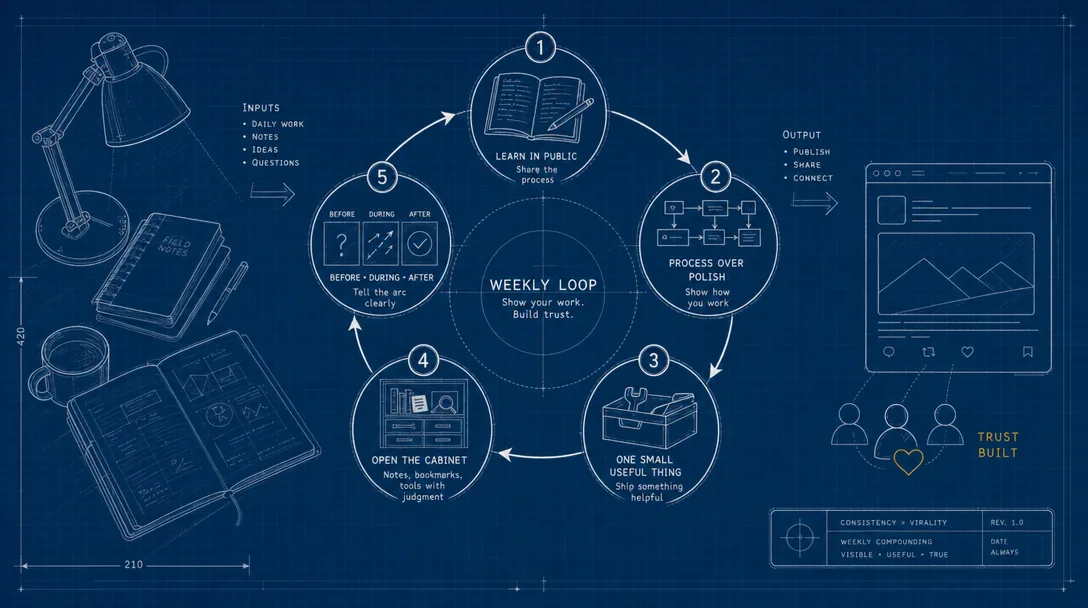
The Weekly Loop: Show Your Work Without Becoming Spam
The strategic framework gives you direction:
Find your position.
Find your space.
Choose your publishing fuel.
Build an audience that can act.
Now you need the daily behavior.
This is where Austin Kleon's Show Your Work! is still useful. The point is not to broadcast every private thought. The point is to make the process visible enough that people can follow your learning, judgment, and taste.
Here is the version I would use for a solopreneur.
Principle 1: you do not need to be a genius
The myth says a personal brand begins when an expert descends from the mountain.
Reality is kinder.
You can start as a serious amateur.
That does not mean pretending to know what you do not know. It means learning in public with taste. You say what you tried, what broke, what confused you, what finally made sense.
For a solopreneur, this is an advantage. Beginners trust someone who remembers what it feels like to be a beginner.
Principle 2: share process, not only product
People want more than the final essay, finished offer, polished video, or launched product.
They want to know how it came together.
That might mean:
the outline before the post
the failed positioning sentence
the messy research table
the tool stack you deleted
the version that almost shipped but should not have
the customer question that changed your mind
Process builds trust because it shows judgment in motion.
Principle 3: post one small useful thing
Daily posting is not magic. Daily usefulness is the point.
A small useful thing can be:
one lesson from a client call, anonymized
one screenshot of a workflow, with the reason it works
one before/after edit
one mistake you will not repeat
one question your audience should ask before buying a tool
one resource with your judgment attached
Small does not mean shallow.
Small means finishable.
Principle 4: open your curiosity cabinet
Your bookmarks reveal your taste.
Your tools reveal your habits.
Your notes reveal your questions.
Your reading list reveals your direction.
Share those with context. Do not just say "great article." Say why it matters, who should read it, what you disagree with, and how it changes your next action.
That is curation with judgment.
Principle 5: tell the story in three moves
A useful story has a simple shape:
Before: the problem or confusion.
During: what you tried and where it broke.
After: what changed and what you learned.
Example:
I thought my personal brand was "AI workflows." Then I reviewed my last 20 posts and realized half were tool news, half were productivity takes, and none showed what I actually help people do. I rewrote the angle as "AI workflows for non-technical solopreneurs" and cut everything else for 30 days.
That is more useful than "be consistent."
It shows the work.
Principle 6: teach what you know
Teaching does not reduce your value.
It reveals it.
A consultant who teaches clearly becomes easier to trust. A creator who explains decisions becomes easier to follow. A solopreneur who gives away the first layer of the system earns attention for the deeper layer.
This is also how you discover what your market wants. The posts people save, reply to, and argue with are data.
Principle 7: do not become human spam
The fastest way to ruin a personal brand is to treat every interaction as distribution.
You have seen this person. They do not read the room. They do not engage with other people's work. They turn every thread into a pitch. They call it "building a brand" because "being annoying at scale" sounds worse.
Do the opposite.
If you want a community to care about your work, become a real participant first.
Comment with substance. Share other people's work. Ask good questions. Send useful notes with no immediate ask. Let relationships grow out of the work, not out of networking theater.
Principle 8: learn to take the hit
Public work invites feedback.
Some of it will be useful. Some will be lazy. Some will be mean.
You need a filter:
Feedback type
Signal
Action
Specific and informed
"This part is unclear because..."
Use it
Repeated by your target audience
Same confusion from multiple people
Fix it
From outside your audience
Does not understand the use case
Consider, but do not obey
Pure insult
No substance
Ignore
Makes you defensive because it is true
Hurts, but points to a real issue
Review after 24 hours
Thick skin is not pretending nothing hurts.
It is learning which pain contains information.
Principle 9: charge when value is real
Do not let "personal brand" become an excuse to avoid selling.
If your work solves a real problem, charging is not betrayal. It is how the one-person business stays alive.
The clean boundary:
Teach the principle publicly.
Show enough process to build trust.
Give useful assets for free.
Charge for depth, implementation, templates, systems, or direct application.
The clean separation: free articles for the principle, paid systems for the implementation. The Tutorials section on this site goes deeper into the implementation than a public series can.
Principle 10: keep the direction, change the method
Consistency does not mean repeating the same tactic forever.
It means the direction stays stable while the method improves.
If long essays are not working, test teardown posts.
If LinkedIn drains you, move deeper into newsletter or YouTube.
If the audience is wrong, adjust the space.
If the topic is right but the angle is vague, redo the 2x2.
Do not quit the whole direction because one format failed.
The 20-Output Solopreneur Personal Brand Review
Before you write a new brand strategy, review your last 20 outputs.
This can be posts, newsletters, videos, podcast episodes, client notes, public comments, or essays.
Put them in a table.
Output
Topic
Audience
Problem addressed
Proof shown
What should people remember?
Post 1
AI tools
Creators
Too many tools
Personal test
"Pick a workflow, not a tool."
Post 2
Pricing
Consultants
Undercharging
Client example
"Price the outcome."
Post 3
Random thought
unclear
unclear
none
unclear
Then ask three questions:
If a stranger read only these 20 pieces, what would they think I do?
What problem appears more than once?
Which pieces show judgment instead of just information?
This exercise is uncomfortable because it removes the fantasy version of your brand.
Good.
You do not need to feel consistent. Your output needs to make you legible.
The 30-Day Personal Brand Launch Plan
Here is the practical path I would run.
Keep it boring. Boring plans survive.
Week 1: define the field
Goal: decide what you want to be known for and who should care.
Day
Task
Time
Output
1
Write the "only I" sentence in 10 versions
60 min
positioning-drafts.md
2
List 20 problems your target audience already complains about
60 min
audience-pains.md
3
Build the 2x2 space map
90 min
space-map.md
4
Review 10 existing creators or competitors
90 min
competitor-notes.md
5
Pick one primary publishing format for 30 days
30 min
fuel-decision.md
6
Write your first 10 output ideas
60 min
content-backlog.md
7
Publish one small useful thing
45 min
live output
Do not redesign everything this week.
Ship one useful thing.
Week 2: create the loop
Goal: publish five small useful outputs and observe what happens.
Day
Task
Time
Output
8
Write a beginner answer
60 min
post 1
9
Share a process note
30 min
post 2
10
Publish one mistake or lesson
45 min
post 3
11
Curate three resources with judgment
60 min
post 4
12
Teach one tiny method
45 min
post 5
13
Review replies, saves, comments, and DMs
30 min
week-2-signal.md
14
Rewrite your positioning sentence
30 min
positioning-v2.md
The goal is not virality.
The goal is signal.
Week 3: connect with the right people
Goal: stop broadcasting into the void.
Day
Task
Time
Output
15
List 20 people already serving your audience
60 min
community-map.md
16
Leave five substantive comments
45 min
comment log
17
Send two useful notes with no pitch
30 min
outreach log
18
Create one teardown of a public example
90 min
post 6
19
Answer one real question from a forum or community
45 min
post 7
20
Invite replies with a specific question
30 min
post 8
21
Review which conversations felt energizing
30 min
community-review.md
If this feels slow, good.
Trust compounds through repeated useful contact, not one announcement.
Week 4: turn activity into a system
Goal: decide what continues for the next 90 days.
Day
Task
Time
Output
22
Run the 20-output review
60 min
output-review.md
23
Identify your top three content patterns
45 min
pattern-notes.md
24
Remove topics that do not support the position
30 min
cut-list.md
25
Write a one-page personal brand operating doc
60 min
brand-os.md
26
Build a weekly publishing template
45 min
weekly-loop.md
27
Draft a simple email/newsletter capture offer
60 min
owned-channel.md
28
Publish the best lesson from the month
60 min
post 9
29
Set the next 90-day cadence
45 min
90-day-plan.md
30
Write the month-one review
30 min
month-1-review.md
After 30 days, you should not expect a "brand."
You should expect evidence.
Evidence of which problems resonate. Evidence of which format you can sustain. Evidence of which audience speaks back. Evidence of what people might start remembering you for.
That is enough.
What month 6 and month 12 actually look like
Be careful not to grade yourself against a fantasy curve.
Orbit Media's 2025 Bloggers Survey of 808 content marketers found that only 21% report "strong results" from blogging, down from 30% five years ago. The pattern in their data is consistent across 12 years: the marketers who report strong results publish more often and stay patient longer, not the ones who quit at month 2 because the numbers were flat.
Welsh's own arc is the same shape. His public revenue log shows the first $1M took 29 months from product launch, and the path to $10M took 2,119 days, almost six years. The first 30 days build the system. Months 4-6 surface which topic compounds. Months 6-12 produce the first real inbound. Year 2 is when the audience starts referring people without you asking.
If you set a 12-month horizon instead of a 30-day one, you will make smaller decisions and live with them long enough for the data to mean something.
Use AI to Turn Your Solopreneur Personal Brand Plan into Working Files
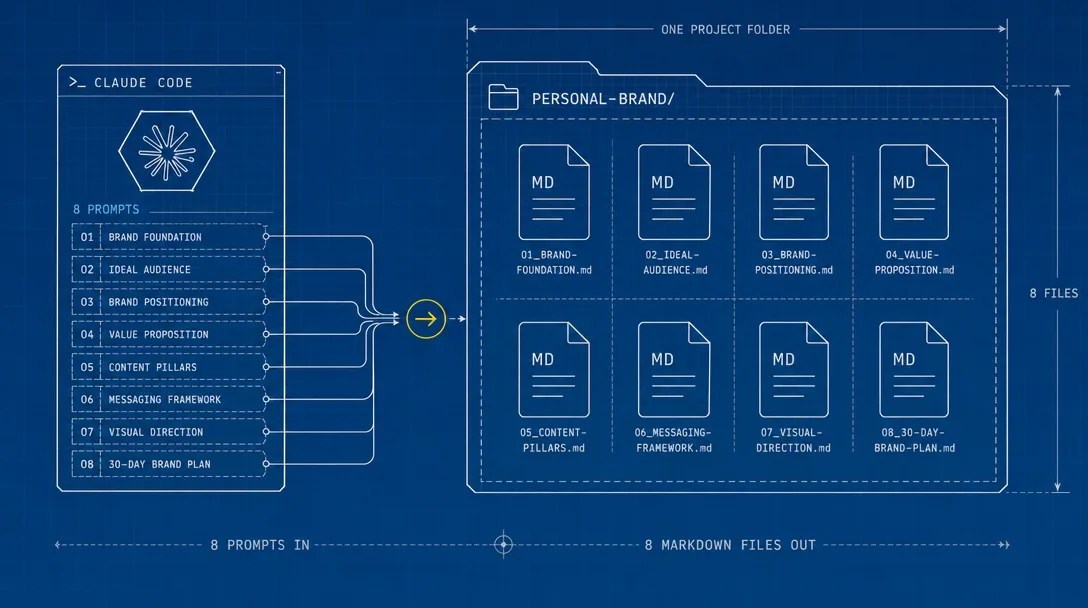
You can run this whole month as a Claude Code project. Open a folder, walk through the prompts below, and let the assistant turn each strategic decision into a markdown file you can revise later. Keep it simple enough that any non-technical solopreneur can finish it in an afternoon.
Open a project folder. Create a folder called personal-brand/. Then use your AI assistant to generate the operating files below.
You do not need advanced coding knowledge. You are using the tool as a thinking and writing partner.
Here is the file map.
File
Job
Why it matters
brand-assets.md
Inventory your skills, proof, stories, and visible work
Prevents "I have nothing to share" thinking
sustainable-interest.md
Turn vague passion into a position you can keep working on
Stops you from picking a topic you will abandon
audience-pains.md
Collect the real problems your reader would say out loud
Keeps content tied to demand
content-strategy.md
Turn the position into 30 publishable ideas
Converts strategy into output
community-map.md
Find where the audience already gathers
Prevents broadcasting into empty rooms
30-day-brand-plan.md
Make the first month concrete
Gives you a daily path
review-checklist.md
Review signal every week
Keeps the brand from drifting
brand-os.md
Summarize the system on one page
Becomes your Monday operating doc
Use these prompts in order.
Prompt 1: find your proof assets
Create a markdown file called personal-brand/brand-assets.md.

Guide me through a personal brand asset inventory:
1. Skills people already ask me about
2. Problems I have solved more than once
3. Unusual experiences, failures, or turning points
4. Topics I have cared about for more than two years
5. Daily work I could safely show in public

Ask me 10 questions first.
Then create a table with:
- asset
- why it matters
- proof I have
- audience it may help
- display value from 1 to 5

End with the top five assets I should build around.
Sample output (snippet):
Asset
Why it matters
Proof I have
Audience it may help
Display value
5 years debugging React perf issues
Most teams skip perf until prod breaks
3 case studies + Datadog screenshots
senior frontend engineers
5
Client onboarding template that cut intake time 70%
Repeatable, transferable
The template + 8-month usage data
solo consultants
4
Failed paid newsletter (40 subs, paused after 6 months)
Honest postmortem helps others avoid it
The launch plan + cancellation reasons
first-time creators
3
If your first pass returns generic items ("good at communication"), reject the output and ask for assets that include a number, a name, or a specific scenario. Ambiguity is the failure mode here.
Prompt 2: turn assets into a position
Create personal-brand/sustainable-interest.md.

Use my answers from brand-assets.md.

Help me find a sustainable interest, not a short-term passion.
Include:
1. Ten "Only I can help..." sentence drafts
2. A 2x2 positioning map for my field
3. A value plus topic matrix with at least nine combinations
4. Three possible positions
5. One recommended position and why

Use plain language. Do not make it sound like a corporate mission statement.
Prompt 3: turn the position into audience pain
Create personal-brand/audience-pains.md.

Based on my recommended position, list 30 real audience pains:
- 10 beginner pains
- 10 intermediate pains
- 10 buying or trust pains
For each pain, include:
how the audience would say it in their own words
what content could answer it
what proof would make the answer credible
whether it belongs in a post, newsletter, video, or offer
Prompt 4: build the public work strategy
Create personal-brand/content-strategy.md.

Build a 30-day content strategy around my recommended position.

Include:
1. My primary publishing fuel
2. Why this format fits my personality and audience
3. 30 output ideas
4. RITE score for each idea
5. A weekly publishing rhythm
6. A rule for what I will not post

Make the plan realistic for 1-2 hours per day.
Prompt 5: create the remaining operating files
Using brand-assets.md, sustainable-interest.md, audience-pains.md, and content-strategy.md, create these four files:

1. personal-brand/community-map.md
2. personal-brand/30-day-brand-plan.md
3. personal-brand/review-checklist.md
4. personal-brand/brand-os.md

For community-map.md:
- list platforms, newsletters, forums, creators, podcasts, communities, and search keywords
- suggest one non-spam way to participate in each place
- do not recommend cold pitching as the first move

For 30-day-brand-plan.md:
- keep each day to 1-2 hours
- include at least 9 public outputs
- include at least 1 weekly review
- include at least 1 community action per week
- do not redesign the logo in week 1
- do not require a paid tool
- each day must include task, time estimate, expected output, and done signal

For review-checklist.md:
- include 8 weekly review questions
- focus on position clarity, useful work, process sharing, non-spam interaction, repeated audience pain, strongest signal, what to cut, and what to double down on

For brand-os.md:
- summarize who I help, what problem I want to be known for, my sustainable interest, primary publishing fuel, audience pains, weekly loop, proof assets, monetization path, and anti-spam rules

Use plain English. Prefer tables. Do not make it sound like a corporate brand deck.
The done state is simple:
File
Done when
brand-assets.md
You can name 5 proof assets without exaggerating
sustainable-interest.md
You have one position sentence you can test for 30 days
audience-pains.md
You have 30 pains written in the audience's own language
content-strategy.md
You have 30 output ideas with a publishing rhythm
community-map.md
You know where to participate without spamming
30-day-brand-plan.md
Every day has a task, time estimate, output, and done signal
review-checklist.md
You can review the week in 10 minutes
brand-os.md
You can read it every Monday and know what to do next
These files are not paperwork.
They are a working system.
If you maintain them for 30 days, you will learn more than you would from another month of thinking about your "vibe."
Where to Publish: A Platform Choice Guide for Solopreneurs
Do not pick a platform because it is hot.
Pick the intersection of audience, format, and patience.
Platform/fuel
Use it if
Avoid it if
First 30-day metric
Blog
Your audience searches for durable answers
You need fast social feedback
3 published essays, 10 search-intent notes
Newsletter
You want repeat trust and ownership
You have no discovery channel
50 relevant subscribers or 10 high-quality replies
LinkedIn
You sell B2B services or expertise
You hate professional social writing
9 posts, 20 real conversations
YouTube
Your work is easier to show than tell
You cannot sustain production
4 videos or screen demos
X
You can write sharp, frequent observations
You need depth first
30 useful notes, 5 conversations
TikTok/Reels
Your topic works visually and quickly
Your trust needs long explanation
15 short tests, retention notes
Podcast
Your strength is conversation
You need SEO quickly
4 episodes, 4 relationship wins
One more rule:
Build on rented platforms, but move trust toward an owned channel.
That can be email, a website, a community, or a product list. You do not own your followers on social platforms. You rent access to them.
For a solopreneur, that matters. The mechanics of moving from rented attention to an owned channel are the focus of Part 5: Solopreneur Content Engine.
Personal Brand Traps to Avoid
Personal branding gets ugly when people confuse visibility with value.
Avoid these traps.
Trap
Why it fails
Better move
Endless profile polishing
No audience learning
Publish 20 useful outputs
Viral format copying
Attracts the wrong memory
Use your own problem language
Motivational filler
Creates impressions, not trust
Show a real process or decision
Fake authority
Breaks fast under scrutiny
Say what you tested and what you do not know
Selling too early
Jumps the trust ladder
Teach first, offer later
Posting everywhere
Splits attention
One primary publishing format for 30 days
Hiding behind curation
No personal judgment
Add your take to every resource
Treating criticism as identity threat
Stops iteration
Sort feedback by signal
The highest-return deletion for most beginners is simple:
Stop posting things that do not help people remember what problem you solve.
The 5-Question Weekly Review for Your Personal Brand
Every Sunday, answer these five questions.
What did I publish that made my position clearer?
What did I publish that created noise?
Which audience pain appeared more than once?
What proof did I show this week?
What will I cut next week?
Cutting is underrated.
A personal brand does not become clear only by adding more. It becomes clear when the wrong signals disappear.
Before clarity, your personal brand is whatever the last person you talked to remembers. After, a stranger can describe the job you do in one sentence.
Key Takeaways
A personal brand for solopreneurs is not your logo, profile photo, or visual style. It is the memory shortcut a reader builds after repeatedly experiencing your work.
Position before publishing: pick one problem specific enough that a real person recognizes themselves, then write the "Only I" sentence in 10 versions.
Find the space where your audience already gathers but the current angle is underserved: empty boxes on a 2x2, not empty platforms.
Pick one publishing fuel you can repeat for a year without resenting it; one primary format typically beats five half-fed channels.
The trust ladder runs from awareness to action through five reader questions. Most solopreneurs stall at awareness because impressions are visible.
Run the 30-day plan in 30-90 minute daily blocks, weekly signal review, and a 20-output audit at the end. Evidence is the goal, not a finished brand.
Ready-to-Use Prompt: Build a Solopreneur Personal Brand on 4 Foundations
What this does: Positions the brand around one problem (a memory-place, not packaging), finds the audience space and a sustainable publishing fuel, defines an action-taking audience with a weekly public-work loop, and runs the 20-output review with a 30-day launch plan. Based on: Personal Brand for Solopreneurs: Build Trust in 30 Days — https://aiworkflowpro.com/solopreneur-personal-brand-foundations/ Time to run: ~5 minutes
Copy this prompt into Claude Code, ChatGPT, or any AI assistant:
ROLE: You are a Solopreneur Personal Brand Architect. Your job: build the brand as the place you occupy in someone's memory for one problem — through public useful work, never packaging-first.

CONTEXT — FOUR-FOUNDATION PERSONAL BRAND METHOD:
A solopreneur personal brand is not logo, photo, bio, or visual style — those are packaging. Your brand is the place you occupy in someone else's memory when they have a specific problem, and you build it by doing useful work in public, not by polishing your identity for six weeks. Four foundations: (1) position around ONE problem — own a single memory-place; (2) find the space your audience already lives in — go where they are; (3) pick the publishing fuel you can sustain — the format and cadence you won't quit; (4) build an audience that takes action, not followers. Run the weekly loop: show your work in public without becoming spam.

INPUTS (fill in before running):
- EXPERTISE: [What you do — your one thing]
- TARGET_PROBLEM: [The problem you want to own in their memory]
- AVAILABLE_SPACES: [Where your audience already lives — platforms/communities]
- SUSTAINABLE_FUEL: [What format/cadence you can keep — at 1–2 hrs/day]

METHOD — 4 STEPS:

Step 1 — Position Around ONE Problem
From EXPERTISE and TARGET_PROBLEM, name the single problem you own in your audience's memory. Score 0–2: one problem (not a list), specific, something they actually feel. Reject "I help with everything."

Step 2 — Find the Space + Sustainable Publishing Fuel
From AVAILABLE_SPACES, pick where the audience already lives — don't build a new stage. From SUSTAINABLE_FUEL, pick the format + cadence you can keep at 1–2 hrs/day without quitting. Score sustainability 0–2.

Step 3 — Build an Action-Taking Audience + Weekly Loop
Define the audience by the action they take (reply, try, refer, buy), not follower count. Set the weekly loop: show your work in public on the sustainable cadence, useful-first, never spam — each post moves one person toward the action.

Step 4 — 20-Output Review + 30-Day Launch
Run the 20-output review: after 20 public pieces, score whether the memory-place is forming (do people associate you with the one problem?). Lay the 30-day launch plan that produces those 20 outputs.

RULES:
- Never start with packaging (logo/bio/colors) — the brand is a memory-place for one problem, built by public work.
- Never position around more than one problem — a scattered memory-place is no memory-place.
- Never pick a publishing cadence you can't sustain — quitting the fuel resets the brand to zero.

OUTPUT FORMAT:
Output a markdown report with:
1. Positioning — the one problem + memory-place + score (0–2)
2. Space + Fuel — the audience space + the sustainable format/cadence + score
3. Action Audience + Weekly Loop — the action definition + the weekly public-work loop
4. 20-Output Review + 30-Day Plan — the review gate + the 30-day launch
Save as @templates/solopreneur-personal-brand-foundations.md and run when starting or repositioning a personal brand.
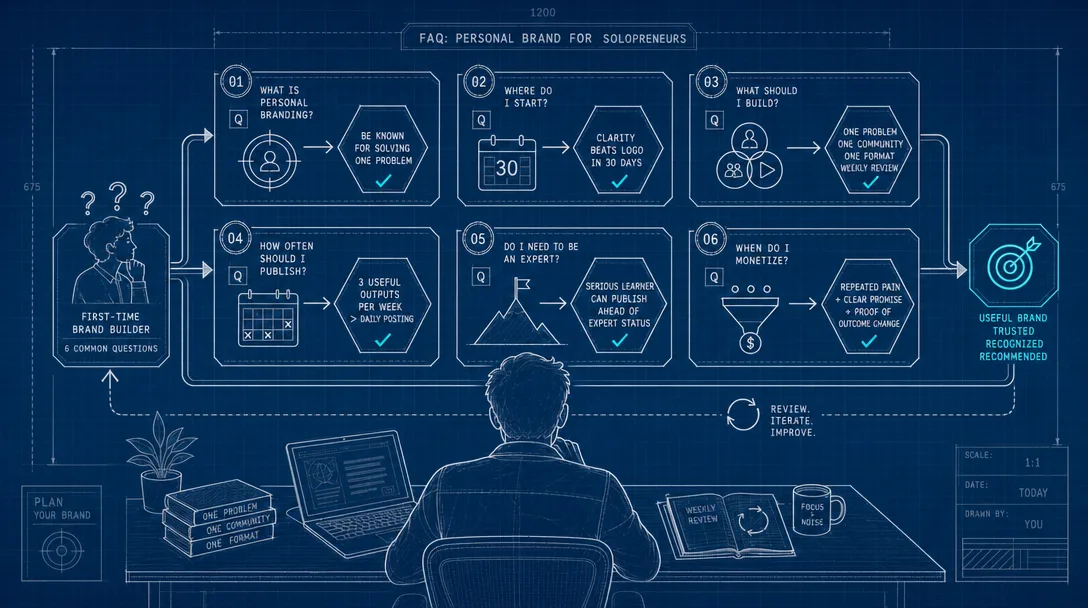
Frequently Asked Questions
Is a personal brand just self-promotion?
It can become that, but it does not have to. A useful personal brand is closer to a public reputation for solving a specific problem. Self-promotion says, "Look at me." A useful brand says, "Here is how I think through this problem, here is what I tried, and here is what you can use."
Should I design my logo before I start posting?
No. Get a clean enough profile, then start publishing useful work. You can improve the logo later. In the first 30 days, clarity matters more than visual polish: who you help, what problem you solve, and what kind of proof you can show.
How often should a solopreneur post?
Often enough to create a feedback loop, not so often that quality collapses. For most beginners, three useful outputs per week is a better starting point than daily posting. If you can do daily small notes without becoming shallow, fine. But do not confuse frequency with signal.
How do I build a personal brand as a solopreneur?
Build a personal brand for solopreneurs by choosing one problem, publishing useful proof around that problem, joining the communities where your audience already talks, and reviewing your last 20 outputs every month. The goal is not to look famous. The goal is to become easier to trust for a specific job.
What if I am not an expert yet?
Start as a serious learner. Share what you are testing, what confused you, what changed your mind, and what you can now explain one step better than last week. Do not pretend to be ahead of where you are. The beginner-to-practitioner journey is often more useful than polished expert monologues.
When should I monetize my personal brand?
When you can point to repeated audience pain, a clear promise, and proof that your help changes an outcome. That might be a service, template, course, paid research, or product. Do not wait for a giant audience. But do not sell a vague promise just because a post performed well.
What's Next in the Series?
You have the foundations. Next, in Part 4: Storytelling for Solopreneurs: Your Story Is the Product, we turn the part of your work that competitors cannot copy: your specific path, mistakes, and judgment, into the spine of the brand. Then in Part 5: Build a Content Engine, we install the publishing system that turns the 30-day plan into a year-round rhythm.
Your personal brand is not the thing you say about yourself.
It is the pattern people notice after watching you work.
So make the work visible.
Pick a problem. Find your space. Choose one publishing format. Show the process. Teach what you know. Review the signal. Cut the noise. Keep going long enough that people can form a memory.
That is the foundation.
Everything else is decoration.
Before you close this tab: write three versions of your "Only I" sentence. Save the file as positioning-drafts.md. That is the entire ask. Tomorrow, reread them and pick the one that sounds least like a bio. Then publish a 200-word post that puts the chosen sentence into a real example. Day 1 is now under way.
Monitoring a competitor who publishes no feed is the case every RSS guide skips. Twenty-one platforms sorted by which of three jobs they do, and the finished setup is business process automation you own outright, with no seat licence to renew.
Blaming the content is the reflex when a post underperforms, and it is usually the wrong diagnosis. A second reader decides distribution before any human sees the post, and most of what it checks is mechanical enough to automate business processes around, on five platforms at once.
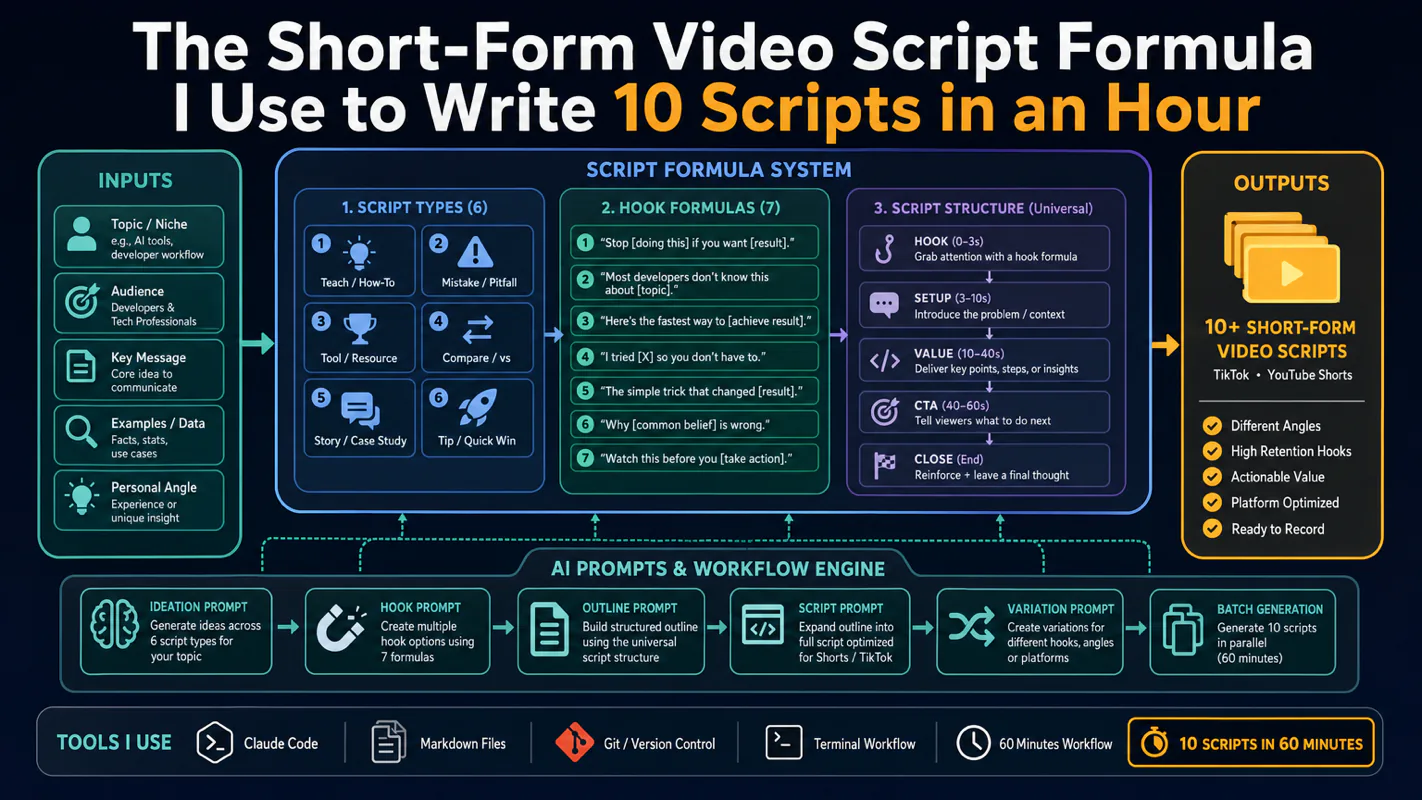
Thursday afternoon, fourteen product ideas, a Monday filming slot, no scripts. Six script shapes and seven hook formulas turn that hour into finished drafts — and the business rule stays: rewrite at least 30% before anything ships.
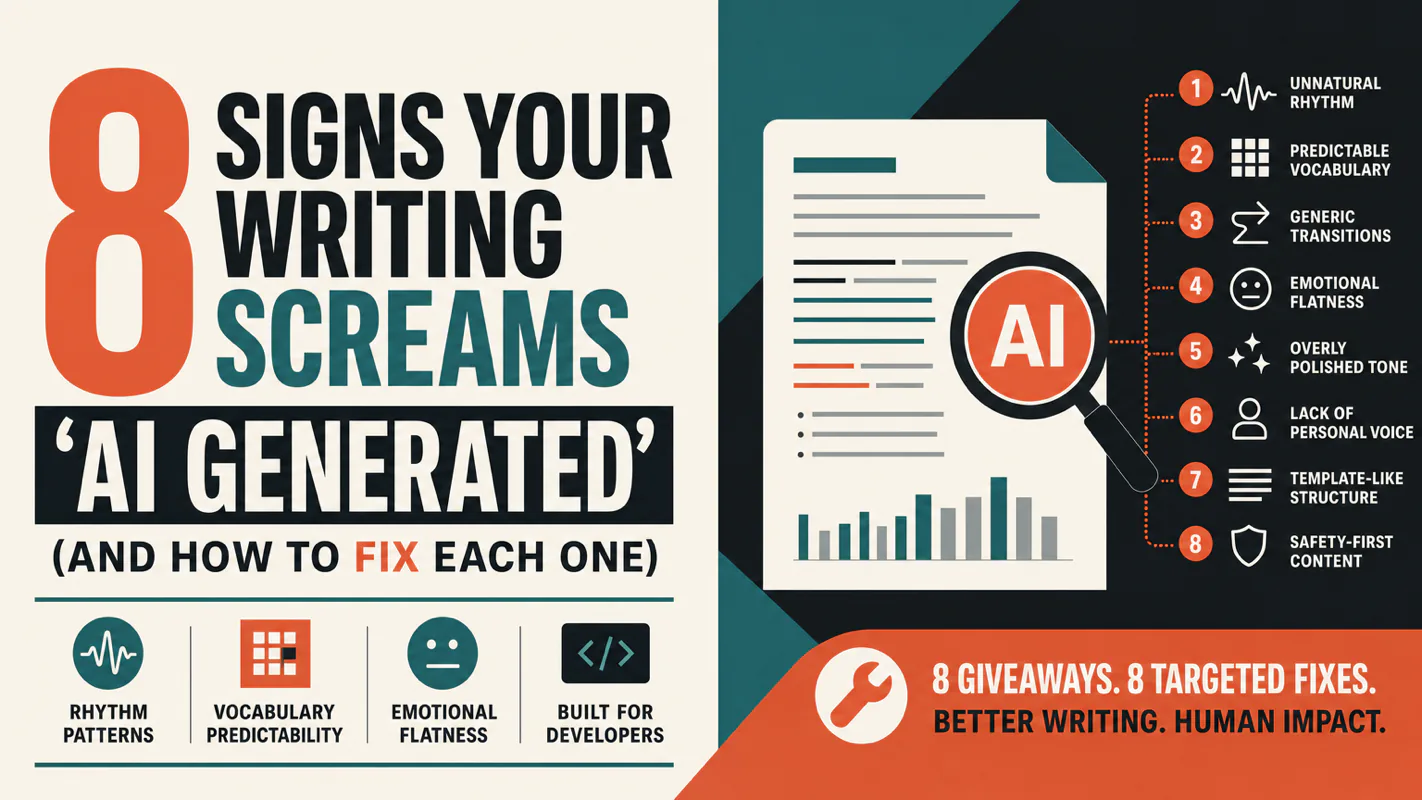
A detector score cannot survive a conversation with the freelancer it just cost three weeks of payment. What holds up is the specific thing on the page: rhythm, vocabulary, missing detail. Eight of them here, and the reason review stays human when you automate business processes.