A 30-minute video is too long for one conversation. This guide walks the 8-step Skill that locks the narration and one look, then gives each 3-minute segment to a fresh sub-agent, five at a time, and polishes the cut in an empty-context session.
The folder structure behind my AI agent team, the Herdr setup where Grok Build, Claude Code and Kimi Code work side by side, and the two live tasks from the video: an article published by voice and a three-model front-end test.
Eight folders of plain Markdown, a CLAUDE.md index in each, and seven prompts that make your agent interview you. Every prompt, template and command from the video, in order.
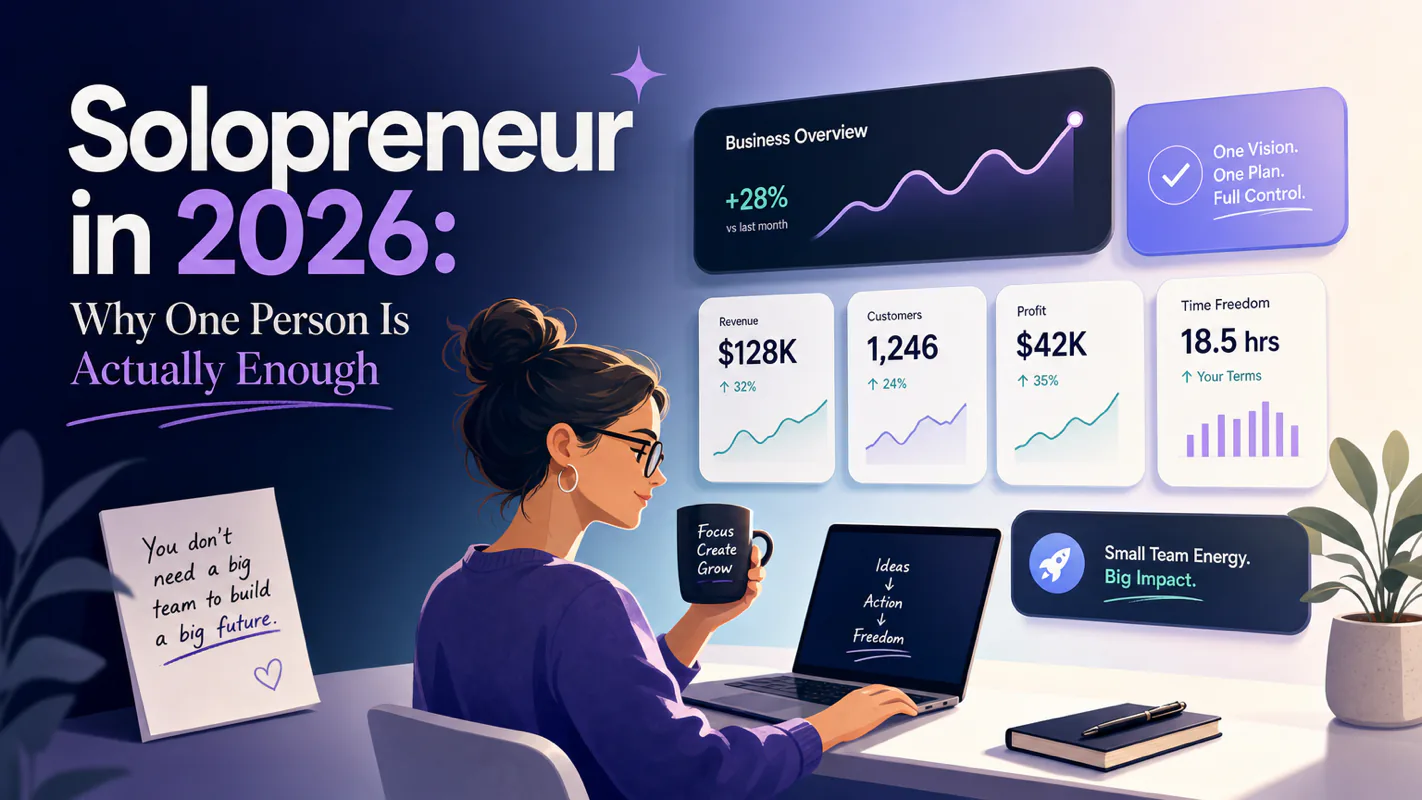
Why One Person Is Enough in 2026: The Structural Case for Going Solo
Not a playbook, an argument. Headcount stopped being a proxy for capability somewhere between 2019 and 2024, and four old reasons for hiring broke with it. When each one broke, the data behind it, and a 10-question test for whether a one-person small business fits you.
This is the why, not the how. For the operational playbook — four pillars, six paths, cost-collapse math — read the One Person Company AI Playbook
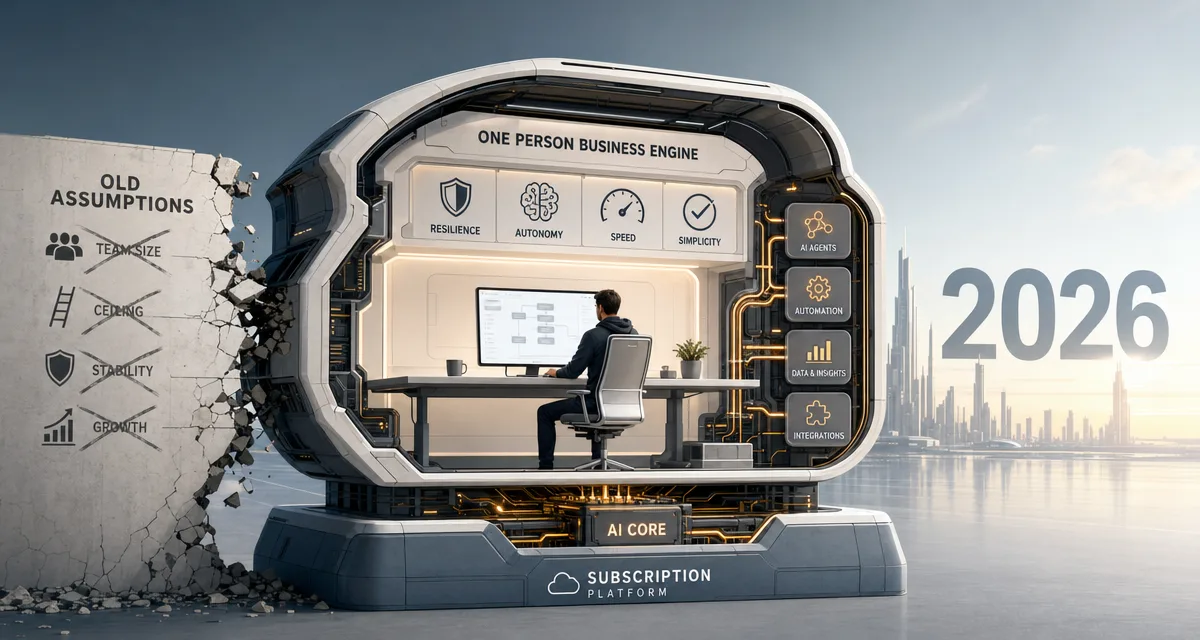
Four assumptions about team size, ceiling, stability, and growth stopped being true between 2019 and 2024. AI accelerated each break
Below: when each assumption was valid, when it broke, why it's wrong now, and a 10-question self-assessment for whether the one-person-company shape actually fits you
Plus the honest numbers most solopreneur posts skip — the median, the on-ramp, and the asymmetric cost collapse
About 117,000 US businesses with zero employees clear a million dollars a year. That is not a rounding error and not survivorship marketing -- it comes out of Census nonemployer data, the same file that counts 29.8 million solo firms producing $1.7 trillion. It matters because most people still price headcount into their definition of a real company. If a two-person design studio is weighing a third hire, the honest first question is not whether they can carry the salary. It is whether the old reasons for hiring anyone still hold in 2026. This piece takes them one at a time, with the numbers.
If you're reading this, you're not asking "how do I build a one-person company." You're asking the question that comes before that: does this actually work — for me, in 2026, without a team, without funding, without a safety net I don't have?
That's a different question. Most solopreneur content conflates them. A playbook assumes you've decided. This post is for the moment before the decision — when the math feels risky, the cultural script says "get a real job," and the four quiet assumptions that kept your parents' generation employed are still running in your head.
The argument here is structural, not motivational. Four assumptions about business size, ceiling, stability, and growth stopped being true between 2019 and 2024. AI accelerated each break. By the end of this post you'll know which assumptions still apply to your situation, which don't, and whether the one-person-company shape fits the person you are.
If you decide yes, the next read is the One Person Company AI Playbook: the four pillars, six proven paths, and the exact cost-collapse math that makes 2026 the inflection year. This post links to it. It does not reproduce it.
The Market Snapshot, Once
The case for going solo is no longer anecdotal. It's a measurable share of the US economy.
The US Census Nonemployer Statistics (May 2025) counts 29.8 million nonemployer businesses generating $1.7 trillion in revenue, roughly 6.8% of total US economic output. The July 2025 follow-up showed nonemployer firms grew faster than employer businesses in nearly every year from 2012 to 2023. 81.9% of US small businesses employ zero people. About 117,000 nonemployer firms cross $1M in annual revenue.
Those are the headline numbers, stated once. The Census table, the full breakdown, and the sourcing live in the playbook. The rest of this post is about why those numbers are structurally possible now, and whether you should be one of them.
The Four Assumptions That Used to Be True (And Why Each One Broke)
The standard path for starting a business looks like this: have an idea → raise money → hire a team → grow → exit or IPO. Business school teaches it. Pitch competitions celebrate it. Your LinkedIn feed reinforces it.
Underneath that path, four assumptions quietly operate:
Revenue scales with team size. Bigger team means bigger revenue. Always.
One person's ceiling is low. You can only do so much with one set of hands.
No team means freelance means unstable. A "real" business has employees.
Growth is the only measure of health. A business that isn't growing is dying.
If those four held, then yes, one person isn't enough. None of them hold in 2026. Below: when each one was valid, when it broke, the data that confirms the break, and what it means for your decision.
Assumption 1: Revenue Scales with Team Size
When it was true. Through roughly 2014, professional output required specialized humans. Writing needed a writer. Coding needed a developer. Research needed an analyst. Operations needed an ops person. Each role was a salary line, typically $3K to $15K per month. Bigger output meant more salaries, which meant more people.
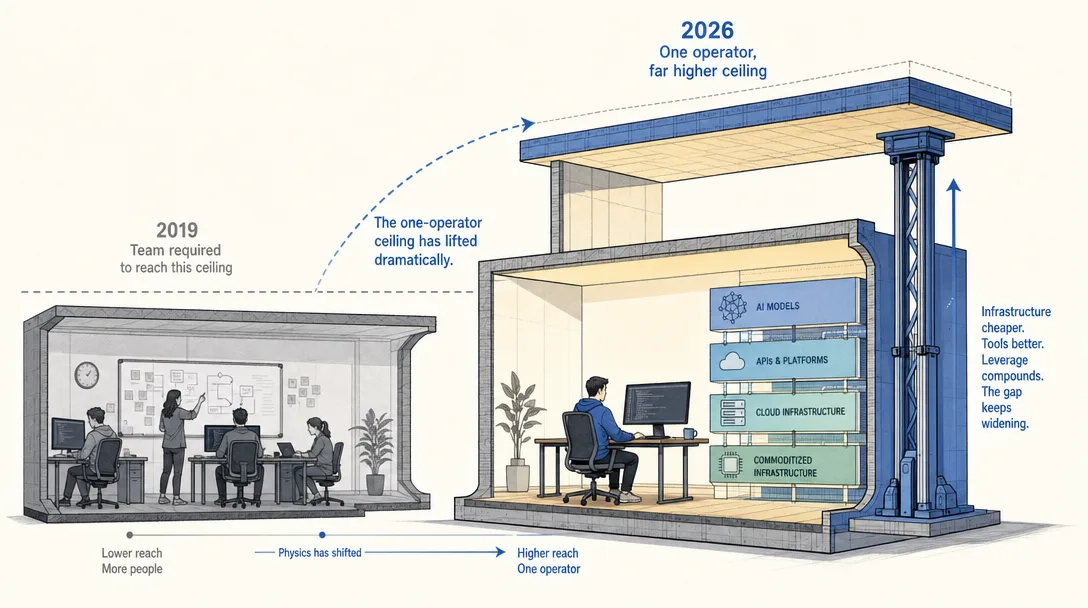
When it broke. Between 2019 and 2024, three things inverted simultaneously. SaaS infrastructure matured to the point where Stripe, Ghost, Vercel, and a handful of subscriptions replaced a $15K-per-month dev shop retainer. Outsourcing markets went mainstream — Upwork, Contra, specialized agencies turned anything outside your core competency into a project instead of a hire. And AI collapsed the cost of the "junior employee" role from a salary to a $20-per-month subscription.
Why the assumption is now wrong. Revenue tracks the value you produce and how well you price it. Headcount is a cost, not an accelerant. The Census data above — 29.8 million nonemployer firms generating $1.7 trillion — is not a long tail of hobbyists. It's roughly 6.8% of US economic output produced without W-2 employees. If revenue scaled with team size by default, employer firms would dominate revenue. They don't. Nonemployer firms grew faster than employer businesses in nearly every year from 2012 to 2023.
The one-line proof. Pieter Levels publishes a multi-million ARR portfolio he runs alone. One person, multiple products, no team, no office, no venture money. The full operational breakdown of his stack is in the playbook. The point here is simply that the assumption is dead.
Assumption 2: One Person Hits a Low Ceiling
When it was true. When every unit of work required a human specialist, one person could only cover one or two functions. You couldn't ship product, write copy, run ads, handle support, and close deals simultaneously. The ceiling was real, and it was low.
When it broke. AI compressed the execution layer. First drafts, basic code, research summaries, ad creative, support replies — all of these moved from "hire a junior" to "prompt and review." The ceiling didn't lift by 20%. It lifted by a factor of 10 to 50 depending on the function. A single operator with the right tool stack now delivers the throughput of a small team from three years ago.
Why the assumption is now wrong. Three named cases anchor the new ceiling, and the full case studies live in the playbook. The summary: Pinboard, run by Maciej Ceglowski alone, bought Delicious for about $35,000 in 2017 — one engineer bought a funded competitor for the price of a used car. Midjourney crossed roughly $200M ARR with about eleven people, or $18M per head, against a conventional SaaS benchmark of $200K to $500K per employee. Sam Altman placed a public bet on when the first one-person billion-dollar company would appear, calling it "would have been unimaginable without AI and now will happen."
The honest follow-up. The ceiling moved, but so should your expectations. About 1.2% of nonemployer firms cross $1M per year. The median sits closer to $50K than $500K. The decision is not "can one person make $18M per head" — it's "can I, with my skills, in my niche, reach a number that beats my current take-home with the freedom a job cannot give." That question has a different answer for every person reading this. The self-assessment below is designed to surface yours.
Assumption 3: No Team Means Unstable
When it was true. When revenue depended on selling your hours — freelancing, consulting billed hourly, gig work — one lost client meant one lost income line. Stability meant diversifying across many clients, which eventually meant hiring coordinators, which eventually meant a team. In that model, solo meant one bad month from disaster.
When it broke. The one-person-company shape is not the freelancer shape, and the conflation is the single most common error in go-solo content. A freelancer sells hours. A one-person company sells an asset — a product, a subscription, a system, a position in a market — that earns whether the founder logs in today or not. AI made it cheap to build assets, not just bill time. That distinction is the entire structural argument.
Why the assumption is now wrong. Stability in 2026 comes from owning an asset that earns without your direct input for every dollar. Nomad List exists whether Pieter Levels logs in or not. The same is true of Pinboard, of any paid newsletter with evergreen subscribers, of the 117,000 nonemployer firms crossing $1M per year. A W-2 salary cannot build that kind of asset. The asset is the stability.
The reframe. A job feels stable because the paycheck is predictable. Predictable is not the same as stable. Predictable means one signature on one employment agreement decides your income. Stable means many independent revenue lines, none of which can be cut by a single person's decision. The one-person company trades predictability for stability. Whether that trade works for you depends on your risk shape, which the self-assessment covers.
Assumption 4: Growth Is the Only Measure of Health
When it was true. For venture-backed startups, growth is the only measure of health because the funding model requires it. Venture capital priced in 10x outcomes. The only way to deliver 10x is to grow aggressively or die. That model produced the "grow or die" reflex that most professionals now carry as default, even if they've never raised venture capital.
When it broke. For businesses that aren't venture-backed — which is most businesses, and by definition all one-person companies — growth is one measure among several, and often not the most important one. The assumption stopped being true the moment you stopped raising venture capital, which for a one-person company is day one.
Why the assumption is now wrong. Two Japanese cases make the point across 1,400+ years of data. Kongo Gumi, a construction company founded in 578 AD, survived 1,428 years. Then, during Japan's 1980s bubble, it expanded aggressively into real estate. When the bubble popped, the expansion debt crushed the company. It was absorbed in 2006. Onsen Keiunkan, a hot-spring inn founded in 705 AD, has survived over 1,300 years. It never expanded. It's still operating. Growth killed one. Restraint kept the other alive.
Paul Jarvis' Company of One makes this its central argument: question growth. Not reject growth. Question it. Every time someone suggests expanding, the first move is to ask whether expansion actually serves what the business does well. The full decision matrix — traditional thinking vs. one-person-company thinking — is in the playbook. The point here is that one-person companies get to ask that question honestly because they don't have investors demanding a 10x return.
The Mental Model Shift
If the four assumptions broke, what replaces them? Not a different set of assumptions. A different question.
The old model asked: "How do I grow this business?"
The new model asks: "What size does this business need to be to do what it does well?"
The difference is small in language and enormous in practice. The first question defaults to hiring, raising, and scaling. The second defaults to systematizing, simplifying, and pricing. Same business. Different reflex. Different outcome.
This is the shift most professionals never make. They carry the "grow or die" reflex from every job they've ever held, where headcount was a status symbol and budget was a proxy for importance. In a one-person company, headcount is zero by design, and budget is the leanest version that still serves the customer.
The mental model that fits: you are not a small company. You are a focused company. A small company wants to be bigger. A focused company wants to be sharper. Both can earn the same revenue. Only one of them gets to keep the time.
If that reframing doesn't land — if "focused company" still feels like a consolation prize compared to "bigger company" — that's useful data. It means the growth reflex still owns the decision. There's nothing wrong with that. But it means the one-person-company shape will fight your instincts every day, and you should know that before you start, not after.
Should YOU Start a One-Person Company? A Self-Assessment
The four assumptions breaking is a structural argument. Whether that structure fits you is a personal one. The following self-assessment is the prompt I wish someone had given me before I started.
Answer each honestly. The point is not to score well. The point is to find the one or two questions where your honest answer is "no" — those are the questions that decide whether this works for you.
On risk shape
Can I cover six months of actual expenses from savings without touching the business?
If the business produces zero revenue for the first six months, can I keep going without panic-deciding?
Do I have at least one paying customer, or a clear path to one within 90 days of starting?
On skill depth
Is there one skill, one customer type, or one problem I know better than most employees in my field know their own job?
Can I articulate, in one sentence, what someone pays me for that they cannot easily get elsewhere?
On autonomy readiness
Can I make decisions without external validation, or do I need a manager, a co-founder, or a team to feel safe?
Can I tolerate months where the only feedback loop is the market, not a performance review?
On the work shape
Can I do focused, uninterrupted work for three to four hours at a stretch, without the social structure of an office?
Do I find meetings energizing or draining? If energizing, the one-person-company shape will feel lonelier than expected. That's data, not a character flaw.
On the growth reflex
When I imagine the business succeeding, do I picture more employees, more revenue, or more time? The first answer is the venture reflex. The second is the operator reflex. The third is the one-person-company reflex.
How to read your answers. There is no score. If questions 1 through 5 are "no," the structure isn't ready yet — save more, deepen the skill, find the customer first. The fix is operational and time-bound. If questions 6 through 10 are "no," the person isn't ready yet — and that's fixable too, but not by reading more solopreneur content. It's fixable by working on the underlying reflexes, ideally inside a job that gives you cover while you build the skill.
The one-person-company shape is not better than the team shape. It's a different shape. It fits some people and not others. The four assumptions breaking means the shape is now available to anyone. Whether it fits you is what this assessment is for.
The Honest Numbers Most Solopreneur Posts Skip
The headlines say $1.7 trillion and 29.8 million solopreneurs. The quieter numbers shape the year-one decision more than the headlines do.
The median is unforgiving. About 1.2% of nonemployer firms cross $1M per year. The median sits closer to $50K than $500K. The ceiling is real. The median is not the ceiling. Anyone who tells you the average solopreneur makes six figures is confusing the mean with the median, and the mean is dragged up by the 117,000 firms crossing seven figures.
The on-ramp is longer than Instagram suggests.Justin Welsh's $10M Journey names it plainly: the first $1M took 29 months from product launch. The path to $10M took 2,119 days, almost six years. Months 4 through 6 surface which topic compounds. Months 6 through 12 produce the first real inbound. Year 2 is when the audience starts referring people without you asking. Anyone selling you a six-month ramp to seven figures is selling you something else.
The cost collapse is asymmetric. Frontier-model token prices fell roughly 80% over 2023 to 2024. A solo operator who learns the tools well captures most of that gain because there is no team to retrain. The same drop applied to a 50-person company forces coordination costs that erode the savings. Solo math compounds. Team math averages out. For the full stack comparison — what the 2014 team cost versus what the 2026 AI stack costs, line by line — see the playbook.
These three numbers — the long tail, the multi-year on-ramp, and the asymmetric cost collapse — are what make 2026 actually different from 2019. Not the trillion-dollar headline. The trillion is the marketing. The patience is the work.
Common Objections, Answered
Isn't a one-person company just fancy freelancing?
No. A freelancer sells hours. A one-person company sells an asset — a product, a system, an audience — that earns independently of direct hours worked. The income shape is different: freelancing is a sine wave that resets every month, a one-person company is a slope that compounds across years. If your business model requires you to bill hourly to earn, you're freelancing. If it earns while you sleep, it's a one-person company. Same person, different shape.
Do I need to quit my job first?
Almost never. Five hours a week for six months before quitting is the pattern that works. By month six, you know whether the idea has traction, you have at least one paying customer, and you have saved enough to cover another six months without income. Quitting cold is a romance, not a strategy. The most durable one-person-company stories have a boring six-to-twelve-month on-ramp that nobody posts about.
What if I'm not technical?
Good. Five of the six proven one-person-company paths — information products, premium services, ecommerce, rental income, and curation — do not require coding. The sixth, specialized SaaS, can be outsourced or built with AI code assistants. The one-person-company economy was built by writers, coaches, designers, teachers, and operators, not primarily by engineers. The full path-by-path breakdown is in the playbook.
Won't AI eventually replace solopreneurs by automating everything?
The opposite. AI commoditizes the execution layer: first drafts, basic code, research summaries, data analysis. It does not commoditize the judgment layer: taste, positioning, customer trust, and the decision of what to build next. A one-person company sits squarely in the judgment layer. AI makes solo businesses cheaper to run. It does not make the business itself automatic. The person who learns AI tools well captures the cost savings — and in a one-person company, there's no coordination tax to redistribute the gains across a team.
What if I fail?
Then you'll have built a skill, a portfolio, a network, and a track record of shipping things — all of which transfer to your next job or your next attempt. The failure mode of a one-person company is not the failure mode of a venture-backed startup. You don't lose investor capital. You don't lay off a team. You stop, learn, and either try again or take a job that's now better than the one you left because you've built the skills the job market actually rewards. The downside is bounded. The upside is not.
Ready-to-Use Prompt: Decide Whether Going Solo Fits You (10-Question Structural Assessment)
What this does: Walks you through the four assumptions that broke (team size, ceiling, stability, growth), runs a 10-question fit self-assessment, applies the honest numbers (median, on-ramp, asymmetric cost collapse), reality-checks your timeline, answers the common objections, and reaches a go / on-ramp / no-go with the one blocker named — the why, not the how. Based on: Why One Person Is Enough in 2026: The Structural Case for Going Solo — https://aiworkflowpro.com/solopreneur-why-one-person/ Time to run: ~5 minutes
Copy this prompt into Claude Code, ChatGPT, or any AI assistant:
ROLE: You are a go-solo decision advisor. Your job: take a person through the structural case for going solo in 2026 — the four assumptions that broke, a 10-question self-assessment of fit, the honest numbers — and reach a clear go/no-go with the one blocker named if no-go.

CONTEXT — GO-SOLO DECISION ASSESSMENT (10 QUESTIONS):
This is the why, not the how. Four assumptions about team size, ceiling, stability, and growth were valid pre-2019, broke between 2019 and 2024, and AI accelerated each break — so going solo is now structurally viable, not a consolation prize. But "viable in general" is not "right for you": a 10-question self-assessment tests whether the one-person-company shape fits the individual. The honest numbers most posts skip — the median outcome, the on-ramp timeline, and the asymmetric cost collapse (downside tiny, upside large) — frame the decision. The output is a clear go/no-go, not hype.

INPUTS (fill in before running):
- SITUATION: YOUR_TODAY_HERE (employed / freelancing / between / side-project)
- RISK_TOLERANCE: YOUR_STANCE_HERE (need a safety net / can risk 6-12 months / all-in)
- SKILL_OWNERSHIP: YOUR_ANSWER_HERE (do you own a skill people pay for? yes/no)
- TARGET_TIMELINE: YOUR_HORIZON_HERE (need income in 1-3 months / 6-12 months / multi-year)

METHOD — 6 STEPS:

Step 1 — Walk the four broken assumptions
For each assumption — team size (you need a team to scale), ceiling (one person caps out), stability (employment is safer), growth (growth needs headcount) — state when it was valid, when it broke, why it is wrong now (AI collapsed the cost of the roles you used to hire). If the reader still believes one, name it.

Step 2 — Run the 10-question self-assessment
Score the 10 fit questions (do you own a paid skill? can you ship without a team? can you tolerate ambiguity? do you have 6-12 months runway or an on-ramp? can you sell/distribute? do you want autonomy more than predictability?). Tally — most solopreneurs who fit score ≥7; below 5 is a real mismatch signal.

Step 3 — Apply the honest numbers
State the median outcome (not the outlier), the on-ramp timeline (revenue typically lags 6-12 months), and the asymmetric cost collapse (downside now small — AI/sharing cut the stack to ~$300/mo — while upside is unchanged). Frame against RISK_TOLERANCE and TARGET_TIMELINE.

Step 4 — Flag the timeline reality-check
If TARGET_TIMELINE = income in 1-3 months, flag the mismatch — the on-ramp is usually 6-12 months; going solo for fast income is a top failure mode. Adjust (on-ramp while employed) or delay.

Step 5 — Answer the common objections
Address the reader's likely objections (stability, benefits, loneliness, "what if I fail") against SITUATION and RISK_TOLERANCE — each has a concrete response, not reassurance.

Step 6 — Reach go/no-go + name the blocker
Verdict: go / on-ramp (start alongside current SITUATION) / no-go. If not a clean go, name the ONE blocker (no paid skill, no runway, wrong timeline, wrong risk tolerance) and the single action that would flip it. No hype — a no-go now is cheaper than a no-go in month 9.

RULES:
- This is the why, not the how — do not produce an operational playbook; produce a decision.
- Use honest numbers (median, on-ramp, asymmetric cost collapse) — outlier survivor stories distort the decision.
- A 1-3 month income need is a mismatch with the usual 6-12 month on-ramp — flag it, do not paper over it.
- A no-go with the blocker named is a valid, valuable output — cheaper than forcing a go that fails at month 9.

OUTPUT FORMAT:
Output six sections:
1. **Four broken assumptions** — markdown table with columns: Assumption | When valid | Why wrong now.
2. **10-question assessment** — markdown table with columns: # | Question | Score (0-1).
3. **Honest numbers** — median + on-ramp + asymmetric cost collapse, framed to RISK_TOLERANCE.
4. **Timeline reality-check** — whether TARGET_TIMELINE fits the on-ramp.
5. **Objections answered** — markdown table with columns: Objection | Concrete response.
6. **Go/no-go + blocker** — the verdict + the one blocker (if not a clean go) + the single action to flip it.
Save as @templates/solopreneur-why-one-person.md and run before deciding to go solo, then re-run if your situation, runway, or timeline changes.
Key Takeaways
Four assumptions stopped being true between 2019 and 2024. Revenue does not equal team size, the one-person ceiling is far higher than assumed, no team does not mean unstable, and growth is not the only measure of health.
The break is structural, not motivational. Census data, AI cost collapse, and 1,400-year case studies all confirm it. The argument doesn't need affirmations. It has receipts.
The shape fits some people and not others. Use the 10-question self-assessment above. If the answer is no on risk and skill depth, the structure isn't ready. If the answer is no on autonomy and focus, the person isn't ready. Both are fixable.
The honest numbers matter more than the headlines. The median is closer to $50K than $500K. The on-ramp is years, not months. The cost collapse is asymmetric in favor of solo operators.
The decision is not "one-person company vs. real company." It's "focused company vs. unfocused company." The four pillars, six paths, and operational mechanics for the focused version are in the playbook.
What Comes Next
This was the why and the should you. If the answer is yes, the next read is the One Person Company AI Playbook — the four pillars every durable one-person company runs on, six proven paths, the 2014-vs-2026 cost math, and the four habits of solopreneurs who cross $100K.
The folder structure behind my AI agent team, the Herdr setup where Grok Build, Claude Code and Kimi Code work side by side, and the two live tasks from the video: an article published by voice and a three-model front-end test.
Eight folders of plain Markdown, a CLAUDE.md index in each, and seven prompts that make your agent interview you. Every prompt, template and command from the video, in order.
Stop briefing your AI from scratch. One free folder holds your background, your rules and your voice. Eight prompts build it, no code, and any AI can read it.
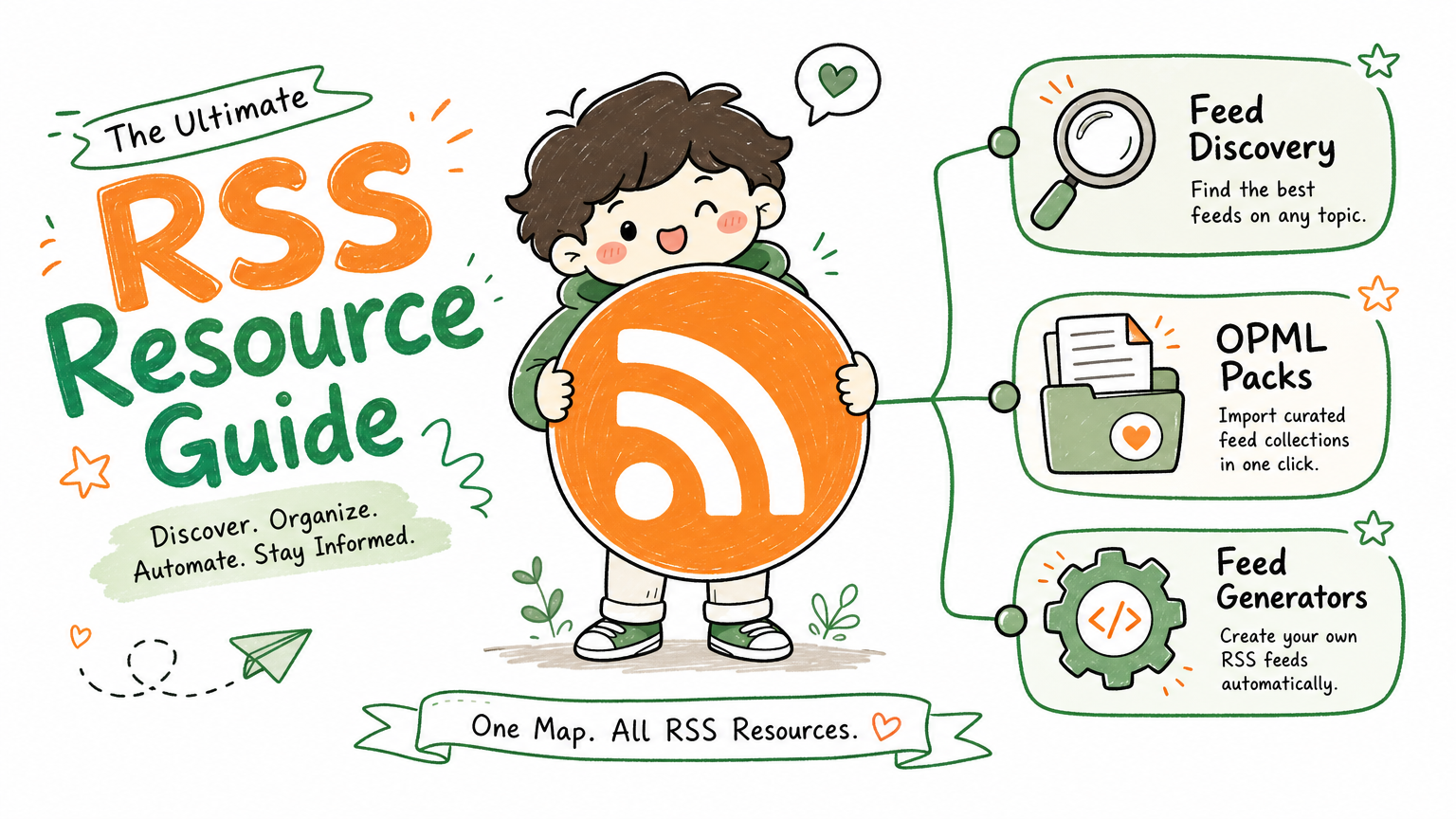
Monitoring a competitor who publishes no feed is the case every RSS guide skips. Twenty-one platforms sorted by which of three jobs they do, and the finished setup is business process automation you own outright, with no seat licence to renew.