A 30-minute video is too long for one conversation. This guide walks the 8-step Skill that locks the narration and one look, then gives each 3-minute segment to a fresh sub-agent, five at a time, and polishes the cut in an empty-context session.
The folder structure behind my AI agent team, the Herdr setup where Grok Build, Claude Code and Kimi Code work side by side, and the two live tasks from the video: an article published by voice and a three-model front-end test.
Eight folders of plain Markdown, a CLAUDE.md index in each, and seven prompts that make your agent interview you. Every prompt, template and command from the video, in order.
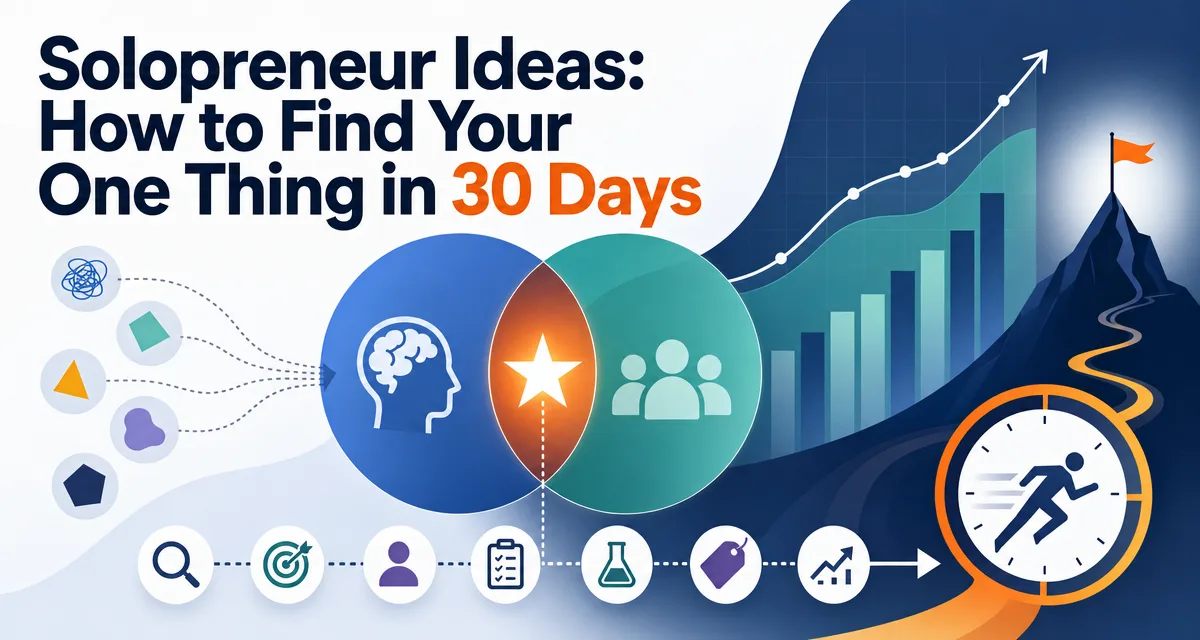
Solopreneur Ideas: How to Find Your One Thing in 30 Days
Five ideas in a notes app for three months and nothing shipped is a picking problem, not an idea problem. Here is the framework that breaks the tie: two circles, six categories of small business idea that actually earn, a seven-step market test, and a 30-day validation sprint with eight AI prompts.
Most "solopreneur ideas" lists give you fifty options, not a decision. The picking is the bottleneck, not the brainstorming
Below: a two-circle picking framework, a six-category map, a seven-step market test, a 30-day validation sprint, and 8 Claude Code prompts designed to execute the whole thing
For non-technical people. Most examples are writers, coaches, designers, and operators, not engineers
If you've been stuck more than a month picking between multiple decent ideas, this is for you
In one week, three different people asked a marketing consultant the same question -- so what do you actually do? -- and got three different answers. A retainer. A course. A vendor directory. None of them were wrong, and that was the problem: an operator who answers that question differently every time cannot be referred, quoted, or found. The bottleneck is not a shortage of ideas. It is that nothing forces a decision between the decent ones. What follows is the deciding machinery -- two circles, six categories, a seven-step market test -- and a 30-day sprint that ends with one answer you can say out loud.
Most people stuck on solopreneur ideas don't have an idea problem. They have a picking problem.
The pattern is familiar: a notes app with five business ideas in it for three months. AI tools. An online course. A paid newsletter. A services agency. A curated directory. Every morning the same loop: open the app, re-read each one, maybe edit the wording, close it. By afternoon, back on Twitter watching other people ship things. The honest question, which of those five are you actually doing?, has the same honest answer every day: none.
This post is what I wish someone had handed me when I was at that stage. If the previous post made the case that one person is enough, this one is about the next question: what is the one thing you're going to do?
Who Is This For?
You've decided you want to build something on your own
You have two or more solopreneur ideas that all seem "pretty good," and you can't pick
You've been in this stuck state for more than a month
You're willing to spend the next 30 days actually testing one, not brainstorming a sixth
If you've never picked an idea before, start with Why One Person Is Enough for the macro case. If you've been stuck for over a month with multiple decent options, read on.
Is "Follow Your Passion" Enough?
The instinct most people reach for first: do what you love.
It's not wrong. It's incomplete.
Here's why "follow your passion" stalls so many would-be solopreneurs: passion alone tells you what you'd enjoy doing, never whether anyone will pay you to do it. A study of US college students
📄
found that their passions clustered heavily in sports, arts, and music
" download style="background:#333;color:#fff;padding:8px 16px;border-radius:6px;text-decoration:none;font-size:13px;white-space:nowrap">下载 PDF
, but only about 3% of jobs exist in those three fields combined. Loving tennis doesn't make you the next Serena Williams. There aren't enough seats at that table.
Cal Newport's So Good They Can't Ignore You flips the usual narrative: passion is a byproduct of mastery, not a prerequisite. You don't love a thing first and then get good at it. You get good at a thing, and somewhere along the way, you start to love it.
Everyone says follow your passion. Actually, passion is downstream of competence, and competence is what the market actually pays for. The better question isn't what do I love? but what do I have skills in that people will also pay for?
That's two circles, overlapping. The overlap is your opportunity.
The Two-Circle Model
The two-circle model is the single most useful frame for picking. Here's why: it forces you to test both halves separately before committing, instead of letting one circle (usually passion) drown out the other.
Draw two circles.
Left circle: your passions and your skills. Not just what you like, but what you've gotten good at, whether or not it's a hobby, a side thing, or part of your day job.
Right circle: what the market is willing to pay for. What people are already spending money on, right now, in the world you actually live in.
The overlap is your territory.
Written as a formula:
Passion or skill × Usefulness = Opportunity
Scott Adams, creator of Dilbert, is the textbook example. He wasn't the best illustrator in the world. He wasn't the best writer. He wasn't the funniest person. He had basic business experience. But Dilbert is the intersection of all four, each at a good enough level, applied to a specific audience (office workers). Plenty of people were better than Adams at any one of those skills. Almost nobody had the exact combination he did.
Adams calls this the "talent stack." You don't need to be the best at any one thing. You need a rare combination of skills that are each at least decent.
The Hidden Skill Set
There's a version of the two-circle model most people get wrong on the first try. They list their job title's skills on the left circle ("I'm a teacher, I can teach"). They miss that every job contains a second skill set, the one underneath the job description.
A teacher doesn't only teach. She also:
Communicates complex ideas to people at different levels
Holds the attention of a room for an hour
Designs a curriculum (which is product development)
Manages parents, peers, and administrators (which is stakeholder management)
Handles emotional situations patiently
Any of those, repackaged, can be a business. An online course creator uses the same skills. A B2B trainer uses the same skills. A corporate communications consultant uses the same skills.
Don't ask "what am I good at?" Ask "what am I good at that I've been giving away for free inside my current role?" That's usually where the real talent stack is hiding.
Sahil Lavingia's origin story for Gumroad is exactly this pattern. He was a designer at Pinterest. The skill he commercialized wasn't design, it was knowing what creative people need to sell their work, which he'd built up during years inside a creative-tools company. The job title was "designer." The real talent stack was "empathy for creators + product sense + writing."
Solopreneur Ideas in 2026: A Snapshot of the Market
The case for going solo isn't a hunch anymore, it's a measurable share of the US economy.
The most recent US Census Nonemployer Statistics, published May 2025, counted 29.8 million nonemployer businesses generating $1.7 trillion in revenue, about 6.8% of total US economic output. The July 2025 follow-up release showed nonemployers grew faster than employer businesses in nearly every year from 2012 to 2023.
Search behavior tells a parallel story. A 2026 spot check for "solopreneur ideas" mostly returns "best ideas in 2026" catalogues (SimplyBusiness, IdeaProof, StartupOwl, Ken Yarmosh, Eleken, and others), with catalogues of 23, 30, 45, 100 options.
The useful gap is a picking framework with executable prompts. That is the niche this post fills. The bottleneck isn't a shortage of solopreneur ideas, it's the absence of a repeatable way to decide. If you're stuck choosing between five "pretty good" solopreneur ideas, you don't need a sixth list, you need a method that makes the choice with data instead of opinion.
Six Kinds of Solopreneur Ideas That Actually Make Money
Once you have a sense of your talent stack, the next question is: which type of business is this a fit for? There are roughly six categories that consistently work for non-technical solopreneurs.
Back when picking a category meant reading 14 startup books, the bottleneck was time. Now AI compresses category research from weeks to one afternoon, but the picking question is the same one.
1. Information Products (Digital Content, Courses, Paid Newsletters)
Package knowledge into something you can sell repeatedly: a course, an ebook, a paid newsletter, a template library, a research service. Justin Welsh describes building a $10M+ one-person business primarily around information products on LinkedIn in his detailed 23-step breakdown of how he got there.
2026 fit: extremely high. AI accelerates content production 3-10x without replacing the underlying insight you bring. The cost structure is nearly zero.
2. Specialized Services at Premium Rates
Consulting, coaching, copywriting, specialized freelancing. The difference between a $75/hour freelancer and a $15,000/engagement consultant is framing and positioning, not talent.
2026 fit: high. AI lets one person deliver what used to take a small agency. The premium rate is justified by outcome, not hours.
Paul Jarvis, author of Company of One, is the canonical example of this category at deliberate scale. Before writing the book, he spent years as an internet consultant working with high-profile athletes (Warren Sapp, Steve Nash, Shaquille O'Neal) and brands like Yahoo, Microsoft, and Mercedes-Benz. He didn't invent consulting. He repackaged the same skill set for a more deliberate scope, then wrote down the philosophy for everyone else.
3. Drop-Shipped or Print-on-Demand Ecommerce
Design the product, outsource everything else. Printful, Printify, Shopify, Amazon FBA. Never touch inventory. Etsy is full of six- and seven-figure operations run by one person.
2026 fit: medium-high. Market is more saturated than it was in 2020, but AI helps with product research, ad copy, and design iteration.
2026 fit: medium. Requires more upfront investment and some technical collaboration, but AI is lowering the barrier quickly.
5. Rental, Royalty, and Asset Income
Real estate, stock photography, music licensing, course royalties on platforms. Build or acquire an asset once; it earns on its own schedule.
2026 fit: medium. Slow to build. Very stable once it's working.
6. Marketplaces and Curated Platforms
Directories, job boards, niche newsletters with ads, curated community platforms. Arvid Kahl's Zero to Sold is built on this pattern and has become a small industry of its own.
2026 fit: high for curators who already have an audience. Hard from scratch.
Everyone says you need an original idea. Actually, you need an original angle on a recognized pain. Originality is the marketing decision, not the product one.
What's common across all six: none require you to be an engineer, none require doing every task yourself, and none require outside capital to start. Being a solopreneur means being the only decision-maker, not the only worker.
Validating Solopreneur Ideas: A Seven-Step Market Test
Quick Check Before You Pick — A Solopreneur Ideas Filter
Before committing 30 days to one idea, run it through this six-question filter:
[ ] Can you name one specific person who would pay for this? (not "professionals", but "Sarah, 35, freelance UX designer in Berlin")
[ ] Have you personally seen 3+ people complain about this exact problem in the last 30 days? (not "I think people might want this")
[ ] Does the smallest version break even with $0/month in tools and 5 hours/week of your time?
[ ] Is there an existing competitor you could become a sharper version of? (different and better, not cheaper)
[ ] Can you describe the offer in one sentence using a benefit, not a feature?
[ ] If 0 people pre-buy in 30 days, are you willing to kill it cleanly?
Check 5+ of 6 → sprint-worthy. 4 or fewer → refine the offer first.
So you have a direction. The instinct now is to build the product. Resist that instinct. Build validation first, product second.
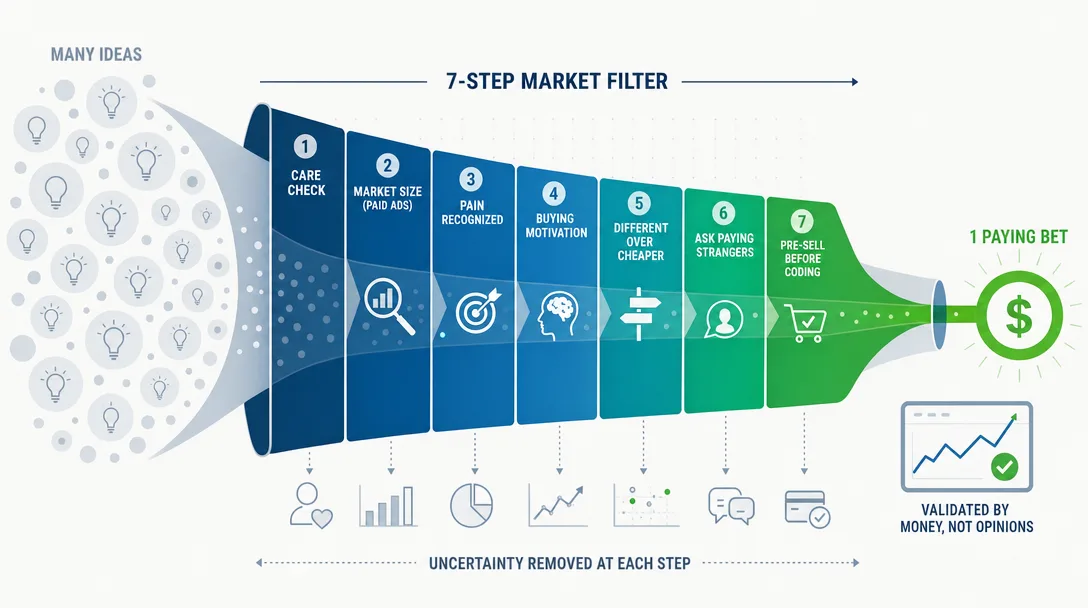
A compressed version of a market-test method that works for solo operators:
1. Confirm you actually care
You have to be willing to work on this for 2+ years through plateaus. If you're not, it won't last. But "passion" alone isn't enough, see above.
2. Confirm the market is at least medium-sized
Cheap test: search your target term on Google. Are there ads on the results page? Ads mean someone's paying to get in front of this audience, which means there's money there. No ads at all in a mature market is usually a bad sign.
3. Target a recognized pain
Selling to someone who already knows they have a problem and is actively looking for a solution is 10x easier than selling to someone you need to first convince they have a problem.
4. Understand the actual buying motivation
Almost all purchases solve a deep pain or a deep desire. People don't buy luxury watches for timekeeping; they buy status, belonging, self-image. Pain-relief usually sells better than desire-fulfillment. Pain is urgent. Desire is optional.
5. Be different *and* better, not cheaper
Competing on price is a race to the bottom. One-person businesses can't win it; they don't have the volume. Differentiate on quality, positioning, audience, or delivery, never on price alone.
6. Ask the right people, not your friends
"What do you think of this idea?" asked to your brother is worthless. Build one clear customer profile, the specific person most likely to pay for this thing, and talk to five of them in depth. What do they currently do about this problem? What would they pay to avoid it? What would make them switch?
7. Pre-sell to a small group
Build a minimum version. Offer it to 5-10 target customers for free or discounted in exchange for honest feedback and a case study. If no one wants the minimum version, no one will want the full one.
The underlying logic of all seven steps: sell first, build second. Pre-selling a service before it exists, then using the deposit to fund the build, is a well-documented pattern in the indie founder community. The sequence forces a market answer before forcing a build cost.
The pre-sale email template, distilled from indie founder threads:
Subject: Quick favor — would you actually pay for this?

Hi [name],

You mentioned [specific problem they have] last [month/conversation].
I'm building [thing] to solve exactly that for [specific niche].

Here's the rough version: [link to one-page sales doc / Notion / Carrd]

I'm not selling yet — I'm trying to figure out if 5 people would pay
$X for the v1 before I finish building.

Would you be one of the first 5? If yes: [Stripe link / Calendly].
If no but you'd be interested at a different price/scope: tell me
what would change your mind.

Either way, thanks for the original conversation.
The hard rule: this email goes only to people who already mentioned the specific problem. Cold-pitching it to your network produces near-zero yeses. Sending it to people you've talked to about the problem in the last 60 days produces meaningful reply rates and a small but real conversion to pre-orders, depending on niche.
The One-Page Solopreneur Business Plan
You don't need a 40-page document. You need three things on one page.
Element
The question it answers
One product or service
What are you selling?
One target audience
Who is paying?
One delivery / payment method
How does money flow in?
Plus a one-sentence mission:
I help [customer] achieve [core benefit / outcome].
For a dog-walking service: "I help busy owners feel calm when they can't be there for their dog." Notice that's not "I walk dogs"; that's the function. "Feel calm" is the benefit. Customers don't buy your actions; they buy the outcome your actions produce.
For a knit hat pattern: "I help people experience the joy of making something with their hands." Not "a PDF with knitting instructions."
Functions vs. benefits is the single most common business-writing error. Every landing page, every social post, every email should lead with the benefit. Train yourself to ask, "yes, but what does this do for them?"
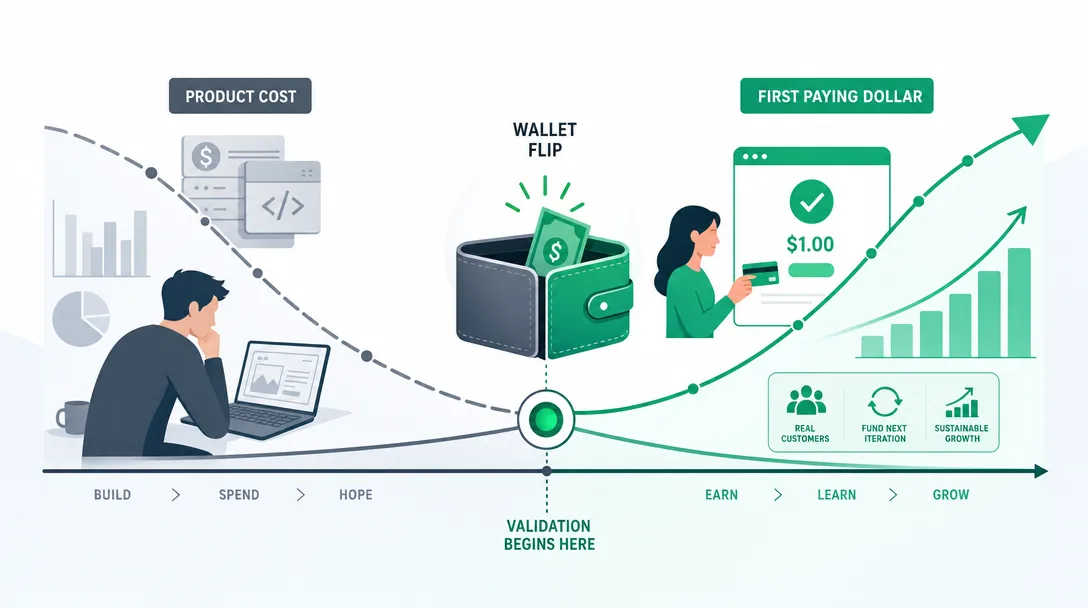
Start with Minimum Viable Profit, Not Minimum Viable Product
The standard advice: build an MVP, a minimum viable product. For solopreneurs, there's a harder-edged version: minimum viable profit.
A product can lose money. Profit can't. Here's why this swap matters more than the brand of your stack: defining the smallest version of your business that breaks even compresses your timeline far below the VC-style "we'll make it up in volume."
The mental flip is from "your wallet" to "their wallet." Before validation, you spend money to find out if anyone wants the thing. After: customers spend money to tell you they do. The first $1 in is the only data point that matters.
A common trap before this lesson lands: wiring together a paid stack (Carrd + ConvertKit + Stripe + Notion) for every idea you want to test. The SaaS bills get ridiculous for ideas you kill in week two. A single Carrd page plus a free Tally form does the same job at $0/month, with the paid stack added only after the first paying customer.
Two classic minimum-viable-profit examples:
Crew (later Unsplash) started as a single-page website with a form, manually matching companies to designers and developers. No software. No automation. They built the tech only after they had paying customers.
Derek Sivers' CDBaby started with about $500 in startup costs. Month one: $300 in revenue. Month two: $700. Profitable in month two. Sold ten years later for $22M.
The pattern: don't wait for the product to be polished. Get to the first paying customer as fast as possible.
Be the Biggest Fish in a Small Pond
Solopreneurs have one unfair advantage over big companies: you can serve markets too small for them to care about.
In a niche market, you don't compete with everyone. You only need to be the best in a very small pond. Niche isn't a limitation, it's a moat. Trust builds faster inside a narrow audience. Expertise reads as authority more clearly. Word of mouth travels faster in a tight community than in a broad one.
The phrase "the riches are in the niches" is a cliché for a reason. Justin Welsh is specifically a LinkedIn solopreneur educator. Arvid Kahl is specifically a bootstrapped SaaS coach. Pieter Levels is specifically for digital nomads. None of them are trying to be for everyone. All of them make more than the generalists.
The 30-Day Solopreneur Ideas Validation Sprint
A compressed sprint that works for solo operators on a tight runway.
Week 1, Define
Day 1-2: Write down your top three solopreneur ideas, one paragraph each
Day 3-4: For each, answer: who is it for? what's the benefit? how do they pay?
Day 5-7: Pick one. Commit in writing. You can come back to the others later, you can't validate three at once
Week 2, Research
Day 8-10: Find the 10 closest competitors. What do they charge? What are their reviews? Where do they fall short?
Day 11-14: Talk to 5 potential customers. Not your friends. Find them in the communities where they actually hang out. Ask what they currently do to solve the problem, not what they think of your idea
Week 3, Minimum Offer
Day 15-18: Build the smallest testable version. Not a product, a landing page, a manual service, a pre-sale page
Day 19-21: Put it in front of 10 people. Ask for money or a binding commitment (not a vague "sounds interesting")
Week 4, Decide
Day 22-26: Iterate based on the 10 conversations. Refine the offer, not the delivery
Day 27-30: Make a decision:
2+ people paid or pre-committed → this is the one, scale it
1 person paid, others were polite → refine the offer, run another 2-week test
0 paid, all were polite → kill this idea, pick another from week 1
The goal isn't success in 30 days. The goal is a clean go / iterate / kill decision in 30 days. Most ideas fail this test. That's fine, failing in 30 days is a feature, not a bug. Failing in 30 days is how you get to the idea that does work within a reasonable timeframe.
Hands-On: 8 Claude Code Prompts for Solopreneur Ideas Validation
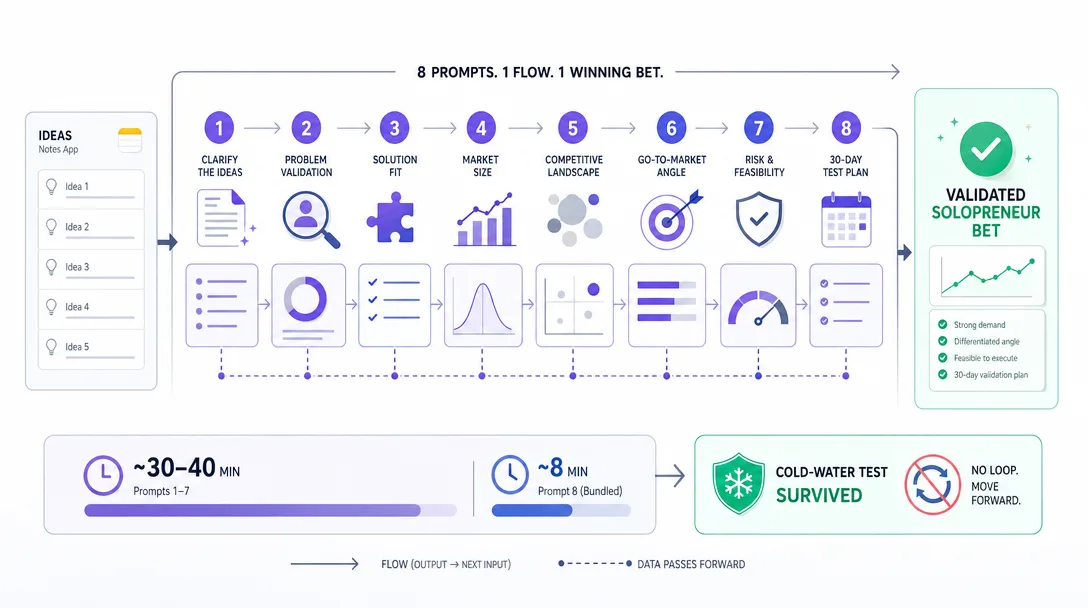
Theory done. The rest of this post is the executable layer: 8 Claude Code prompts that take any solopreneur ideas list from "five things in a notes app" to "one thing with a 30-day validation plan."
Run them in order. Each prompt's output becomes the input for the next, so by prompt 8 you have a complete validation kit, not eight disconnected docs. Total run time: about 30-40 minutes for prompts 1-7 individually, ~8 minutes for the bundled prompt 8.
Before this prompt chain, picking between three "pretty good" options is three weeks of stuck. After running prompts 1-3 in order, the picking decision survives the cold-water test by day 4 — fast enough that you spend the rest of the month testing the choice instead of arguing with yourself about it.
If you don't use Claude Code yet, skip to the FAQ. If you do, copy these prompts into a project folder named solopreneur-validation/ and run them sequentially.
Prompt 1: Skill-Market Convergence Analysis
The two-circle model, run as a structured interview by Claude Code, then output as a matrix.
I need a skill-market convergence analysis (two-circle model).

Step 1: Interview me with the following frame, one question at a time.
Wait for my answer before asking the next.

[Passion]
1. What do you spend free time learning or doing? (Not for money)
2. What topic can you talk about for an hour without notes?
3. What problems do friends bring to you first?

[Skills]
4. Which tasks at your current job do you do significantly faster than peers?
5. What unusual skill combinations do you have? (e.g., design + data analysis)
6. In the last 5 years, what skills have you self-taught to solve a problem?

[Market]
7. Among your skills, which ones have people paid you to do? (Any amount)
8. What problems do you hear people complain about in your industry that nobody is solving?

Step 2: After the interview, generate this file:
- Path: ./01-convergence-analysis.md
- Contents:
  - Passion list (3-5 items)
  - Skill list (explicit skills + hidden skills, 3-5 each)
  - Market opportunity list (3-5 items)
  - Convergence matrix: a table showing each skill × each market opportunity, fit rated High/Medium/Low
  - Top 3 convergence points: highest combined score

Step 3: For each Top 3 convergence point, write a 100-word elevator pitch in this format:
"I help [customer] do/achieve [core benefit]"
The key is one question at a time. Don't dump all 8 questions at once. People answer single questions far better than they answer questionnaires. CC will wait for each reply, then synthesize.
The most common surprise this prompt produces: a hidden skill set buried under the wrong job title. Watch for that in step 1 ("explicit + hidden skills, 3-5 each") and force CC to keep digging if it stays surface-level.
Prompt 2: Six-Category Fit Assessment
Take the convergence output. Map it to the six business types.
Read ./01-convergence-analysis.md.

For each of my Top 3 convergence points, score the fit against the six solopreneur business categories:

1. Information products (courses, paid newsletters, ebooks)
2. Specialized services (consulting, coaching, freelancing at premium rates)
3. Drop-shipped or print-on-demand ecommerce
4. Specialized SaaS for a narrow audience
5. Rental / royalty / asset income (real estate, stock media, royalties)
6. Marketplaces and curated platforms

Output: ./02-category-fit.md

Format:
- Per convergence point, a table with 6 rows showing category fit (★☆☆ / ★★☆ / ★★★)
- Each rating gets a one-sentence reason
- Final recommendation: best 1-2 categories + a specific direction inside that category
- A 200-word "why this direction" justification, citing my skill analysis
The output should narrow five fuzzy options to one specific direction inside a specific category. If it's still vague after this prompt, the convergence analysis was vague. Go back to prompt 1.
Prompt 3: One-Page Business Plan
Turn the direction into something you can actually act on.
Read ./01-convergence-analysis.md and ./02-category-fit.md.

Generate a one-page business plan for the recommended direction.

Output: ./03-one-page-business-plan.md

Structure:
## Mission (one sentence, ≤140 chars)
"I help [customer] do/achieve [core benefit]"
## Three pillars
| Element | Specifics |
|---------|-----------|
| Product / service | What you sell, in concrete form |
| Target customer | Who buys, with a persona-level description |
| Payment method | Pricing model + payment rail |

## Core value proposition
- Primary benefit
- Secondary benefit
- Differentiation: why pick you over alternatives?

## Likely objections
List 3 most likely customer objections, with response strategy

## First-month action list
≤ 5 concrete tasks, each with estimated time and budget

Finally, do a "cold-water test": call out 2-3 biggest risks and how to mitigate them.
The cold-water test is the most useful section. CC is too eager to please by default. Forcing it to identify failure modes saves you from a one-month detour.
Prompt 4: Competitor + Niche Validation
You know what you're doing. Now look at who else is already doing it.
Read ./03-one-page-business-plan.md.

Run competitor analysis and niche validation for my direction.

Step 1: Competitor search
Use the Brave Search MCP to search for existing competitors (at least 3 different keyword variations). Collect:
- Competitor name, URL, core product
- Pricing model
- Most common complaints in user reviews / Twitter / Reddit threads

Step 2: Niche positioning analysis
Output: ./04-niche-validation.md

## Competitor map
Table comparing 5-10 competitors (name / pricing / core feature / main weakness)

## Market gap analysis
Based on competitor weaknesses, identify 3 unmet needs

## Niche positioning recommendation
Using minimum-viable-profit thinking, recommend a niche small enough to validate in 30 days

## Search trend validation
Use Google Trends + Exploding Topics to check the direction's keyword trend (growing / flat / declining)
## Final verdict
Use a traffic-light system (🔴 🟡 🟢) to evaluate viability, with reasoning
Watch for two failure modes: (1) CC inventing competitors that don't exist, always check the URLs by clicking through; (2) CC marking everything 🟢, force it to flag at least one 🔴 or 🟡.
Prompt 5: Fresh Market Data Verification
Use real numbers as a sanity check on the direction.
My direction is [paste from prompt 3].

Run a fresh market data search:

1. Use Brave Search MCP for the following (at least 3 searches):
   - "[direction] market size 2025 2026"
   - "[direction] solopreneur revenue case studies"
   - "[direction] trends growth"

2. Output: ./05-market-data.md
   - Market size (specific number if available)
   - Growth trend (rising / flat / declining, with source date)
   - At least 3 successful solopreneurs in this space (name + revenue + URL)
   - Key data points table (data / source / date)
   - Positioning recommendation given these numbers

All data must cite a source URL and date. Mark "unverified" anything you can't find a source for.
The "unverified" flag is non-negotiable. Skip it and CC will hallucinate market size numbers that look plausible but trace back to nothing.
Prompt 6: Waitlist Landing Page Copy
Numbers in hand, write the page that turns them into signups.
Read ./03-one-page-business-plan.md.

Design copy for a waitlist landing page.

Output: ./06-landing-page-copy.md

Structure:
## Headline
One sentence, ≤15 words: who you help with what problem

## Subheadline
Expand the value proposition (1-2 sentences)

## Three core benefits
Each benefit framed as outcome, not feature ("you get X" not "we provide X")

## Social proof slots
Design 3 placeholder slots (even if you don't have data yet, plan what goes there)

## CTA button copy
Not "Submit". Use action-oriented copy ("Join the free waitlist", "Get the early access deal")

## Objection handling
Below the CTA, 3 mini-FAQ items addressing top concerns

Also: a 200-word Twitter/LinkedIn post to drive traffic to the waitlist.
Two anti-patterns CC defaults to: (1) "Revolutionize your X" headlines, cut them; (2) "Join thousands of users" social proof when you have zero, replace with "be among the first 50 to test".
Prompt 7: 30-Day MVP Validation Plan
All the analysis converges into a daily-executable plan.
Read all of:
- ./01-convergence-analysis.md
- ./02-category-fit.md
- ./03-one-page-business-plan.md
- ./04-niche-validation.md
- ./05-market-data.md
- ./06-landing-page-copy.md

Generate a 30-day MVP validation plan.

Output: ./07-mvp-validation-plan.md

Structure:
## Validation goals
3 yes/no questions to answer in 30 days

## Week 1: research + conversations
- Daily task list
- 10 DM target audience definition + message template
- Communities to post in (Reddit, Discord, X, LinkedIn: specific subs/servers)

## Week 2: build + launch
- Landing page launch (tool choice + key metrics)
- Waitlist open
- Social plan (what to post, where, daily)

## Week 3: deliver + charge
- Minimum product/service version
- First-5-customers special offer
- Payment setup

## Week 4: review + decide
- Data collection checklist (which numbers to track)
- Go/No-Go decision matrix
- If Go: next steps
- If No-Go: how to pivot

## Budget
Total 30-day budget, ≤ $70

## Risk register
Top 3 risks + mitigation
The Go/No-Go decision matrix at week 4 is the whole point. Without it, the offer keeps getting adjusted for another month, and another, and another. The matrix forces a clean kill or commit. The risk register is the second most important section: when CC's cold-water test calls out an admin risk (payment processor setup time, tax registration, contract templates), don't skip it just because it's not exciting. Admin risks have a way of eating week 4.
Prompt 8: Bundled Bootstrap Prompt
Time-boxed mode. One prompt that runs the entire pipeline end-to-end.
I'm starting a solopreneur MVP validation. Here's my baseline:

- My skills: [list 3-5]
- Areas of interest: [list 1-2]
- Target customer (rough): [describe]
- Time available: [hours/week]
- Startup budget: [amount]

Generate the following files in ./solopreneur-validation/ in one pass:

1. convergence-analysis.md: skill-market convergence
2. category-fit.md: six-category fit assessment
3. one-page-business-plan.md: one-page plan
4. landing-page-copy.md: landing page copy
5. mvp-30-day-plan.md: 30-day validation plan

Each file builds on the previous one. Maintain logical continuity throughout.

Frameworks to use:
- Two-circle model
- Six-category map
- Minimum-viable-profit thinking
- Seven-step market test

After generating, output a summary: one sentence per file's core conclusion + the single most important first action this week.
The bundled prompt is the express lane. If you have time, do prompts 1-7 individually, your own answers to each interview question are worth more than CC's auto-fills. The bundled version is for when you're traveling or stuck and need to break inertia in one sitting.
Setup time for the chain: about 10 minutes to copy these into a project. Run time per pass: about 30 minutes for prompts 1-7 individually, about 8 minutes for the bundled prompt 8. Prompts 1-3 typically run once per direction; prompts 4-7 once per direction seriously being tested.
If you want the same chain but tuned for Claude Code Skills specifically (saving these as reusable Skills instead of pasted prompts), the Claude Code tag is the index.
Ready-to-Use Prompt
Turn a pile of half-finished solopreneur ideas into one validated, paid bet — via a two-circle filter, a six-category fit check, a seven-step market test, and a one-page business plan.
You are a ruthless idea-selection coach. I have multiple solopreneur ideas and I'm stuck choosing. Apply the framework below, force me down to ONE validated bet, then output a one-page business plan. No hedging, no "they're all good."

INPUTS:
- My ideas (2-6): [YOUR_IDEAS_HERE]
- My skills/edge: [YOUR_SKILLS_HERE]
- Hours/week available: [YOUR_HOURS_PER_WEEK_HERE]
- Starting capital: [YOUR_STARTING_CAPITAL_HERE]

STEP 1 — TWO-CIRCLE FILTER (score each idea 1-5 on both):
- Circle A "Unfair advantage": do my skills put me in the top 10% here?
- Circle B "Payable demand": will someone pay for this THIS MONTH?
Keep only ideas scoring >=4 on BOTH. Kill the rest.

STEP 2 — SIX-CATEGORY FIT. Sort each survivor into exactly one of: (1) Services/done-for-you, (2) Coaching/consulting, (3) Digital products, (4) Courses/cohorts, (5) Content/media, (6) Software/community. Any idea that fits no category is vanity — kill it.

STEP 3 — SEVEN-STEP MARKET TEST (run on the top 1-2):
1. Specific customer (one persona + a real example)
2. Where they already pay — name 3 competitors
3. Demand signal (search volume, forums, existing spend)
4. Price test — what I charge + a precedent at that price
5. Five customer conversations — write one opening question
6. Pre-sell test — landing page hook + the ask
7. Kill criterion — the number that means stop

STEP 4 — CONVERGE. Pick the ONE idea. One sentence why. Name what you're killing.

OUTPUT (markdown):
A. Survivors table: Idea | Circle A | Circle B | Category | Keep/Kill
B. Seven-step test for the winner
C. ONE-PAGE BUSINESS PLAN:
   - Mission (one sentence, <=140 chars)
   - Three pillars
   - Core value proposition
   - Top 3 likely objections + rebuttal
   - First-month action list (target: Minimum Viable Profit — first dollar in, not first feature shipped)
Be concrete and specific. If an input is missing, ask once, then assume.
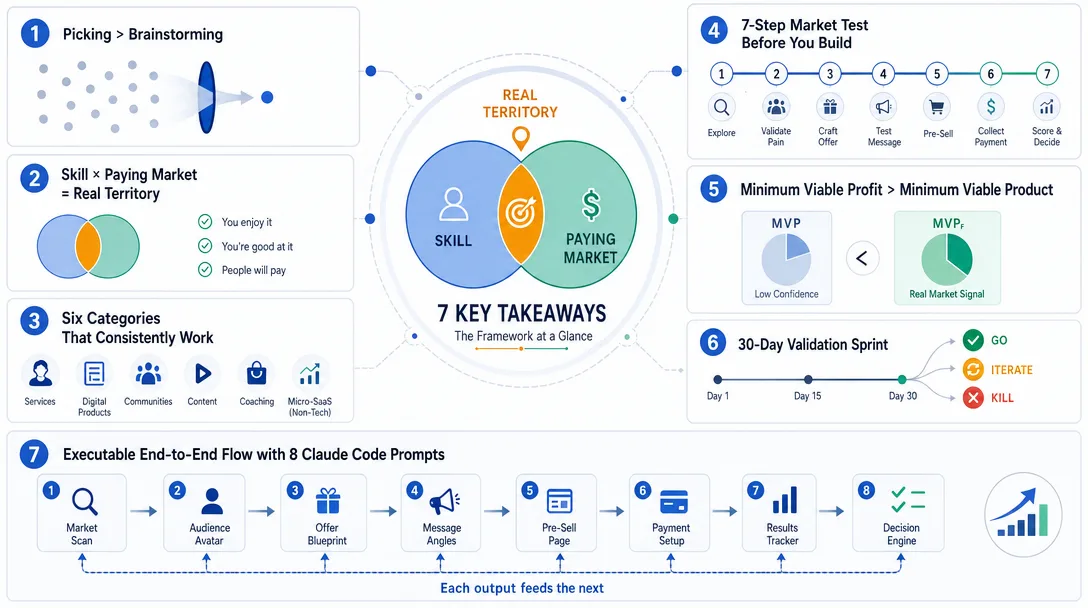
Most solopreneurs don't have an idea problem, they have a picking problem. Five "pretty good" ideas in a notes app = three months of stuck
The two-circle model: overlap between skills AND what the market will pay for. "Follow your passion" alone is incomplete
Six categories that work for non-technical solopreneurs: information products, services, ecommerce, SaaS, royalty income, curation
Seven-step market test before building: care, market size, recognized pain, buying motivation, differentiation, right people, pre-sell
Minimum viable profit > minimum viable product. Ship the smallest thing that generates the first dollar, then iterate from real data
30-day validation sprint with a clean Go/Iterate/Kill decision at day 30
8 Claude Code prompts to execute the whole chain end-to-end. Run them in order; the output of each becomes input for the next
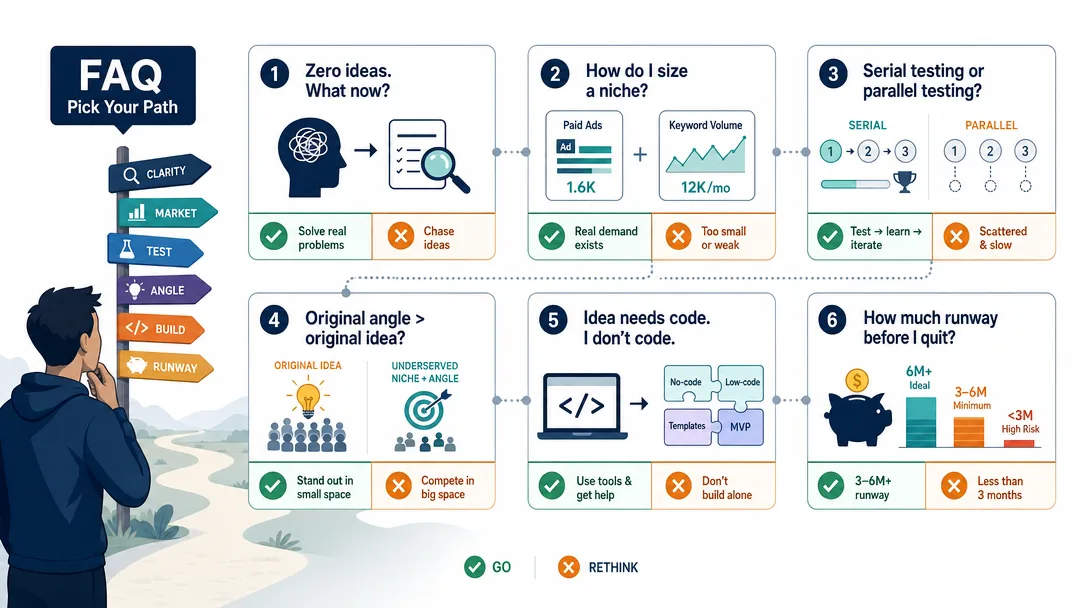
What questions should readers ask about Solopreneur Ideas?
What if I have zero solopreneur ideas instead of too many?
Run the hidden skill set exercise. Write down your current job title. Under it, list everything you actually do day-to-day, not the job description, the real tasks. Half of those are transferable skills that could be packaged into a business. Communicate complex things? Course creator, technical writer, consultant. Handle client relationships? Account manager as a service, boutique agency. The ideas often hide inside the role you already do.
How do I know if my solopreneur idea is "big enough"?
Cheap test: search for your niche term on Google and scroll through the ads. Ads mean advertisers are willing to pay to reach this audience, which means there's money. No ads = either too small or not commercial. A more expensive test: check keyword search volume using a tool like DataForSEO or Ahrefs. Anything with 500+ monthly searches on a commercial keyword has real potential.
Should I test multiple solopreneur ideas in parallel?
No. Serial, not parallel. Testing two ideas at once means doing a bad job of both. Pick the one you'd most regret not testing, give it a clean 30-day sprint, and kill it or commit to another 90 days. Parallel testing is what keeps people stuck in their notes app for three months.
Do I need an original solopreneur idea?
No, you need an original angle. Most successful solopreneurs solve an existing problem for an underserved niche, not an unsolved problem for everyone. Paul Jarvis didn't invent consulting. Justin Welsh didn't invent LinkedIn content. Pieter Levels didn't invent job boards. They all took something established and narrowed it to a specific audience with their own voice.
What if my solopreneur idea needs code and I don't code?
Three classic options: (1) outsource the v1 on Upwork or a no-code platform ($2K-$10K typically gets you a working MVP), (2) find a technical co-founder, though be careful with equity splits, (3) start with a non-code version of the business (a manual service, a newsletter, a consulting practice) and fund the code build from revenue later. Crew/Unsplash did #3. So did CDBaby.
A fourth option became real in 2026: build the first version with an AI coding assistant. Non-programmers using Claude Code ship small-but-real MVPs in a weekend or two, not production-grade, but enough to validate paying demand before spending $10K outsourcing. The 8 prompts in the section above are designed for exactly that path. For the broader Claude Code track, the claude-code tag is the index.
How much should I save before quitting my job?
The common rule: six months of real monthly expenses. Add: plus at least one paying customer on the new thing. Six months of savings without revenue buys a long job-hunt, not a business. Six months of savings and a first customer buys a real ramp.
What's Next?
You have the framework. You have the eight prompts. The remaining work is doing the sprint, which is not something a blog post can do for you.
Next in this series: Starting a Solopreneur Business in 2026, the first 90 days of an actual launch, covering pricing, your first customers, and the mistakes worth avoiding.
The folder structure behind my AI agent team, the Herdr setup where Grok Build, Claude Code and Kimi Code work side by side, and the two live tasks from the video: an article published by voice and a three-model front-end test.
Eight folders of plain Markdown, a CLAUDE.md index in each, and seven prompts that make your agent interview you. Every prompt, template and command from the video, in order.
Stop briefing your AI from scratch. One free folder holds your background, your rules and your voice. Eight prompts build it, no code, and any AI can read it.
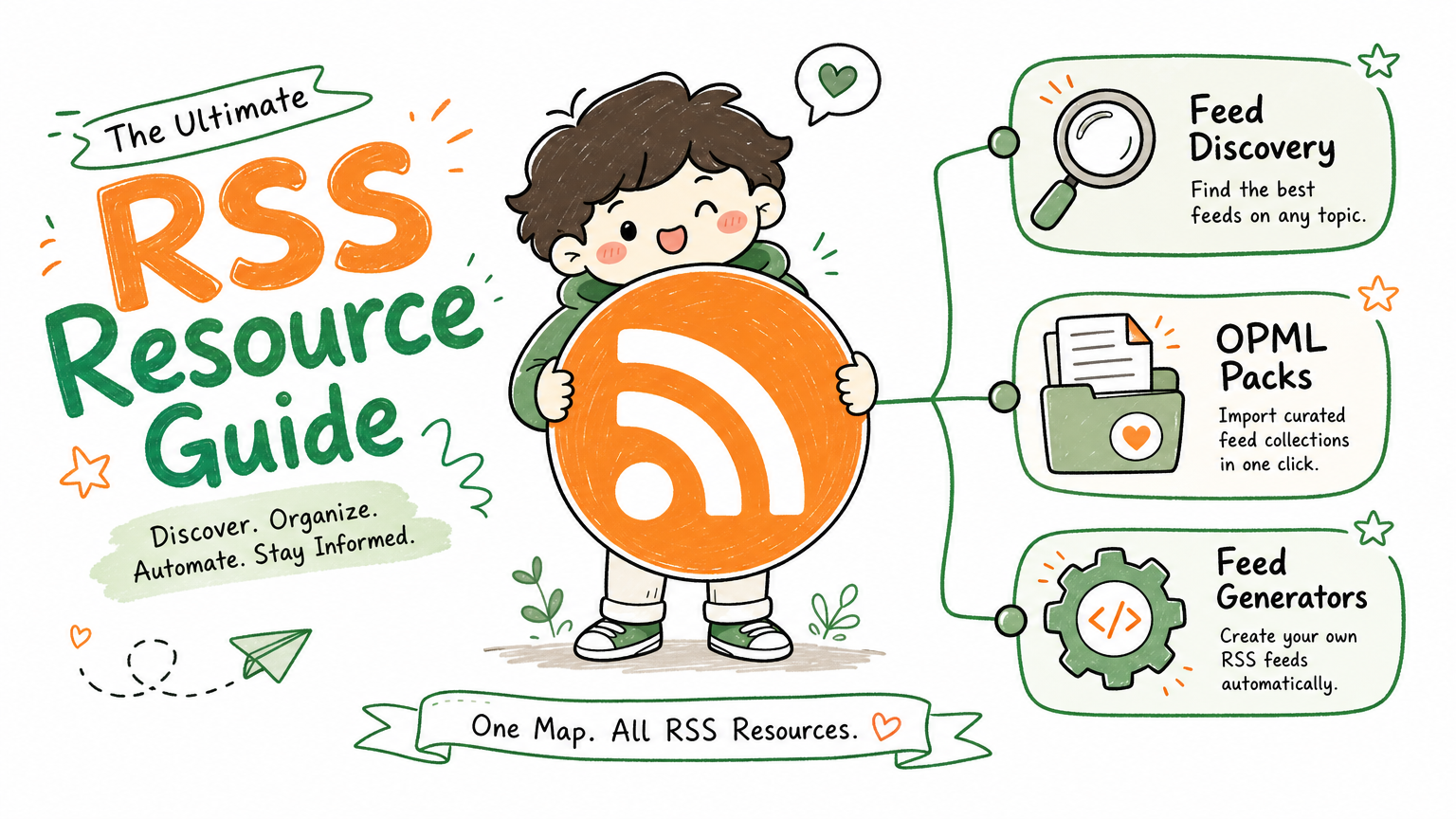
Monitoring a competitor who publishes no feed is the case every RSS guide skips. Twenty-one platforms sorted by which of three jobs they do, and the finished setup is business process automation you own outright, with no seat licence to renew.