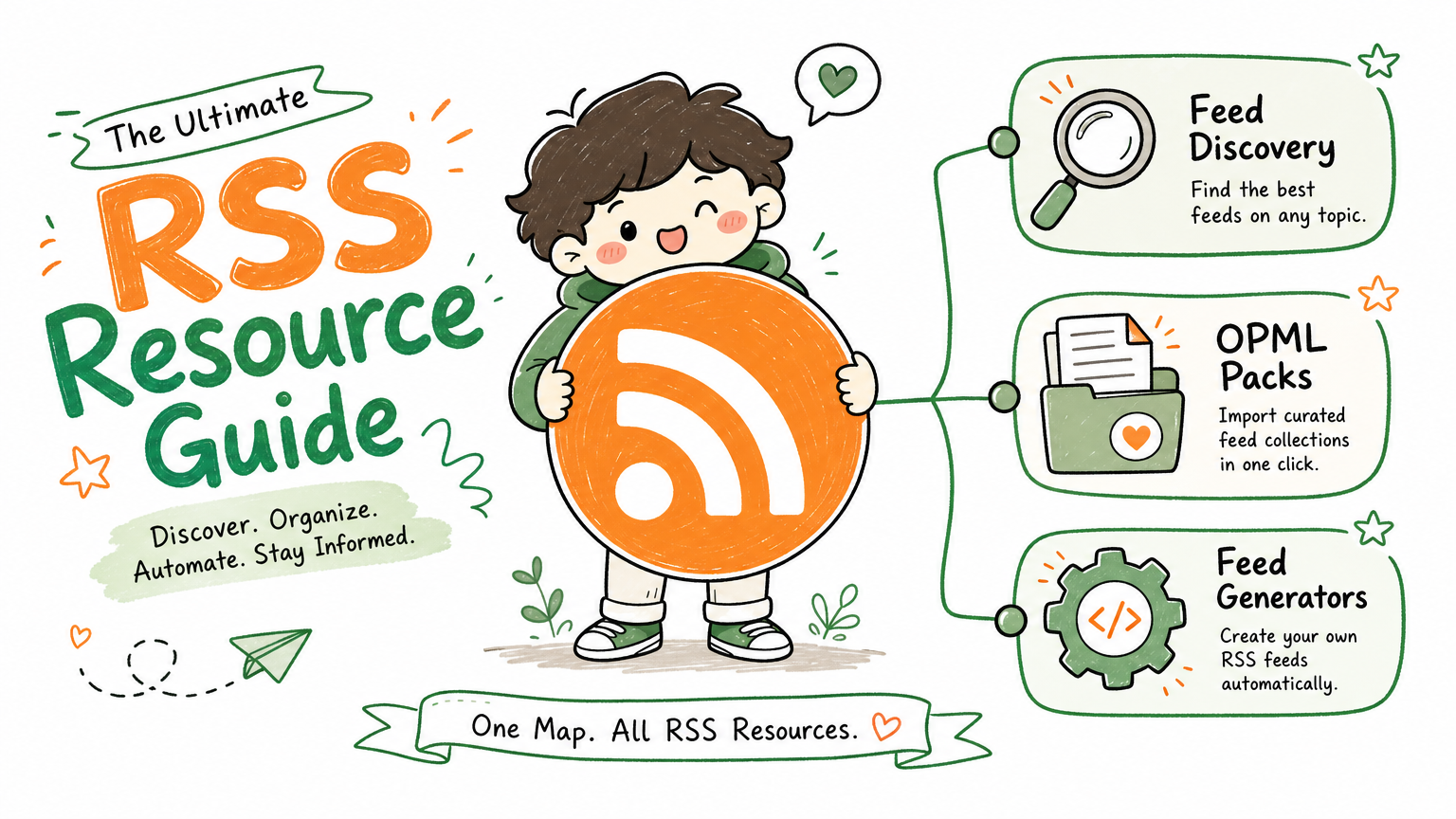
Monitoring a competitor who publishes no feed is the case every RSS guide skips. Twenty-one platforms sorted by which of three jobs they do, and the finished setup is business process automation you own outright, with no seat licence to renew.
Blaming the content is the reflex when a post underperforms, and it is usually the wrong diagnosis. A second reader decides distribution before any human sees the post, and most of what it checks is mechanical enough to automate business processes around, on five platforms at once.
Gloves on, tape measure in hand — nobody types a query. Three voice surfaces for ai automation tools (terminal, Telegram, Discord), 10 TTS and 6 STT providers compared on cost and latency, plus a setup that costs nothing.
You do not need a million followers. You need enough people who trust you, hear from you often, and buy when the fit is right. Four acquisition routes in a specific order, plus the 100-rep rule that tells a failed channel from one you quit early, which most ai for small business playbooks omit.
Your first 1,000 true fans as a solopreneur are not followers. They are people who trust you enough to pay, refer, reply, and stay.
Customer acquisition has four basic routes: warm outreach, content, cold outreach, and paid ads. Start with the first two.
A lead magnet turns attention into permission. A good one solves one narrow problem and opens the next step.
The system below gives you the acquisition map: warm start, content, cold outreach, ads later, lead magnets, story, referrals, and AI prompts.
One Tuesday for a solo recruiter: forty minutes on a post that reached 900 people and produced nothing, then twenty minutes messaging six former colleagues, which produced two calls and one paid search. Same day, same person, a 40-to-1 gap in return, and the post was still the better investment, because one of those numbers compounds and the other resets by the next Tuesday. That is the trap in ranking channels by what they returned yesterday. What follows puts them in sequence instead, with a rule separating a channel that genuinely failed from one abandoned three weeks early. Most ai for small business advice skips that distinction.
The previous article showed how to build an irresistible offer for solopreneurs. That matters because attention without an offer becomes applause. An offer without attention becomes a private document.
This piece connects them:
Where do the first buyers, subscribers, and true fans come from?
If you have posted for three months, gained 500 followers, and made zero dollars, this is for you.
If you spent money on ads and attracted freebie hunters, this is for you.
If you are publishing on five platforms and still cannot tell where customers come from, this is for you.
We start with a famous idea: 1,000 true fans.
Then we make it operational.
First 1,000 True Fans as a Solopreneur in 2026: A Market Snapshot
Kevin Kelly's 1,000 True Fans essay is approaching its 18th year (published 2008). The math still works. The execution layer is now louder than the core idea.
A 2026 spot check for "1000 true fans solopreneur" mostly returns broad takes on Kelly's essay (Carl Kruse, Studio Layer One, Marvelous, SendOwl, a16z 100 True Fans and others). The common pattern is principle-first. Some refresh it for the creator economy.
The useful gap is a four-route acquisition system grounded in named operator data: Paul Graham's Do Things That Don't Scale, Stripe Collison Installation, Airbnb NYC photography, Reichheld 5-25-95 retention math, the Superhuman waitlist counter-experiment. The gap is not more 1000-fans theory. The gap is the acquisition system that turns the math into a Tuesday-morning to-do list. That is what this guide is.
1,000 true fans: the number that changed solopreneur business
Everyone says you need a million followers to make a living. Actually, Kevin Kelly's 1,000 True Fans essay showed that 1,000 buyers paying you $100/year each equals a six-figure business with no algorithm dependency.
Here is why most solopreneurs miss it: they confuse audience size with audience commitment, and most platforms reward the first one.
In 2008, Kevin Kelly published 1,000 True Fans, an essay that became a reference point for creators, makers, musicians, writers, and solo businesses.
The idea is simple:
A creator does not need millions of casual followers. A creator can make a living with a smaller group of true fans who buy consistently.
The classic math:
1,000 true fans x $100/year = $100,000/year
The exact numbers matter less than the mental shift.
You do not need everyone.
You need enough of the right people.
A true fan is not someone who clicked follow once. A true fan is someone who:
repeatedly pays attention,
trusts your judgment,
saves your work,
replies or asks questions,
shares you with the right people,
buys when the offer fits,
stays long enough for the relationship to compound.
The Reddit discussions around the idea keep repeating one useful correction: a true fan is not a follower, listener, or casual viewer. It is a much higher bar.
That correction matters because solopreneurs often chase the wrong number.
The 100 true fans version: depth instead of reach
The internet changed since 2008.
For many creators, the number can be smaller if the offer is deeper.
The "100 true fans" version, associated with Li Jin's work on the passion economy, reframes the model:
100 true fans x $1,000/year = $100,000/year
That does not mean "charge high and find 100 rich people."
It means offer depth changes audience math.
Model
Fan count
Annual value per fan
Annual revenue
Broad creator model
1,000
$100
$100,000
Deep expertise model
100
$1,000
$100,000
Premium service model
20
$5,000
$100,000
A solopreneur should not worship the number 1,000.
The real question is:
What level of trust and value do I need for my business model?
If you sell a $19 template, you need many buyers. If you sell a $2,000 implementation sprint, you need fewer but much more qualified buyers. If you sell a membership, you need retention and repeated usefulness.
Audience size and offer depth must match.
A useful contemporary example: per Justin Welsh's own $10M Journey newsletter (founder-reported), his solo business has crossed $10M in cumulative revenue over 5 years 9 months with two evergreen offers ($150 and $200) sitting on roughly 750,000 LinkedIn followers and 175,000+ newsletter subscribers, but the real engine is a much smaller subset of repeat buyers and referrers. The audience is large; the true-fan core that funds the business is far smaller. Designjoy goes the other way: charging $4,995/month (regular $5,995) per client and reportedly clearing roughly $3.1M in 2024 revenue with zero employees per Latka's tracker. Two opposite strategies, same lesson — the math has to match the offer.
Solopreneur acquisition has four routes
If you already have an audience and a clear offer, skip to the warm-outreach section. If you are starting from zero, the four routes below run in order: warm first, content second, cold third, paid fourth.
Back when reaching 1,000 fans meant cold-emailing 100K people, the bottleneck was list size. Now AI compresses outreach personalization to seconds, but the trust question is the same one: will the next 100 people I reach feel served, or pitched.
Before this four-route order, you spend $5K on ads against an offer no warm contact has bought. After: warm contacts validate the offer first, and the ad spend gets spent on a proven message.
Customer acquisition looks complicated because the channels keep changing.
At the first-principles level, there are only four routes.
There are two kinds of people:
people who already know you,
people who do not.
There are two ways to reach them:
one to one,
one to many.
That creates the full map:
One to one
One to many
People who know you
Warm outreach
Content
People who do not know you
Cold outreach
Paid ads
That is the acquisition system.
No magic fifth route.
The order matters:
Warm outreach.
Content.
Cold outreach.
Paid ads later.
Most beginners want to skip to ads because ads feel scalable. That is backwards. Ads amplify a message. They do not fix an unclear offer, weak landing page, or audience mismatch.
For a solopreneur, warm outreach and content are usually the right starting point because they are cheap, personal, and fast enough to generate real feedback.
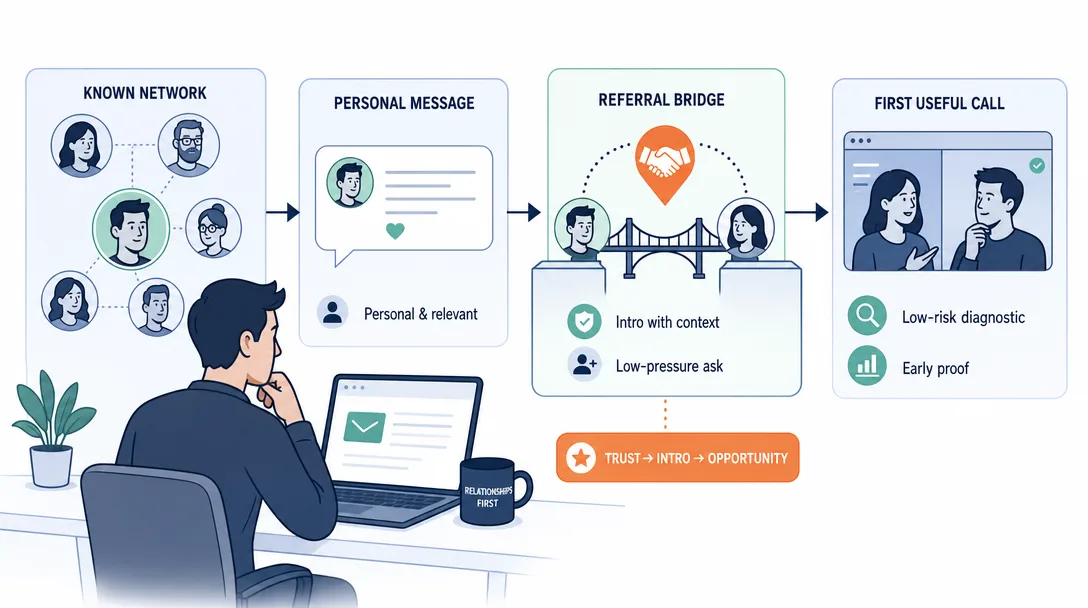
Warm outreach: start with people who already know you
Warm outreach does not mean spamming your friends.
It means letting your existing network know what problem you are working on and asking for introductions to people who might have that problem.
The key phrase is:
Do you know anyone who is struggling with this?
Not:
Buy my thing.
Warm outreach works because trust already exists. You are not starting from zero.
Use this ten-step version:
Step
Action
Note
1
Build a contact list
Phone, email, LinkedIn, communities, old clients
2
Segment by relationship
Strong ties first
3
Write a personal opener
Mention something real
4
State the problem
One sentence
5
Ask for a referral
"Do you know anyone..."
6
Offer a low-risk first step
Free diagnostic, short call, sample audit
7
Collect language
Write down how people describe the pain
8
Ask for permission to follow up
Do not disappear
9
Turn early wins into proof
With consent
10
Start charging
After the first proof, stop hiding
Example:
Hey Jordan, I saw your post about moving from freelance projects to productized consulting.
I'm testing a small offer audit for solo consultants whose landing pages do not explain the offer clearly.
Do you know anyone dealing with that?
I'm doing the first 5 teardowns at no charge in exchange for honest feedback.
That is specific, low pressure, and referral-friendly.
The hardest part is emotional.
You may feel like you are bothering people.
The reframe:
If your work genuinely helps a real problem, hiding it from people who trust you is not noble. It is avoidance.
This kind of unscalable, founder-led outreach has a respectable lineage. Paul Graham's 2013 essay "Do Things That Don't Scale" describes how the Stripe founders pioneered what YC calls the "Collison installation" when anyone agreed to try Stripe, the brothers would say "Right then, give me your laptop" and set them up on the spot. After Graham challenged Brian Chesky with "Your users are in New York and you're here in Mountain View, what are you still doing here?", the Airbnb founders flew to NYC and went door to door photographing hosts' apartments themselves. Weekly revenue doubled within a week, and the door-knocking later scaled into a network of 2,000 freelance photographers. Warm outreach is the solo-founder version of the same move.
Content: one-to-many trust at scale
Warm outreach is direct, but it does not scale forever.
Content lets one piece reach many people.
For acquisition, content has three jobs:
Make the right people feel seen.
Demonstrate useful judgment.
Move them to a permission asset: email, membership, community, or direct relationship.
Every effective piece needs three parts:
Part
Job
Hook
Stop the right person
Retain
Keep the promise alive
Reward
Make the time feel worth it
A hook is not clickbait. It is relevance.
Weak:
How to build an audience.
Stronger:
You do not have an audience problem. You have a trust-transfer problem.
The second line attracts fewer people, but the right people.
Your best content sources are already around you:
mistakes you made,
customer questions,
failed experiments,
before/after examples,
buyer objections,
tools you deleted,
decisions you changed,
small wins readers can copy.
For solopreneurs, past experience is often the strongest content source because it is hard to fake. Anyone can write "10 tips." Only you can write "I tried this for six weeks and here is what broke."
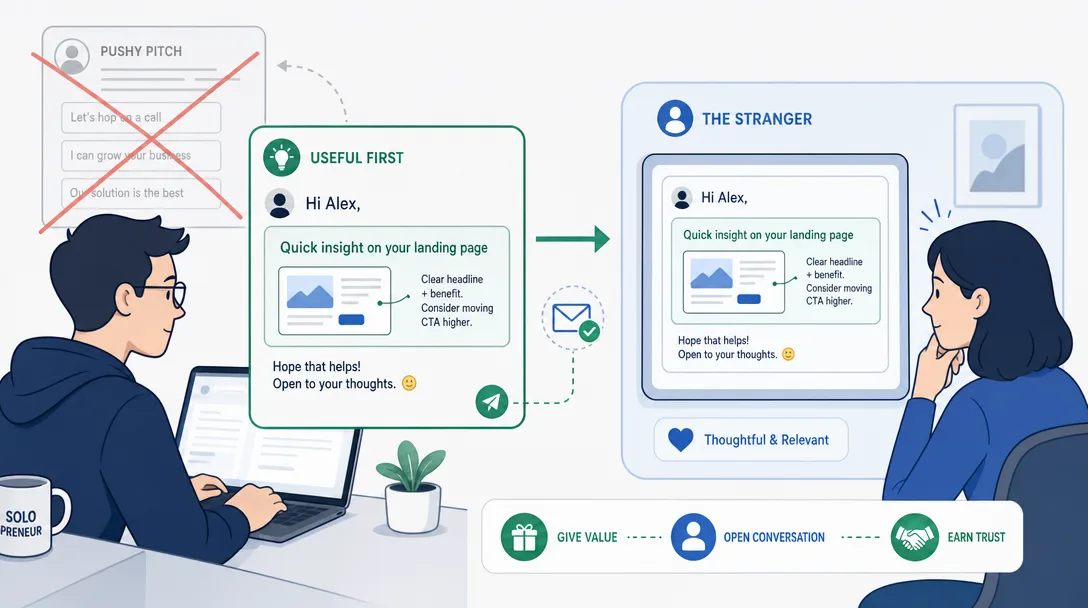
Cold outreach for solopreneurs: useful first, ask second
The most common failure mode in cold outreach: pitching the offer in message one. Open rates collapse, reply rates approach zero, the recipient blocks future emails, and the solopreneur concludes cold outreach does not work. The actual problem is sequence: useful first, ask second, never both in the same message.
Cold outreach is contacting people who do not know you.
It has a bad reputation because most cold outreach is lazy:
generic message,
no proof of reading,
instant pitch,
fake personalization,
no useful value.
Good cold outreach is different.
It begins with specific help.
The structure:
Identify a narrow target.
Notice a real problem or opportunity.
Provide a small piece of value.
Suggest a clear next step.
Make it easy to ignore.
Example:
Hey Maya, I read your landing page for the bookkeeping course.
The offer is strong, but the hero section makes the buyer decode three things: who it is for, what result they get, and why now.

I rewrote the first screen in a Google Doc. No pitch attached.
If useful, I can send it over.
This works better than:
I help course creators increase conversions. Want to chat?
Why?
Because the first message proves attention.
Cold outreach is not about clever wording. It is about earned relevance.
Paid ads: wait until your acquisition system works first
Paid ads buy attention.
They do not create clarity.
If the audience is wrong, the offer is vague, the page is weak, and the follow-up is missing, paid ads simply reveal the problem faster.
Use this timing:
Stage
Paid ads decision
No offer, no proof
Do not run ads
Clear offer, no conversion data
Use warm/content first
Some sales, unclear CAC
Small test budget only
Proven landing page and follow-up
Scale carefully
Front-end product funds ads
Now ads can compound
For a solopreneur, paid ads become interesting when the front-end offer can pay for acquisition.
Example:
$49 template pack attracts buyers.
The buyers enter a nurture sequence.
Some upgrade to a $999 program.
The front-end product covers part of the ad cost.
Until then, ads are usually an expensive way to avoid doing the uncomfortable personal work.
Lead magnets: turn solopreneur attention into permission
Acquisition routes bring attention.
A lead magnet captures permission.
A good lead magnet is a complete solution to one narrow problem.
Two words matter:
narrow and complete.
Not:
Ultimate guide to business growth.
Better:
12-question offer clarity diagnostic for solo consultants.
The best lead magnets do two things at once:
Solve a real small problem.
Reveal the next bigger problem your paid offer solves.
Lead magnet type
Example
What it opens
Diagnostic
Offer clarity scorecard
"How do I fix the weak parts?"
Sample
Free teardown
"Can you help with the rest?"
One step
30-day content calendar
"How do I turn this into a full engine?"
Template
Sales page structure
"Can you review my draft?"
Checklist
Launch readiness list
"What happens if I fail three checks?"
Do not make the free thing bad.
The free asset is proof.
If it is shallow, people assume the paid thing is shallow too.
Give the method away. Charge for implementation, review, templates, depth, speed, accountability, or done-with-you support.
From knowledge to authority for solopreneurs
Acquisition is not only traffic.
It is trust transfer.
People follow someone because they believe that person has walked a path they want to walk.
You do not need to be the world's top expert.
You need to be ahead of the person you help, honest about the gap, and useful in the next step.
Your story is not decoration. It is how strangers understand why they should trust your path.
The Epiphany Bridge for solopreneur acquisition
A useful acquisition story often follows the Epiphany Bridge:
I had the same problem.
I tried the obvious solution.
It failed in a specific way.
I noticed something different.
I tried a new path.
It worked enough to change my belief.
Now I help others cross the same bridge.
Example:
I thought my audience problem was reach. I posted more, opened more tabs, and tried to be present on every platform. Nothing converted. Then I looked at the few people who did buy and saw the pattern: every one of them had read at least three useful pieces and replied once before purchase. The problem was not reach. It was trust depth. So I rebuilt the system around subscriber capture, useful follow-up, and specific offers.
That story sells better than:
I help solopreneurs build audiences.
Because it gives the buyer a reason to believe you have lived the problem.
The 100-rep rule: how to test any acquisition channel honestly
Most people quit before they have enough data.
They send 10 messages.
They publish 8 posts.
They run one webinar.
Then they decide the channel "does not work."
The 100-rep rule fixes that.
For any acquisition motion, do enough reps before judging:
Channel
100 reps means
Warm outreach
100 personal messages
Content
100 focused creation blocks or 100 posts
Cold outreach
100 useful first-touch messages
Lead magnet
100 qualified visitors to the opt-in
Sales call
100 conversations, if that is your model
This is not a hustle slogan.
It is a statistical sanity check.
Ten reps tells you almost nothing. One hundred reps starts to reveal patterns:
which pain gets replies,
which wording creates confusion,
which audience segment responds,
which offer creates buying questions,
which channel is not worth the effort.
The advanced version is "hit the result, not the count."
If your daily goal is five qualified conversations and you get them after 40 actions, stop. If you need 130 actions, keep going.
But at the beginning, the count helps you stop hiding behind perfection.
From leads to true fans: 6 levers
Getting leads is only the first step.
Turning them into true fans requires a different mindset.
Here are six levers:
Lever
How to apply it
Serve better-fit people
Narrow the audience until the product works more often
Set better expectations
Promise slightly less than you intend to deliver
Create faster wins
Give a first useful result within 48 hours when possible
Reduce effort
Templates, checklists, reminders, examples
Improve the product monthly
Remove one friction point every month
Show the next step
A product ladder prevents dead ends
The referral thought experiment is useful:
If you lost every customer except one, and every future customer had to come from that person's recommendation, how would you treat them?
That is how you should treat each customer.
Not with fake delight.
With useful outcomes, clear expectations, and enough care that recommending you feels safe.
Referrals are not a tactic you add at the end. They are the result of a value gap:
Goodwill = Value received - Price paid - Friction endured
Increase value. Reduce friction. Keep the promise.
The seven-level solopreneur acquisition roadmap
Here is the path from zero to true fans:
Level
State
Main motion
Milestone
1
People who know you understand what you sell
Warm outreach
First paid customer
2
Your network hears from you consistently
Warm outreach plus content
Repeat conversations
3
Content creates leads without direct messages
Content plus lead magnet
Weekly subscribers
4
Product results create referrals
Better delivery
20-25 percent of customers from referrals
5
Multiple acquisition routes work
Add cold outreach or partnerships
Predictable pipeline
6
System runs without daily panic
Automation and SOPs
Weekly review rhythm
7
True fan base exists
Community, product ladder, referrals
Durable revenue and repeat buyers
Most people try to act like Level 5 while still at Level 1.
They buy tools, design funnels, and study ads before they have told 100 people what problem they solve.
Do not do that.
Walk the levels.
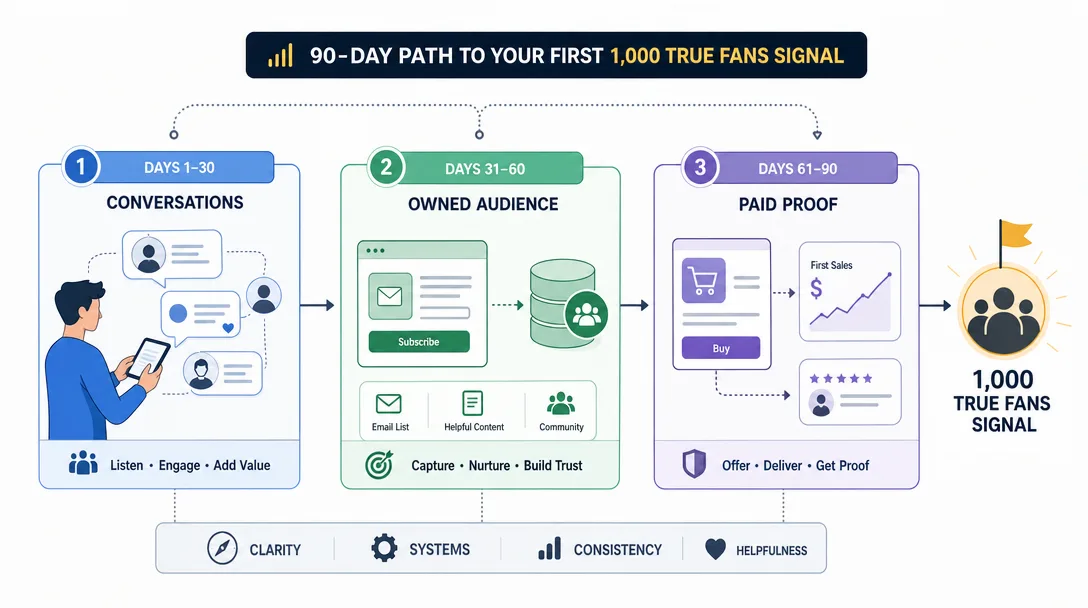
A 90-Day Path to Your First 1,000 True Fans
Do not set "1,000 true fans" as a 90-day goal.
That is too vague and too far away.
Set a signal goal.
In the first 90 days, you are trying to prove that a specific audience reacts to a specific problem, trusts your way of explaining it, and will take a small next step.
Here is a clean 90-day plan.
Phase
Days
Main motion
Target signal
Phase 1
1-30
Warm outreach plus one content base
20-50 real conversations
Phase 2
31-60
Lead magnet plus content rhythm
100-300 owned subscribers
Phase 3
61-90
Nurture sequence plus first paid offer
5-20 paid customers or strong sales calls
These numbers are not promises. They are diagnostic targets.
If you miss them, the question is not "am I a failure?"
The question is:
Which part of the system did not produce signal?
Days 1-30: warm outreach and useful proof
The first month should feel uncomfortably manual.
Good.
Manual work keeps you close to the market.
Do this:
send 100 warm messages,
publish 4 useful pieces,
collect 20 problem phrases from real people,
ask 10 people what they tried before,
offer 3-5 free or low-cost diagnostics,
document every objection.
Do not build ads, a complex funnel, or a big course yet.
At the end of 30 days, you should know:
Question
Good signal
Do people understand the problem?
They repeat it in their own words
Do they know someone with the problem?
They make introductions
Do they trust your perspective?
They ask follow-up questions
Is the problem painful now?
They want help soon, not "someday"
Can you create a small win?
Diagnostics reveal useful next steps
If you do not get any signal, fix the audience or problem before writing more.
Days 31-60: lead magnet and owned audience
The second month turns conversation into permission.
Build one lead magnet. Not three.
The lead magnet should be the thing people already asked for during month one.
Examples:
if people asked "is my offer clear?", build an offer clarity scorecard;
if people asked "what should I post?", build a 30-day content calendar;
if people asked "which AI tools matter?", build a toolchain checklist;
if people asked "how do I get first customers?", build a warm outreach tracker.
Then attach it to every content piece.
Do this:
publish 4 more core pieces,
mention the lead magnet in each one,
write a 3-message welcome sequence,
ask new subscribers one question,
track which content creates subscribers,
update the lead magnet once based on feedback.
The key metric is not download count.
It is qualified replies.
If 200 people download and nobody replies, the asset may be too broad or too passive. If 30 people download and 8 reply with detailed problems, you have a better signal.
Days 61-90: first paid offer
The third month tests payment.
Do not jump straight to a huge flagship product unless the demand is obvious.
Start with one small paid offer:
a teardown,
a paid diagnostic,
a workshop,
a template pack,
a 14-day sprint,
a small cohort.
Your first paid offer should be tightly connected to the lead magnet.
Lead magnet
First paid offer
Offer clarity scorecard
Paid offer teardown
Content calendar
Content engine workshop
AI toolchain checklist
Toolchain setup sprint
Warm outreach tracker
First customer acquisition sprint
Do this:
send the offer only to people who engaged,
write a simple sales page or email,
run 5-20 sales conversations if needed,
collect objections,
fulfill deeply,
ask for feedback and referrals.
The first offer's main job is learning.
Revenue matters, but the deeper question is:
Did anyone trust the path enough to pay?
If yes, you have something to improve.
If no, return to the offer, not the ad platform.
The anti-roadmap: 8 traps in your first 90 days
Here is what I would not do in the first 90 days.
Temptation
Why I would skip it
Build a polished course first
You do not know the buyer language yet
Post on every platform
You will exhaust yourself before signal appears
Buy ads before conversion
Paid traffic amplifies confusion
Automate outreach too early
You need human feedback first
Create a huge free community
Communities require energy before they create revenue
Redesign branding repeatedly
Branding will not fix a vague problem
Chase viral topics
Viral attention often attracts the wrong people
Hide the offer forever
Audience building without selling becomes avoidance
The most common failure is not greed.
It is hiding.
People hide inside content because selling feels exposed. They hide inside tools because outreach feels awkward. They hide inside branding because asking for payment feels risky.
A real acquisition system forces contact with reality.
That is uncomfortable.
It is also the only way the business becomes real.
What to measure each week (and what to ignore)?
Use a small dashboard.
Large dashboards make you feel sophisticated and slow down action.
Metric
Why it matters
Bad interpretation
Warm messages sent
Measures reps
"More messages means more trust"
Replies
Measures relevance
"Any reply is a good reply"
New owned subscribers
Measures permission
"All subscribers are equal"
Best subscriber source
Shows channel fit
"The biggest channel is best"
Lead magnet conversion
Shows pain clarity
"Downloads equal intent"
Sales conversations
Shows offer interest
"Calls mean revenue"
Paid customers
Validates the promise
"One sale proves scale"
Referrals
Shows goodwill
"Referral asks can be scripted around bad delivery"
The weekly review should produce one decision, not twelve observations.
Examples:
"Next week I will narrow the lead magnet from audience building to warm outreach."
"Next week I will stop posting on LinkedIn and double down on newsletter replies."
"Next week I will rewrite the offer around the first visible win."
"Next week I will ask every diagnostic customer for one referral."
Progress comes from decisions.
Metrics are only useful if they change behavior.
The trust ladder: how followers become true fans
A true fan is built through repeated trust events.
Think of it as a ladder:
Step
Trust event
1
They recognize the problem in your content
2
They believe you understand people like them
3
They get one useful result from your free work
4
They subscribe or reply
5
They consume more than one piece
6
They take a small action you recommend
7
They buy a low-risk offer
8
They get a result
9
They buy again or refer someone
This ladder explains why follower count is misleading.
Followers may be at step one.
True fans are at steps seven through nine.
Your job is not to push people up the ladder with pressure. It is to remove friction between steps:
clear CTA,
useful free asset,
welcome sequence,
low-risk first offer,
strong onboarding,
fast win,
referral moment.
When the ladder is missing, people like the content and disappear.
When the ladder exists, attention has a path.
That path is the business.
Why retention matters as much as acquisition
Once a fan reaches step 8 or 9, the math changes, and most solopreneur acquisition advice undersells this part. The classic Reichheld & Sasser 1990 Harvard Business Review paper "Zero Defections" found that reducing customer defections by just 5% increased profits by 25% to 95% across industries, specifically 85% in one bank's branches, 50% in an insurance brokerage, 30% in an auto-service chain. For a solopreneur, the implication is direct: every fan you keep at step 9 is worth more than several you replace at step 1. The cheapest way to grow your audience is to stop losing the audience you already have.
The waitlist trap
Pre-launch waitlists look like obvious wins. Robinhood famously stacked nearly 1 million signups before opening, using position-based referrals. But Gaurav Vohra, who personally grew Superhuman's waitlist past 500,000, later published the internal numbers: their live signup funnel converted to paying customers at ~10%, while the waitlist funnel converted at ~3% — three times worse. "The only difference," he writes, "was that the waitlist had been made to wait." If you use a waitlist, do it because you genuinely cannot serve everyone yet, not because you think waiting will manufacture desire. For most solopreneurs, opening live and converting fast beats a beautiful waitlist that converts slowly.
One-page solopreneur acquisition checklist
Print this if needed.
Step
Action
1
Define the exact customer you want
2
Choose one acquisition motion for the next 30 days
3
Commit to the 100-rep rule
4
Capture every reply, objection, and phrase
5
Turn repeated pain into content
6
Turn repeated content response into a lead magnet
7
Turn repeated buying questions into an offer
8
Review weekly
That is the loop.
Audience building is not mystical.
It is repeated useful contact plus trust plus an offer that fits.
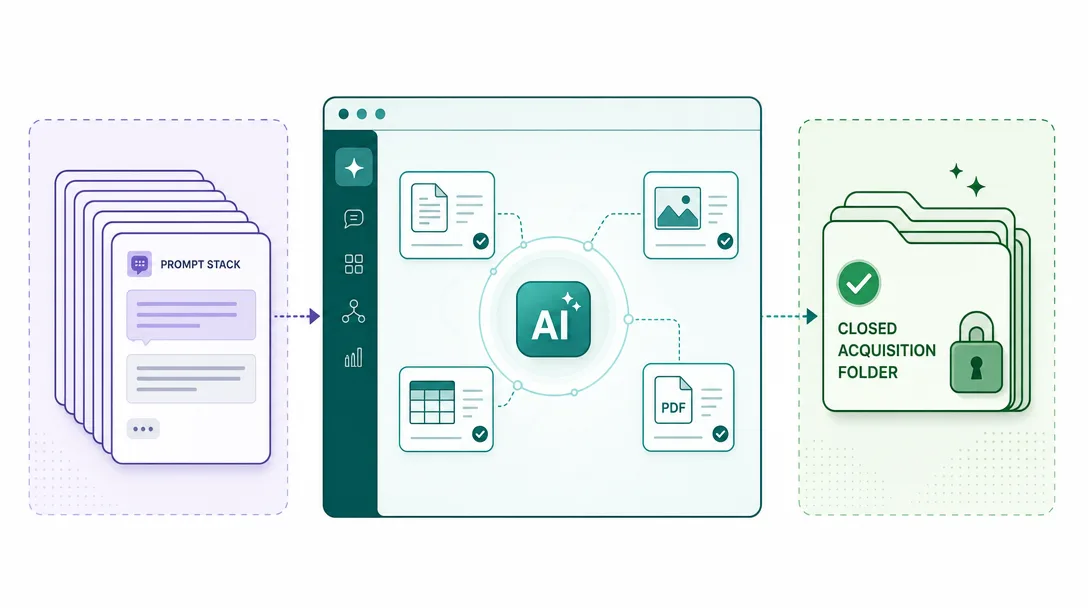
Read docs/business-profile.md and docs/target-audience.md.

Create 5 warm outreach templates:
- old colleague,
- friend of a friend,
- former client,
- social media acquaintance,
- someone who previously showed interest.

Each template must include:
- personal opener placeholder,
- problem statement,
- "do you know anyone" referral ask,
- low-risk first step.

Also create a 30-day warm outreach calendar.
Save to marketing/warm-outreach-templates.md.
Hey [Name], I noticed [specific recent project / move / post].

I'm working on something narrow these days: [one-sentence problem you solve, in their language, not yours].

Quick ask, no pressure: do you know anyone struggling with [exact pain]?

I'm running 5 free [diagnostics / teardowns / 30-min calls] in exchange for honest feedback before I price it. If someone in your circle would find that useful, an intro would mean a lot. If not, no worries, happy to swap notes any time.
If the first pass returns "I help businesses grow with proven strategies", reject it and force the model to use buyer-language pain ("page that does not explain the offer", "feast/famine months", "calls that go cold after the demo"). Vague templates get ignored. Specific ones get replies.
Prompt 2: 30-day content calendar
Read docs/business-profile.md and docs/target-audience.md.

Create a 30-day content calendar for one base platform.
Each day needs:
- topic,
- content type,
- hook,
- reader outcome,
- CTA,
- subscriber signal to watch.

Use five content types:
- past experience,
- customer story,
- current observation,
- tool or workflow,
- active experiment.

Save to marketing/content-calendar-30-days.md.
Prompt 3: Lead magnet design
Read docs/product-offer.md.

Design 3 lead magnets:
1. diagnostic,
2. sample,
3. one-step template.

For each, include:
- narrow problem,
- delivery format,
- title options,
- how it leads to the paid offer,
- production cost,
- expected conversion strength.

Recommend the first one to build.
Save to marketing/lead-magnet-design.md.
Prompt 4: Epiphany Bridge story
Read docs/founder-story.md and docs/business-profile.md.

Build my core Epiphany Bridge:
- problem I had,
- failed attempts,
- discovery moment,
- new belief,
- result,
- what I now help others do.

Write:
- 500-word long version,
- 150-word short version,
- 50-word profile version.

Save to marketing/epiphany-bridge-story.md.
Prompt 5: Full acquisition funnel
Read docs/product-offer.md, marketing/lead-magnet-design.md, and marketing/epiphany-bridge-story.md.

Design the funnel:
- attract,
- capture,
- nurture,
- convert,
- refer.

Include:
- weekly content rhythm,
- lead magnet CTA,
- 5-message nurture sequence,
- sales page transition,
- referral ask.

Save to marketing/acquisition-funnel.md.
Prompt 6: 90-day plan and audit
Read every file in marketing/.

Create a 90-day acquisition plan:
- Days 1-30: warm outreach and content,
- Days 31-60: lead magnet and nurture,
- Days 61-90: first launch and referral loop.

For each phase, include daily actions, weekly metrics, and failure response.

Then create an audit checklist for after 30 days.
Save to marketing/90-day-plan.md, marketing/daily-checklist.md, and marketing/weekly-review.md.
Before warm outreach, paid ads burn fast on unvalidated offers. After, warm contacts validate first and ad spend lands on a proven message.
Key takeaways
Followers are not the goal. True fans repeatedly pay attention, trust your judgment, buy when the fit is right, and stay long enough for the relationship to compound.
Audience size and offer depth must match. 1,000 fans × $100, 100 fans × $1,000, or 20 fans × $5,000, pick the math your business model can support.
Acquisition has only four routes: warm outreach, content, cold outreach, paid ads. Run them in that order. Skipping straight to ads amplifies confusion.
Use the 100-rep rule before judging any channel. Ten reps reveal nothing; one hundred reps reveal patterns. Most people quit at rep 12.
A good lead magnet is narrow and complete: solves one small problem fully and reveals the next problem your paid offer solves.
Run a 90-day signal plan: warm outreach + content (Days 1-30) → lead magnet + nurture (31-60) → first paid offer (61-90). Revenue is secondary; learning is primary.
Ready-to-Use Prompt: Plan the First 1,000 True-Fan Acquisition
What this does: Defines a true fan by behavior (pays/refers/replies/stays), sequences the four acquisition routes (warm + content first, cold next, ads last), designs a lead magnet that earns permission, and applies the 100-rep rule so channels are tested honestly instead of quit early. Based on: Your First 1,000 True Fans as a Solopreneur — https://aiworkflowpro.com/solopreneur-first-1000-fans/ Time to run: ~5 minutes
Copy this prompt into Claude Code, ChatGPT, or any AI assistant:
ROLE: You are a Solopreneur Acquisition Architect. Your job: build the first 1,000 true fans with the four routes in the right order — depth over follower count, channels tested by 100 reps, never starting with ads.

CONTEXT — 4-ROUTE TRUE-FAN ACQUISITION METHOD:
Your first 1,000 true fans are not followers — they are people who trust you enough to pay, refer, reply, and stay. Acquisition has four routes: (1) warm outreach — start with people who already know you; (2) content — one-to-many trust at scale; (3) cold outreach — useful first, ask second; (4) paid ads — wait until the acquisition system works first. Start with the first two. A lead magnet turns attention into permission — it solves ONE narrow problem and opens the next step. Test any channel honestly with the 100-rep rule: 100 attempts before you judge it.

INPUTS (fill in before running):
- OFFER: [What you sell — the irresistible offer]
- WARM_NETWORK: [People who already know you — size]
- CONTENT_CHANNEL: [Where you can publish — or "none"]
- BUDGET: [Paid ads budget — or "zero"]

METHOD — 4 STEPS:

Step 1 — Define the True-Fan Target (Quality, Not Count)
From OFFER, define a true fan by behavior — pays, refers, replies, stays — not a follower number. Set the first target at the 100-fans-depth version if reach is hard, scaling to 1,000 as depth compounds.

Step 2 — Pick the Acquisition Routes in Order
From WARM_NETWORK and CONTENT_CHANNEL: run warm outreach + content first (the two start-here routes). Add cold outreach (useful first, ask second) once warm+content flow. Hold paid ads until the system works — never start with ads.

Step 3 — Build the Lead Magnet (Attention → Permission)
Design a lead magnet that solves ONE narrow problem and opens the next step toward OFFER. Score it 0–2: narrow problem solved, clear next step, low friction. Reject a generic "newsletter signup" — it must earn permission with value.

Step 4 — Apply the 100-Rep Rule to Test Channels Honestly
Commit 100 reps per channel before judging it. Score each active channel on reps completed (0–2) — a channel "not working" at under 100 reps is untested, not failed. Cut only after 100 honest reps show it doesn't convert.

RULES:
- Never start acquisition with paid ads — they wait until warm+content+cold have proven the system.
- Never judge a channel before 100 reps — quitting early is a false negative, not a verdict.
- Never confuse followers with true fans — define the fan by pay/refer/reply/stay behavior.

OUTPUT FORMAT:
Output a markdown report with:
1. True-Fan Target — the behavior definition + the depth-to-reach path
2. Acquisition Route Order — markdown table, columns: Route | Order | Active Now?
3. Lead Magnet — the narrow problem + next step + score (0–2)
4. 100-Rep Plan — reps committed per channel + the honest-test verdict
Save as @templates/solopreneur-first-1000-fans.md and run at the start of the acquisition build, or whenever a channel "isn't working."
Frequently Asked Questions
What does 1,000 true fans mean for solopreneurs?
It means you do not need a massive audience to build a real solo business. You need a smaller group of people who repeatedly value your work, trust your judgment, and are willing to pay when your offer solves their problem.
Are true fans the same as followers?
No. A follower may see and like your content. A true fan pays attention repeatedly, joins your owned audience, refers others, and buys when the fit is right. The gap between followers and true fans is trust.
What is the fastest way to get first customers?
Start with warm outreach and useful content. Ask people you know whether they know someone with the problem you solve. Publish content that demonstrates your judgment. Delay paid ads until you have a clear offer and conversion data.
What makes a good lead magnet?
A good lead magnet solves one narrow problem completely and naturally reveals the next problem your paid offer solves. It should be useful on its own, easy to consume, and connected to your product ladder.
Can AI help with audience building?
AI can draft warm outreach, build a content calendar, design lead magnets, write nurture sequences, and audit your funnel. It should not fake relationships, mass-spam strangers, or invent testimonials.
What's next in the series?
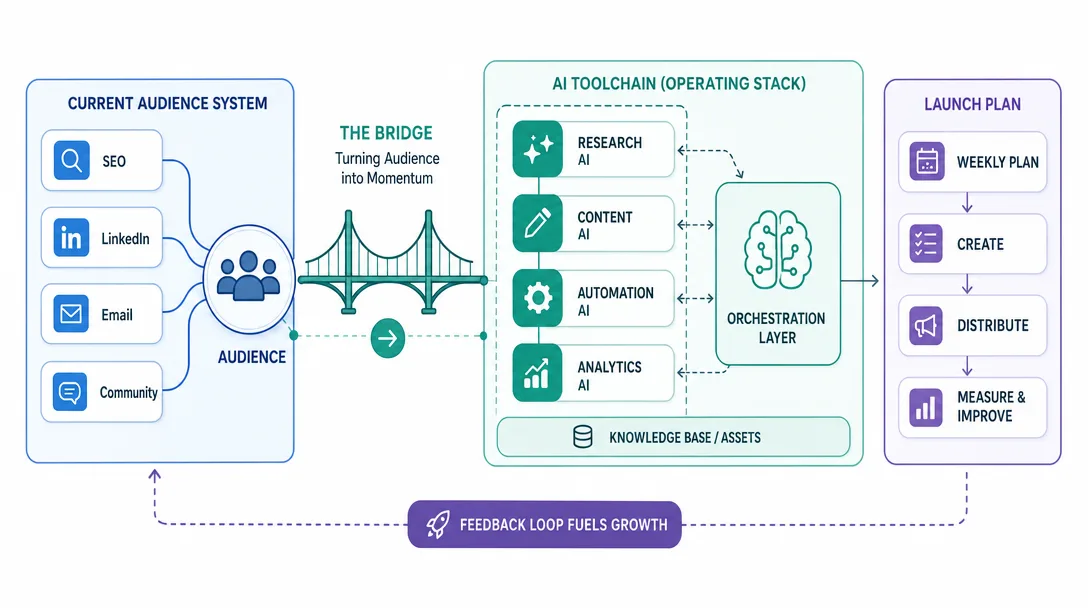
You have the acquisition system. Next, in Part 8: AI Toolchain for Solopreneurs, we install the operating stack that lets one person run warm outreach, content production, lead magnet delivery, and offer fulfillment without burning out. Then in Part 9: 12-Week Solopreneur Launch Plan, we sequence everything into a deliverable plan with weekly milestones.
Before you close this tab: write 10 names from your contacts who might know someone with the problem you solve. Save the list as warm-list-10.md. Tomorrow, send the first three messages using the warm outreach template. That is rep 1, 2, 3 of 100.
Monitoring a competitor who publishes no feed is the case every RSS guide skips. Twenty-one platforms sorted by which of three jobs they do, and the finished setup is business process automation you own outright, with no seat licence to renew.
Blaming the content is the reflex when a post underperforms, and it is usually the wrong diagnosis. A second reader decides distribution before any human sees the post, and most of what it checks is mechanical enough to automate business processes around, on five platforms at once.
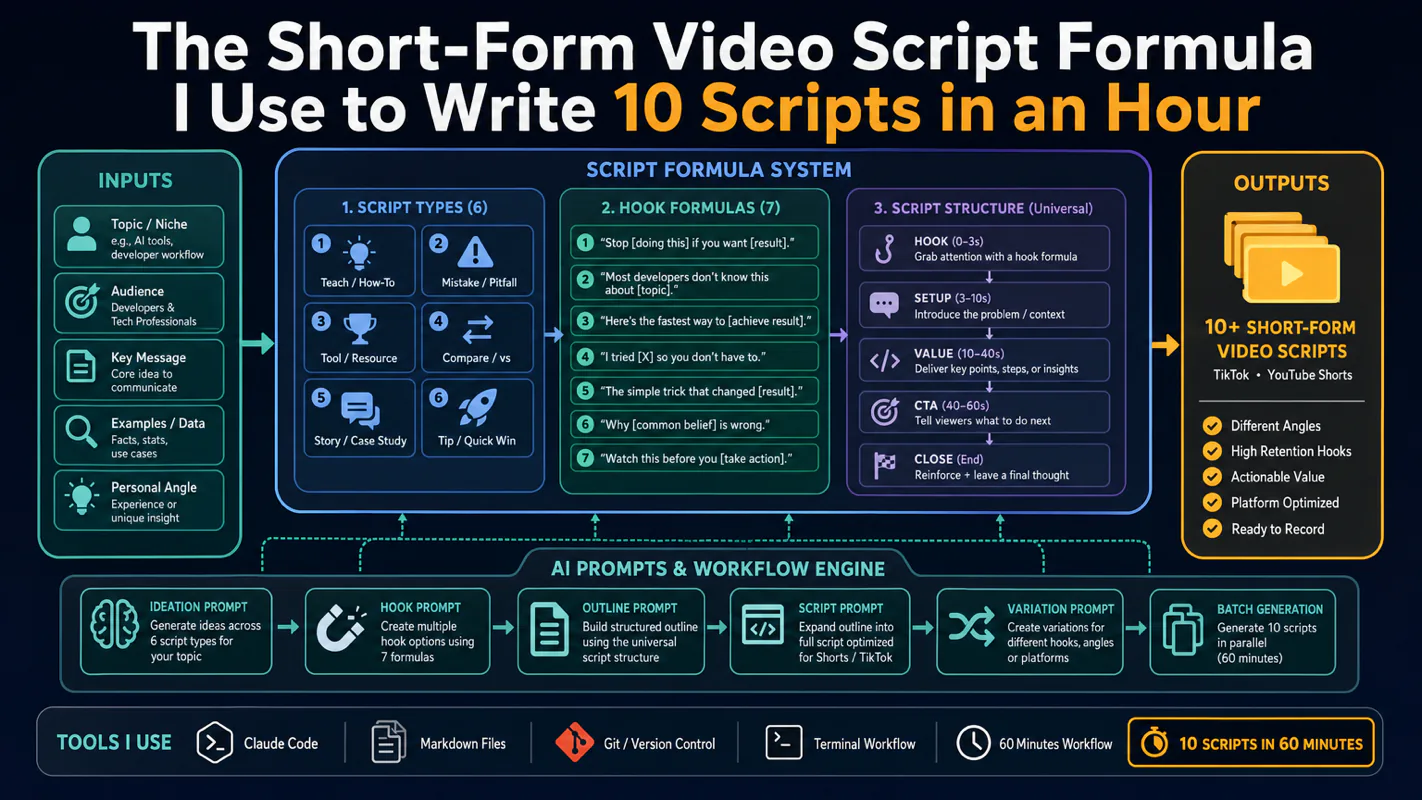
Thursday afternoon, fourteen product ideas, a Monday filming slot, no scripts. Six script shapes and seven hook formulas turn that hour into finished drafts — and the business rule stays: rewrite at least 30% before anything ships.
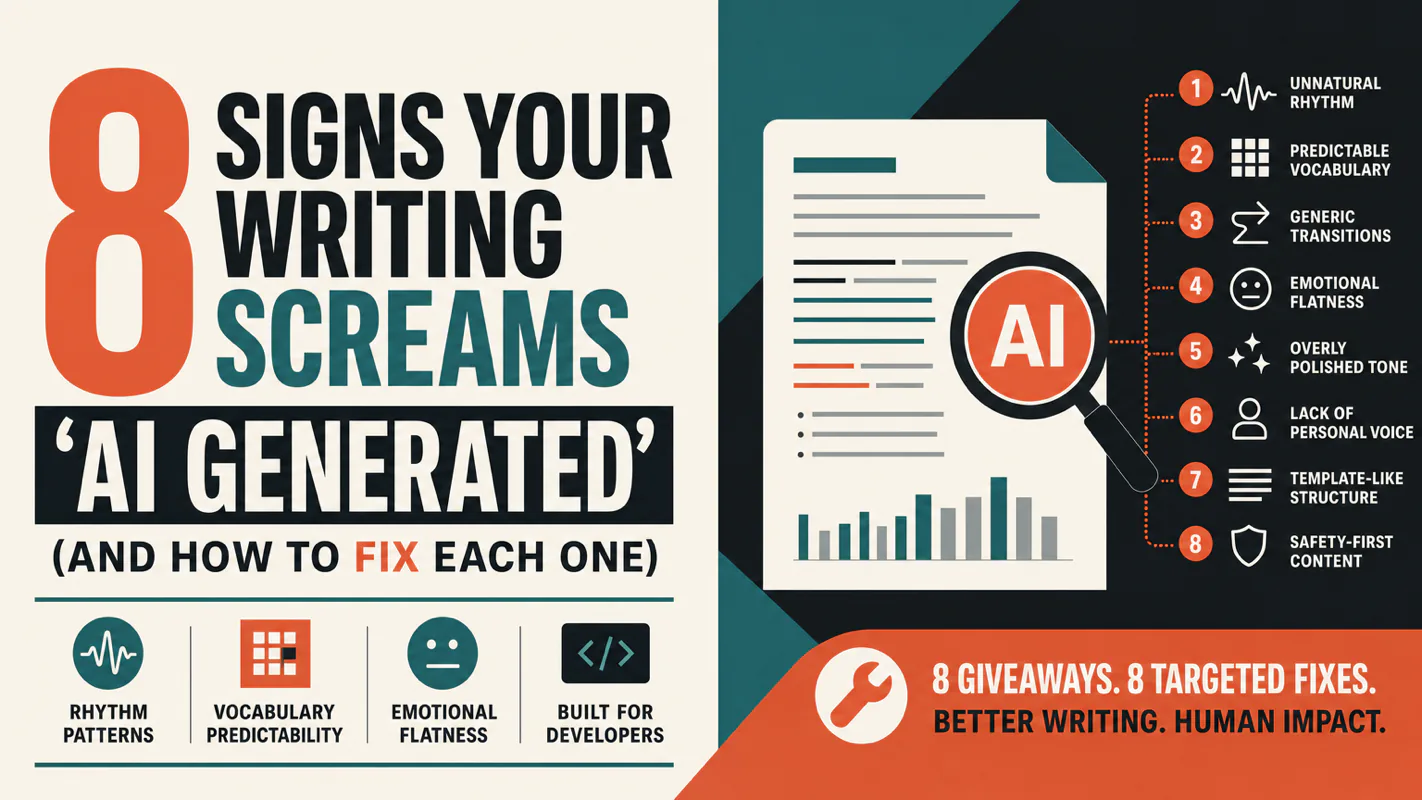
A detector score cannot survive a conversation with the freelancer it just cost three weeks of payment. What holds up is the specific thing on the page: rhythm, vocabulary, missing detail. Eight of them here, and the reason review stays human when you automate business processes.