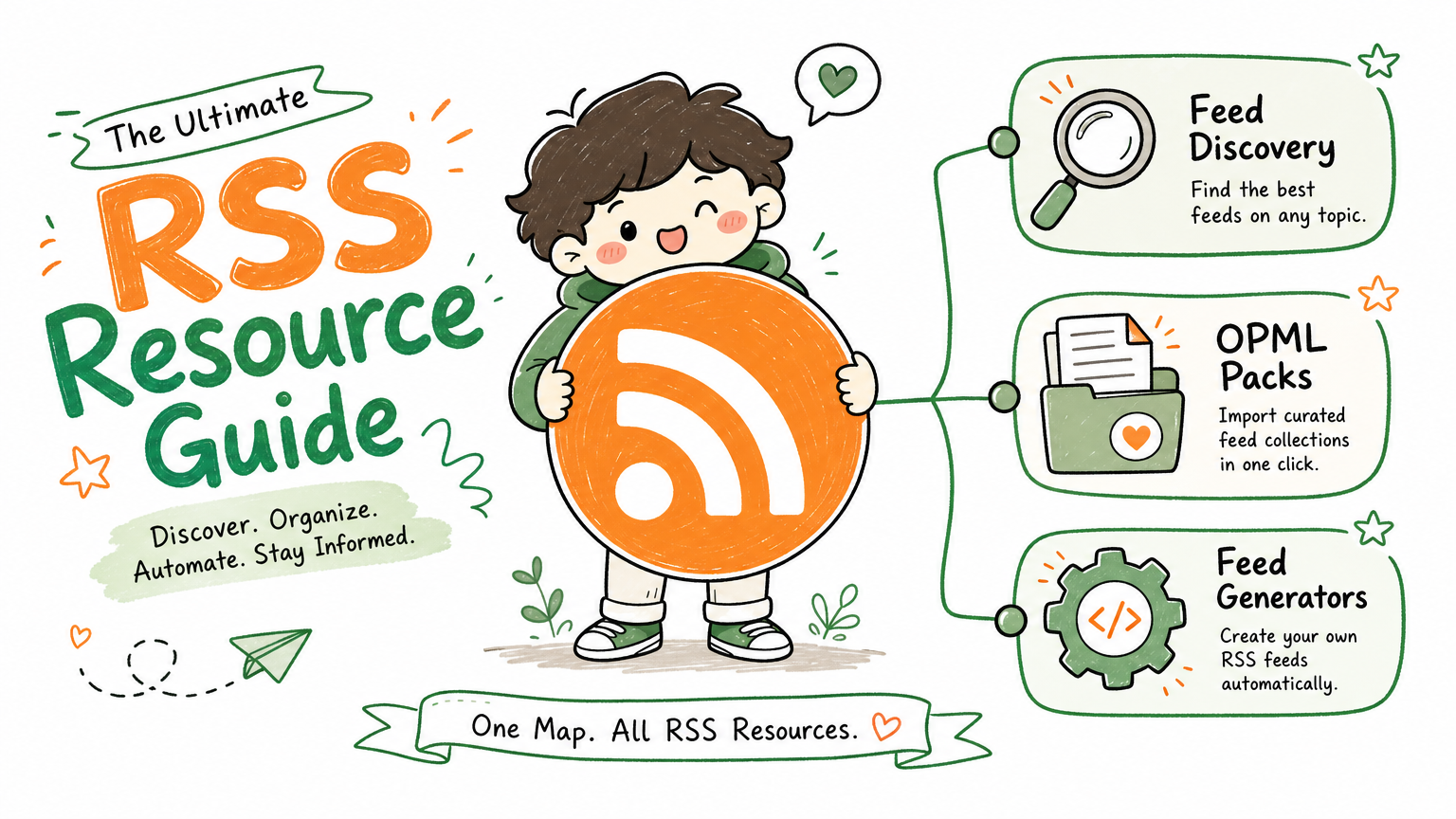
Monitoring a competitor who publishes no feed is the case every RSS guide skips. Twenty-one platforms sorted by which of three jobs they do, and the finished setup is business process automation you own outright, with no seat licence to renew.
Blaming the content is the reflex when a post underperforms, and it is usually the wrong diagnosis. A second reader decides distribution before any human sees the post, and most of what it checks is mechanical enough to automate business processes around, on five platforms at once.
Gloves on, tape measure in hand — nobody types a query. Three voice surfaces for ai automation tools (terminal, Telegram, Discord), 10 TTS and 6 STT providers compared on cost and latency, plus a setup that costs nothing.
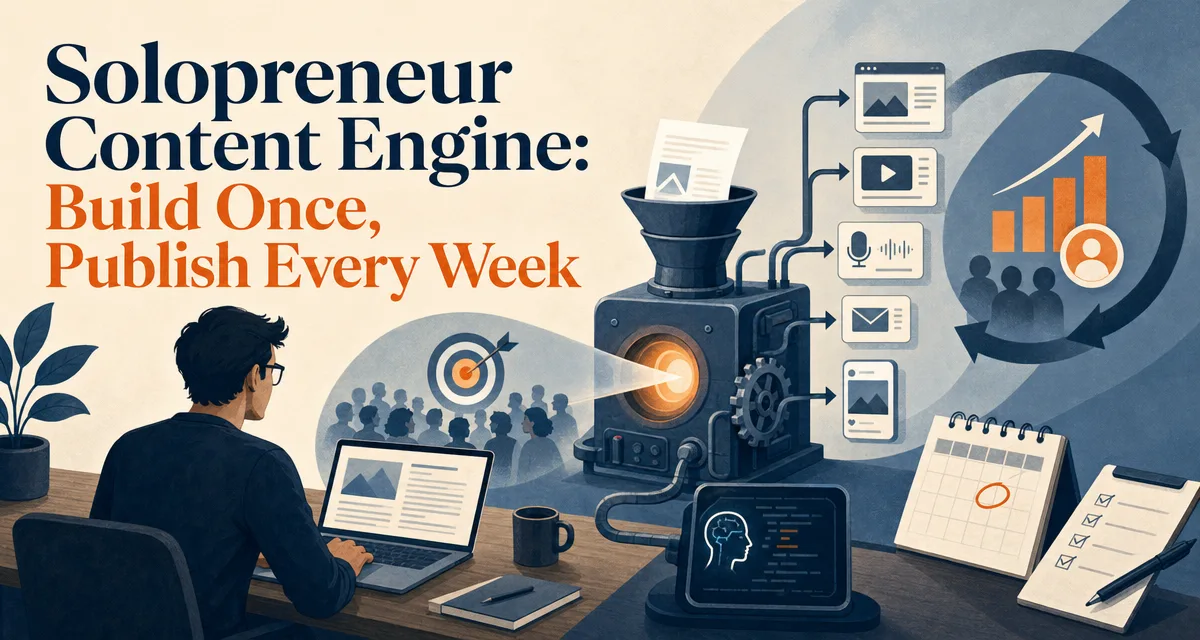
Solopreneur Content Engine: Build Once, Publish Every Week
A content engine is not a posting habit. It is the part of a small business that does qualification before the first call: pick one narrow angle, build one base people can subscribe to, turn one core idea into many useful formats, and measure subscribers instead of applause.
A content engine is not a posting schedule. It is a business system for earning trust before you sell.
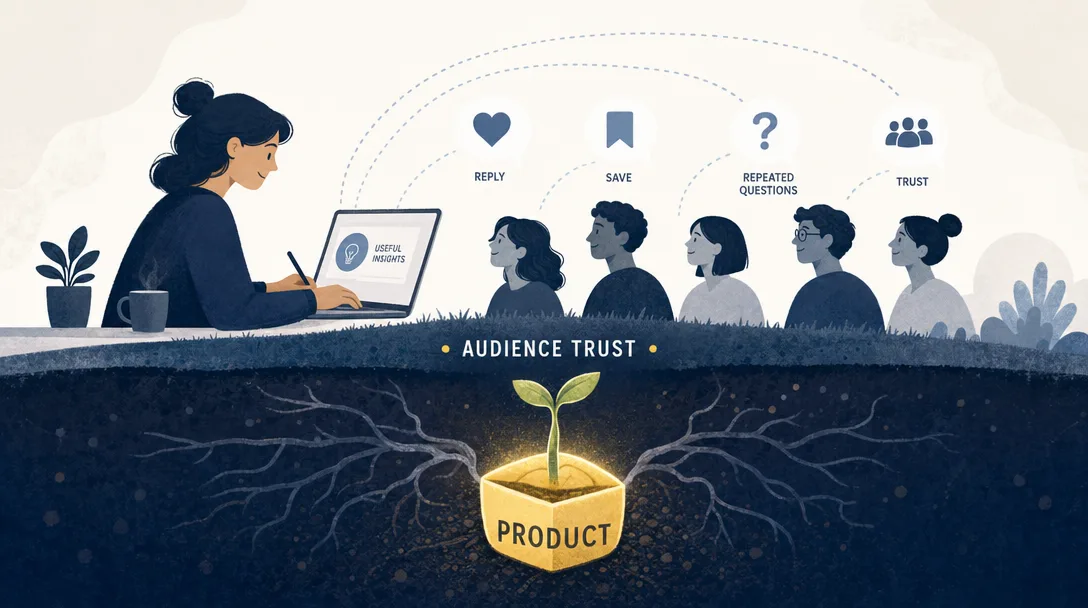
The safest path for many solopreneurs is audience first, product second: publish useful work until the market tells you what to build.
The key pieces are a sweet spot, a content tilt, one base platform, subscriber capture, a repurposing flywheel, and a weekly review.
AI helps only after the system is clear. It can multiply a point of view. It cannot replace one.
Most operators file publishing under marketing -- a cost that buys attention. For an independent insurance broker it turned out to be something else. The people who had read four or five posts before calling already knew what was and was not covered, and those calls closed in one conversation instead of three. Publishing was doing qualification work, not advertising work. That reframe changes what you build. An engine that chases applause optimizes for reach; an engine that qualifies optimizes for one narrow angle, one place people can subscribe, and a weekly rhythm. This piece builds the second kind.
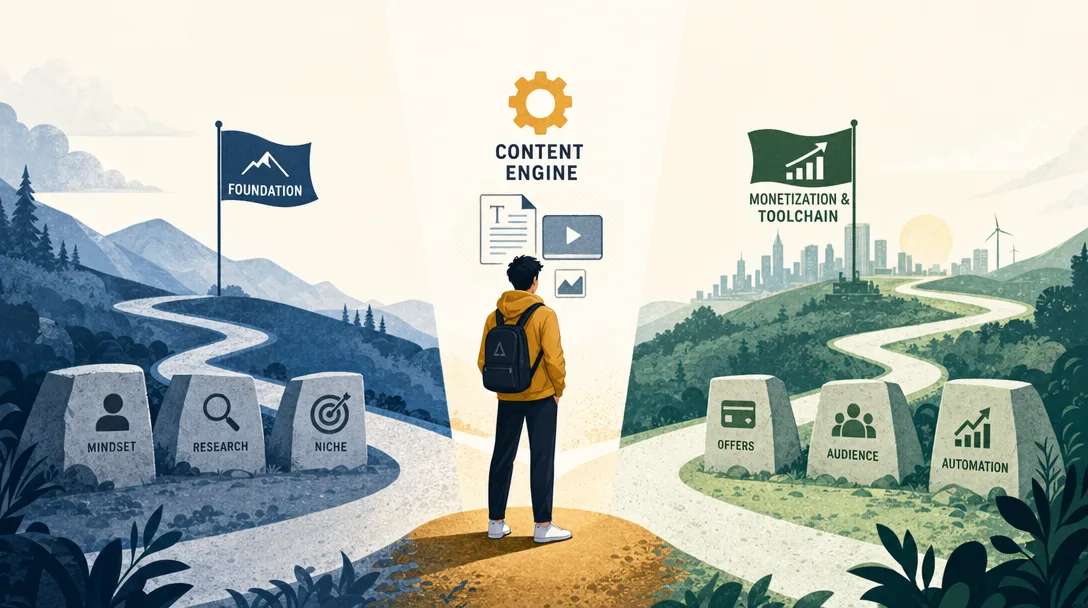
In Part 1, we made the case that one person can be enough. In Part 2, we picked the thing. In Part 3, we built the personal brand foundation. In Part 4, we turned the founder story into a business asset.
Now comes the part that turns all of that into compounding attention:
Content.
Not content as "post more."
Not content as "be everywhere."
A real content engine is the thing that lets a stranger discover you, trust you, follow you, and eventually buy without being pushed through a hard sell. They read one useful piece. Then another. Then they realize you keep helping them think better. By the time you make an offer, the sale feels like a natural next step.
That is the point.
Solopreneur Content Engine in 2026: A Market Snapshot
Every solopreneur is now told to build a content engine. The market is loud, and the noise hides the signal.
A 2026 spot check for "solopreneur content engine" mostly returns generic AI-content guides (Averi, FlowDevs, TheAIHat, LifeByDesign, DigitalPratik, and others). The common pattern frames the engine around tool stacks, automation flows, and "1 idea 10 assets" repurposing.
None of them attach the framework to a real audience-first sequence with named operator data: Pulizzi's 17-18 month profitability timeline from 1,000+ content entrepreneurs, the $17.6M CMI exit, the Subscriber Hierarchy ranking. The gap is not "more AI tools." The gap is the audience-first sequence with the patience tax priced in. That is what this guide is.
The Counterintuitive Starting Point: Audience First, Product Second
Everyone says build the product first, then find the audience. Actually, the order is reversed for solopreneurs: build the audience first, then sell the product the audience tells you it needs. Here's why this matters: the audience-first sequence collapses customer-acquisition cost to near zero by month six.
Most people imagine entrepreneurship as a straight line:
Have an idea.
Build a product.
Find a channel.
Market the product.
Sell it.
Make money.
That sounds clean. It is also the reason many small businesses waste months building things nobody asked for.
The hidden assumption is this:
You already know what the market wants.
Usually, you do not.
You know what you can make. You know what feels exciting. You know what you wish people would buy. But until real people repeatedly pay attention, reply, subscribe, share, or buy, you are still guessing.
The content-first path flips the order:
Pick a narrow audience and problem space.
Publish useful content for that audience.
Build trust and subscriber access.
Watch what people ask about, save, reply to, and pay for.
Build the product after the demand becomes visible.
It feels slower because you may spend twelve months publishing before the real business appears.
But it is often lower risk.
Joe Pulizzi's Content Inc. model frames this clearly: build valuable content, gather an audience around it, then create products for that audience. The sequence matters. You are not using content to decorate a product. You are using content to discover the product. Pulizzi's own playbook — Content Marketing Institute, sold to UBM in June 2016 for $17.6M plus an earn-out on roughly $9M in 2015 revenues, after years of free content first — is one of the cleanest examples of the model paying out at scale.
Pulizzi's own research at The Tilt, surveying more than 1,000 content entrepreneurs, gives the timeline plainly: "17 to 18 months seems to be the runway needed to get to profitability." That number is the patience tax. Twelve weeks builds the engine. Eighteen months proves it.
A solopreneur version of the same pattern: Justin Welsh built his audience over years of consistent writing — roughly 175,000+ newsletter subscribers and 750,000+ LinkedIn followers — with courses launching along the way en route to seven figures. The newsletter and the LinkedIn archive were not marketing for the courses — they were the unpaid research project that revealed which courses were worth building. That sequence is the engine.
For a solopreneur, that distinction is not theoretical.
If you build the wrong product, you lose months. If you publish the wrong content, you learn in public, keep the relationship, and adjust next week.
Product-First vs Content-First for Solopreneurs
Neither path is morally better. They solve different problems.
Dimension
Product-first
Content-first
First asset
Product
Audience trust
Main risk
Building the wrong thing
Publishing without patience
Feedback loop
Sales data, often late
Comments, replies, saves, subscriptions
Cash timing
Faster if demand is known
Slower, usually 12-18 months
Best when
You already know the buyer and pain
You are still finding the buyer and angle
Moat
Product quality and distribution
Relationship, point of view, and owned audience
I would not use content-first for every business.
If you already have a specific customer asking for a specific paid solution, build the solution. Do not start a newsletter to avoid selling.
But if you are a solopreneur with skill, taste, and uncertainty, content-first is one of the cleanest ways to reduce blind guessing. It lets the market vote before you spend your best months building.
The catch is patience.
Most people can publish for two weeks. Fewer can publish for two months. Almost nobody can publish usefully for twelve months before the visible payoff.
That patience is part of the moat.
The Seven-Part Solopreneur Content Engine
A content engine has seven parts.
Step
Name
Core question
Usual timeline
1
Sweet spot
Where do your skills overlap with a real audience need?
Week 1-2
2
Content tilt
What makes your angle meaningfully different?
Week 2-4
3
Content base
Where will your deepest work live?
Month 1-2
4
Audience building
How do followers become subscribers?
Month 3-12
5
Monetization
What are people already signaling they want?
Month 12-18
6
Diversification
Which second channel deserves attention?
Month 18-24
7
Scale or stay small
Do you want a lifestyle business, team, or exit?
Month 24+
This sequence is boring on purpose.
Most failed content plans do the opposite. They start with channels, tools, and formats:
Should I post on X or LinkedIn?
Should I make short video?
Should I use Substack, Ghost, Beehiiv, Medium, or WordPress?
Which AI tool can turn one article into fifty posts?
Those questions are not useless. They are late.
The first questions are sharper:
Who exactly is this for?
What pain do they already feel?
What do I know that they need?
What is my non-obvious angle?
Where can I show up every week for a year?
If you cannot answer those, a better content calendar only helps you publish more confusion.
Step 1: Find Your Content Engine Sweet Spot
If you already have an audience and a clear topic, skip to Step 3. If you're starting from scratch, the next four steps build the foundation in order, and skipping any of them collapses the engine.
The sweet spot is the overlap between what you can talk about with earned depth and what a specific audience already wants.
Not passion alone.
Not expertise alone.
Not market demand alone.
The overlap.
Too broad
Stronger sweet spot
Productivity
Productivity systems for solo consultants with client work
Fitness
Home strength training for 40-plus desk workers
AI tools
AI workflows for non-technical solopreneurs
Personal finance
Cash-flow systems for freelancers with irregular income
Writing
Newsletter writing for experts who hate social media
The sweet spot must be small enough to create recognition.
When a reader sees your page, they should think:
This person is talking to someone like me.
That feeling is stronger than "this is high quality." High quality is generic. Specific relevance creates trust.
A useful test:
Could I name ten real people who would care about this topic next week?
If not, the sweet spot is still too abstract.
Step 2: Find Your Content Tilt
The sweet spot tells you what arena you are in.
The content tilt tells you why anyone should notice you inside that arena.
This is the part most creators skip. They choose a good topic, then publish the same thing everyone else publishes.
If your niche is "AI tools for small business," you are not done. That niche is already crowded. Your content tilt might be:
AI tools for non-technical consultants who sell expertise.
AI workflows that replace one repetitive task per week.
AI automation with no SaaS stack, only local files and plain text.
AI tool reviews written after deleting tools, not collecting them.
A content tilt is not a slogan. It is an editorial constraint.
It tells you what you will refuse to publish.
Generic content
Tilted content
"10 AI tools for creators"
"The 3 AI tools I kept after deleting 17 subscriptions"
"How to build a newsletter"
"How to write a newsletter when you only have two hours on Sunday"
"Content marketing tips"
"Content systems for solo founders who still need to build the product"
"Personal branding advice"
"Personal brand for people who hate influencer behavior"
The brutal validation standard is simple:
If all your content disappeared tomorrow, would the market feel a missing point of view?
This is essentially Pulizzi's own "missing test" from Content Inc., which he phrases like this: "Let's say someone rounded up all your content and placed it in a box, like it never existed. Would anyone miss it? Would you leave a gap in the marketplace?" The point is the same: a tilt either creates a noticeable absence in the market when it disappears, or it never had readers in the first place — only impressions.
If the answer is no, you do not have a tilt yet. You have a topic.
That hurts, but it is useful.
Step 3: Choose One Content Base Platform
Pick one base platform and go deep.
Not five.
One.
Your content base is where your most durable work lives. For most operators it is the website; for others it could be a newsletter, YouTube channel, podcast, or long-form LinkedIn archive. The format matters less than the principle: one place owns the canonical version of every piece you publish.
The base should satisfy three conditions:
Condition
Why it matters
You can publish consistently
A format you hate will die
You can capture subscribers
Followers are weaker than owned access
The archive compounds
Old work should stay discoverable
Social platforms are useful, but they are rented attention. The algorithm can change, your reach can disappear, and your audience list is usually not yours.
That does not mean "never use social."
It means social should feed the base. The base should capture the relationship.
For most solopreneurs, I would choose one of these:
Base
Best for
Watch out for
Ghost or WordPress site
SEO, long-form trust, owned archive
Slow early growth
Newsletter
Relationship and repeat attention
Discovery is harder
YouTube
Demonstration and parasocial trust
Production load
Podcast
Deep trust with niche audiences
Slow feedback loop
LinkedIn
B2B expertise and client demand
Algorithm dependence
My default for a one-person business:
One owned base plus one discovery channel.
Example: Ghost site plus LinkedIn. Newsletter plus X. YouTube plus email. Do not build a content empire before you have one working route.
Step 4: Build Subscribers, Not Applause
Views are not the north star.
Likes are not the north star.
Follower count is not the north star.
Subscribers are closer.
A subscriber has given you permission to appear again. That is a different kind of asset.
Pulizzi formalized this with what he calls the Subscriber Hierarchy. His ranking, from most valuable to least: email and print at the top, then Medium, then Twitter, LinkedIn, iTunes, Snapchat, Pinterest, YouTube, with Facebook and Instagram at the bottom. The principle in his words: "Having a YouTube following is not an asset. Having an email database is an asset." For a solopreneur, this is not a moral judgment about platforms. It is a recognition that whoever owns the relationship eventually owns the business.
Metric
What it tells you
Risk
Views
Distribution happened
Can be accidental
Likes
Momentary approval
Often low intent
Comments
Friction or resonance
Can reward controversy
Saves
Utility
Stronger than likes
Replies
Trust and pain
Very strong signal
Subscribers
Permission and repeat access
The asset you can build on
Your content engine should ask every week:
Which piece created the most subscribers?
Which topic generated the most replies?
Which promise made people ask for help?
Which content attracted the wrong people?
Which format was too expensive to sustain?
This is why "audience-first" does not mean "attention-first."
Attention is raw material. Subscriber trust is the asset.
Step 5: The Repurposing Flywheel
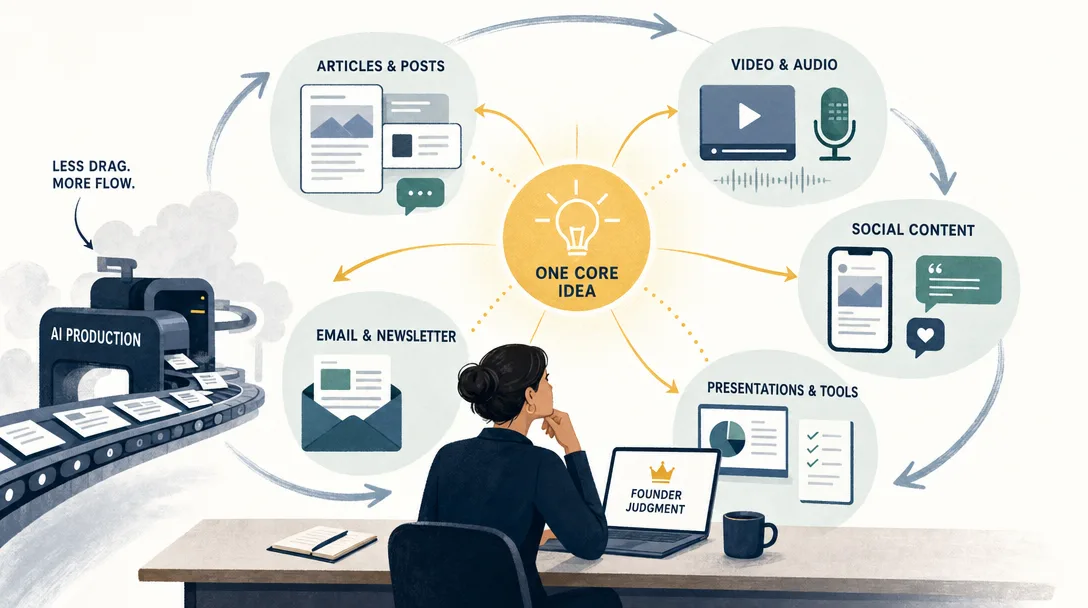
Back when content marketing meant "more posts," the bottleneck was time. Now AI compresses repurposing from days to minutes, but the picking question is the same one: which one piece is worth multiplying.
Before this flywheel, you write five disconnected posts a week and burn out by month two. After: you write one well-researched piece every two weeks and let the same idea show up across LinkedIn, X, newsletter, podcast, and YouTube in different shapes. The work doubles in surface area; the brain doubles in clarity.
A solopreneur does not have the capacity to create ten original pieces from scratch every week.
So stop trying.
Build one strong core piece, then repurpose it deliberately.
The workflow:
Start with one core idea.
Write one deep piece.
Extract the argument, examples, tables, objections, and FAQ.
Adapt each part to the channel instead of copy-pasting.
Send everything back to the base.
Core asset
Repurposed form
Job
Long article
Newsletter
Relationship
Long article
X or LinkedIn thread
Discovery
Table
Carousel
Fast explanation
FAQ
Short video script
Search and objections
Case story
Sales email
Trust
Checklist
Lead magnet
Subscriber capture
Contrarian section
Discussion post
Conversation
Prompt template
Downloadable asset
Utility
Summary
Social post
Reminder
Reader question
Next article
Feedback loop
This is where AI helps.
Not by replacing the original thinking, but by reducing format drag.
A strong AI-assisted content engine can take one 3,000-word article and generate:
a newsletter version,
five short social posts,
one carousel outline,
one 60-second script,
three FAQ snippets,
a lead magnet checklist,
and a week of distribution copy.
But the original idea still has to be yours.
If the core piece is generic, AI will multiply generic content. Faster.
Step 6: A Content Calendar That Records Reader Outcomes
Most content calendars track dates and titles.
That is not enough.
A useful calendar tracks the reader outcome.
Field
Why it exists
Publish date
Keeps cadence real
Draft date
Prevents last-minute writing
Topic
Names the content
Primary audience
Stops vague writing
Reader problem
Keeps the piece useful
Reader outcome
Defines what changes after reading
Base platform
Prevents channel chaos
Repurposing plan
Forces multiplication
CTA
Connects content to next step
Status
Makes the system visible
The most important field is reader outcome.
Before writing, finish this sentence:
After reading this, the reader can...
If you cannot complete that sentence, the piece is not ready.
Examples:
After reading this, the reader can choose one content base.
After reading this, the reader can write a content mission statement.
After reading this, the reader can turn one article into five distribution assets.
After reading this, the reader can tell which metrics matter and which are noise.
This one field prevents self-indulgent content. It forces usefulness.
Step 7: Subscriber-First Metrics
A content engine needs a dashboard, but the dashboard should be small.
Most creators drown themselves in analytics and call it strategy.
Start with this:
Metric
Weekly question
Net new subscribers
Did trust grow?
Subscriber source
Which channel produced the asset?
Best converting piece
What promise worked?
Replies or DMs
What pain did people reveal?
Saves or bookmarks
What was useful enough to keep?
Product signals
What did people ask to buy?
Production time
Is the system sustainable?
The last metric matters more than people admit.
If a weekly piece takes fifteen hours and leaves you exhausted, the engine will fail even if the content is good. Your operating model must fit your actual life.
I would rather publish one strong article every week for fifty weeks than five bursts of brilliant output followed by silence.
Consistency is not a moral virtue.
It is how trust recognizes you.
The 'Show Your Work' Layer
There is one more layer I would add for solopreneurs:
Show the work before it is polished.
Do not wait until you have a perfect product, perfect brand, perfect website, and perfect content library. Share the process:
what you are learning,
what you tried,
what broke,
what you changed,
what you are still unsure about.
This is not oversharing. It is useful proof of work.
People trust builders who let them see the bench, not only the showroom.
The mistake is turning every process note into self-promotion. The rule is simple:
Share what helps the reader understand or do something better.
Not "look at me working."
"Here is the mistake I made, the fix I found, and the test you can run."
That is content.
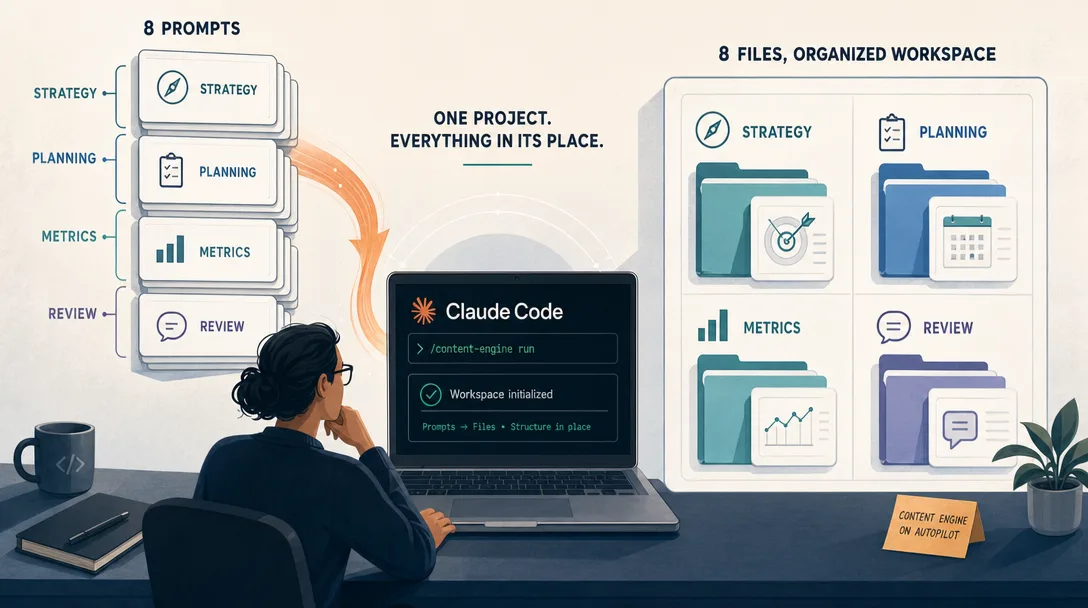
The AI Solopreneur Content Engine Workflow: 8 Prompts, 8 Files
Here is the practical Claude Code workflow I would use to build the system.
Read docs/background.md and docs/audience.md.

Build a sweet spot analysis for my solopreneur content engine.

Return a table with:
- expertise area
- audience segment
- painful problem
- demand evidence
- competition level
- content potential
- recommendation score from 1 to 5

Then recommend the top 3 sweet spots and explain the tradeoff behind each.
Save the result to output/sweet-spot-analysis.md.
Sample output (snippet):
Expertise
Audience
Pain
Demand evidence
Competition
Score
AI workflow design
Non-technical solo consultants
Drowning in tools, no shipped output
40+ Reddit threads in r/Entrepreneur asking "which AI stack actually saves time"
High but generic
5
Cash-flow systems
Freelance designers with irregular income
Feast/famine months kill morale
r/freelance threads, FreshBooks survey
Low
4
Newsletter ops
Experts who hate social media
Want repeat trust, not viral posts
Newsletter operator forums, Indie Hackers
Medium
4
If the output returns "AI for everyone" or "productivity for entrepreneurs", reject it and ask for sweet spots narrow enough to name 10 specific people who would care next week. Vague is the failure mode.
Prompt 2: Content tilt
Read output/sweet-spot-analysis.md.

For the top sweet spot, find 10 existing creators, newsletters, blogs, or channels in the space.
Do not copy their structure.

Identify:
- what they all cover
- what they avoid
- what audience they underserve
- what assumptions they repeat
- 10 possible content tilts I could own

For the best 3 tilts, write a content mission statement:
"My [base platform] helps [audience] get [outcome] by [distinct angle]."

Save the result to output/content-tilt-analysis.md.
Prompt 3: Content mission
Read output/content-tilt-analysis.md.

Create:
1. a one-sentence content mission,
2. a 30-second explanation,
3. an About page section,
4. a reader promise,
5. a list of topics I will cover,
6. a list of topics I will refuse.

Use plain English. No hype.
Save the result to output/content-mission.md.
Prompt 4: Repurposing system
Read content/originals/latest.md.
Turn this one core article into:
a newsletter version,
5 short social posts,
1 LinkedIn post,
1 X thread,
1 short video script,
1 carousel outline,
5 FAQ snippets,
1 lead magnet checklist.
Adapt each format. Do not copy-paste the same text.
Save each output into content/distributed/.
Also create output/distribution-checklist.md.
Prompt 5: 90-day calendar
Read output/content-mission.md and output/content-tilt-analysis.md.

Build a 90-day content calendar.

Include:
- weekly theme,
- core article title,
- reader outcome,
- primary keyword,
- distribution assets,
- CTA,
- expected subscriber signal,
- review question.

Mark 3 pillar pieces that can generate at least 10 derivative assets.
Save to output/content-calendar-90-days.md.
Prompt 6: Metrics dashboard
Read output/content-calendar-90-days.md.

Create a weekly dashboard template with these fields:
- week number,
- published core pieces,
- net new subscribers,
- source of subscribers,
- best converting piece,
- replies or DMs,
- saves or bookmarks,
- production hours,
- product signals,
- next week adjustment.

Also create a monthly review template.
Save to output/metrics-dashboard.md and system/weekly-review.md.
Prompt 7: Month-one execution plan
Read all files in output/.

Create a 30-day execution plan.

Week 1: setup the base, About page, subscriber CTA, and first outline.
Week 2: publish the first pillar piece and distribute it.
Week 3: publish the second piece and start light outreach.
Week 4: publish the third piece and run the first review.

For each task include:
- file to create,
- deadline,
- acceptance criteria,
- what not to do.

Save to content/month-1/month-1-execution-plan.md.
Prompt 8: Content engine SOP
Read output/ and content/month-1/.

Build a reusable operating system for the content engine:
- topic selection workflow,
- article template,
- repurposing workflow,
- publishing checklist,
- subscriber capture checklist,
- weekly review process,
- 50-question idea bank.

Save everything to system/.
Create system/README.md explaining how to use it each week.
The important part is not the prompts.
The important part is the folder system. Claude Code performs better when the business has a place for every decision to land.
Content Engine Failure Modes to Avoid
A content engine usually fails in predictable ways.
The failure is rarely "I did not know enough." It is usually one of these:
Failure mode
What it looks like
Fix
Platform hopping
You publish on five channels for three weeks, then stop
Pick one base and one discovery channel
Topic drift
Every week is a different audience, promise, or niche
Write a content mission and reject off-mission ideas
AI sameness
The content is clean, but it sounds like everyone else
Add real decisions, failures, and examples before drafting
Vanity metrics
You celebrate views but capture no subscribers
Add a subscriber CTA to every core piece
No product signal
People like the content but never ask for help
Write more specific problem-solving pieces
Overproduction
You create too many formats and burn out
Reduce derivative assets, not the core piece
No review loop
You publish and never learn from the result
Run a 30-minute weekly review
The two most dangerous are topic drift and AI sameness.
Topic drift feels productive because you are always writing. But the reader cannot build a memory shortcut around you. One week you write about productivity. Next week personal branding. Next week AI tools. Next week book notes. Each piece may be useful, but the body of work does not accumulate.
AI sameness is quieter. The sentences are fine. The structure is clean. The article has bullets, tables, and a confident tone. But nothing inside proves that a real person made a real judgment.
The fix is to add a "proof of work" pass before AI touches the draft.
Before drafting any serious piece, write these five notes by hand:
What did I personally try, observe, reject, or change?
What would a generic article say here?
What do I disagree with?
What example can only come from my work?
What should the reader do differently this week?
Then let AI help structure and polish.
If you reverse the order, AI gives you a smooth draft, and you spend the rest of the process trying to inject a soul into it. That is harder than starting with judgment.
The 6-Week Content Tilt Validation Test
Do not argue about your content tilt in your head.
Test it.
For six weeks, publish around one tilt and watch the signals.
Week
Test
What to publish
What to measure
1
Pain clarity
One piece naming the problem sharply
Replies saying "this is me"
2
Method clarity
One piece explaining your approach
Saves and shares
3
Story clarity
One personal failure or turning point
Trust replies and DMs
4
Utility
One checklist or template
Downloads or bookmarks
5
Objection
One piece answering the biggest doubt
Comment quality
6
Product signal
One soft "would this help?" post
People asking for the next step
The goal is not virality.
The goal is recognition.
You are looking for the moment when a reader repeats your angle back to you:
"So your thing is AI workflows for non-technical solo operators?"
That is a good sign.
You are no longer just "posting about AI." You are occupying a mental shelf.
If nobody can repeat the angle after six weeks, either the tilt is too vague or the content is not making the tilt visible enough.
The 30-Minute Weekly Content Engine Review
A solopreneur content engine does not need a complicated analytics stack in month one.
It needs a weekly review.
Use this every Friday:
Question
Answer
What did I publish this week?
List the core piece and derivatives
How many new subscribers did it create?
Count only owned audience growth
Which piece created the best reply?
Copy the reader language
Which promise got saved or bookmarked?
Identify utility
What took too long?
Cut or automate one step
What did people misunderstand?
Turn that into next week's article
What product signal appeared?
Note requests, objections, paid interest
What will I repeat next week?
Pick one pattern
The "best reply" field matters more than the dashboard.
A single sentence from a real reader can tell you more than a page of metrics. If three people use the same phrase to describe their problem, that phrase belongs in your next title, landing page, or offer.
This is how the content engine turns into a business engine.
You publish. People respond. You collect the language. You clarify the offer. You publish again.
It is not glamorous.
It works because it is close to the market.
When to Monetize Your Content Engine
Do not wait forever.
Audience-first does not mean "never sell."
It means you sell after the demand is less imaginary.
Here are the signals I would watch:
Signal
Weak version
Strong version
Replies
"Great post"
"Can you help me do this?"
Subscribers
Random growth
Growth from the exact audience you want
Saves
General approval
People saving a specific checklist or template
Questions
Abstract curiosity
Repeated questions about execution
DMs
Compliments
Problem descriptions and budget hints
Calls
Friendly chats
People asking price, scope, or availability
The first product does not need to be a big course.
For many solopreneurs, the cleanest first offer is one of these:
a paid diagnostic,
a template pack,
a workshop,
a small cohort,
a fixed-scope service,
a one-hour teardown,
a paid implementation sprint.
The first offer should answer a pain that the content has already surfaced.
That is the point of the content engine. It does not only attract the audience. It helps you listen before you build.
The Smallest Content Engine You Can Start This Week
If all of that feels too large, use the small version.
For the next four weeks:
Pick one narrow audience.
Pick one base platform.
Publish one useful piece per week.
Repurpose each piece into three smaller assets.
Ask every reader to subscribe somewhere you control.
Track subscribers, replies, saves, and production hours.
Review every Friday.
That is enough.
Do not automate it yet. Do not add five tools. Do not design a brand universe.
Run the loop by hand first.
After four weeks, ask:
Question
Keep going if...
Did I publish four times?
Yes, without heroic effort
Did anyone reply or subscribe?
Yes, even a small number
Did one topic clearly outperform others?
Yes, repeat that angle
Did production feel sustainable?
Yes, or fix the workflow
Did I learn what people want?
Yes, document the signals
If the answer is mostly no, do not quit the whole idea yet. Fix the sweet spot or tilt.
Before the engine, many solopreneurs publish five posts a week and burn out by month two. After, one well-researched piece every two weeks tends to compound across multiple channels — the exact cadence depends on your format and audience, but the shift from volume to leverage is the consistent pattern.
Key Takeaways
A solopreneur content engine is a trust system, not a posting habit. Audience first, product second is usually the lower-risk path.
The seven parts run in sequence: sweet spot → content tilt → one base platform → audience building (subscriber capture) → monetization → diversification → scale or stay small. The repurposing flywheel, calendar, and subscriber-first metrics are the operating layer that makes those seven steps actually run.
One owned base plus one discovery channel beats five half-fed channels. Social feeds the base; the base captures the relationship.
Subscribers are the asset. Views are rented attention. Track net new subscribers, replies, saves, production hours, and product signals — not likes.
Build one strong core piece per week, then repurpose deliberately into 7-10 derivative assets. AI multiplies format, not judgment.
The two most dangerous failures are topic drift and AI sameness. Run a 30-minute weekly review every Friday to catch both early.
Ready-to-Use Prompt: Build Your Seven-Part Solopreneur Content Engine
What this does: Builds your content engine — sweet spot, content tilt, one owned base platform, subscriber capture, a repurposing flywheel, an outcome-recording calendar, and subscriber-first metrics — on the audience-first principle, so you earn trust before you sell and build once to publish every week. Based on: Solopreneur Content Engine: Build Once, Publish Every Week — https://aiworkflowpro.com/solopreneur-content-engine/ Time to run: ~5 minutes
Copy this prompt into Claude Code, ChatGPT, or any AI assistant:
ROLE: You are a solopreneur content-engine architect. Your job: build the seven-part content engine that earns trust before you sell — audience first, product second — with a sweet spot, a content tilt, one base platform, subscriber capture, a repurposing flywheel, an outcome calendar, and subscriber-first metrics.

CONTEXT — 7-PART CONTENT ENGINE BUILDER:
A content engine is not a posting schedule — it is a business system for earning trust before you sell. The safest path for many solopreneurs is audience first, product second: publish useful work until the market tells you what to build. The seven parts: (1) your content-engine sweet spot (where your expertise, audience need, and a defensible angle meet), (2) your content tilt (the specific point of view that differentiates you), (3) one base platform, (4) subscriber capture (subscribers, not applause), (5) the repurposing flywheel, (6) a content calendar that records reader outcomes, (7) subscriber-first metrics. AI multiplies a point of view only after the system is clear — it cannot replace one.

INPUTS (fill in before running):
- EXPERTISE: YOUR_STRENGTH_HERE (what you know deeply)
- TARGET_READER: YOUR_AUDIENCE_HERE (who you serve)
- BASE_PLATFORM: YOUR_PLATFORM_HERE (your one base — newsletter/blog/video — or "undecided")
- PRODUCT_TODAY: YOUR_ANSWER_HERE (do you have a product yet? yes/no)

METHOD — 6 STEPS:

Step 1 — Find the sweet spot
Locate where EXPERTISE, TARGET_READER's need, and a defensible angle intersect. The sweet spot is not "what you can write about" — it is the narrow overlap you can own. If the three do not intersect, narrow until they do.

Step 2 — Find the content tilt
Define the specific point of view that differentiates you from everyone else writing on the topic. The tilt is the angle only you can take — without it you are generic, and AI cannot rescue generic. AI multiplies a POV; it does not replace one.

Step 3 — Choose ONE base platform
Commit to one BASE_PLATFORM (newsletter, blog, or video). One base, not many — the base is where you own the audience; everything else is distribution that funnels to it.

Step 4 — Build subscribers, not applause
Capture subscribers (email/list), not likes/applause. Applause is vanity; subscribers are ownable trust. Every base-platform post must have a capture path.

Step 5 — Build the repurposing flywheel
Design the flywheel: one base asset → multiple derivative pieces across distribution channels funneling back to the base. Build once, publish every week — the flywheel is what makes weekly sustainable.

Step 6 — Outcome calendar + subscriber-first metrics + audience-first check
Set a content calendar that records reader OUTCOMES (what readers did/said/felt), not just posts. Set subscriber-first metrics (subscriber growth, retention, replies) over vanity metrics. If PRODUCT_TODAY = no, confirm the audience-first stance: publish until the market tells you what to build.

RULES:
- Audience first, product second — publish useful work until the market tells you what to build; do not build in a vacuum.
- One base platform that you own; everything else funnels to it.
- Build subscribers, not applause — subscribers are ownable trust; likes are vanity.
- AI multiplies a point of view only after the system is clear — it cannot replace one.

OUTPUT FORMAT:
Output six sections:
1. **Sweet spot** — the expertise × need × defensible-angle intersection.
2. **Content tilt** — the differentiating POV only you can take.
3. **Base platform** — the one owned base + what funnels to it.
4. **Subscriber capture** — the capture path on every base post (subscribers, not applause).
5. **Repurposing flywheel** — markdown table with columns: Base asset | Derivative pieces | Funnel-back.
6. **Outcome calendar + metrics + audience-first** — the outcome-recording calendar + subscriber-first metrics + the audience-first stance if PRODUCT_TODAY = no.
Save as @templates/solopreneur-content-engine.md and run when you build the content engine, then re-run when you change base platform, tilt, or product status.
Frequently Asked Questions
What is a content engine for solopreneurs?
A content engine is a repeatable system for turning one clear point of view into useful content, subscribers, trust, and eventually products. It includes a narrow audience, a content tilt, one base platform, a calendar, a repurposing workflow, and subscriber-first metrics.
Should I build a product first or an audience first?
If you already have validated demand, build the product. If you are still guessing, build the audience first. A content-first path lowers the risk of building something nobody wants because the audience tells you what problems are worth solving.
How often should a solopreneur publish?
Start with one serious piece per week on one base platform. Repurpose that piece into smaller formats only after the core piece is strong. The goal is not maximum volume. The goal is a rhythm you can sustain for twelve months.
What metric matters most in a content engine?
Subscriber growth matters more than views, likes, or follower count. Views are rented attention. Subscribers are a permission asset. Track weekly net subscribers, best converting content, replies, and product signals.
Can AI run my content engine for me?
AI can research, outline, repurpose, format, and maintain the calendar. It should not decide your point of view or invent your experience. The best split is simple: AI handles production drag, you keep the judgment.
What's Next in the Series?
You have the engine. Next, in Part 6: Irresistible Offer for Solopreneurs, we wrap the audience and content output into an offer buyers cannot misread. Then in Part 7: Your First 1,000 True Fans, we turn the subscriber base into the relationship that funds the business.
It is a way to earn enough trust that the business can be built with less guessing.
The audience tells you what matters. The calendar keeps you honest. The flywheel gives one idea more surface area. The dashboard keeps you from confusing applause with progress.
AI makes the engine faster.
Your point of view makes it worth following.
Build the point of view first.
Before you close this tab: pick one base platform and write the one-sentence content mission ("My [base] helps [audience] get [outcome] by [distinct angle]"). Save it as content-mission.md. Tomorrow, draft the first pillar piece around that mission. That is Week 1, Day 1 of your content engine.
Monitoring a competitor who publishes no feed is the case every RSS guide skips. Twenty-one platforms sorted by which of three jobs they do, and the finished setup is business process automation you own outright, with no seat licence to renew.
Blaming the content is the reflex when a post underperforms, and it is usually the wrong diagnosis. A second reader decides distribution before any human sees the post, and most of what it checks is mechanical enough to automate business processes around, on five platforms at once.
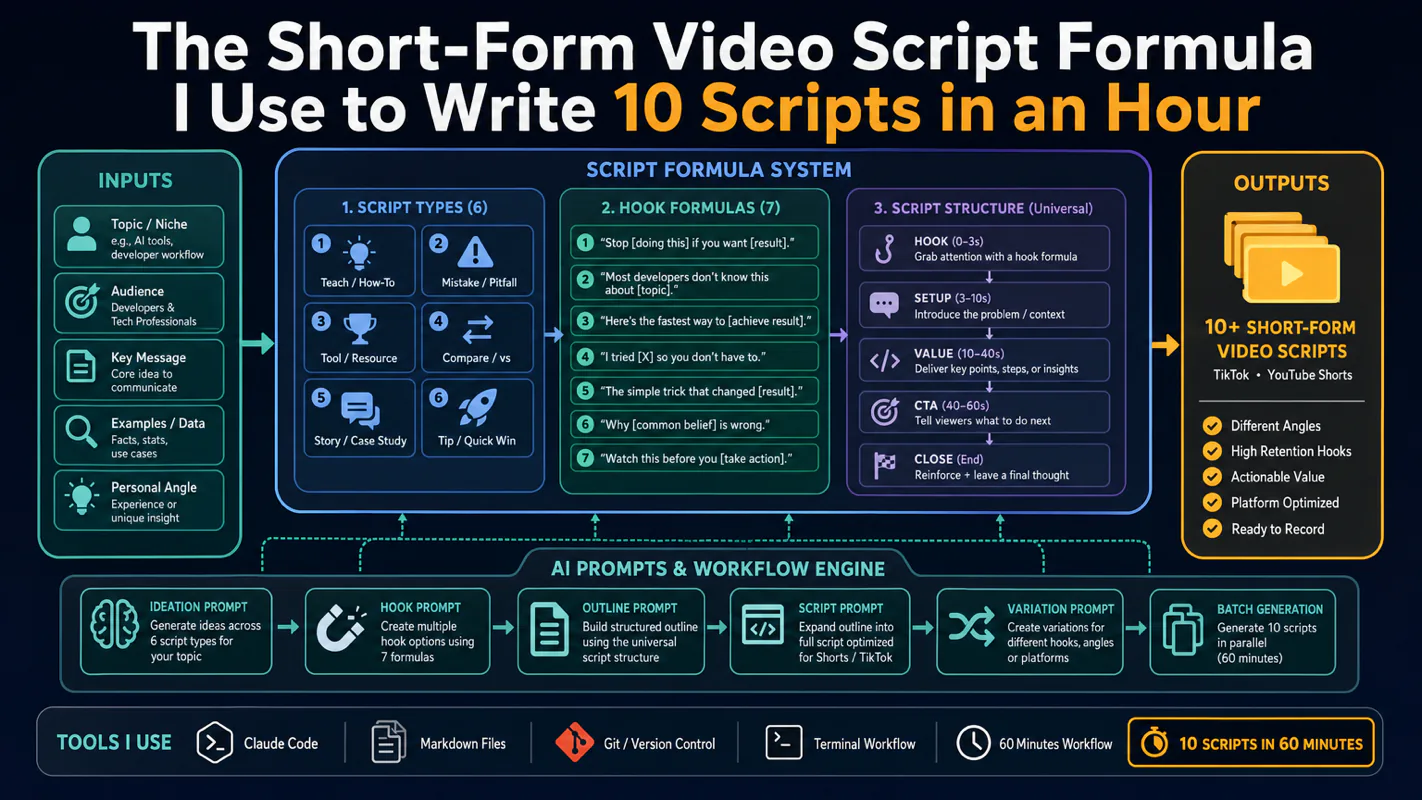
Thursday afternoon, fourteen product ideas, a Monday filming slot, no scripts. Six script shapes and seven hook formulas turn that hour into finished drafts — and the business rule stays: rewrite at least 30% before anything ships.
A detector score cannot survive a conversation with the freelancer it just cost three weeks of payment. What holds up is the specific thing on the page: rhythm, vocabulary, missing detail. Eight of them here, and the reason review stays human when you automate business processes.