Monitoring a competitor who publishes no feed is the case every RSS guide skips. Twenty-one platforms sorted by which of three jobs they do, and the finished setup is business process automation you own outright, with no seat licence to renew.
Blaming the content is the reflex when a post underperforms, and it is usually the wrong diagnosis. A second reader decides distribution before any human sees the post, and most of what it checks is mechanical enough to automate business processes around, on five platforms at once.
Gloves on, tape measure in hand — nobody types a query. Three voice surfaces for ai automation tools (terminal, Telegram, Discord), 10 TTS and 6 STT providers compared on cost and latency, plus a setup that costs nothing.
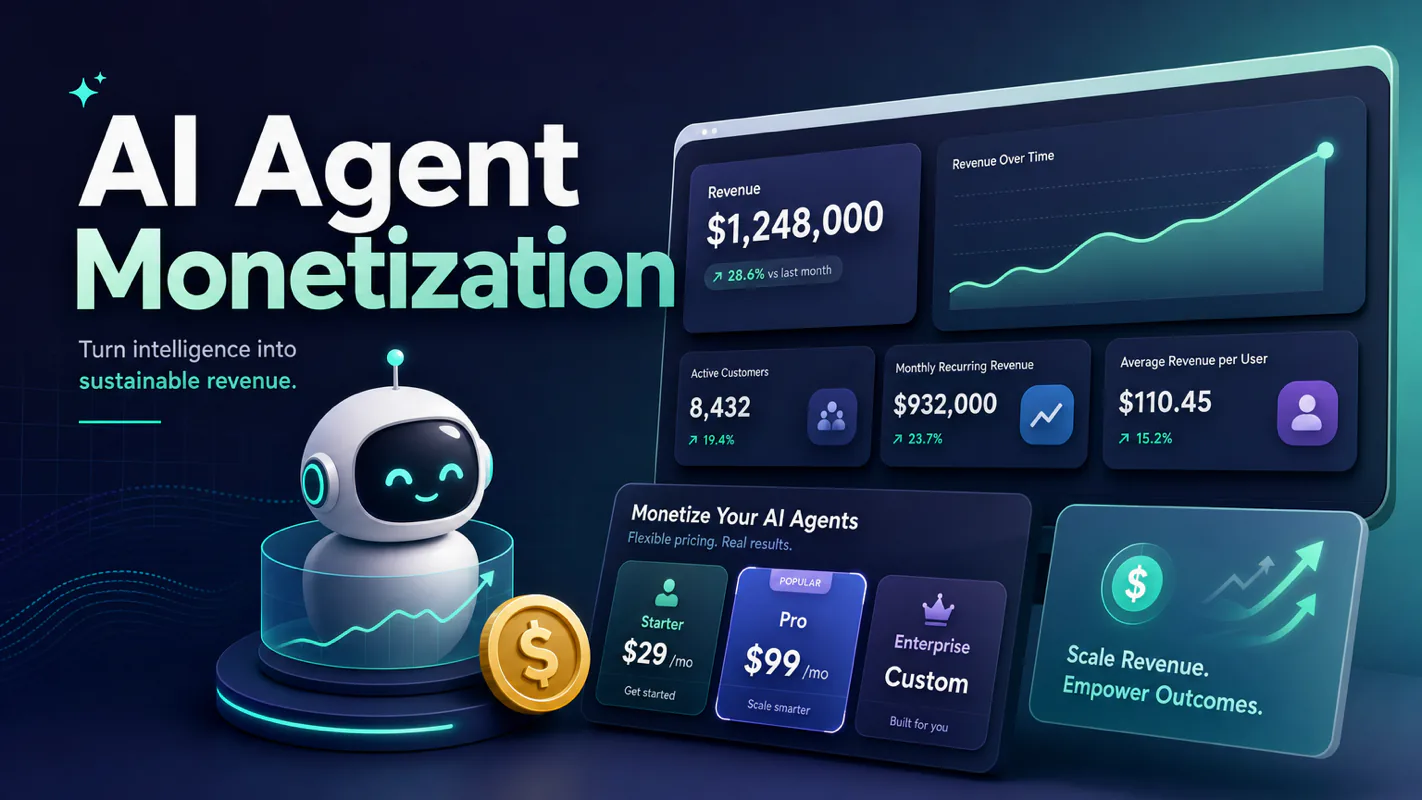
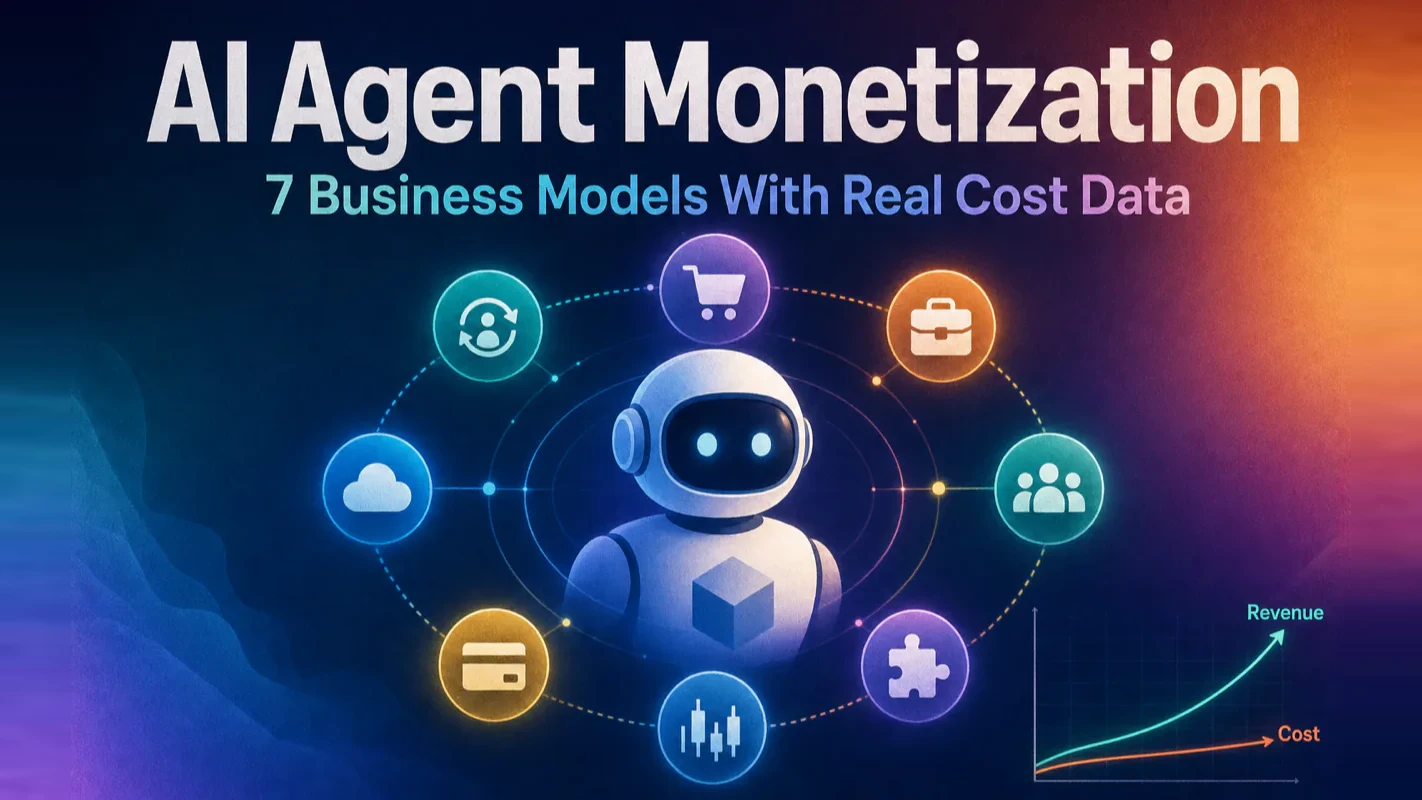
AI Agent Monetization: 7 Business Models That Actually Work (With Real Cost Data)
Revenue models are easy to list and hard to price. Here are seven with the actual monthly running cost attached — including the three that quietly stop working once volume goes up.
Every list of AI business models skips the same column: what it costs to keep running. That column is where most of these die. A model that nets forty dollars a month per client is a real business at thirty clients and a full-time unpaid job at three. So this list has the running cost attached to each one — measured, not estimated — because for AI for small business that number is the difference between a side income and an expensive hobby. Three of the seven stop making sense above a certain volume, and it is worth knowing which before you build.
AI agent monetization comes down to one number: your operating cost. I run a multi-platform AI agent system — Discord, Telegram, web chat — for under $7 a month. Not a typo. Seven dollars covers electricity for a Mac mini running 24/7, and model inference costs are essentially zero thanks to free-tier APIs and local models.
That cost structure is the entire argument for monetizing open-source AI agents. When your operating expense rounds to zero, nearly every dollar a client pays you is profit.
This guide breaks down seven business models built on that foundation. Each section covers four things: what you sell, how you price it, what it costs you, and where clients come from. I was wrong about one thing early on — I assumed the highest-revenue models would require the most technical skill. They don't. Some of the best margins come from the simplest deployments.
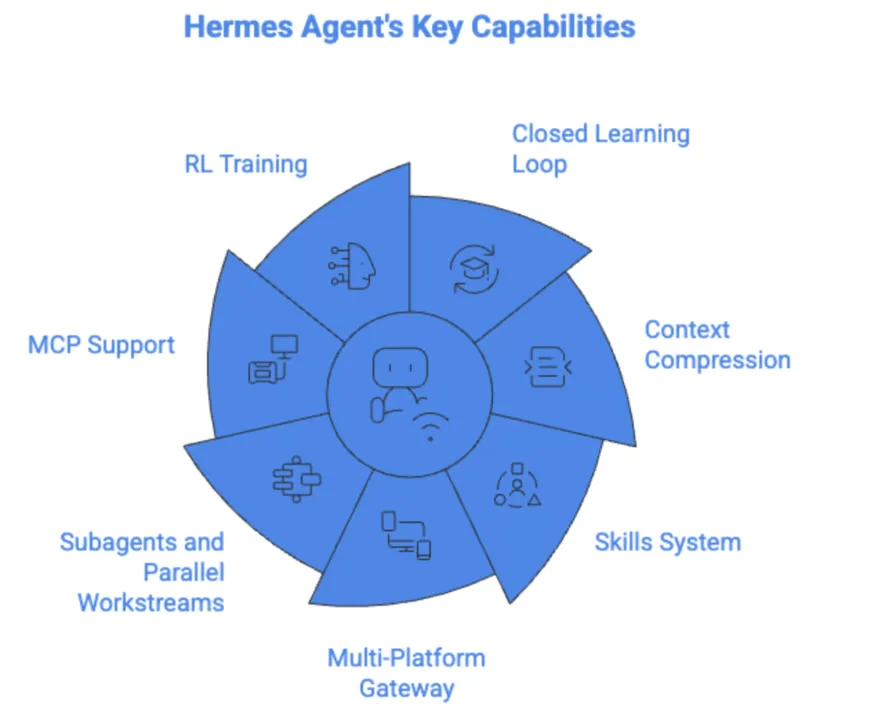
New to AI agents? Start with the Hermes Agent Complete Guide to understand the architecture before diving into monetization.
7 AI Agent Business Models at a Glance
Here's the bottom line upfront. Every model below is analyzed in detail further down, but this table gives you the decision-making data in 30 seconds.
Model
Monthly Revenue
Startup Cost
Technical Skill
Break-Even
AI Customer Service (Local Businesses)
$400–2,000/mo
$5–20/mo
Medium
First client
Community Channel Operations
$400–1,450/mo
$0–20/mo
Low
3–6 months
AI Agent Freelancing
$3,000–15,000/mo
$0–20/mo
Medium–High
1–3 months
Skill/Plugin Marketplace
$150–2,000/mo
$0
Medium
First week
White-Label AI Agent Platform
$2,500+/mo (10 clients)
$0–20/mo
High
First batch
CRM/SCRM Replacement
Saves $1,400+/yr per client
$5–20/mo
Medium–High
First client
AI Content Operations Agency
$3,000–10,000/mo
$5–20/mo
Low–Medium
First client
Revenue ranges marked [projected] are derived from industry benchmarks and verified cost structures. Sources cited per model.
Model 1: AI Customer Service for Local Businesses
What You Sell
You deploy an AI customer service system for local restaurants, retail shops, gyms, and training centers. The agent handles incoming messages on Telegram, Discord, or web chat — answering FAQs, processing appointment requests, and routing complex issues to the business owner.
Think of it as a receptionist that never clocks out. A bakery owner stops answering "What time do you close?" forty times a day. A gym stops missing appointment requests at 11 PM.
How to Price It
Tier
Setup Fee
Monthly Retainer
What's Included
Basic (single channel, text only)
$500–800
$100–200/mo
One bot + FAQ knowledge base
Standard (multi-channel + voice)
$1,200–2,500
$200–400/mo
Multi-platform + speech-to-text transcription
Premium (full knowledge base + training)
$3,000–8,000
$400–800/mo
Custom knowledge base + owner training + quarterly optimization
The pricing logic: Intercom Fin charges $0.99 per AI conversation. At 2,000 conversations per month, that's $23,760 per year. Zendesk AI costs even more — roughly $42,660 annually for one seat plus 2,000 AI conversations. Your open-source solution undercuts these by 80–95%, and the client still saves money compared to hiring a part-time employee.
Your Cost Structure
Item
Your Cost
Notes
Agent software
$0
Apache-2.0 open-source license (free for commercial use)
VPS
$5–20/mo
Lightweight instance; self-hosted = $0
Model API
$0–10/mo
Free tiers cover most usage
Monthly total
$5–30
Gross margin
85–97%
Where Clients Come From
Door-to-door demos convert better than any online marketing for local businesses. Prepare a working demo bot, walk into a business, pull out your phone, and ask the bot their most common customer questions. Business owners who see it working live close at dramatically higher rates than those who read a brochure.
The client acquisition path:
Pick one industry. Restaurants and fitness studios work best — high inquiry volume, repetitive questions, owners who are perpetually busy
Build a live demo. Configure a bot that answers typical questions for that industry. Record a screen demo as backup
Walk in and show it. The demo takes 90 seconds. Let the owner try it
Offer a free trial week. Zero risk for the business. After one week, interested owners sign a contract
Referral incentives. Waive one month's retainer for every successful referral
Market Validation
Salesforce reports AI customer service users reduce per-interaction costs by 52% within 6 months
Gartner CX research: businesses deploying AI customer service cut contact costs by 35–45% within 12 months
Human agent cost per interaction: $15–25 in North America. AI agent cost: $0.50–0.70 — Crisp 2026 benchmark
This is the steadiest path. Business owners don't care about your tech stack. They care about two questions: can it replace a hire, and what does it cost? An open-source agent answers both favorably.
Model 2: Community Channel Operations (Telegram/Discord)
What You Sell
You run an AI-powered content channel on Telegram or Discord. The agent automates content publishing, user interactions, and community management. Revenue comes from ad revenue sharing, paid memberships, and promotional partnerships.
Revenue Breakdown
Telegram introduced ad revenue sharing in 2024 — channels with 1,000+ subscribers earn 50% of ad revenue. Discord offers Server Subscriptions for premium tiers.
For a 5,000-subscriber channel [projected]:
Revenue Stream
Monthly Range
Notes
Telegram ad revenue share
$50–200
Depends on CPM and engagement rate
Paid memberships ($5–15/mo)
$250–750
At 5–10% conversion rate
Promotional partnerships
$100–500
Sporadic, depends on niche
Total
$400–1,450
What the Agent Automates
I run this exact setup — 12 Discord channels across multiple brand segments, all managed by a single agent instance. Here's what runs without human intervention:
Scheduled content publishing: The agent pushes curated content to channels on a daily and weekly cadence via cron automation
24/7 user interaction: Auto-replies to text, transcribes voice messages (local speech-to-text), and interprets images
Brand-segmented responses: Channel-specific prompts auto-switch personality and knowledge context when a user posts in different channels
Knowledge base Q&A: Pointer architecture reads from a knowledge base in real time — update a file, the agent picks up the change on the next message. Zero maintenance
Automated digests: Daily and weekly summaries pushed to subscribers via cron scheduling
My actual deployment: 12 Discord channel segments, single agent instance, Mac mini running 24/7, total monthly cost approximately $7 (electricity only).
The Bottom Line
This is the lowest-barrier model. You need zero capital to start, basic terminal skills to configure the agent, and patience to build an audience. Revenue kicks in at 1,000 subscribers and scales with audience growth. The agent does the heavy lifting — you set the content strategy.
Model 3: AI Agent Freelancing on Upwork and Fiverr
What You Sell
You take on AI automation projects on freelance platforms: building customer service bots, setting up agent workflows, connecting knowledge bases, integrating multi-platform messaging. The demand is real — and growing fast.
Market Size
The numbers are verifiable:
AI integration and automation category grew 90%+ year-over-year — Upwork 2025 Q4 earnings
AI agent development is one of the fastest-growing skill clusters in 2026
AI-related freelance skills demand grew 109% — Upwork official data cited by Nomixy
AI freelancing overall grew 47%, fastest of all categories — LumiChats 2026 Guide
Pricing by Service Type
Based on a survey of 50+ freelancers [verified, BetOnAI March 2026]:
Service Category
Monthly Revenue
Avg. Project Price
Market Saturation
AI automation builds
$5,000–25,000
$2,000–8,000
Low
AI chatbot deployment
$3,000–12,000
$1,500–5,000
Medium
RAG (retrieval-augmented generation) / knowledge base setup
$4,000–15,000
$3,000–10,000
Low
AI strategy consulting
$8,000–30,000
$5,000–15,000
Low
AI content production
$2,000–8,000
$500–2,000
High
Prompt engineering (standalone)
$500–2,000
$100–500
Oversaturated
Maintenance retainers: $200–500/month per client [verified]. Ten clients = $2,000–5,000 in recurring monthly revenue.
Former middle-school teacher in Texas: builds AI automation workflows for small businesses (restaurants, law firms, real estate). Monthly income: $7,200
UX designer in Chicago: uses AI for website copy. Side income: $3,500/month
Mechanical engineer in Seattle: AI automation consulting for manufacturing. Monthly income: $4,800
Your Competitive Edge
When competing against n8n and Make consultants on Upwork, an open-source agent framework gives you four structural advantages:
Zero vendor lock-in: Clients own their infrastructure. They can switch maintainers without losing their setup
Multi-platform from a single deployment: One agent instance handles Telegram + Discord + web chat simultaneously
Local deployment = data sovereignty: For privacy-conscious clients, data never leaves their premises
72+ built-in tools + skill system: Customization is faster than building from scratch on generic automation platforms
Client Acquisition Strategy
Platform
Strategy
Ramp Time
Upwork
Price first 3–5 projects low to build 5-star reviews, then raise rates
1–3 months
Fiverr
SEO-optimize gig titles, standardize deliverables
2–4 weeks
Direct outreach
Cold emails to local businesses with demo links
1 month
Content marketing
Tutorial blog posts and videos for passive inbound
3–6 months
Model 4: Skill and Plugin Marketplace Sales
What You Sell
You build agent skills (plugins, task definitions, workflow templates) and sell them on emerging skill marketplaces. A skill is a Markdown-formatted task definition that tells an agent how to complete a specific job — SEO audits, code reviews, data analysis, customer support workflows.
Build it once, sell it indefinitely. The economics are simple: your development time is the only cost.
Where to Sell
Several marketplaces are already live [verified, June 2026]:
Platform
Seller Revenue Share
Minimum Price
Payment
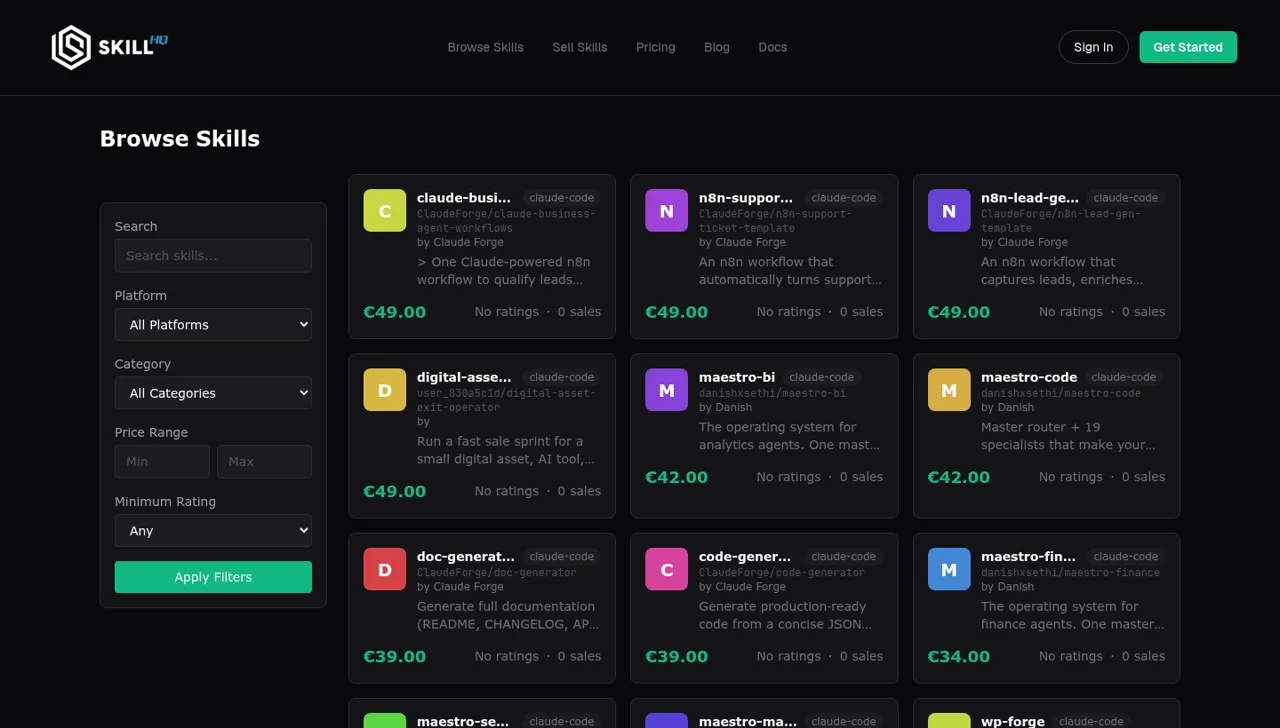
SkillHQ.dev
85%
€2
Stripe
AgentPowers.ai
85% (incl. fees)
$5
Stripe Connect
Agensi.io
80%
$3
Not disclosed
AgentStore (open source)
80%
Free tier available
USDC (x402 protocol)
ClawStudio (open source)
~95% (infra fee only)
$0.01/call
USDC (x402 protocol)
Pricing Tiers
Tier
Price Range
Dev Time
Expected Monthly Sales
Single-function skill
$3–10
2–4 hours
50–200 units
Multi-step workflow skill
$15–50
1–3 days
20–80 units
Enterprise skill suite
$100–500
1–2 weeks
5–20 units
Custom development
$500–5,000/project
Per project
On demand
Three Revenue Layers
Layer 1: Direct skill sales. Price at $3–10, distribute through SkillHQ.dev or AgentPowers.ai. Lowest barrier. Good for testing market demand.
Layer 2: Industry solution bundles. Package multiple skills into vertical solutions — an "E-commerce Customer Service Suite" combining order lookup + return processing + automated replies. Price at $100–500 with monthly maintenance.
Layer 3: Skills as pay-per-call APIs. Wrap skills as API services through AgentGate or HYRVE marketplaces. The ClawStudio model suggests an agent handling 10 calls/day could generate roughly $300/month in revenue at $6.50/month infrastructure cost [projected, ClawStudio README].
What Sells Best
High-demand categories according to the Agensi marketplace guide: code review, test automation, DevOps, CI/CD integration, and framework boilerplates.
The agent ecosystem already includes 155+ built-in skills and 88K+ community skills. You don't build from zero — customize existing capabilities for specific verticals. Bundle "order tracking + return handling + customer reply" into an "E-commerce Customer Service Suite" and the value jumps from $5 per skill to $200 per suite.
I was wrong about skill marketplaces initially. I expected them to remain niche developer tools. Instead, the x402 payment protocol and agent-to-agent commerce are turning skills into a real marketplace — agents buying capabilities from other agents, no human in the loop.
Model 5: White-Label AI Agent Platform
What You Sell
You package the agent framework under your own brand and sell it as a managed service to end clients. The client sees your company name, your dashboard, your support. Under the hood, it's the open-source agent doing the work.
Think car dealership economics: you don't manufacture the vehicle, but you brand the buying experience and handle the customer relationship.
Traditional platform cost (e.g., AgentForge Scale)
$297/mo
Open-source platform cost
$0
Your VPS + API overhead
~$20/mo
Revenue from 10 clients at $250/mo each
$2,500/mo
Gross profit (traditional)
$2,183
Gross profit (open source)
$2,480
Gross margin
~99%
The $297/month savings is modest at 10 clients. At 50 clients, the annual difference is $17,820 — and the margin advantage compounds as you scale.
Requirements
This is the most technically demanding model. You need to:
Deploy and maintain agent instances for each client
Configure isolated knowledge bases per tenant
Provide tier-1 technical support
Build repeatable deployment workflows (automate everything you can)
The payoff: near-zero marginal cost per additional client once your deployment pipeline is solid.
Model 6: CRM and Customer Management Replacement
What You Sell
You replace expensive CRM and SCRM (Social CRM) platforms with an open-source agent deployment. The pitch: same core functionality, 80% lower annual cost, and data stays on the client's own infrastructure.
What Paid CRM Platforms Cost
Platform
Annual Cost
Source
HubSpot Professional
$9,600/yr
HubSpot pricing
Intercom (1 seat + 2K conversations/mo)
$24,252/yr
Heeya 2026 benchmark
Zendesk AI (1 seat + 2K conversations/mo)
$42,660/yr
Zendesk pricing
Freshdesk Pro
$3,588/yr
Freshdesk pricing
What the Agent Replaces
CRM Feature
Agent Equivalent
Replacement Coverage
Multi-channel messaging
Discord + Telegram + web chat integration
90%
AI customer service replies
LLM + knowledge base with real-time file watching
85%
Customer tagging/profiling
Automatic memory management per user
60%
SOP automation
Skill system + workflow definitions
70%
Analytics and reporting
Custom development required
40%
Bulk messaging
Cron automation + channel broadcasting
75%
The Savings Math
Using HubSpot Professional as the baseline [projected]:
Solution
Annual Cost
Notes
HubSpot Professional
$9,600
Full CRM + marketing + contacts
Open-source agent (VPS)
$240
$20/mo VPS + API calls
Open-source agent (self-hosted)
$84
$7/mo electricity
Annual savings
$9,360–9,516
The savings gap is your value proposition and your revenue. Charge clients a deployment fee plus monthly maintenance, and you're profitable from client one.
Building Trust First
I learned this the hard way: pitching CRM replacement cold doesn't work. Business owners need to trust you with their customer data before they'll switch platforms. The natural sequence is to start with Model 1 (AI customer service) — once the bot runs reliably for two or three months, expanding the conversation to full CRM replacement is a much easier sell.
The main gap to be transparent about: analytics and reporting coverage is only about 40%. If a client relies heavily on dashboards and automated reports, set expectations clearly before signing.
Model 7: AI Content Operations Agency
What You Sell
You run content operations for businesses — topic research, draft generation, publishing, engagement management, and performance reporting. The agent handles 70–90% of the production workflow. You handle strategy and quality control.
Pricing
Service Level
Monthly Fee
What's Included
Starter
$1,500–3,000/mo
Basic topic research + AI-assisted content + scheduling
Full content strategy + multi-platform + data analysis + conversion optimization
What the Agent Automates
Task
Automation Level
Notes
Topic discovery
90%
Cross-references industry trends with knowledge base
Content drafting
70%
AI generates first draft, human reviews and refines
Publishing and scheduling
95%
Automated end-to-end
Engagement replies
95%
24/7 auto-responses + voice transcription
Performance reporting
80%
Automated data collection and report generation
Strategy planning
40%
Requires human judgment and industry expertise
The Key Insight
Platform policies globally are cracking down on pure AI-generated content — but they encourage AI-assisted creation with human oversight. Position yourself as a strategist and quality controller, not a content factory. The agent handles the repetitive production work (drafting, formatting, scheduling). You handle what AI can't: deciding what to write about, when to chase a trend, and when to hold back.
This positioning is both platform-compliant and defensible. AI can't make editorial judgment calls. You can.
Full Cost Comparison: Open Source vs. Paid Alternatives
This table is the core argument for building a monetization business on open-source infrastructure.
Paid Alternative
Annual Cost
Open-Source Annual Cost
Annual Savings
Savings %
Customer Service
Intercom Fin (1 seat + 2K conv/mo)
$24,252
$0–240
$24,012+
99%
Zendesk AI (1 seat + 2K conv/mo)
$42,660
$0–240
$42,420+
99%
Freshdesk Pro (1 seat)
$3,588
$0–240
$3,348+
93%
CRM/SCRM
HubSpot Professional
$9,600
$0–240
$9,360+
97%
Salesforce Essentials
$3,600
$0–240
$3,360+
93%
White-Label Platforms
Stammer.ai Full SaaS
$5,964/yr
$0
$5,964
100%
AgentForge Scale
$3,564/yr
$0
$3,564
100%
Automation Workflows
Zapier Team (50K tasks/mo)
$5,382/yr
$60–240
$5,142+
95–99%
Open-source costs: $0 = self-hosted (Mac mini + free-tier APIs); $240/yr = VPS at $20/month. Prices collected June 2026; subject to change.
Pricing volatility note: AI agent pricing is shifting rapidly. The AIAgentROI 2026 Q2 benchmark report suggests token costs may drop 10x within 18 months and recommends against signing annual contracts at current prices. The structural advantage — open source vs. paid subscription — holds regardless of price fluctuations.
Which Model Should You Start With?
Not every model fits every person. Here are three paths based on your starting point.
Path A: Limited Technical Background
Start with Community Channel Operations (Model 2).
Investment: 1–2 hours daily. The agent handles content production and engagement. Zero startup cost. Revenue begins at 1,000 subscribers.
Level up to Content Operations Agency (Model 7) once you have channel management experience. Charge $1,500–3,000/month per client. Two clients covers a full-time income in many markets.
Path B: Intermediate Developer Skills
Start with Skill Marketplace Sales (Model 4).
The fastest feedback loop. Spend 2–4 hours building a skill, price it at $5–10, list it on SkillHQ.dev. No client negotiations needed.
Level up to AI Agent Freelancing (Model 3). Take on Upwork projects at $2,000–5,000 per build. Once you have 10 maintenance retainers ($200–500/mo each), that's $2,000–5,000/month in recurring revenue.
Path C: Full-Stack Engineering Background
Start with AI Customer Service for Local Businesses (Model 1).
Build 5–10 deployment case studies. Refine your delivery process and client management system.
Level up to White-Label Platform (Model 5). Standardize your deployment pipeline, brand it as your own platform. Each client at $150–400/month, near-zero marginal cost. Ten clients = $2,500/month.
My Actual Running Costs
Full transparency on what a production multi-platform agent deployment actually costs.
Model inference:
Model
Role
Monthly Cost
GLM-5.1
Primary conversation
$0 (within plan quota)
DeepSeek V4 Pro
Backup
Negligible (activated only when primary quota exhausted)
Gemini 2.5 Flash
Vision assistance
$0 (Google free tier)
faster-whisper
Speech-to-text
$0 (runs locally)
Infrastructure:
Item
Monthly Cost
Mac mini M4 (existing hardware)
$0 incremental
Electricity (24/7 operation)
$4–7
Network (existing broadband)
$0 incremental
Background process management
$0
Monthly total
$4–7 (~$50–85/year)
That's the real number. A multi-platform, multi-brand, always-on AI agent system running for less than a single cup of specialty coffee per month. Every dollar a client pays, minus acquisition cost, is margin.
Ready-to-Use Prompt: Pick an AI Agent Business Model Using the Cost-First Lens
What this does: Matches your skills and client access to one of seven agent business models, fills the four dimensions (what you sell, how you price, what it costs, where clients come from), and validates the margin — anchored on the one number that matters: driving operating cost toward zero so nearly every client dollar is profit. Based on: AI Agent Monetization: 7 Business Models That Actually Work (With Real Cost Data) — https://aiworkflowpro.com/hermes-agent-monetization-guide/ Time to run: ~5 minutes
Copy this prompt into Claude Code, ChatGPT, or any AI assistant:
ROLE: You are an AI-agent business advisor. Your job: pick one of seven agent business models for a person using the cost-first lens, and fill the four dimensions — what you sell, how you price, what it costs, where clients come from — so the margin is real and the OPEX rounds to zero.

CONTEXT — COST-FIRST AGENT BUSINESS MODEL SELECTOR:
AI agent monetization comes down to one number: operating cost. A self-hosted multi-platform agent (Discord, Telegram, web) can run for under $7/month — Mac mini electricity plus free-tier APIs and local models — so nearly every client dollar is profit. Seven business models are built on that foundation: (1) AI customer service for local businesses, (2) community channel operations, (3) AI agent freelancing on Upwork/Fiverr, (4) skill/plugin marketplace sales, (5) white-label agent platform, (6) CRM/customer-management replacement, (7) AI content operations agency. The counterintuitive rule: the highest-revenue models do not need the most technical skill — the best margins often come from the simplest deployments.

INPUTS (fill in before running):
- YOUR_SKILLS: YOUR_ASSETS_HERE (technical level, what you can build/operate)
- CLIENT_ACCESS: YOUR_REACH_HERE (do you know local businesses, run communities, have a freelance profile, an audience?)
- HOURS_WEEKLY: YOUR_TIME_HERE (hours per week to run this)
- STARTUP_BUDGET: YOUR_CAPITAL_HERE ($ near-zero / some / flexible)

METHOD — 6 STEPS:

Step 1 — Pick one model
Match YOUR_SKILLS + CLIENT_ACCESS to one of the seven models. Local-business access → Model 1 (customer service) or 6 (CRM replacement); community access → Model 2; freelance profile → Model 3; builder with audience → Model 4/5; content skills → Model 7. Pick the lowest-friction fit; name the six rejected.

Step 2 — Define what you sell
State the concrete deliverable for the chosen model (e.g., Model 1 = a 24/7 support agent answering FAQs + routing; Model 4 = a packaged skill). One sentence, specific — not "AI solutions."

Step 3 — Set the price
Set the pricing model and number: Model 1/6 → monthly retainer per business; Model 3 → per-project; Model 4 → per-skill one-time; Model 5 → platform seat license. Price against client value, not your cost.

Step 4 — Compute your cost (the one number that matters)
Estimate monthly OPEX: self-host on a Mac mini (~$7 electricity), free-tier/local-model inference (~$0), platform fees only if needed. The goal is OPEX rounding to zero so margin approaches the price. If a model forces paid inference that breaks near-zero, flag it.

Step 5 — Source clients
For the chosen model, name the primary client channel from CLIENT_ACCESS (local outreach, community, freelance marketplace, audience, direct sales) and the first 3 prospects. No clients = no business, regardless of margin.

Step 6 — Validate margin and fit
Compute the margin (price minus OPEX) and check: does it survive at HOURS_WEEKLY and STARTUP_BUDGET? Flag if the model needs more skill/time/capital than you have — then re-pick a simpler model (highest revenue ≠ highest skill).

RULES:
- Operating cost is the one number that matters — drive it toward zero with self-hosting, free-tier APIs, and local models.
- Price against client value, never against your cost.
- Pick the lowest-friction model for your skills + access; do not chase the "most technical" model.
- No model works without a named client channel and first prospects.

OUTPUT FORMAT:
Output six sections:
1. **Model pick** — the one chosen model + why, six rejected named.
2. **What you sell** — the concrete deliverable (one sentence).
3. **Price** — pricing model + number, against client value.
4. **Cost (OPEX)** — the monthly cost breakdown + whether it rounds to zero.
5. **Client source** — the primary channel + first 3 prospects.
6. **Margin + fit check** — margin (price − OPEX) + pass/fail against HOURS_WEEKLY and STARTUP_BUDGET.
Save as @templates/hermes-agent-monetization-guide.md and run when you choose an agent business model, then re-run if your skills, client access, or cost structure changes.
Frequently Asked Questions
Is Hermes Agent free for commercial use?
Yes. Hermes uses the Apache-2.0 license — commercial use is explicitly permitted with zero licensing fees. Your only costs are server infrastructure and model API calls. Self-hosted deployment runs $4–7/month in electricity. VPS deployment costs $5–20/month.
How much does it cost to run an AI agent in production?
With open-source infrastructure, production costs are remarkably low. A multi-platform deployment (Discord + Telegram + web chat) on a Mac mini totals roughly $4–7/month — electricity only. Most model inference costs are covered by free tiers (Google Gemini Flash, local models like faster-whisper). VPS deployments run $5–20/month.
What is the fastest way to start earning with AI agents?
Skill marketplace sales. Build a simple skill in 2–4 hours, price at $3–10, and list it on SkillHQ.dev or AgentPowers.ai immediately. No client acquisition needed — buyers come to the marketplace. For higher revenue, Upwork freelancing ($2,000–8,000 per project) generates income faster once you have a few completed projects.
Can I build an AI agent business without coding skills?
Partly. Community channel operations (Telegram/Discord) and content operations agencies need minimal coding — basic terminal proficiency is enough. Skill development and client-facing deployments require intermediate technical skills. White-label licensing demands strong engineering capability. Start with low-barrier models and build technical depth as you earn.
How does open-source compare to paid platforms like Dify or Coze?
Profit structure is the biggest difference. Dify Professional costs $590/year. Coze individual plans run around $300+/year. Those platform fees eat directly into your service margins. An open-source agent has zero software cost, so your gross margin on the same service is 20–30 percentage points higher. The trade-off: more initial setup work. For data-sensitive deployments, local hosting (data never leaves premises) is a competitive advantage that cloud-only platforms cannot offer.
What platforms work best for AI agent freelancing?
Upwork is the top choice for high-value engagements ($500–5,000+, with 40–50% repeat client rates). Fiverr suits standardized deliverables and faster initial traction. AI automation skills demand grew 109% year-over-year on Upwork. The market is large and undersaturated for agent-specific builds.
Is white-label AI agent licensing really profitable?
The margins are exceptional. Traditional white-label platforms charge $197–497/month in overhead before you serve a single client. Open-source eliminates that cost entirely. Ten small business clients at $250/month each yield $2,500/month at roughly 99% gross margin. The barrier is purely technical — you need reliable multi-tenant deployment and support infrastructure.
Will these prices and revenue estimates stay accurate?
No. AI agent pricing changes fast. Token costs may drop 10x within 18 months per the AIAgentROI 2026 Q2 benchmark report. All pricing data in this article includes collection dates and sources — verify before making business decisions. The core advantage — zero software cost vs. paid subscriptions — remains valid regardless of price movements.
Nothing about month four is harder than month three. It is simply the month an unpaid channel starts to feel like proof of failure. Surviving it takes a cadence you can hold while earning nothing, which is a better reason to automate business processes than speed ever was.
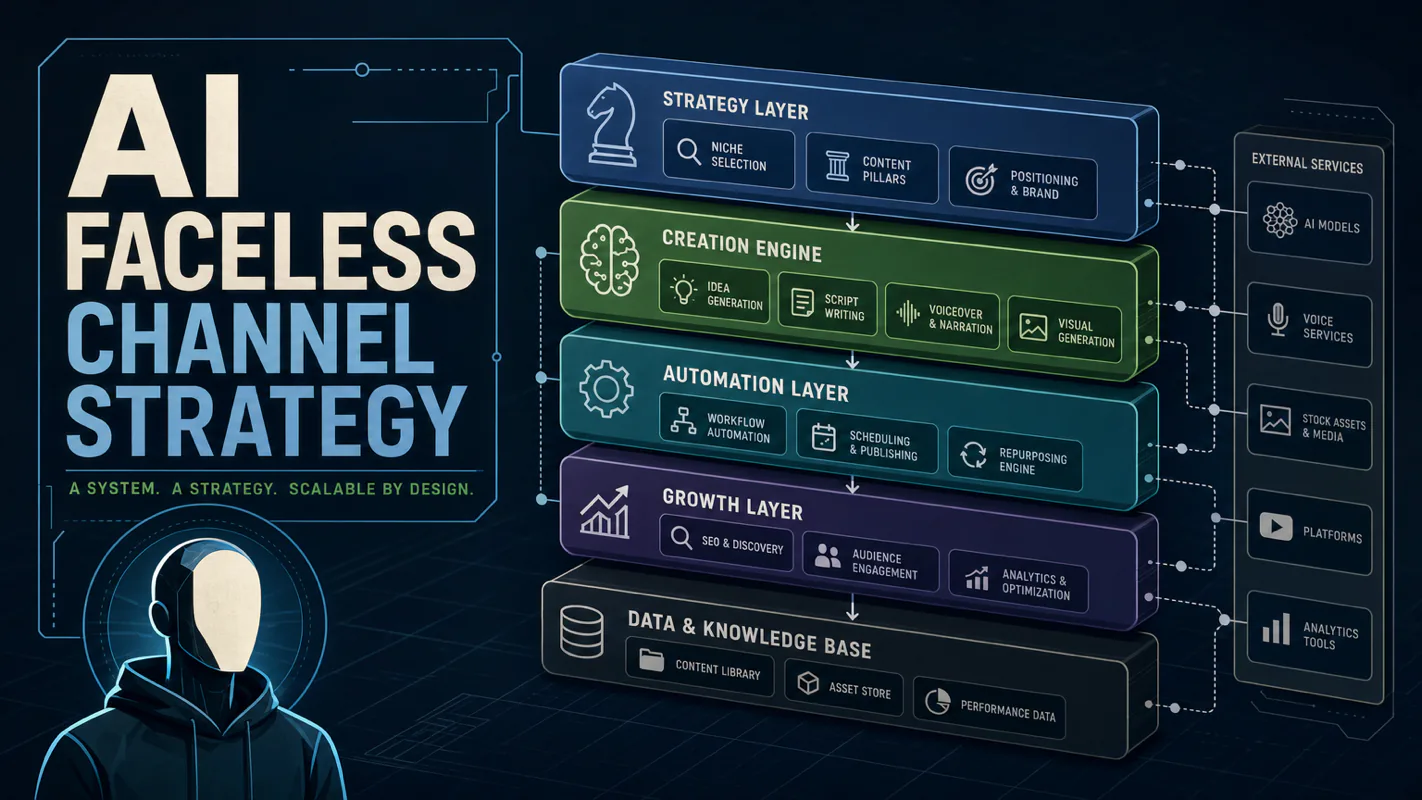
The bottleneck is production, not ideas - and compressing it is the easy half. What decides whether the channel keeps its voice is which work you refuse to hand over. The AI workflows below, the monetization math underneath, and the one judgement that has to stay yours.
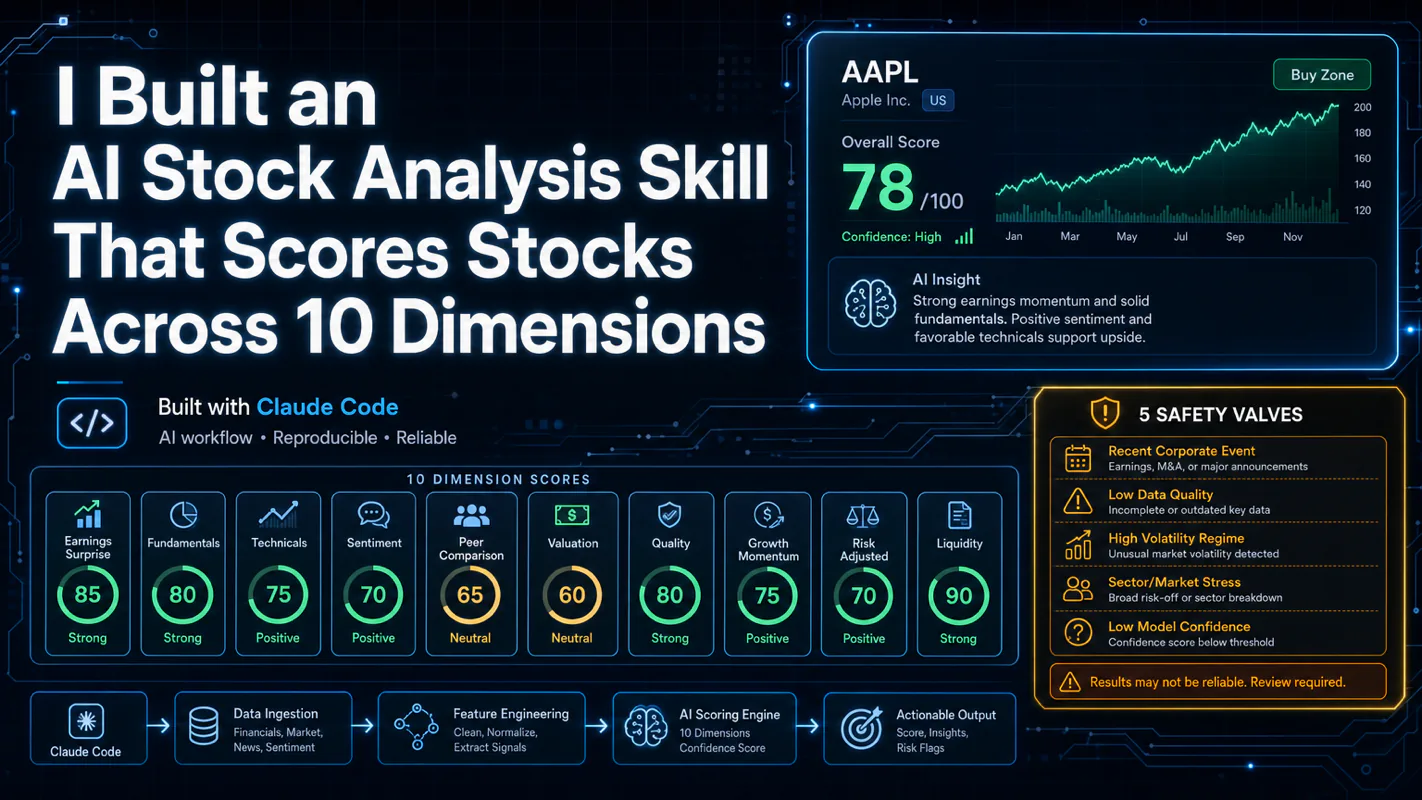
One number hides more than it shows. This Claude Code Skill scores US equities across 10 dimensions, from earnings surprise to peer comparison, with confidence scoring and 5 safety valves that flag thin data. A coding tutorial, not financial advice.
Before asking which product to sell, ask whether the category is worth entering at all. Five dimensions — lifecycle, saturation, price band, creator ecosystem, whitespace — turn one person's gut call into a written check any teammate can run before capital moves.