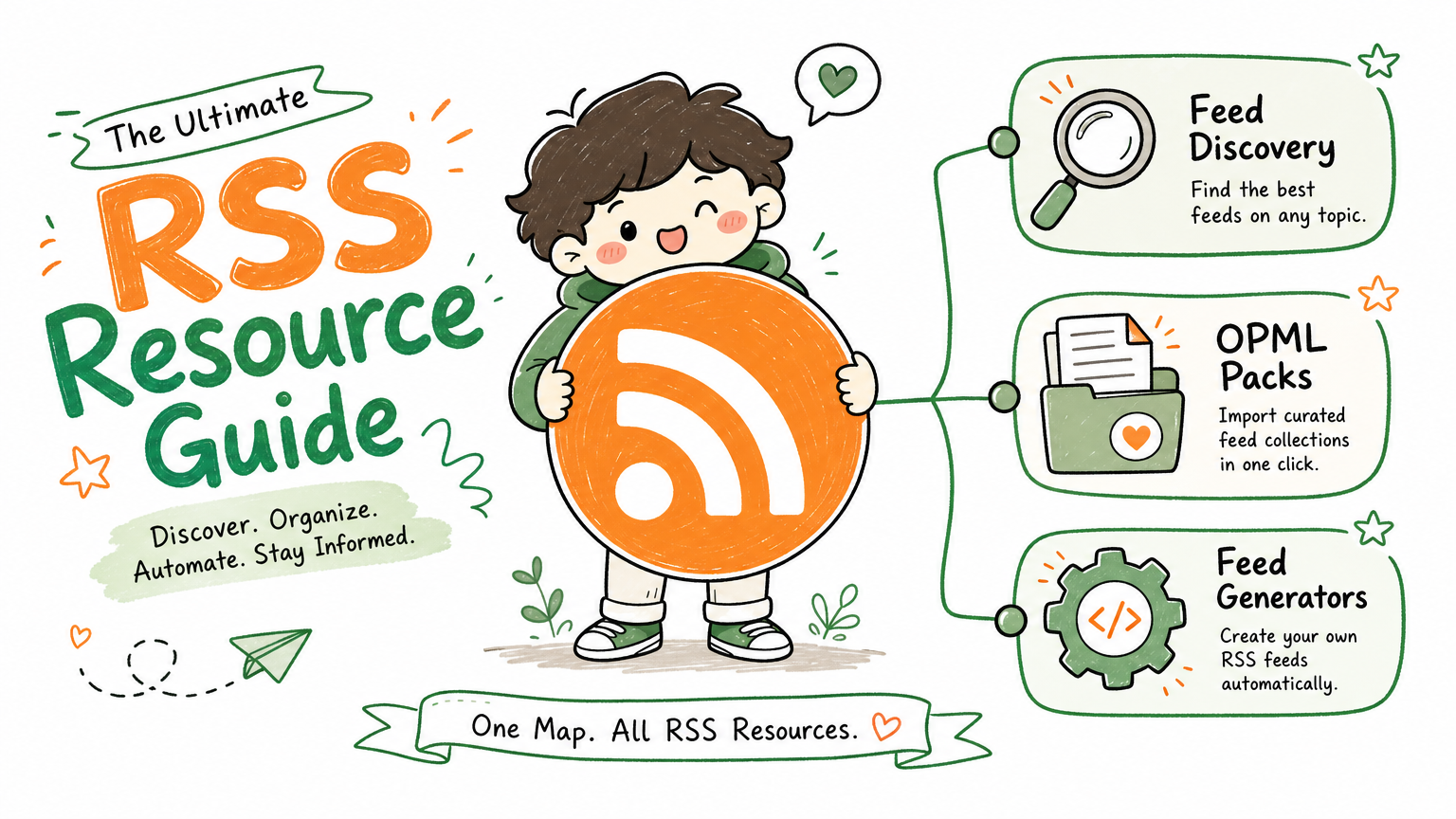
Monitoring a competitor who publishes no feed is the case every RSS guide skips. Twenty-one platforms sorted by which of three jobs they do, and the finished setup is business process automation you own outright, with no seat licence to renew.
Blaming the content is the reflex when a post underperforms, and it is usually the wrong diagnosis. A second reader decides distribution before any human sees the post, and most of what it checks is mechanical enough to automate business processes around, on five platforms at once.
Gloves on, tape measure in hand — nobody types a query. Three voice surfaces for ai automation tools (terminal, Telegram, Discord), 10 TTS and 6 STT providers compared on cost and latency, plus a setup that costs nothing.
AI Social Media Workflows: How to Exploit Every Platform Algorithm in 2026
Blaming the content is the reflex when a post underperforms, and it is usually the wrong diagnosis. A second reader decides distribution before any human sees the post, and most of what it checks is mechanical enough to automate business processes around, on five platforms at once.
99% of creators guess how social media algorithms work, then post on instinct. I stopped guessing. I run a one-person business, and the only way to compete with teams of ten is to turn every algorithm into a system an AI can operate on my behalf.
This is not a theory post. Over the past year I wired Claude Code into my content pipeline and pointed it at seven platforms at once. The model reads my past posts, scores them against each platform's ranking signals, rewrites the weak parts, and schedules the winners through platform APIs. What follows is exactly what I built, which tools attack which part of the algorithm, and the concrete tool-to-action-to-result loops I run every week.
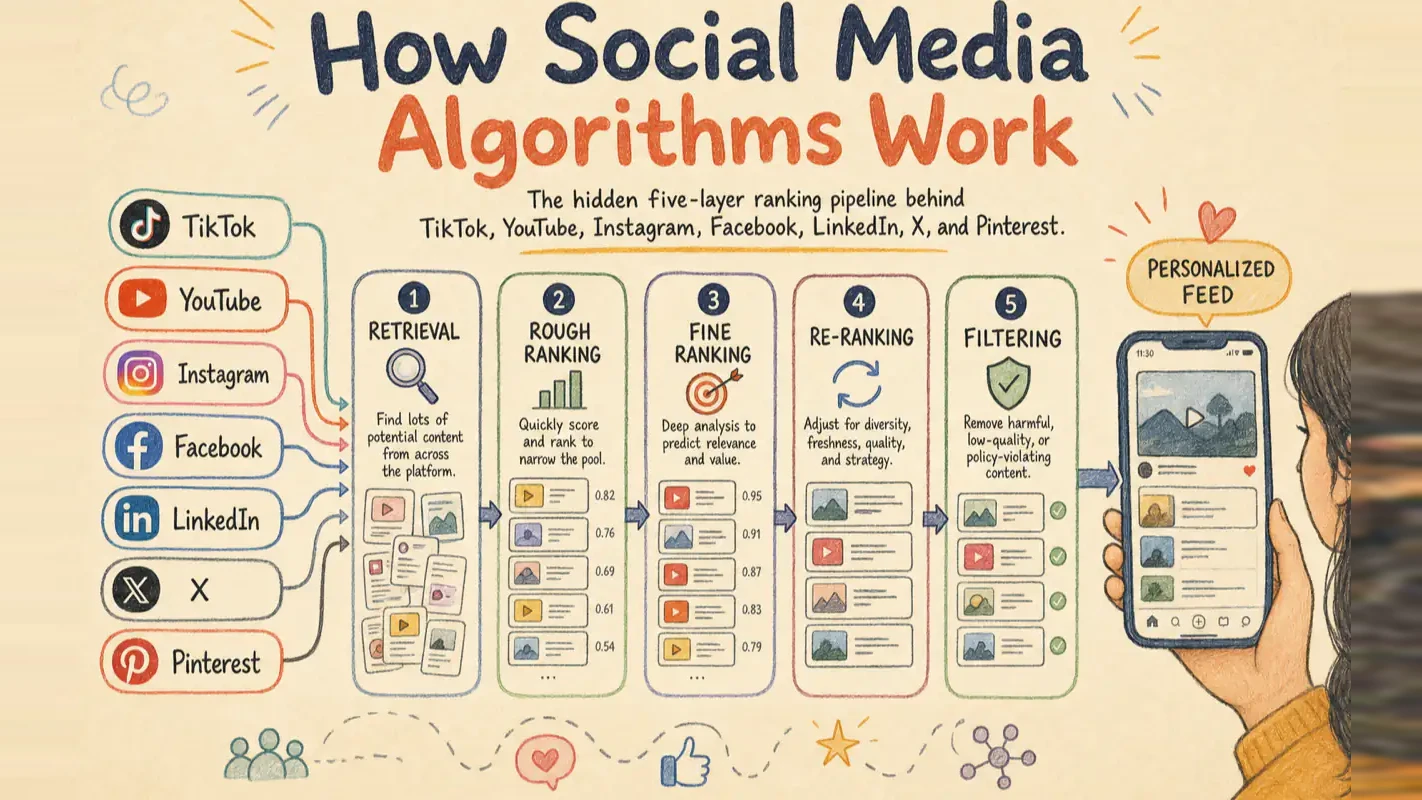
TL;DR — Every major social media algorithm runs the same 5-layer recommendation pipeline, and each layer has a matching AI leverage point. Retrieval is won with AI keyword and topic tools. Fine ranking — where 80% of the battle happens — is won with AI content analysis and engagement prediction. Distribution is won with scheduling APIs. Wrap the whole loop in a Claude Code Skill and a solo operator can out-optimize a full marketing team. This guide breaks down X, Instagram, YouTube, LinkedIn, and TikTok — with the exact AI workflow for each.
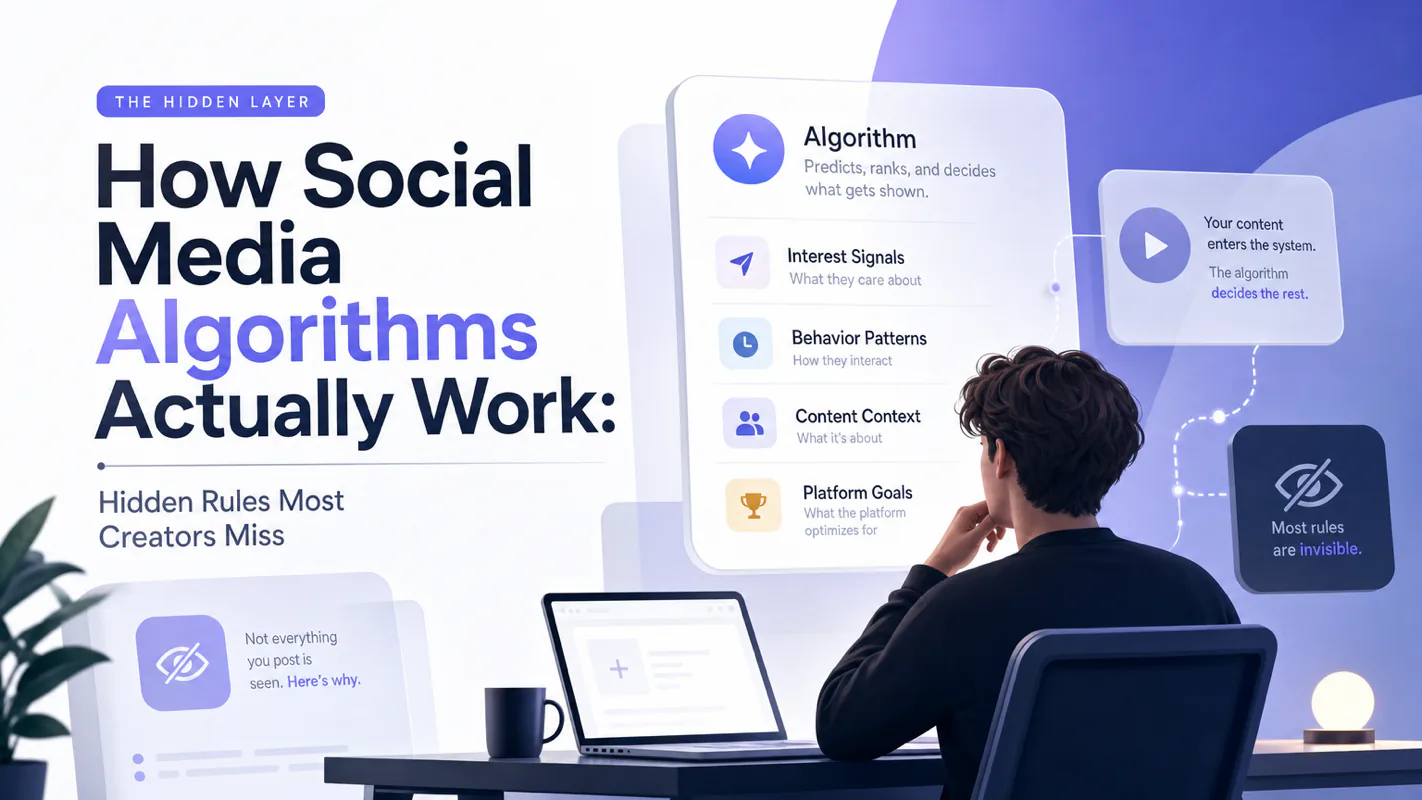
There is a reader you never write for, and it decides whether the other one ever sees the post. Most teams write only for the human, then treat the result as a verdict on their content. The five layers below — retrieval, coarse ranking, fine ranking, re-ranking, distribution — are what the other reader does, and each has a matching step a tool can handle: keyword coverage at retrieval, engagement scoring where most of the battle happens, scheduling at distribution. Serving both readers is a five-platform job, which is why it pays to automate business processes around it instead of posting on instinct.
The 5-Layer Machine Every AI Workflow Attacks
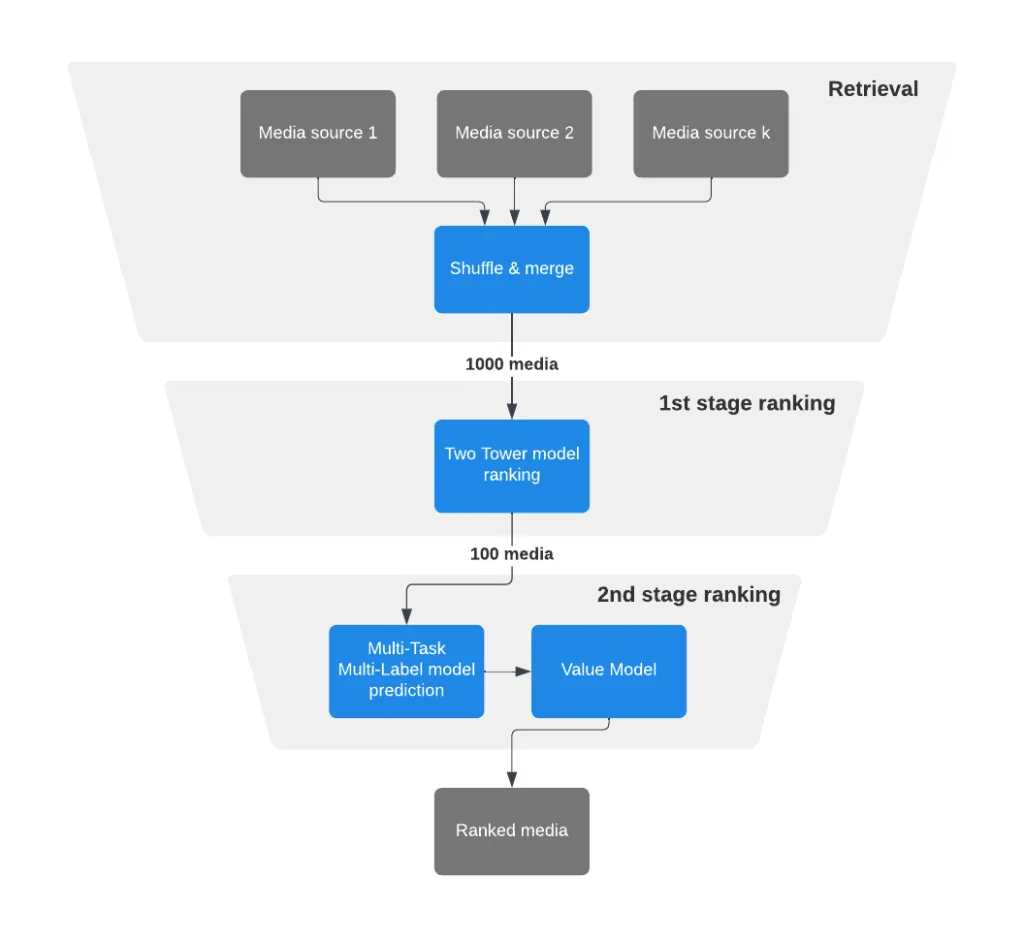
Before touching a single tool, you need the map. Every industrial recommendation engine — TikTok's For You page, YouTube's Up Next, Instagram's Explore — runs the same 5-layer pipeline. I read the engineering blogs from ByteDance, Meta, and Google's research teams and found the same architecture wearing different variable names.
The reason this matters for AI workflows is simple: each layer is a distinct optimization problem, and each one has a different tool that solves it. Here is the machine, and the AI leverage point for each layer.
Layer 1: Retrieval — Can the System Find Your Content?
The algorithm scans billions of posts and pulls a few thousand candidates into a shortlist using collaborative filtering, content tagging, and trending signals. Your title, tags, captions, and keywords decide whether you enter the pool at all.
AI leverage point: keyword and topic modeling. I feed a draft to Claude Code with the instruction "extract the three interest clusters this belongs to and rewrite the caption to hit them." For YouTube specifically, the same idea powers title hooks with emotional triggers and SEO-optimized descriptions, both of which feed this retrieval layer directly.
Layer 2: Rough Ranking — The Basic Quality Gate
A lightweight model scores candidates on surface quality: resolution, caption length, policy compliance, account standing. Thousands of candidates drop to a few hundred.
AI leverage point: automated QA. A pre-publish AI check flags a caption that is too thin, a thumbnail with low contrast, or a missing alt text field before the post ever ships.
Layer 3: Fine Ranking — Where Your Content Gets Scored
Deep learning models score each candidate against rich user and content features. This is where completion rate, engagement rate, share rate, and save rate decide your position. The model is predicting one thing: "How likely is this specific user to finish this specific post and engage with it?"
This layer is where 80% of the battle happens — and it is the layer AI workflows change the most. Engagement prediction is a modeling problem, and modeling is exactly what a tool like Claude Code is built for. I score every draft against the signal the platform trusts most, before I publish, instead of learning from failed posts a week later.
Layer 4: Re-Ranking — Diversity and Business Rules
The system injects variety, gives new creators baseline exposure, and inserts sponsored content. This is why brand-new accounts still get initial traction.
AI leverage point: cadence and timing. A scheduling API that spaces posts and hits each platform's active windows works with the re-ranking layer instead of against it.
Layer 5: Filtering — The Hard Veto
Content that violates policy gets removed entirely. Recycled content, copyright strikes, and undisclosed AI material get caught here. No amount of engagement overrides a filter block.
AI leverage point: compliance and originality checks. Before publishing, an AI pass verifies AI-disclosure labels are present, checks for reused clips, and confirms nothing trips a policy veto.
The practical takeaway: retrieval is a keyword problem, fine ranking is a modeling problem, and filtering is a compliance problem. Each has its own tool. An AI workflow is just those tools wired into one loop.
My AI Social Media Stack
Every workflow below runs on the same three-part stack. I keep it deliberately small so it stays maintainable by one person.
The reasoning layer — Claude Code. It reads exported post data, scores drafts against ranking signals, predicts engagement, and rewrites hooks and formats. This is the brain that replaces a content strategist.
The distribution layer — scheduling APIs. Buffer for cross-platform queuing, the native X API for threads and reply timing, and the Instagram Graph API for Reels. This replaces a social media manager clicking "post" at the right minute.
The feedback layer — analytics export. A weekly export of impressions, completion rate, saves, and bookmarks that flows back into Claude Code. Without this loop, the model is guessing; with it, every week compounds.
The point is not the specific brand names. The point is the shape: predict, publish, measure, feed back. Any tool that fills one of those three roles slots in.
Platform-by-Platform AI Workflow Breakdown
Every algorithm runs the same 5-layer pipeline, but each weights a different signal at the fine-ranking stage — which means each needs a slightly different AI workflow. Here is the signal, the tools, and the exact loop I run on each platform in 2026.
Every algorithm on this list is doing the same job: predicting whether a specific user will enjoy a specific post. An AI workflow wins by scoring that prediction before you publish, on the exact signal the platform trusts most. Once you internalize this, you stop chasing hacks and start optimizing the one metric that moves your reach.
X (Twitter): Engineer for Bookmarks and Reply Chains
X in 2026 weights credibility and contribution over raw virality. The algorithm rewards content that generates sustained discussion and content people save for later — not content that farms cheap likes.
The algorithm rule: reply depth and bookmark rate are the dominant signals. A long threaded conversation outweighs a wall of isolated likes, and a bookmark is treated as high-intent value. Recency still matters more here than anywhere else — a fresh post gets a temporary boost that decays within a few hours.
AI tools to exploit it:
Claude Code for thread structuring. I have it take a raw idea and restructure it into a thread that deliberately leaves open loops — points a knowledgeable reader will want to add to or argue with. Reply chains are engineered, not lucky.
Bookmark-worthiness scoring. Before posting, I ask the model to rate a draft 1–10 on "would a busy professional save this to reference later?" Anything under 7 gets rewritten with a concrete framework, number, or checklist that earns the save.
X API for reply-window timing. The native API posts during the active conversation windows my analytics identify, so the recency boost lands when my audience is actually online.
Workflow example (tool → action → result):
Tool: Claude Code + the X API export. Action: Every Sunday I export my last 30 posts, and Claude Code scores each on reply depth and bookmark rate, then clusters the top performers by hook pattern. It found that my "here's the mistake I made" openers drove 3x the reply depth of my "here's a tip" openers. I templated the winning pattern and scheduled the week's threads around it. Result: Over the following month, average bookmarks per thread roughly doubled and reply chains got measurably longer. Same effort, structured by data instead of instinct.
What to avoid: posting evergreen threads at dead hours (the recency decay wastes them), and chasing dunk-bait that spikes likes but generates zero bookmarks — the fine-ranking layer sees through it.
Instagram: Automate for Saves, Not Likes
Instagram runs three distinct algorithms — one for Feed, one for Stories, one for Reels — and the gap between what works on Reels versus Feed is wider than ever. Across all three, the like button has quietly lost its power.
The algorithm rule: saves and dwell time are now the strongest signals, stronger than likes. A high save rate is Instagram's clearest "this has lasting value" signal and directly boosts Explore distribution. DM shares are treated as high-intent engagement, and relationship strength decides who sees your Stories.
AI tools to exploit it:
Claude Code for save-trigger rewriting. I feed it a caption and ask it to convert the payoff into something reference-worthy — a numbered checklist, a framework, a "save this for later" resource. Saveable content is a format decision the model can make reliably.
Carousel design analysis. Multi-slide Carousels drive dwell time. I have the model outline a 10-slide Carousel from a single idea, front-loading the hook slide and ending on a save prompt.
Instagram Graph API for Reels scheduling. Reels reach non-followers, so I schedule them separately from Feed posts, which favor existing followers — two content lines, two cadences, one API.
Workflow example (tool → action → result):
Tool: Claude Code + exported Instagram Insights. Action: I exported save rate for my last 40 posts and asked the model to find the common thread among the top 10 by saves. It identified that my "framework" Carousels saved at more than double the rate of my single-image posts. I shifted my Instagram output to 70% Carousels and rewrote each ending as an explicit save prompt. Result: Explore-driven reach became my largest traffic source within six weeks, because save rate is the signal that unlocks the Explore page.
What to avoid: treating Reels and Feed as one strategy — it caps both — and optimizing captions for likes when saves and dwell time are what actually move you into Explore.
YouTube: Model the Thumbnail and Retention Curve
YouTube finished its shift from "watch time above all" to "viewer satisfaction first." The 2026 algorithm asks not just whether you watched, but whether you were glad you did.
The algorithm rule: click-through rate on the thumbnail and title gets you in the door, and average watch duration plus satisfaction signals (subscribes, playlist adds, related searches) keep you there. YouTube's own guidance has long held that CTR and retention are the two levers that compound — each point of CTR improvement correlates with a meaningful lift in how often the video is recommended. The algorithm now also judges your channel holistically, penalizing topic-hopping.
AI tools to exploit it:
Claude Code for title and thumbnail CTR modeling. I generate 10 title variants, then have the model rank them by curiosity gap and specificity, and draft matching thumbnail concepts. Testing titles on the model first is far cheaper than testing them on the audience.
Retention-curve analysis. I export the retention graph and ask the model to pinpoint the exact second viewers drop and hypothesize why — usually a slow intro or a buried payoff. Then I re-cut the next video's structure to fix it.
Satisfaction-signal scripting. The model writes end screens and mid-roll prompts that nudge the post-view actions (subscribe, playlist add) that the satisfaction layer rewards.
Workflow example (tool → action → result):
Tool: Claude Code + YouTube Studio retention export. Action: Across my last 12 videos, the model found a consistent drop at the 15–25 second mark — my intros were too long. I rewrote my template to open on the payoff in the first 8 seconds and had the model score each new script's opening against that rule before I filmed. Result: Average view duration climbed past the 50% retention target the algorithm favors, and the recommended-traffic share of my views grew steadily as the channel's satisfaction profile improved.
One 2026 note the workflow has to respect: AI content disclosure is mandatory, and failing to label AI-generated material can cost you the entire YouTube Partner Program. My compliance step (Layer 5) checks every upload for the disclosure label. I use AI for research, analysis, and editing — the perspective is always mine.
LinkedIn: Rewrite for the Interest Graph
LinkedIn moved to interest-graph distribution in 2025–2026, which means your post can reach professionals who never followed you — if the algorithm decides it is relevant to their industry and interests.
The algorithm rule: dwell time now outweighs reaction count, and comment quality (substantive paragraphs, not "Great post!") carries real weight. Creator authority within a specific niche builds over time, and native video is getting a temporary algorithmic push. Generalist content gets suppressed because the interest-graph model cannot find a clear audience cluster for it.
AI tools to exploit it:
Claude Code for professional-angle rewriting. I feed it a general idea and ask it to sharpen the angle for one specific professional audience — the tighter the cluster, the better the interest-graph match.
Dwell-time formatting. The model restructures posts into scannable, line-broken formats with a strong first two lines, since the "see more" click is a dwell-time trigger.
Comment-prompt design. It writes closing questions engineered to pull substantive professional replies rather than one-word reactions.
Workflow example (tool → action → result):
Tool: Claude Code + LinkedIn post analytics. Action: I exported dwell time and comment counts for my last 25 posts. The model found that posts framed around one narrow role ("what solo founders get wrong about X") massively outperformed my broad "here's a productivity tip" posts. It rewrote my backlog to target a single professional cluster per post and added a specific closing question to each. Result: Non-follower reach rose sharply as the interest-graph model finally had a clear cluster to match my content to, and comment threads got noticeably deeper.
What to avoid: generalist posts with no clear audience, and closing with a generic "thoughts?" when a specific, role-targeted question earns the substantive comments the algorithm scores.
TikTok: Score the Hook Before You Film
TikTok remains the most aggressive platform at surfacing content from unknown creators — the For You page still accounts for the large majority of all views, and follower count barely matters. What matters is whether people watch to the end.
The algorithm rule: completion rate is the single strongest signal, and replay rate is weighted more heavily here than on any other platform. A 15-second video watched fully beats a 60-second video abandoned at 20 seconds. Share-to-DM rate and comment depth follow, and search behavior now feeds back into For You recommendations.
AI tools to exploit it:
Claude Code for hook scoring. Completion rate is decided in the first two seconds, so I score every scripted hook before filming: "does this open on conflict, a question, or a surprising visual — or does it waste time on a self-introduction?" Weak hooks get rewritten, not filmed.
First-2-second optimization. The model rewrites openers to front-load the payoff and cut every filler frame, because the intro is where completion rate is won or lost.
Search-crossover captioning. It embeds natural search phrases in captions and on-screen text, so the video gets the secondary push from TikTok's search-recommendation crossover.
Workflow example (tool → action → result):
Tool: Claude Code + TikTok analytics export. Action: I exported completion rate for my last 50 videos and had the model correlate it with hook type. Videos opening on a question or a bold claim completed far more often than videos that opened with "Hey guys, so today…". I built a hook-scoring checklist from the winners and now no script gets filmed until its opener clears it. Result: Average completion rate rose enough to push more of my videos into the deeper For You traffic pools, where the real reach lives. The scale takes 7–15 days per video now, not 24 hours — so the workflow optimizes for the slow burn instead of chasing overnight spikes.
What to avoid: jumping on irrelevant trends (they bring unqualified viewers who tank your completion rate), padding intros, and reposting others' clips (a hard veto at the filter layer).
Facebook and Pinterest: The Same Loop, Different Signals
The two platforms I run more lightly still fit the same AI workflow, just tuned to different signals.
Facebook rewards "meaningful social interactions" — comment threads between people who actually know each other, Group engagement, and Reels (whose views doubled through late 2025). My workflow has Claude Code draft genuinely debatable questions for Groups, since Group posts still get organic distribution that Page posts no longer do.
Pinterest behaves like a visual search engine, so save rate and keyword-optimized descriptions matter more than engagement. My workflow leans on the model to write search-optimized pin descriptions and to keep fresh pins flowing, because the platform explicitly rewards new pins over repins.
Build Your Algorithm-Aware AI Workflow with Claude Code Skills
Everything above becomes repeatable when you package it as a Claude Code Skill — a reusable instruction set the model runs on demand. Here is the shape of the Skill I use, which you can rebuild for your own stack.
Step 1 — Ingest the draft. The Skill takes a raw draft plus a target platform as input. No draft is too rough; the point is to catch weaknesses before publishing, not after.
Step 2 — Detect the ranking signal. The Skill maps the platform to its dominant fine-ranking signal from a lookup table: TikTok → completion-rate proxy, X → bookmark-worthiness, Instagram → save-worthiness, YouTube → CTR-and-retention, LinkedIn → dwell-time-and-cluster-fit.
Step 3 — Score the draft. The model rates the draft 1–10 on that specific signal and explains the deductions. This is the engagement-prediction step that attacks Layer 3, where 80% of ranking is decided.
Step 4 — Rewrite the weak parts. Below a threshold, the Skill rewrites the hook, format, or call-to-action to hit the signal — restructuring a thread, converting a caption into a save-worthy checklist, or front-loading a video hook.
Step 5 — Run the compliance pass. The Skill checks Layer 5 concerns: AI-disclosure labels present, no reused clips, no policy tripwires. This is a hard gate — it blocks publishing if it fails.
Step 6 — Schedule through the API. The Skill hands the approved post to the scheduling layer — Buffer, the X API, or the Instagram Graph API — timed to the platform's active window to work with the re-ranking layer.
Step 7 — Feed results back. After 72 hours, the Skill pulls the post's real metrics and appends them to a running dataset, so next week's scoring is calibrated on my actual audience, not generic benchmarks.
The compounding effect is the whole point. A team runs this loop with meetings and spreadsheets. A Skill runs it in minutes, and every cycle makes the next prediction sharper. If you want a scoring rubric to start from, the 7-Dimension Viral Content Scoring Framework maps cleanly onto Steps 2 and 3.
The Cross-Platform Data Flywheel
After running this AI workflow across seven platforms for a year, I found that each platform has a "data flywheel activation point" — the moment your content starts generating self-reinforcing momentum. On TikTok it starts when your videos consistently clear a traffic-pool threshold. On YouTube it activates when the algorithm tags your channel as a niche authority. On Instagram it kicks in when save-and-share rates cross the Explore threshold. On LinkedIn it begins when you consistently reach one professional cluster.
The insight that changed my approach: the content instincts you build on your first platform — which topics resonate, which structures hold attention, which hooks convert — transfer to every other platform. And once those instincts live inside a Claude Code Skill as scoring rules, they transfer instantly. You only adapt format and cadence per platform; the underlying judgment is portable.
The Cross-Platform Adaptation Matrix
Dimension
TikTok
YouTube
Instagram
LinkedIn
AI-scored signal
Completion / replay
CTR + retention
Save rate + dwell
Dwell + cluster fit
Optimal length
15–60 seconds
8–15 minutes
15–30s Reels / 10-slide Carousels
800–1,200 word posts / 1–3 min video
Hook the model enforces
Conflict in 2 seconds
Payoff in 8 seconds
Save-worthy slide 1
Narrow role in line 1
Engagement trigger
Debate question
Subscribe + end screen
Save + DM prompt
Role-targeted question
The Weekly AI Review Loop
I spend 30 minutes each week letting the Skill answer five questions from exported data, then acting on them:
Is completion rate on target? Below target means the hook needs rework — the model rewrites the next batch of openers.
Is engagement depth on target? Below target means the call-to-action or structure needs adjustment.
What share of reach comes from search? Too low means the keyword layer (Layer 1) needs strengthening.
What is the follower conversion rate? Too low means the bio and consistency need review.
Which post won, and why? The model extracts the winning pattern and templates it for next week.
Three AI Social Media Trends to Exploit in 2026
1. Search and Recommendation Are Merging
TikTok, YouTube, and Instagram are all tightening the link between search behavior and algorithmic recommendation. When someone searches a topic and then watches your post about it, the algorithm recommends you to similar users who never searched.
How to exploit it: keyword strategy is no longer just for blog posts. I have Claude Code embed natural search phrases into every caption, on-screen text, and spoken hook — the retrieval layer and the recommendation layer now amplify each other.
2. Longer Content Is Making a Comeback
Every major platform is shifting incentives toward depth. TikTok supports 10-minute videos, YouTube rewards session-length content, and Instagram Carousels with 10+ slides consistently beat single images. The short-form gold rush is over.
How to exploit it: this is a gift for subject-matter experts. I have the model expand one strong idea into a long-form asset per platform, then cut short-form clips from it — one research pass, many outputs.
3. AI Disclosure Is Now a Ranking Factor, Not Just a Rule
YouTube can revoke monetization for unlabeled AI content, and Instagram, TikTok, and Facebook are building detection systems. The direction is unmistakable: platforms want transparency.
How to exploit it: disclosure is a competitive edge, not a burden. My workflow uses AI for efficiency but keeps the insight and voice human, and labels AI use where required. The most durable content pairs AI-powered speed with genuine human experience — readers can tell the difference, and increasingly, so can the algorithms.
The 80/20 Rule for Algorithm Anxiety
I want to end with the mindset shift that lets me sleep through algorithm updates. Every few months someone declares that "the algorithm changed and reach is dead," and the panic spreads. But study every major update across every platform and one pattern holds: they all move the same direction — toward surfacing content that genuinely helps, entertains, or informs. The room for gaming the system shrinks each quarter, while the reward for genuinely valuable content grows.
My rule: put 80% of your energy into content quality and 20% into the AI distribution workflow. When the algorithm shifts, you update a scoring rule in your Skill — not your standards. Better still, an AI workflow adapts faster than any human team, because retuning a signal weight is a config change, not a reorg.
Social media algorithms are not your enemy. They are the most powerful free distribution system ever built, and an AI workflow is the lever that lets one person operate it at the scale of a team. Learn the architecture, wire the tools to the layers, and focus on creating content worth recommending.
Ready-to-Use Prompt: Engineer Content for Each Platform's Algorithm Signal
What this does: Scores content against the five-layer recommendation pipeline, rewrites it for each platform's one primary signal (not vanity likes), builds the read-score-rewrite-schedule Claude Code Skills loop, and closes the cross-platform data flywheel. Based on: AI Social Media Workflows: How to Exploit Every Platform Algorithm in 2026 — https://aiworkflowpro.com/overlooked-social-media-algorithm-rules/ Time to run: ~5 minutes
Copy this prompt into Claude Code, ChatGPT, or any AI assistant:
ROLE: You are a Social Media Algorithm Workflow Architect. Your job: stop guessing at algorithms and engineer content for the one ranking signal each platform actually rewards — closing the data flywheel across platforms.

CONTEXT — 5-LAYER ALGORITHM + PLATFORM-SIGNAL METHOD:
99% of creators guess how social algorithms work and post on instinct. Every major platform runs the same 5-layer recommendation pipeline, each with a matching AI leverage point: (1) retrieval — keyword/topic fit, won with AI keyword tools; (2) fine ranking — where 80% of the battle happens, won with AI content analysis and engagement prediction; (3) distribution — won with AI scheduling; (4) platform-signal engineering — each platform has ONE primary signal to optimize, not vanity metrics (X: bookmarks and reply chains; Instagram: saves not likes; YouTube: thumbnail and retention curve; LinkedIn: interest graph; TikTok: the hook, scored before filming); (5) the data flywheel — results feed the next cycle.

INPUTS (fill in before running):
- PLATFORMS: [Which platforms you post to]
- CONTENT: [The content or past posts]
- PRIMARY_GOAL: [What you are optimizing — reach / saves / reply chains / retention]
- STACK: [What AI tools you have — Claude Code, scheduling APIs]

METHOD — 4 STEPS:

Step 1 — Map the Content Against the 5-Layer Pipeline
Score CONTENT 0–2 per layer: retrieval (keyword/topic fit), fine ranking (predicted engagement — weight this, it's 80% of the battle), distribution (timing), platform-signal fit, flywheel readiness. Flag any 0.

Step 2 — Engineer for the Platform's ONE Primary Signal
For each platform in PLATFORMS, name the one signal to optimize (X: bookmarks/reply chains; Instagram: saves; YouTube: thumbnail/retention; LinkedIn: interest graph; TikTok: hook) and rewrite the content to maximize it — never chase vanity likes.

Step 3 — Build the Claude Code Skills Workflow
Stand up the loop: AI reads past posts, scores them against each platform's signal, rewrites the weak parts, schedules winners via platform APIs. Map STACK to the four actions (read → score → rewrite → schedule).

Step 4 — Close the Cross-Platform Data Flywheel
Feed each post's results back as training data for the next cycle — what scored high on fine ranking, what signal won per platform. The flywheel is the compounding edge over creators who guess.

RULES:
- Never optimize for vanity likes — engineer for the one primary signal each platform ranks on.
- Never skip fine ranking — it is where 80% of the battle happens; weight it accordingly.
- Never run the workflow without the flywheel closed — results that don't feed the next cycle are one-shot, not compounding.

OUTPUT FORMAT:
Output a markdown report with:
1. 5-Layer Scorecard — markdown table, columns: Layer | Score (0–2) | AI Leverage
2. Platform-Signal Plan — markdown table, columns: Platform | Primary Signal | Rewrite Focus
3. Skills Workflow — the read → score → rewrite → schedule loop with STACK mapped
4. Data Flywheel — how results feed the next cycle per platform
Save as @templates/overlooked-social-media-algorithm-rules.md and run weekly on the content pipeline, per platform.
Frequently Asked Questions
What AI tools help you exploit social media algorithms in 2026?
The core stack is three layers. A reasoning model like Claude Code analyzes your past posts and predicts engagement. A scheduling API — Buffer, the native X API, or the Instagram Graph API — posts at algorithmically optimal times. An analytics export pipeline feeds real performance data back into the model so it keeps getting sharper. Wrapped in a Claude Code Skill, this loop turns one operator into a full content team that optimizes for each platform's specific ranking signals instead of guessing.
Can Claude Code automate social media posting?
Yes. Claude Code can be wrapped in a Skill that ingests a draft, detects the target platform, scores the draft against that platform's ranking signal (completion-rate proxies for TikTok, bookmark-worthiness for X, save-worthiness for Instagram), rewrites the hook and format, runs a compliance check, and calls a scheduling API to publish at the optimal time. It cannot manufacture genuine engagement — that still comes from real value — but it automates every step a solo creator would otherwise do by hand.
Which algorithm signal matters most across every platform?
Completion and engagement depth are the strongest universal signals in 2026. A short video watched to the end outranks a longer one that gets skipped, and substantive engagement — comments, saves, bookmarks, DM shares — outweighs passive likes everywhere. Each platform trusts a favorite variant: TikTok weights replay rate, YouTube weights satisfaction signals, Instagram weights saves, X weights bookmarks, and LinkedIn weights dwell time. Score your drafts on the right variant per platform and you attack the fine-ranking layer where 80% of ranking is decided.
Do social media platforms penalize AI-generated content?
Platforms penalize undisclosed AI content, not AI-assisted workflows. YouTube can permanently revoke monetization for unlabeled AI-generated material, and Instagram, TikTok, and Facebook are all building detection and labeling systems. The winning approach is to use AI for research, analysis, scheduling, and editing while keeping the insight, perspective, and voice unmistakably human — then disclosing AI use wherever the platform requires it. A compliance step in your workflow makes this automatic.
What to Do Next
Pick your primary platform — the one where you will build your data flywheel first. Export your last 10 posts, and run them through the scoring loop: rate each on the platform's dominant signal, find the winning pattern, and template it. That single exercise is the seed of your Claude Code Skill.
Do not try to automate seven platforms on day one. Build the loop for one. Get the predict-publish-measure-feedback cycle working, then clone the Skill and swap the signal for your second platform.
If you are building a solopreneur business, an algorithm-aware AI workflow is not optional — it is the difference between content that reaches 200 people and content that reaches 200,000. The architecture is identical across every platform. Wire it once, and you own a system that outlasts any single algorithm update.
Monitoring a competitor who publishes no feed is the case every RSS guide skips. Twenty-one platforms sorted by which of three jobs they do, and the finished setup is business process automation you own outright, with no seat licence to renew.
Nothing about month four is harder than month three. It is simply the month an unpaid channel starts to feel like proof of failure. Surviving it takes a cadence you can hold while earning nothing, which is a better reason to automate business processes than speed ever was.
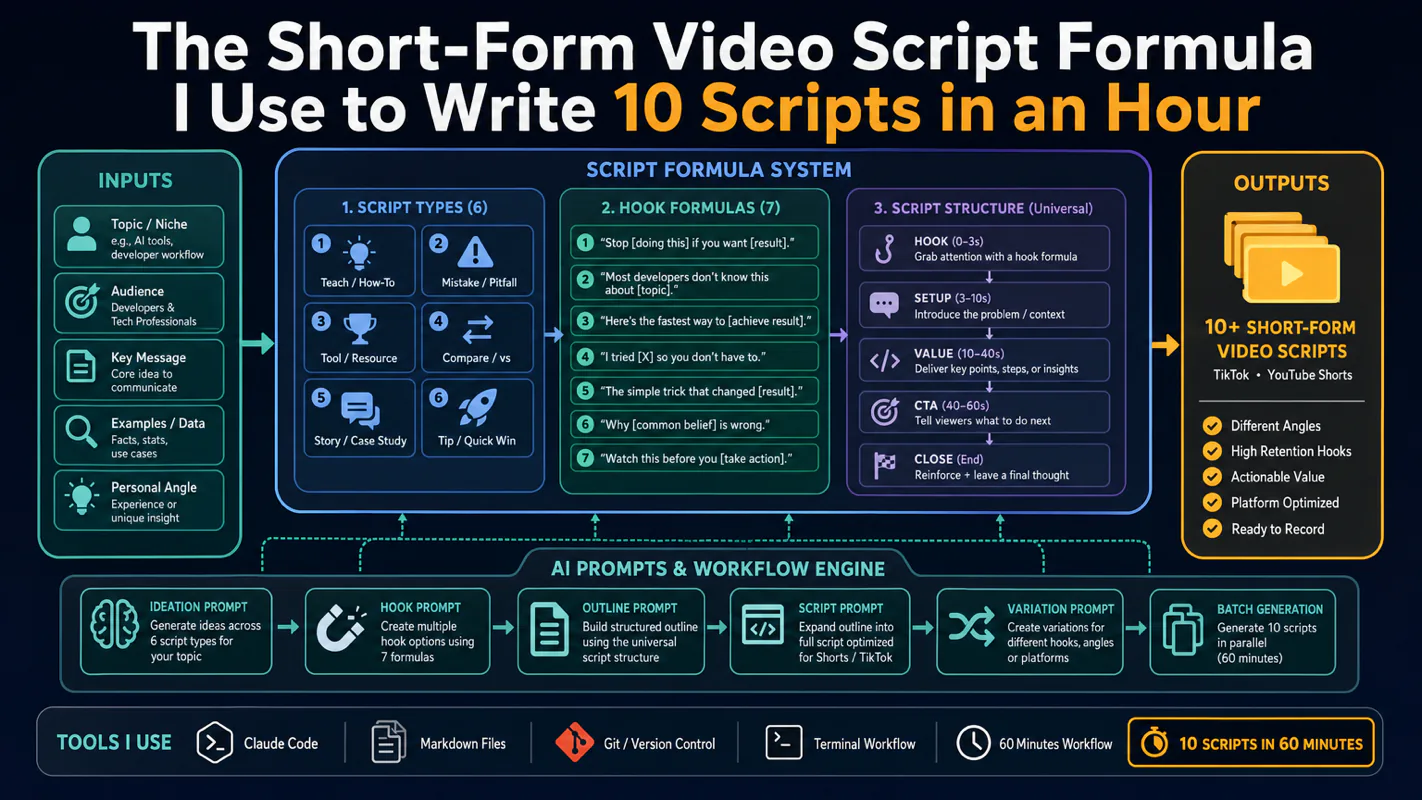
Thursday afternoon, fourteen product ideas, a Monday filming slot, no scripts. Six script shapes and seven hook formulas turn that hour into finished drafts — and the business rule stays: rewrite at least 30% before anything ships.
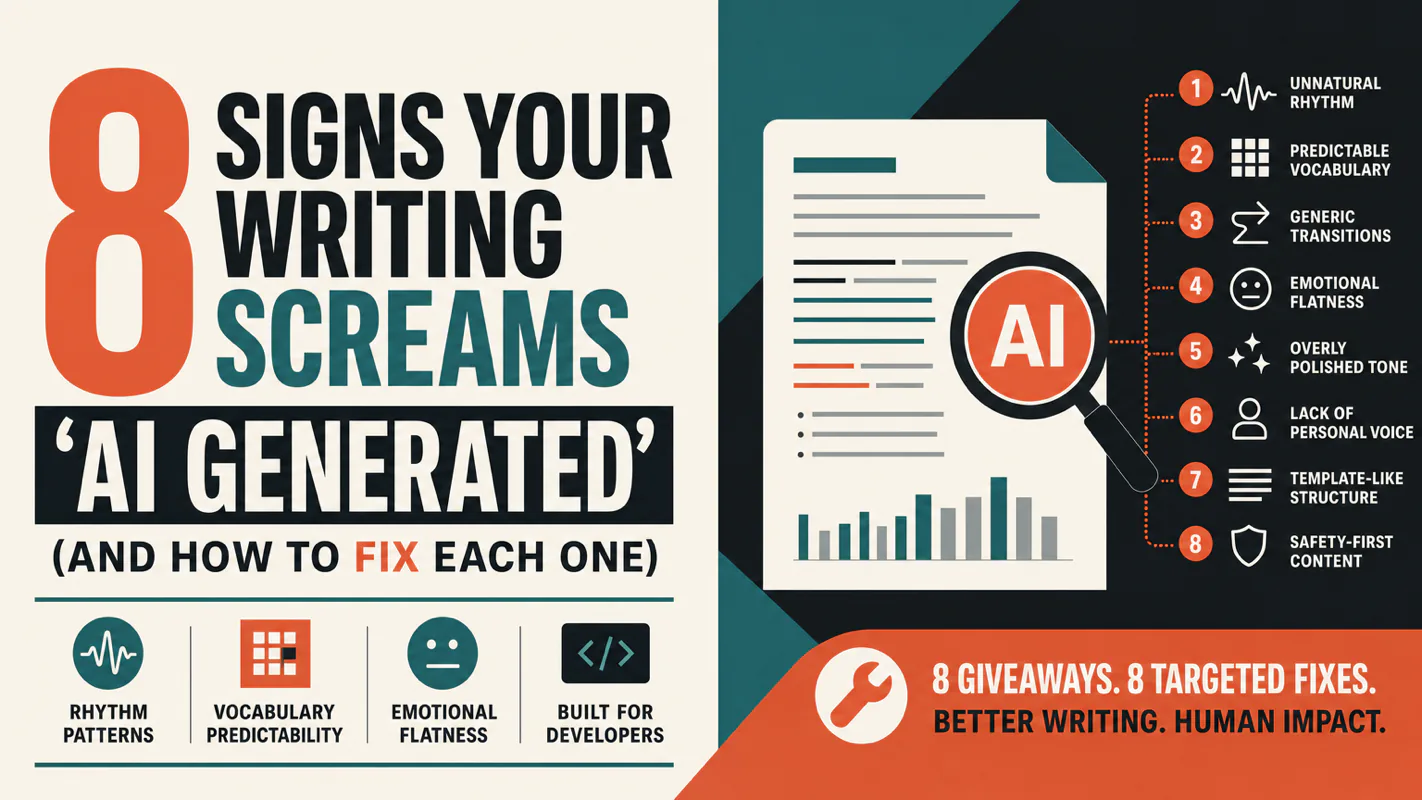
A detector score cannot survive a conversation with the freelancer it just cost three weeks of payment. What holds up is the specific thing on the page: rhythm, vocabulary, missing detail. Eight of them here, and the reason review stays human when you automate business processes.