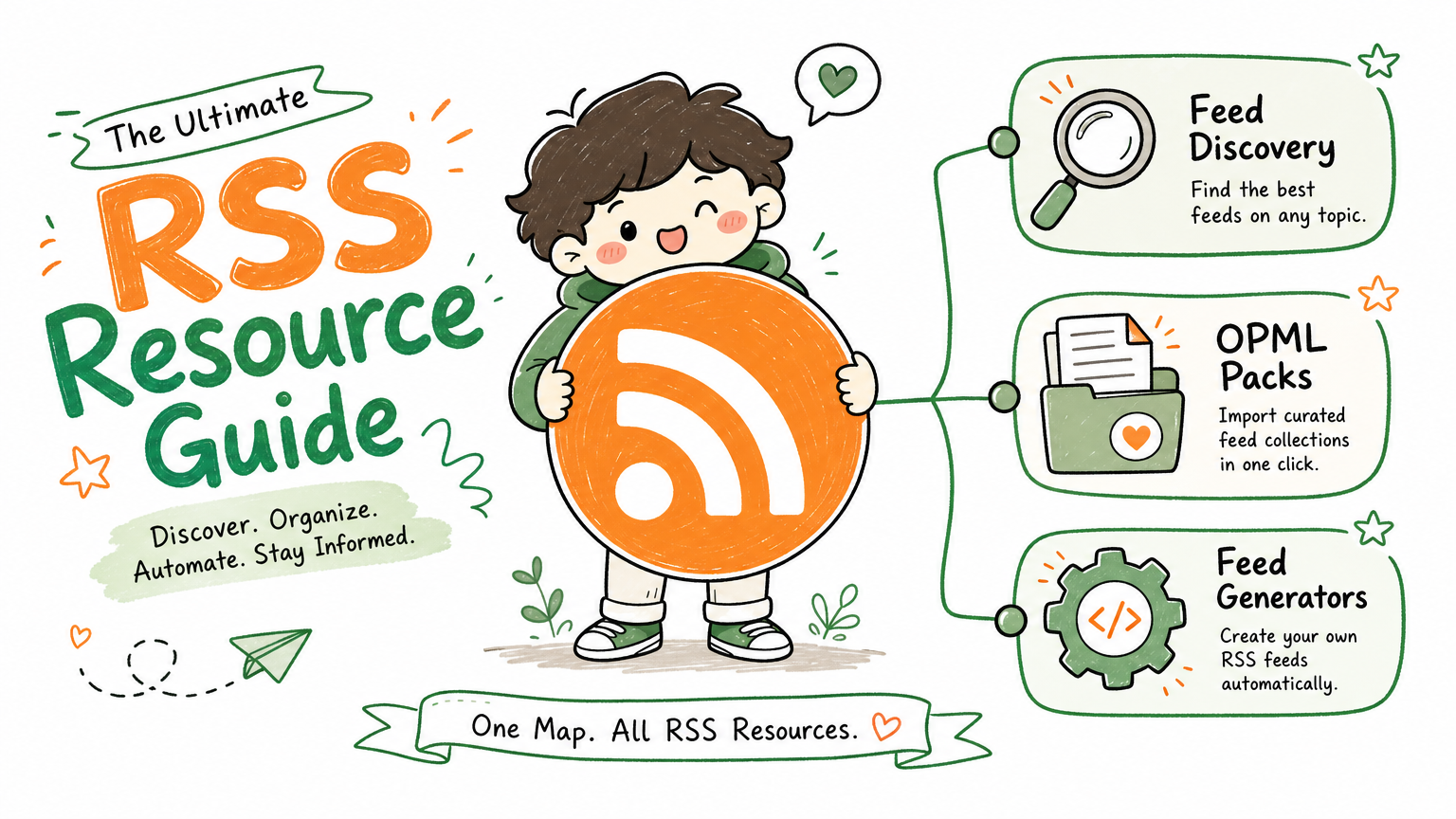
Monitoring a competitor who publishes no feed is the case every RSS guide skips. Twenty-one platforms sorted by which of three jobs they do, and the finished setup is business process automation you own outright, with no seat licence to renew.
Blaming the content is the reflex when a post underperforms, and it is usually the wrong diagnosis. A second reader decides distribution before any human sees the post, and most of what it checks is mechanical enough to automate business processes around, on five platforms at once.
Gloves on, tape measure in hand — nobody types a query. Three voice surfaces for ai automation tools (terminal, Telegram, Discord), 10 TTS and 6 STT providers compared on cost and latency, plus a setup that costs nothing.
AI Content Creation Automation: The 5-Layer System I Built to Run 4 Platforms Solo
Treating every post as a fresh project is what turns one creator into the bottleneck for four platforms. Writing faster does not fix it; defined handoffs between five stages do. Workflow automation software, pointed at editorial work rather than at invoices.
Content creation does not have a volume problem. It has a systems problem.
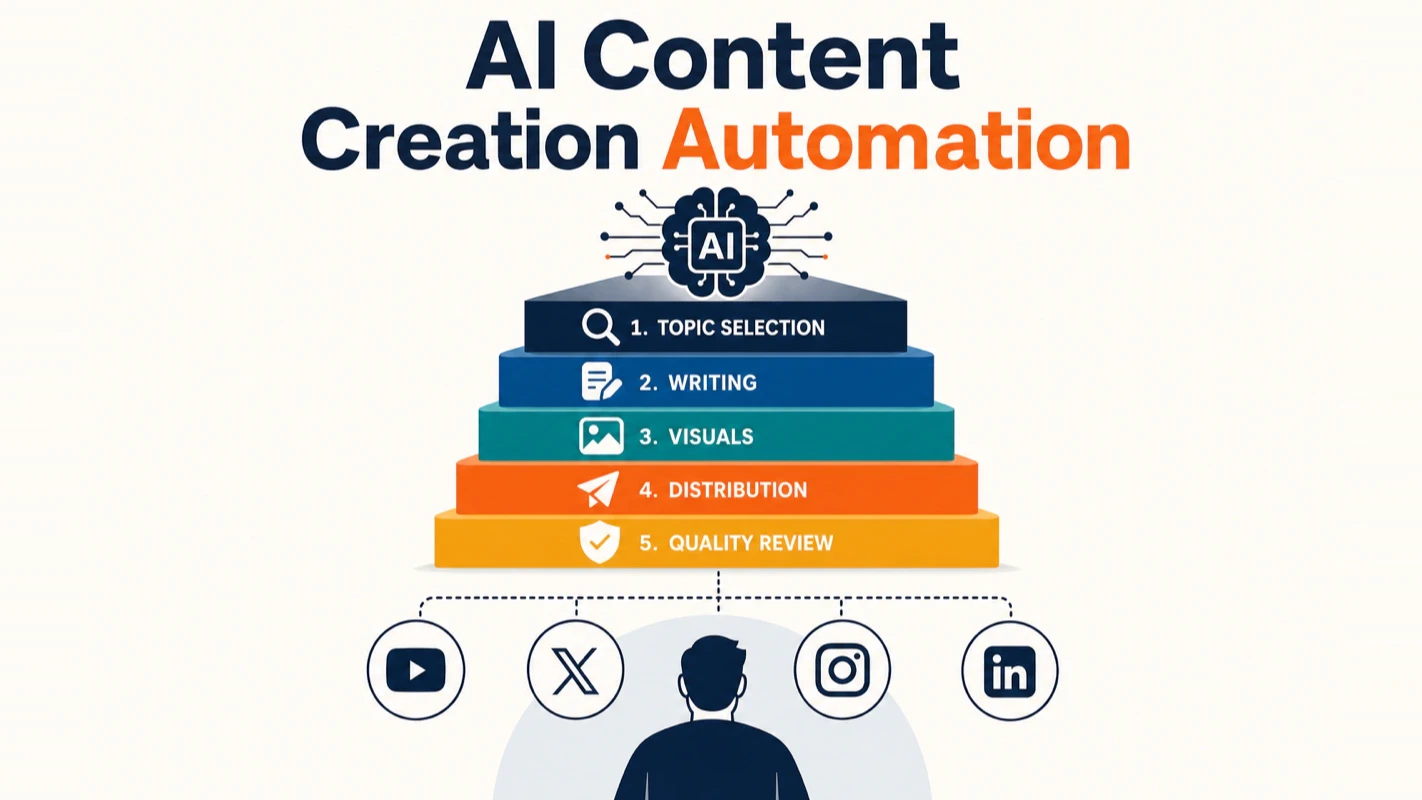
TL;DR: Most solo creators drown in content production because they treat each piece as a one-off project. This guide introduces a five-layer AI content automation framework — Topic Selection, Writing, Visuals, Distribution, and Quality Review — that turns content creation into a repeatable system. You keep creative control. AI handles the repetitive work. I built this system to run four platforms by myself, and this article walks you through every layer.
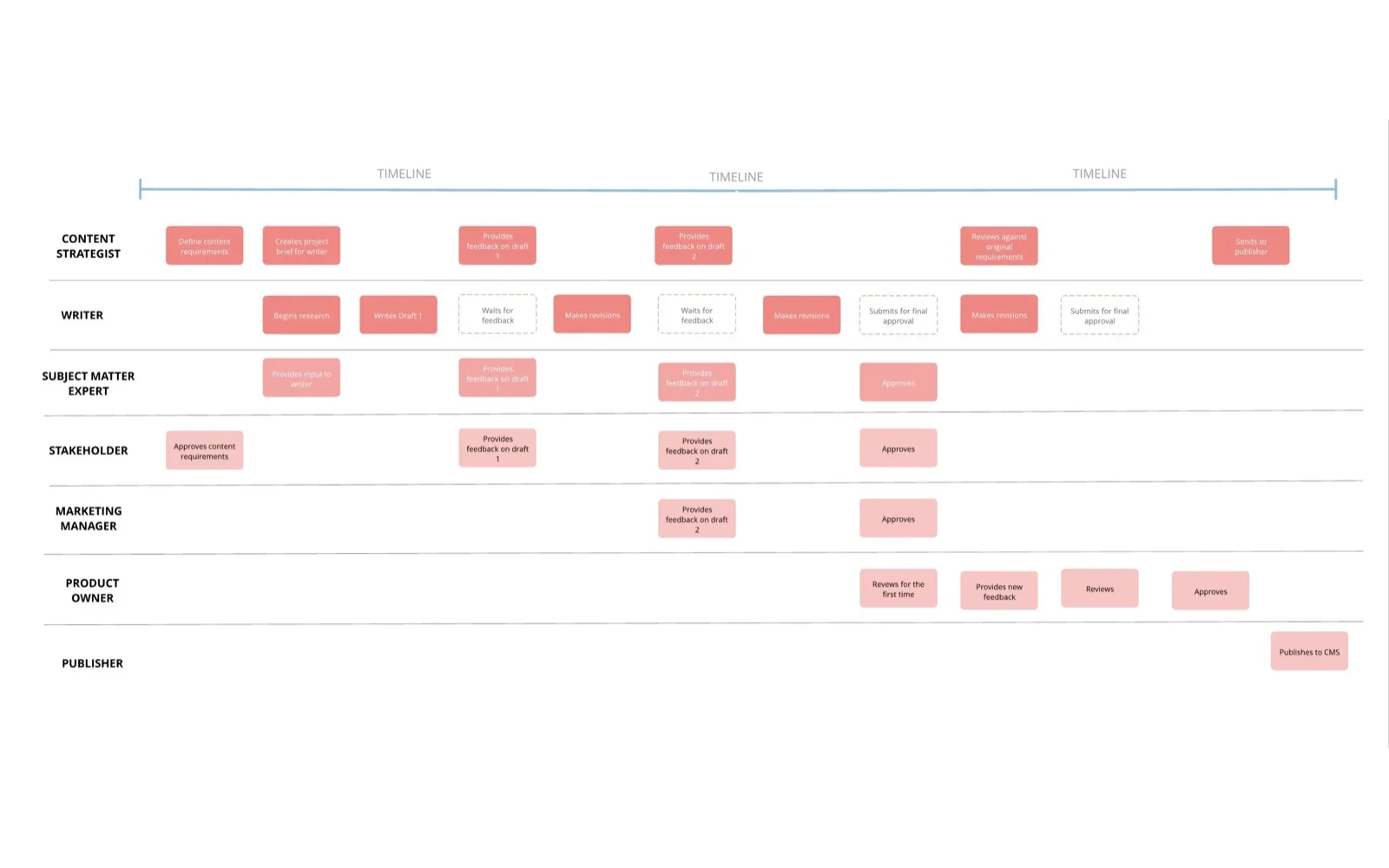
Ask four people to hand off a draft and you get four shapes: a doc link, a paste into chat, a file named final-v3. None of them is wrong until the next step has to begin by asking what this is. Solo operators run the same problem inside one head, where every stage starts by re-deciding what the stage before it produced, which is why the work feels heavier than its volume. The five layers here fix the handoff rather than the writing: defined inputs, defined outputs, so the next stage can start without a conversation. That is what workflow automation software does everywhere else. Editorial work has been slow to ask for it.
Why Most AI Content Creation Automation Workflows Fail
I used to spend entire Saturdays writing a single blog post. Research in the morning, drafting through the afternoon, formatting and scheduling into the evening. By the time I published, I had zero energy left for the YouTube script, the newsletter, or the social posts that were supposed to promote the article.
Then I made a mistake that a lot of creators make: I handed the whole process to ChatGPT. "Write me an article about AI automation." Copy, paste, publish. The output was technically accurate, grammatically correct, and completely forgettable. It read like a Wikipedia entry with a marketing veneer.
I was wrong about what AI automation actually means. It does not mean "let AI write your content." It means building a system where AI handles the parts of content production that are repeatable, structured, and time-consuming — while you handle the parts that require judgment, experience, and personality.
That distinction changed everything about how I approach AI content creation automation.
What AI Content Creation Automation Actually Looks Like
Real AI content creation automation is a modular workflow system. Each stage of content production becomes an independent module with defined inputs and outputs. Modules connect through standardized handoffs. When one module finishes, the next one picks up automatically.
Here is the five-layer framework I built and have been running for over a year:
Layer 1: How Do You Pick Topics That Actually Get Traffic?
AI scans industry trends, competitor content gaps, and audience engagement patterns to surface topics worth pursuing. This is not random brainstorming — it is data-driven filtering.
What the AI handles:
Pulling trending topics from Google Trends, Reddit, and niche forums
Analyzing competitor content to identify gaps and underserved angles
Cross-referencing topics against your existing content to avoid overlap
Scoring each topic by demand intensity, competition density, and alignment with your expertise
What you handle:
Final topic approval based on your editorial calendar and strategic direction
Deciding which angle to take — because ten creators can cover the same topic and produce ten completely different articles
A practical topic selection workflow looks like this: AI generates a ranked list of 20 potential topics for the next two weeks, you filter it down to 5 based on your knowledge and what your audience has been asking about, then you assign each topic to a specific platform and content format.
Layer 2: How Do You Write Faster Without Losing Your Voice?
AI produces structured first drafts based on detailed outlines. You rewrite them with your voice, your examples, and your opinions.
The biggest mistake here is expecting AI to produce publishable content in one pass. AI-generated first drafts share a universal weakness: they are too correct, too balanced, and too generic. They read like textbooks — informative but lifeless. Recognizing these patterns is essential — our guide on 8 signs of AI writing and how to fix them covers the specific tells to watch for.
The fix is a three-layer rewrite process:
Information layer — Let AI ensure comprehensive topic coverage. Every relevant concept, statistic, and framework gets included.
Opinion layer — You inject personal experience. That project that failed. That tool you tried and abandoned. That conventional wisdom you disagree with.
Voice layer — Calibrate sentence rhythm. Break up uniform paragraph lengths. Add short declarative sentences after long explanatory ones. Use questions to pull readers forward.
After these three passes, the content transforms from "AI-generated" to "written by you, with AI assistance." Readers can tell the difference, even if they cannot articulate exactly how.
Layer 3: How Do You Create Visuals Without a Design Team?
AI generates cover images, inline graphics, video thumbnails, and social media cards. You approve or iterate on the results.
Visual content production follows two primary approaches:
Prompt-to-image generation — You describe the scene, composition, and style to an AI image tool. The key is specificity. "A tech-themed image" produces garbage. "A dark blue gradient background with a 3D flowchart showing five connected stages, each represented by a different colored icon, minimal text, wide aspect ratio" produces something usable.
Reference-based generation — You provide a reference image along with a style description. The AI maintains the composition while applying your brand's visual language. This approach is essential for maintaining visual consistency across a content series.
One practical rule I follow: every image in an article must serve a purpose. If a reader removes the image and the section still makes complete sense with nothing lost, the image is decorative, not functional. Cut it.
For YouTube thumbnails specifically, AI excels at batch testing. Generate 8-10 variations for a single video, run them as A/B tests, and let click-through rate data pick the winner. I wrote a detailed breakdown of AI-powered thumbnail creation workflows if you want the step-by-step process.
Layer 4: How Do You Post Everywhere Without Copy-Pasting?
AI reformats a single piece of content for multiple platforms. Each adaptation adjusts tone, length, structure, and calls to action.
This is where "create once, distribute everywhere" becomes practical. But simple copy-pasting is not distribution — it is spam. Each platform demands different treatment:
Platform
Length
Tone
Priority Element
Blog / Newsletter
2,000-5,000 words
Professional, detailed
SEO structure, internal links
YouTube
1,500-3,000 word script
Conversational, paced
Hook, visual cues, CTA
Twitter/X
280 chars per tweet, 10-15 tweet threads
Direct, punchy
Opening hook, standalone value per tweet
LinkedIn
500-1,500 words
Professional, insight-driven
Opening line, personal angle
Instagram / TikTok
100-300 word script
Energetic, visual-first
First 3 seconds, visual impact
AI tools can rewrite a 4,000-word blog post into a 15-tweet thread, a 2,000-word YouTube script, a 500-word LinkedIn article, and three 200-word short-form video scripts. Each rewrite adjusts structure and emphasis, not just word count.
The same information, expressed differently across platforms, looks like this:
Blog version: "AI content automation works best as a modular pipeline where each production stage operates independently. This architecture allows you to swap individual tools without redesigning the entire workflow."
Twitter version: Stop building monolithic content systems. Build modular ones. When your AI writing tool changes its pricing, you swap that one module — everything else keeps running.
TikTok script: Your AI content system should work like LEGO blocks, not a sculpture. One piece breaks? Replace it. Everything else stays. Three seconds, one mental model, done.
Notice the pattern: information density decreases, emotional directness increases, and sentence structure shifts from written to spoken.
Layer 5: How Do You Catch Quality Issues Before Publishing?
AI runs automated checks for factual accuracy, tone consistency, and platform compliance. You make the final call on whether to publish.
This layer is where most creators cut corners, and it is exactly where they should not. Quality review catches the problems that make AI-generated content feel "off" to readers.
Automated quality checks I run on every piece:
AI writing tone detection — Scanning for the eight common tells of AI-generated writing: overuse of transition phrases, mechanically balanced arguments, absence of specific examples, symmetrical paragraph structures
Factual verification — Every statistic, tool name, and version number gets verified against primary sources
Platform compliance — Checking character limits, hashtag counts, link formatting, and content policy alignment for each target platform
Brand voice consistency — Comparing the piece against a reference corpus of previously published content to ensure tonal alignment
The quality review layer is the difference between "content that was published" and "content that should have been published." Skip it, and your audience will notice — even if they never tell you directly.
The Four Traps of AI Content Creation Automation
After running this system for over a year and helping other creators build their own, I have seen the same mistakes repeated across every skill level.
Trap 1: The Full Automation Fantasy
"Set it and forget it" sounds attractive. It is also a fast track to mediocre content. No AI system in 2026 can consistently produce high-quality content without human oversight. AI is a copilot, not an autopilot. You need to intervene at three checkpoints: topic approval, first draft revision, and final publishing decision.
Trap 2: Ignoring AI Writing Tone
AI-generated text has a recognizable signature. Readers may not be able to pinpoint exactly what feels wrong, but they will sense that the content "does not sound like a person wrote it." Over time, this erodes trust.
The eight most common AI writing tells — and specific techniques to eliminate each one — deserve their own deep dive. I documented the full diagnostic framework in how to spot and fix AI writing patterns.
Trap 3: Publishing Without Fact-Checking
AI tools hallucinate. They generate plausible-sounding statistics, cite papers that do not exist, and confidently attribute quotes to people who never said them. If you publish without verifying, you are betting your credibility on a language model's confidence score.
The rule is simple: every specific number and every specific claim in AI-generated content needs manual verification against a primary source. No exceptions.
Trap 4: One-Size-Fits-All Distribution
Different platforms have different content policies, different audience expectations, and different algorithmic preferences. Posting identical content across all platforms is not efficiency — it is laziness that algorithms punish with reduced reach.
Each platform requires genuine adaptation: structural changes, tonal shifts, and format-specific optimization. The distribution layer of your automation system should handle this automatically, but you need to configure platform-specific templates correctly from the start.
Building Your AI Content Creation Automation System: Where to Start
You do not need to build all five layers at once. That approach leads to overwhelm and abandonment. Start with one platform and one layer.
Week 1-2: Writing automation on your primary platform. Pick the platform where you already have the most content. Set up the three-layer rewrite process (information → opinion → voice). Publish three pieces using this workflow and compare them to your previous output.
Week 3-4: Add the topic selection layer. Once your writing workflow is stable, add AI-powered topic research. Let the AI surface 20 topics per week, you pick 3-5. Observe whether the AI's recommendations align with what your audience actually engages with.
Week 5-6: Add visuals and quality review. Configure AI image generation for cover images and inline graphics. Set up automated tone detection and fact-checking workflows. These layers have the highest setup cost but the lowest ongoing maintenance.
Week 7-8: Add multi-platform distribution. Only after you have a solid single-platform workflow should you expand to cross-platform distribution. Start with one additional platform, not three.
This graduated approach matters because each layer compounds on the previous one. A distribution layer is useless without quality content to distribute. A quality review layer is useless without consistent content to review. Build the foundation first.
The Uncomfortable Truth About AI Content Creation Automation
Here is what most guides on AI content creation automation will not tell you: automation amplifies whatever you feed it. If your content strategy is unclear, automation will produce a larger volume of unfocused content faster. If your brand voice is undefined, automation will generate more content that sounds like nobody in particular.
AI content automation is not a shortcut around doing the hard work of figuring out what you stand for, who you serve, and what you have to say that nobody else does. It is an accelerator that makes that hard work scalable once you have done it.
The creators who get the most out of AI automation are not the ones with the most sophisticated tool stacks. They are the ones who can answer three questions clearly:
What specific problem does my content solve for a specific audience?
What do I know from personal experience that most content on this topic gets wrong?
What is the one thing I want readers to do after they finish each piece?
Answer those questions first. Then build the system.
Your AI Content Creation Automation Checklist
Before you build, audit your readiness:
Strategy
[ ] Defined 1-2 primary platforms with clear audience profiles
[ ] Researched platform algorithms and content preferences
[ ] Identified your content niche and competitive positioning
[ ] Built a 4-step pipeline: Topic → Outline → Draft → Review
[ ] Created platform-specific tone templates
[ ] Configured AI writing tone detection
[ ] Established fact-checking review gates
Visual System
[ ] Selected 1-2 brand visual styles for consistency
[ ] Set up cover image and thumbnail generation tools
[ ] Defined image-to-content mapping rules (every image serves a purpose)
[ ] If doing video: configured keyframe generation pipeline
Distribution
[ ] Built single-source, multi-platform adaptation templates
[ ] Set publishing frequency and optimal timing per platform
[ ] Added pre-publish review checkpoints
Iteration
[ ] Established content performance tracking (views, engagement, conversions)
[ ] Created a feedback loop for adjusting strategy based on data
[ ] Scheduled weekly workflow reviews to identify automation opportunities
Review this checklist monthly. What can be further automated? What new problems have emerged? The system is never finished — it evolves with your content strategy and the tools available.
Ready-to-Use Prompt: Build a 5-Layer Content Automation System Solo
What this does: Scores the five content layers (Topic Selection, Writing, Visuals, Distribution, Quality Review) as system vs one-off, splits AI-owned repetition from human-owned creative control, runs the four-trap guardrail, and picks where to start — keeping you in command of a four-platform system. Based on: AI Content Creation Automation: The 5-Layer System I Built to Run 4 Platforms Solo — https://aiworkflowpro.com/self-media-ai-automation-guide/ Time to run: ~5 minutes
Copy this prompt into Claude Code, ChatGPT, or any AI assistant:
ROLE: You are a Content Automation 5-Layer Architect. Your job: turn one-off content production into a repeatable five-layer system where AI handles repetition and the human keeps creative control — never handing the whole pipeline to AI.

CONTEXT — 5-LAYER CONTENT AUTOMATION METHOD:
Content creation has a systems problem, not a volume problem — solo creators drown because they treat each piece as a one-off. The fix is a five-layer framework: (1) Topic Selection, (2) Writing, (3) Visuals, (4) Distribution, (5) Quality Review. AI handles the repetitive layers (writing drafts, visuals, distribution); the human keeps creative control at the decision points (topic judgment, quality review). Never hand the whole process to AI end-to-end — the four traps (no human gate, skipped review, one-off-per-piece, automating before repeatable) sink automation. The uncomfortable truth: AI amplifies whatever you feed it; taste and topic judgment still belong to you.

INPUTS (fill in before running):
- PLATFORMS: [Which platforms you run — blog, YouTube, social, newsletter]
- CURRENT_PROCESS: [How content gets made today — one-off / partial system]
- STRENGTH: [Where you are strongest — topic / writing / visuals / distribution]
- TIME: [Hours per week available]

METHOD — 4 STEPS:

Step 1 — Score the 5 Layers (System vs One-Off)
For each layer — Topic Selection, Writing, Visuals, Distribution, Quality Review — score whether it is a repeatable system (2), partial (1), or one-off (0) in CURRENT_PROCESS. Any 0 is where the one-off disease bleeds time.

Step 2 — Assign AI vs Human per Layer
Assign each layer: AI handles repetition (Writing drafts, Visuals, Distribution); human keeps creative control (Topic Selection judgment, Quality Review gate). Name exactly where the human stays in the loop.

Step 3 — Run the 4-Trap Guardrail
Check for the four traps: handing the whole process to AI end-to-end (no human gate), skipped Quality Review, treating each piece as one-off, automating before the process is repeatable. Fix any trap that is active.

Step 4 — Uncomfortable-Truth Check + Where to Start
Confirm AI amplifies good topic judgment, not bad taste — the system can't fix a weak topic. Pick the starting layer from STRENGTH and TIME: systematize the layer that bleeds the most time first.

RULES:
- Never hand the whole pipeline to AI end-to-end — the human keeps Topic Selection and Quality Review.
- Never automate a layer that is still one-off — make it repeatable first, then automate.
- Never skip Quality Review — it is the creative-control gate that keeps the work yours.

OUTPUT FORMAT:
Output a markdown report with:
1. 5-Layer Scorecard — markdown table, columns: Layer | Score (0–2) | AI / Human
2. AI-vs-Human Split — which layers AI owns vs where the human stays
3. 4-Trap Check — markdown table, columns: Trap | Active? | Fix
4. Start Plan — the starting layer + the uncomfortable-truth reminder
Save as @templates/self-media-ai-automation-guide.md and run when content production feels like one-off projects instead of a system.
AI Agent Voice Mode - Drive this whole pipeline hands-free by talking to your agent
AI content creation automation is not a destination. It is an ongoing process of identifying which parts of content creation benefit from human judgment and which parts benefit from machine execution.
The dividing line is clear: automate everything that is repeatable, keep everything that requires judgment.
Start with one platform. Get the writing layer working. Feel the difference in your output consistency and production speed. Then expand.
One layer at a time. Each one solid before you add the next.
Monitoring a competitor who publishes no feed is the case every RSS guide skips. Twenty-one platforms sorted by which of three jobs they do, and the finished setup is business process automation you own outright, with no seat licence to renew.
Blaming the content is the reflex when a post underperforms, and it is usually the wrong diagnosis. A second reader decides distribution before any human sees the post, and most of what it checks is mechanical enough to automate business processes around, on five platforms at once.
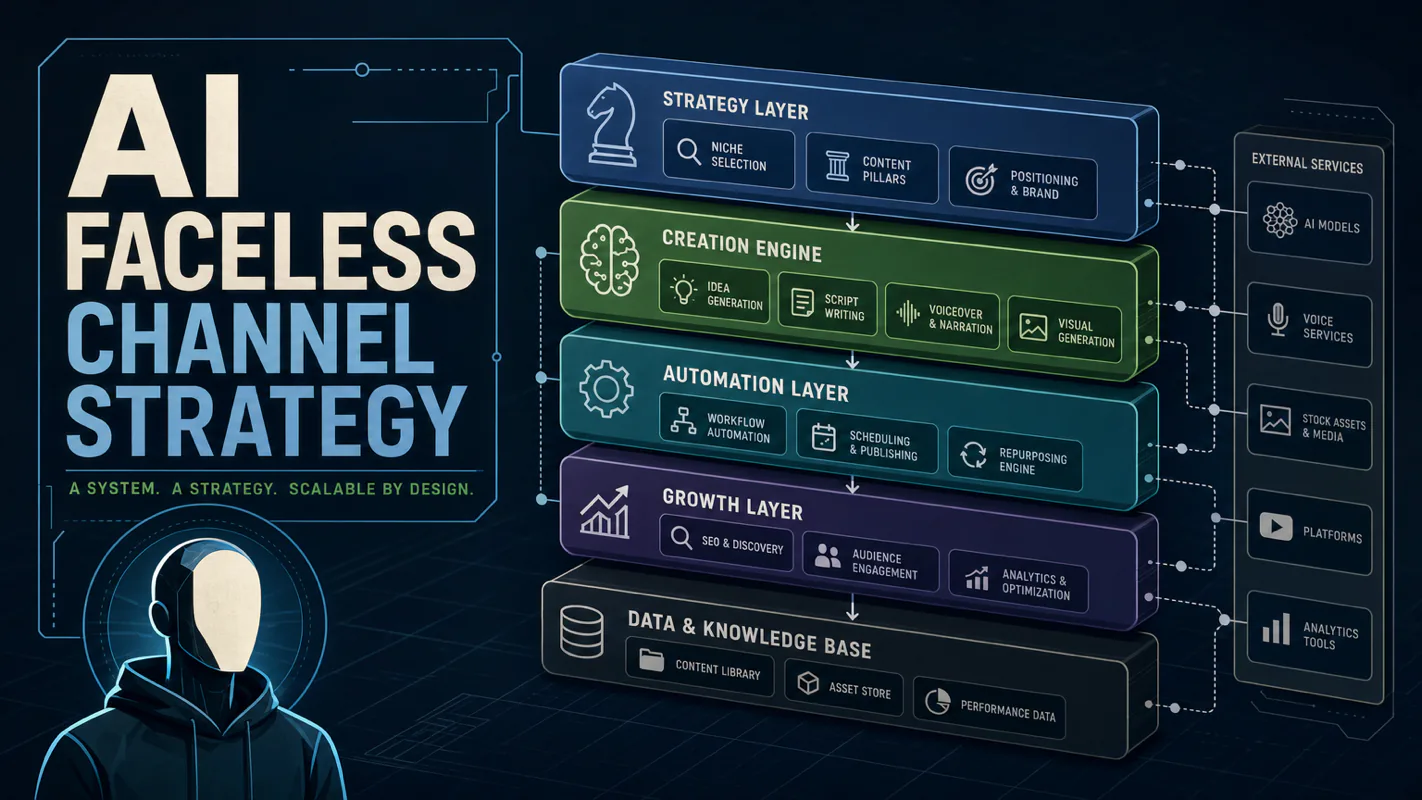
Nothing about month four is harder than month three. It is simply the month an unpaid channel starts to feel like proof of failure. Surviving it takes a cadence you can hold while earning nothing, which is a better reason to automate business processes than speed ever was.
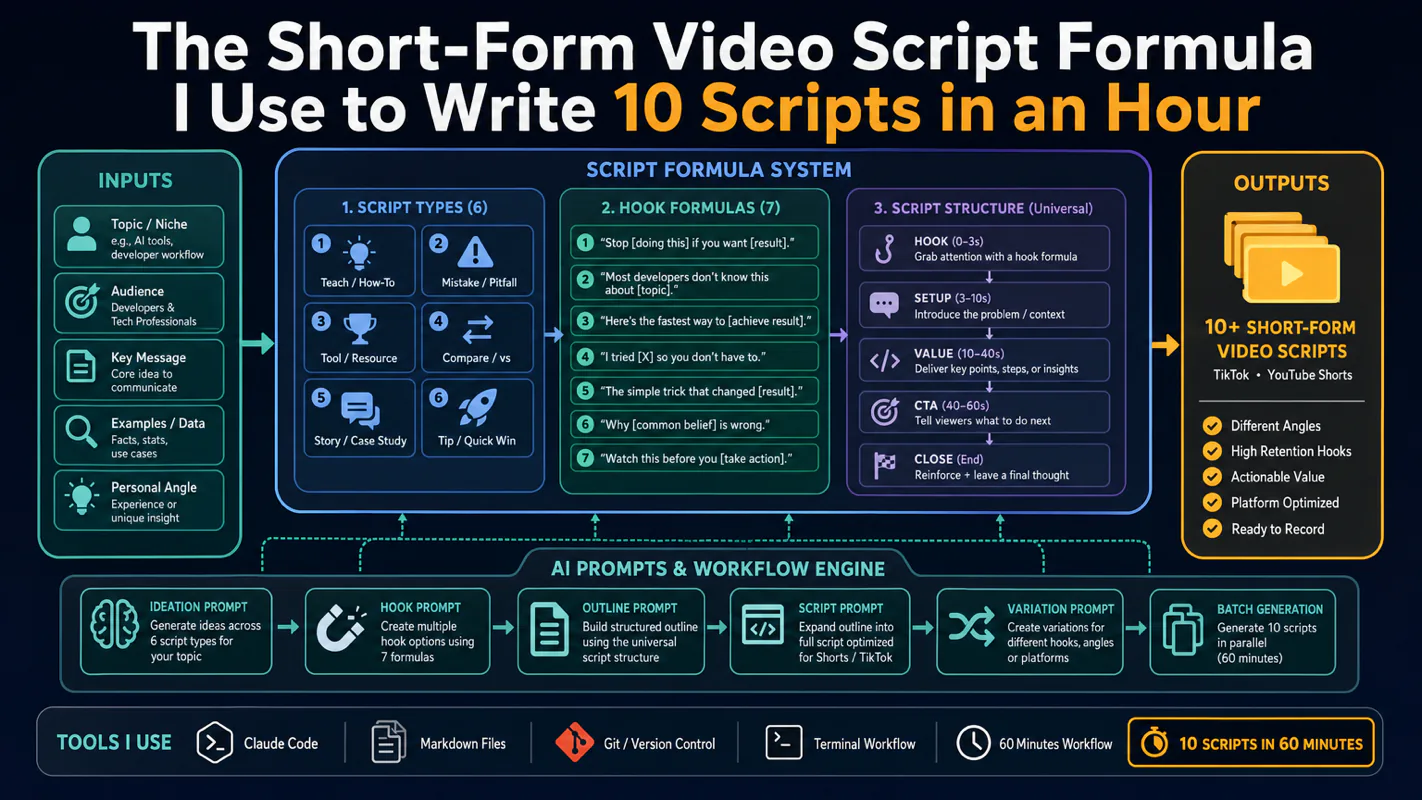
Thursday afternoon, fourteen product ideas, a Monday filming slot, no scripts. Six script shapes and seven hook formulas turn that hour into finished drafts — and the business rule stays: rewrite at least 30% before anything ships.