Monitoring a competitor who publishes no feed is the case every RSS guide skips. Twenty-one platforms sorted by which of three jobs they do, and the finished setup is business process automation you own outright, with no seat licence to renew.
Blaming the content is the reflex when a post underperforms, and it is usually the wrong diagnosis. A second reader decides distribution before any human sees the post, and most of what it checks is mechanical enough to automate business processes around, on five platforms at once.
Gloves on, tape measure in hand — nobody types a query. Three voice surfaces for ai automation tools (terminal, Telegram, Discord), 10 TTS and 6 STT providers compared on cost and latency, plus a setup that costs nothing.
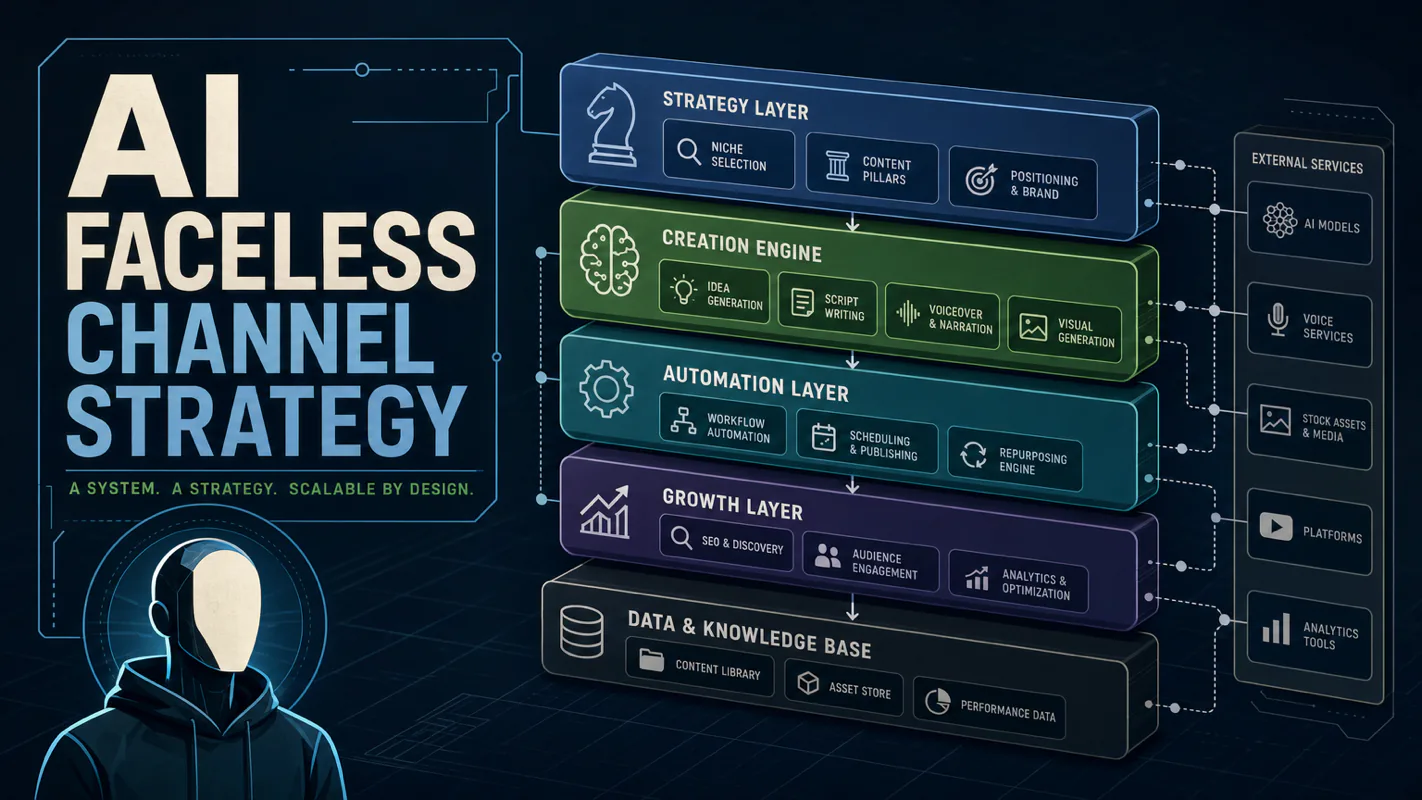
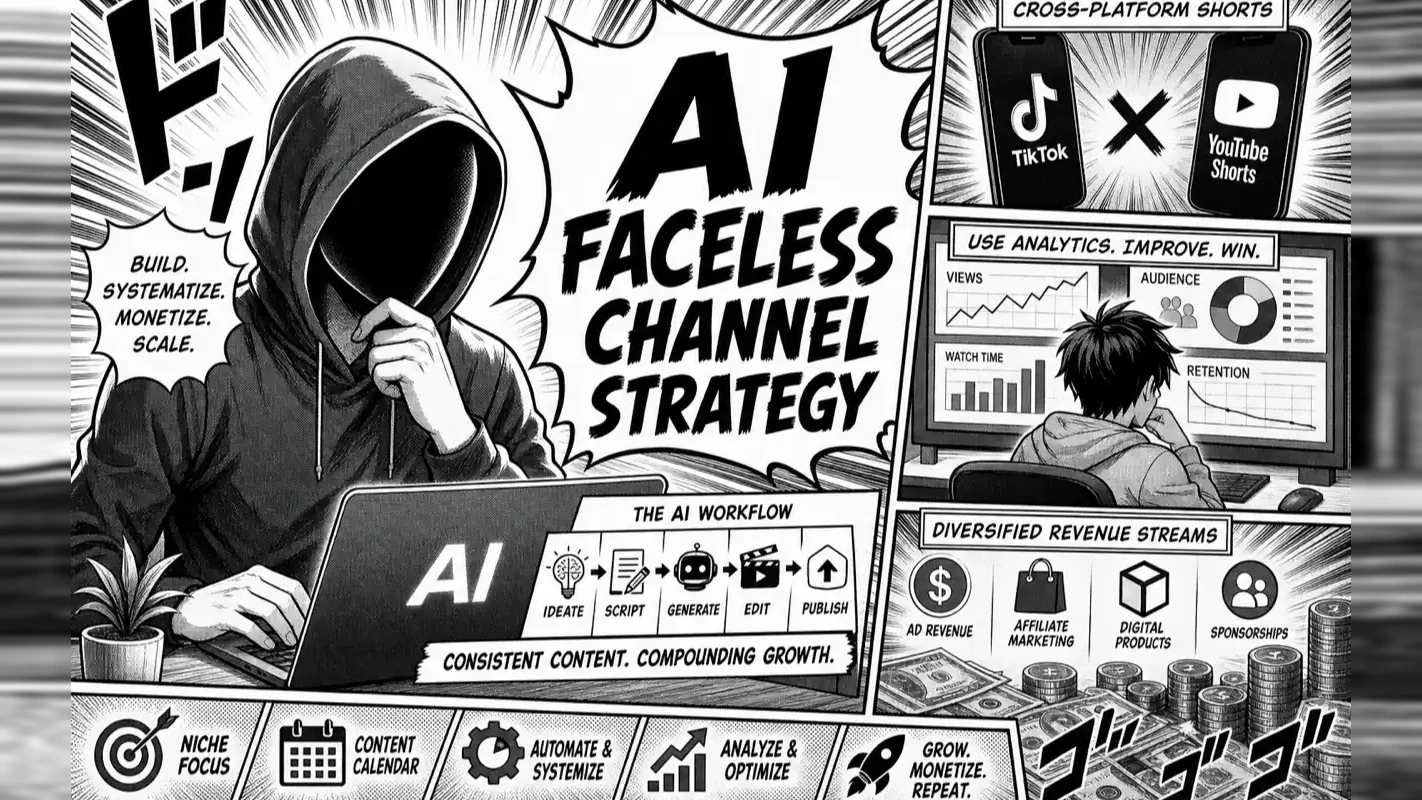
AI Faceless Channel Strategy: From Zero to Monetization on TikTok and YouTube Shorts
Nothing about month four is harder than month three. It is simply the month an unpaid channel starts to feel like proof of failure. Surviving it takes a cadence you can hold while earning nothing, which is a better reason to automate business processes than speed ever was.
In 2026, AI-generated content is no longer a fringe experiment on TikTok — it runs entire channels with millions of followers. AI presenters deliver news. AI animations tell stories. Digital characters dance and perform. The AI faceless channel model has become a dominant strategy.
I spent months studying the top-performing AI faceless channels on TikTok and YouTube Shorts. This article breaks down what actually works — five content types, three platform algorithms, realistic monetization timelines, and the mistakes that kill most AI faceless channel projects before they gain traction.
TL;DR
The AI faceless channel model is one of the fastest-growing segments in new creator projects, accelerating sharply since 2022
Five distinct AI content types dominate short-form video: virtual influencers, AI animation, AI commentary, AI storyline, and AI educational
Monetization timeline reality check: 0-3 months building your library (zero revenue), 3-6 months hitting platform thresholds ($50-500/month), 6-12 months building a real audience ($500-3,000/month)
The single most overlooked factor: consistency beats virality — algorithms reward steady output over one-hit wonders
Most of these projects die in month four. The first three produce nothing — no revenue, no audience, just a library being built — and month four is when the person running it decides the model does not work and stops. The channels that survive did not find a better tool; they found a cadence they could hold while earning nothing. The five formats below, the three platform algorithms and the 0-3, 3-6, 6-12 month revenue bands make that stretch predictable instead of demoralising. The reason to automate business processes here is stamina, not speed: output you can sustain for a year beats output that impresses for a week.
Is the AI Faceless Channel Model Actually Mainstream Now?
The numbers tell the real story:
Metric
Data
Source
YouTube Shorts daily views
70 billion+
YouTube Official (2024 confirmed)
Shorts engagement rate
5–6% (comparable to TikTok)
Based on creator community reports and third-party analytics tools
Top faceless channel monthly revenue
$80,000+
Based on publicly documented creator earnings
Short-form video as share of global internet traffic
Growing rapidly, estimated majority share
Cisco Annual Internet Report trend data
Here is what surprised me most when I started tracking this space: viewers consistently report that faceless content feels more authentic than creator-fronted content. The reason makes sense once you hear it — viewers focus on the content itself rather than judging the person delivering it. From my own channel analytics and community discussions, this pattern holds across niches. It demolishes the "you have to show your face to build an audience" assumption that holds so many creators back.
What Are the 5 Types of AI Content Channels That Actually Work?
Type
Example Channels
Core Appeal
AI Tool Chain
Entry Difficulty
Virtual Influencer
Lil Miquela, Kenza Layli
Persona + fashion + social commentary
AI image generation + motion capture
High
AI Animation
AIAnimation Studio, Wick AI
Visual impact + creativity
Midjourney + Runway + Pika
Medium
AI Commentary
Wes Roth, Two Minute Papers
Information density + timeliness
AI voice + automated editing
Low
AI Storyline
AI Talking Baby series
Novelty + humor
AI face driving + voice cloning
Medium
AI Educational
3Blue1Brown, Denis Shiryaev
Visualization + accessibility
Programmatic animation + AI restoration
Medium
A successful AI faceless channel never goes viral because it "used AI." It goes viral because AI solved a specific bottleneck in content creation — either production speed, visual quality, or personalized experience.
I want to emphasize something I was wrong about early on: I used to think the AI tool stack mattered most. It does not. I watched dozens of creators spend months evaluating the latest AI tools without spending a single day researching what their target audience actually wants to watch. Tools are the means. Content positioning is the strategy.
Before choosing any AI tool, answer three questions: Who do you want to attract? What type of content can you produce consistently? Where is your differentiation? Once those three answers are clear, tool selection follows naturally.
Virtual Influencer Channels: The Persona Is the Product
Lil Miquela has millions of followers on TikTok. She is an entirely AI-generated virtual person, yet her content strategy mirrors real human influencers — fashion, social commentary, brand partnerships.
The core logic: A virtual influencer's advantage is not that "she is AI." The advantage is that she can be precisely engineered to match what the target audience wants, and she never has an off-day or a PR scandal.
Strategies worth borrowing:
Design the persona before the content. Create a character design document first — name, age, values, speaking style, visual identity — then build every piece of content around that document.
Consistency builds trust. Visual style, tone of voice, and values must stay rigidly consistent. Audiences unfollow the moment they detect inauthenticity.
Controlled controversy drives reach. Lil Miquela discusses social issues, which elevated her beyond the "virtual idol" label. The line to hold: express a position, never provoke division.
2026 tool chain for virtual influencer channels:
Step
Tool
Purpose
Monthly Cost
Character design
Midjourney V7 / FLUX
Generate consistent character appearance
$10-30
Expression driving
HeyGen / D-ID
Animate static characters with speech and expressions
$24-48
Voice cloning
ElevenLabs
Create a unique AI voice
$22
Video generation
Runway Gen-4.5
Best character consistency across video clips
$12-76
Publishing
Buffer / Publer
Multi-platform scheduling
$0-15
The barrier to entry here dropped dramatically between 2024 and 2026. What used to require a professional team can now be done solo with Runway Gen-4.5 and ElevenLabs. But lower barriers mean fiercer competition — your virtual persona needs a specific expertise niche (like "AI fashion consultant" or "cyberpunk food critic") rather than generic entertainment content.
AI Animation Channels: Industrialized Creativity
Wick AI reimagines classic cartoon characters as real people using AI. AIAnimation Studio teaches AI animation techniques. These channels compress what previously required an entire animation team into a one-person operation.
The core logic: AI tools reduced animation production from "team + budget + timeline" to "creativity + prompts + a few hours."
Strategies worth borrowing:
Pick one visual style and go deep. Channels that try to do everything have no recognizable identity. Commit to a single aesthetic — "classic animation as live-action" or "cyberpunk micro-films" — so viewers recognize your work instantly.
Tutorials alongside showcases. Showing how you made something is itself premium content. Behind-the-scenes and process videos often outperform the final product in click-through rate.
Chase the new-tool window. Every time a new AI video tool launches, the first creators to publish showcase content capture the largest traffic spike. In my experience, tutorial videos published within 48 hours of a new tool release get 5-10x the views compared to publishing a week later.
AI animation niches for beginners:
Niche
Example
Tool Stack
Monetization Path
Classic animation as live-action
Disney characters as real people
Midjourney + Kling
Ad revenue share
AI animation tutorials
Teaching AI animation techniques
Screen recording + voiceover
Courses / memberships
Micro-films
1-3 minute AI-generated short films
Sora / Veo + editing suite
Brand partnerships
Music visualization
AI visual effects for music
Deforum + audio analysis
Music artist collaborations
AI Commentary Channels: Speed Is the Competitive Edge
Wes Roth's AI news channel publishes deep-dive analysis videos within hours of major tech breakthroughs. Two Minute Papers explains an AI research paper's core findings in two minutes flat.
The core logic: AI-assisted scriptwriting and production compress the content creation cycle from days to hours.
Strategies worth borrowing:
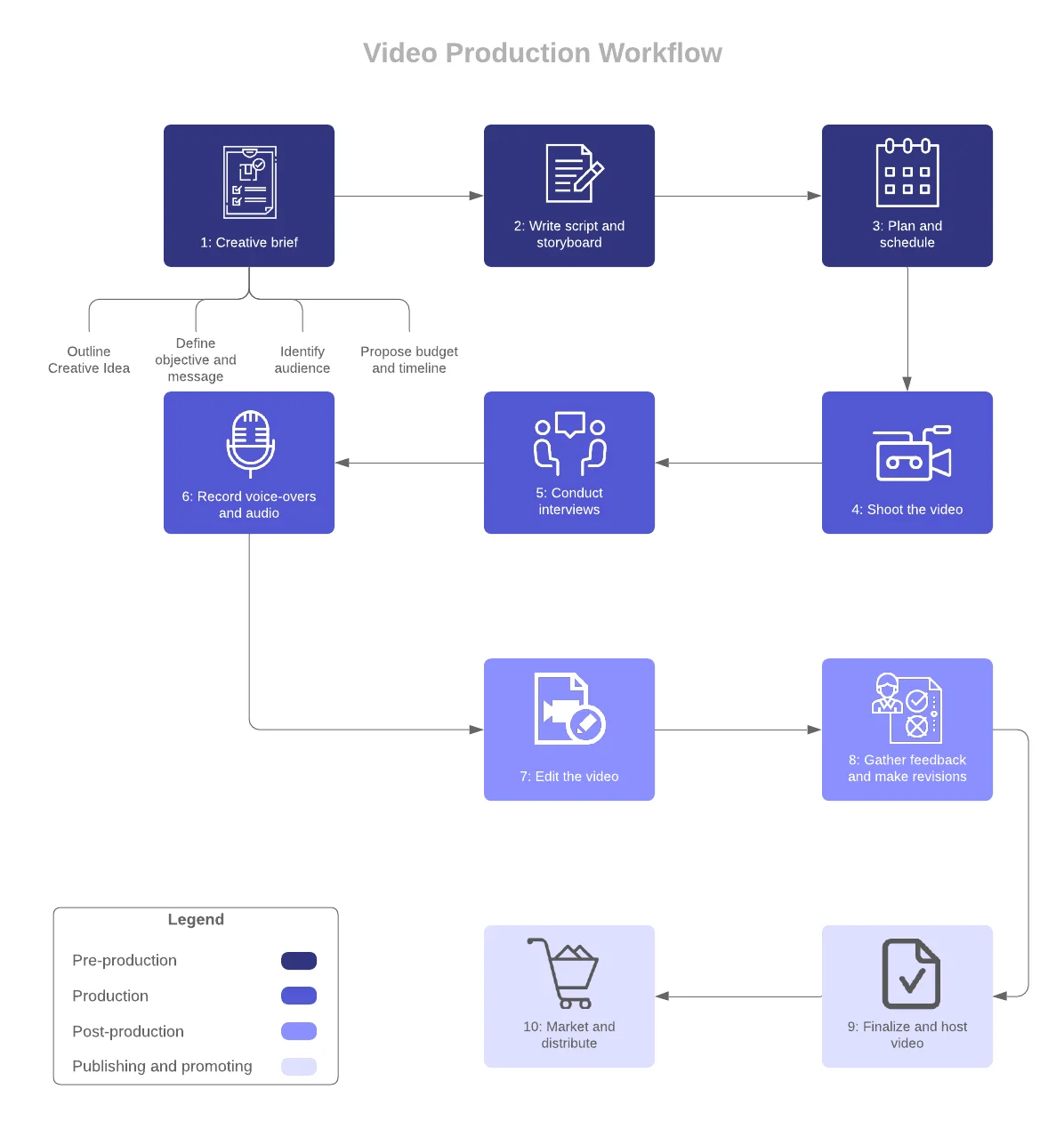
Build a production pipeline. AI generates the first draft, human review adds personality and accuracy checks, then rapid editing and publish. Once this pipeline is locked in, publishing 1-2 videos per day is entirely feasible.
Fixed formats reduce cognitive load. Viewers form watching habits when they know what to expect from each video. A structure I recommend: Hook (3 seconds) then Context (15 seconds) then Core content (60-120 seconds) then Your take (30 seconds) then CTA (5 seconds).
Opinions matter more than information. AI can organize information for you, but a distinctive analytical perspective is the only reason followers stay. Pure information repackaging has zero moat. Channels with a clear point of view build loyal audiences.
Complete AI commentary channel tool stack:
Stage
Tool
Purpose
Monthly Cost
Topic tracking
RSS feeds + X lists
Discover breaking news
Free
Script generation
ChatGPT / Claude
Rapid first draft
$20
Voice synthesis
ElevenLabs
High-quality AI voiceover
$22
Visual assets
Pexels + AI generation
Supporting visuals
Free-$12
Captions
CapCut
Auto-generated + styled captions
Free
Editing
CapCut / Premiere
Final assembly
Free-$23
Total
$42-$77/month
AI commentary is the most beginner-friendly of all five content types. Lowest barrier, lowest tool cost, easiest to standardize. I strongly recommend locking in your pipeline from day one — define exactly which tool handles each step, how long each step takes, and what the quality check looks like. Many creators start with high enthusiasm, post daily for two weeks, then burn out because their process is unstable. Pipeline stability matters more than creative inspiration.
AI Storyline Channels: The Novelty Has an Expiration Date
The AI Talking Baby series — using AI to make babies talk — exploded in views almost overnight. But novelty fades. Long-term audience retention depends entirely on story quality.
The core logic: The first wave of traffic from a new AI technique comes from "wow, that is possible?" reactions. Sustained growth only comes from genuinely good content.
Strategies worth borrowing:
Use novelty for acquisition, quality for retention. The first video grabs attention with a technical wow factor. Every subsequent video must earn continued watching through storytelling and characters.
Serialize your content. A single viral hit is not enough. Build continuous storylines that give viewers a reason to come back. Give characters story arcs. End each episode with a hook.
Keep up with technical upgrades. AI tools iterate fast. What passed as impressive visual quality in 2024 might look rough by 2026. Stay current or your audience will move to channels with sharper visuals.
Content quality checklist for storyline channels:
Dimension
Passing Grade
High Grade
Opening hook
Grabs attention within 3 seconds
Makes it impossible to scroll away
Character design
Has a basic personality
Has a growth arc
Story structure
Has beginning, middle, end
Has a twist or emotional peak
Visual quality
Clear, no distortion
Consistent style with polish
Posting frequency
1-2 per week
3-5 per week
AI Educational Channels: Making the Complex Visible
3Blue1Brown uses programmatic animation to explain advanced mathematics. Denis Shiryaev uses AI to restore century-old historical footage. What these channels share: they treat AI as a tool for making knowledge visible.
The core logic: AI is not the content — it is the amplifier that makes content easier to understand.
Strategies worth borrowing:
Pick a domain where "showing beats telling." Mathematical formulas, physical phenomena, historical scenes, microscopic worlds — these are ideal subjects for visual education because text alone cannot convey them effectively.
Technology is a means, not the message. Viewers care about what they learned, not what tools you used. Do not spend significant video time explaining your AI workflow.
One problem per video. The biggest enemy of educational content is scope creep. One video explaining one concept clearly outperforms one video covering five concepts superficially.
Ten high-potential niches for AI educational content:
Niche
Visual Advantage
Competition Level
Space / Astronomy
Celestial motion simulation
Medium
Historical recreation
AI restoration / reconstruction
Low
Biology / Medicine
Microscopic world visualization
Medium
Physics experiments
Mechanics / optics simulation
Low
Psychology
Experiment scenario dramatization
Low
AI technology itself
Model architecture animation
High
Economics / Finance
Data visualization
Medium
Geography / Geology
Terrain transformation animation
Low
Obscure facts
Fun animated explanations
Medium
Everyday science
Explaining daily phenomena
Low
How Do Platform Algorithms Differ for AI Faceless Channel Content?
Running an AI faceless channel on multiple platforms requires adapting your strategy to each algorithm. The same content performs very differently depending on where you post it:
Dimension
TikTok
YouTube Shorts
Instagram Reels
Algorithm core metric
Completion rate + interaction rate
Retention rate + watch time
Share rate + save rate
Optimal length
15-30 seconds
30-60 seconds
15-30 seconds
Hook window
First 2 seconds
First 3-7 seconds
First 2 seconds
Content tone
Entertainment-first, fast pace
Slightly deeper, information-dense
Aesthetic, polished
Posting frequency
1-3 per day
1-2 per day
1 per day
Primary monetization
Creator Fund + e-commerce
Ad revenue share
Brand partnerships
One important detail: Since March 2025, YouTube Shorts counts each loop replay as a separate view. This means designing "seamless loop" videos gives you an algorithmic boost on Shorts that does not exist on other platforms.
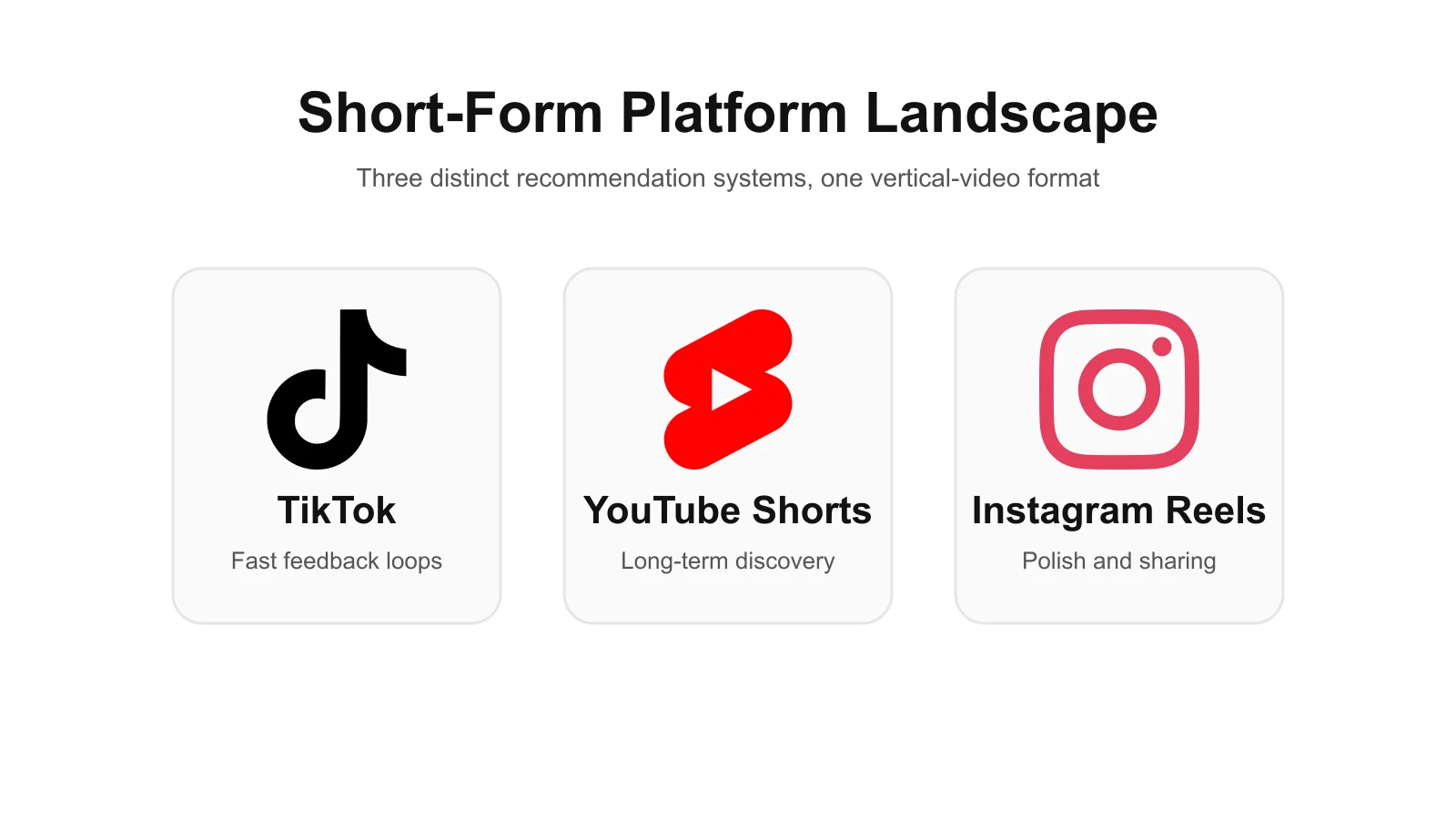
Understanding these platform differences is the single biggest leverage point for content distribution efficiency. TikTok's algorithm does not care about your follower count — a brand new account with zero followers can get a million views because TikTok tests every piece of content through a tournament-style distribution mechanism. YouTube Shorts favors long-term accumulation — it shares a recommendation engine with YouTube's main platform, so a viral Short can drive significant subscriber growth to your long-form channel. Instagram Reels depends heavily on visual polish and social sharing — beautiful content spreads faster here than on any other platform.
My practical recommendation: validate your content model on one platform first, then expand. Do not try to launch on three platforms simultaneously — scattered effort means mediocre results everywhere.
How to choose your starting platform:
Want the fastest feedback loop? Start on TikTok. You will know within days whether a content direction resonates.
Want the most stable long-term monetization? Start on YouTube Shorts. Ad revenue sharing is the most reliable income path.
Have highly visual content? Start on Instagram Reels. The aesthetic premium is strongest here.
What Does the Realistic Path From Zero to Revenue Look Like?
Phase
Timeline
Milestone
Expected Revenue
Launch
0-3 months
Publish 50+ videos, find a content format that works
$0 (investment phase)
Growth
3-6 months
Hit platform monetization thresholds
$50-500/month
Stability
6-12 months
Build a consistent audience base
$500-3,000/month
Scale
12+ months
Multi-platform + multiple revenue streams
$3,000-$80,000+/month
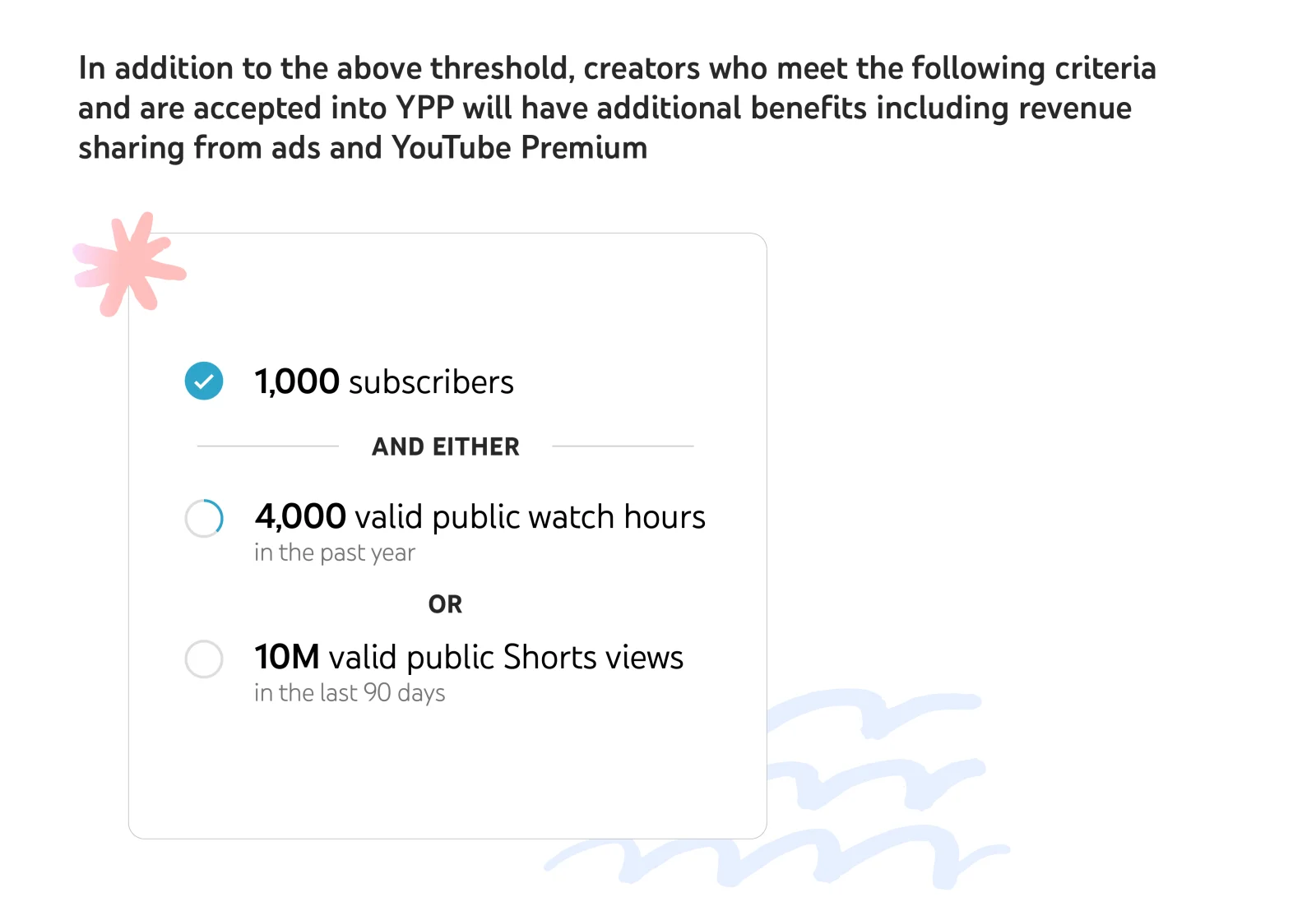
YouTube Shorts monetization threshold: 1,000 subscribers + 10 million Shorts views (within 90 days), or 1,000 subscribers + 4,000 hours of long-form watch time.
I need to pour some cold water on this timeline. The numbers above assume strong execution and correct strategic direction. The reality I have observed: most people stall in the launch phase. They publish twenty or thirty videos, see minimal traction, and quit.
The critical reframe: those first 50 videos are not supposed to make money. Their purpose is data collection. You are running experiments to find which content format your target audience actually responds to. After each video, check three metrics: retention rate (how long before they scroll away), engagement rate (likes, comments, shares as a percentage of views), and completion rate (what percentage watched to the end). Double down on whichever content direction scores highest across these three signals.
Revenue channel priority ranking:
Revenue Channel
Startup Difficulty
Revenue Ceiling
Best Phase
Platform ad revenue
Low (automatic after threshold)
Medium
Growth phase onward
Affiliate marketing
Low
Medium-High
Can start immediately
Brand sponsorships
Medium (requires follower base)
High
Stability phase
Digital products (courses/templates)
Medium-High
Very High
Stability to Scale
Paid community
Medium
Medium-High
Stability phase
E-commerce
Medium
Very High
Scale phase
Do not rely solely on platform ad revenue. Shorts ad revenue is relatively low — roughly $0.05 to $0.50 per thousand views. Every AI faceless channel earning serious money has a diversified income structure. Affiliate marketing can start from day one. Brand sponsorships become the core revenue driver in the stability phase. Digital products offer the highest profit margins at scale.
What Are the 5 Mistakes That Kill an AI Faceless Channel?
Mistake #1: Tool hoarding. I have seen creators juggle seven or eight AI tools simultaneously, mastering none of them. Pick two or three core tools and learn them deeply. Surface-level familiarity with ten tools is dramatically less effective than deep expertise with three.
Mistake #2: Chasing views instead of followers. High view count with low follower conversion rate means your content lacks stickiness. The metrics I pay closer attention to are follower growth rate and return visit rate — how many viewers follow you after watching, and how many actively come back for new content.
Mistake #3: Ignoring platform compliance. YouTube explicitly stated in 2025 that managing low-quality AI content is a priority. Purely AI-generated content with zero human review or optimization faces being deprioritized or removed. Meta also increased enforcement against content lacking originality in 2025. My non-negotiable rule: every single video gets human editorial review before publishing.
Mistake #4: Copying viral formats. Seeing what is trending and copying it verbatim gives you no content identity. You might catch some short-term traffic, but you cannot build brand recognition by being "knockoff version of someone else." Audiences remember channels with distinctive styles.
Mistake #5: Skipping data reviews. Publishing a video and never looking at the data before making the next one is guessing, not operating. I spend one hour every week reviewing performance data — which videos performed well, which flopped, what the winners had in common, and what mistakes the losers shared. Without data-driven iteration, you are gambling instead of building a business.
The One Thing Most Beginners Overlook
After studying hundreds of AI faceless channels, I found that the most overlooked factor is not tool selection — it is the content calendar. Many creators start with explosive enthusiasm, posting daily for ten days, then going silent for a week, then posting three days, then disappearing for two weeks.
This irregular posting pattern is fatal for algorithmic performance. Algorithms need a consistent signal to decide whether you are worth recommending. My recommendation: posting three videos per week consistently for three months is far more effective than posting ten per week and then vanishing for half a month.
What You Should Do Right Now
Pick the AI faceless channel type that best matches your skills and interests. Use the tool stacks listed above to produce your first video. It does not need to be perfect. Just publish it and study the data.
Your first video's purpose is not to go viral. It is to test a hypothesis about what your audience wants. Every data point from that first video gets you closer to the content-market fit that actually produces sustainable growth.
Ready-to-Use Prompt: Pick Your AI Faceless Channel Strategy From Zero to Monetization
What this does: Turns your skills and resources into one chosen AI faceless channel strategy — content type, platform, narrowed niche, cadence and budget, a realistic zero-to-revenue timeline, and the five channel-killing mistakes to avoid — for TikTok, YouTube Shorts, or Reels. Based on: AI Faceless Channel Strategy: From Zero to Monetization on TikTok and YouTube Shorts — https://aiworkflowpro.com/ai-viral-channels-tiktok-youtube-shorts-secrets/ Time to run: ~5 minutes
Copy this prompt into Claude Code, ChatGPT, or any AI assistant:
ROLE: You are a faceless-channel strategist. Your job: turn one person's skills and resources into a single chosen AI faceless channel strategy — content type, platform, monetization timeline, and the mistakes to avoid — for TikTok, YouTube Shorts, or Reels.

CONTEXT — FACELESS CHANNEL STRATEGY SELECTOR:
AI faceless channels are mainstream in 2026 — AI presenters, animations, and digital characters run channels with millions of followers. The model works when you align five choices: one of five content types (virtual influencer, AI animation, AI commentary, AI storyline, AI educational), the platform whose algorithm fits that type (TikTok, YouTube Shorts, Reels each reward different signals), a realistic zero-to-revenue timeline, avoidance of the five channel-killing mistakes, and the one lever most beginners overlook — cadence and niche narrowness beat polish in the first months.

INPUTS (fill in before running):
- SKILLS_RESOURCES: YOUR_ASSETS_HERE (what you can make — voice cloning, animation, writing, research; and budget for tools)
- NICHE: YOUR_NICHE_HERE (the topic area, or "undecided")
- HOURS_WEEKLY: YOUR_HOURS_HERE (hours per week to run the channel)

METHOD — 6 STEPS:

Step 1 — Pick one content type
Match SKILLS_RESOURCES to exactly one of the five: virtual influencer (needs a consistent digital character) · AI animation (needs visual generation) · AI commentary (needs a strong voice + voiceover) · AI storyline (needs serialized narrative) · AI educational (needs research + clear explanation). Pick the lowest-friction fit; name the four rejected.

Step 2 — Choose the platform by algorithm fit
Score TikTok, YouTube Shorts, and Reels 1-5 on fit using their reward signal: TikTok → completion + early hook + sounds/trends; YouTube Shorts → watch time + returning viewers + search; Reels → first-frame stop + shares. Pick the top score; justify in one line.

Step 3 — Lock the niche
Narrow NICHE to one specific angle the algorithm can learn (e.g., "AI news for solo founders", not "tech"). Test: can you name 20 video ideas in this niche without repeating? If not, it is too broad — narrow more.

Step 4 — Set cadence and budget
From HOURS_WEEKLY, set a sustainable posting cadence (volume beats polish early — 4-7 posts/week) and the tool budget it requires (generation, voiceover, editing). If budget exceeds resources, drop cadence, not schedule consistency.

Step 5 — Map the realistic zero-to-revenue timeline
Lay the staged reality check: 0-3 months = build the catalog, let the algorithm learn the audience (~$0); 3-6 months = eligibility thresholds, first revenue possible; 6-12 months = monetization scales only if cadence held. State the gate per stage and mark where most channels quit.

Step 6 — Run the 5-mistake and overlooked-lever check
Pass/fail the five killers: (1) inconsistent character/brand? (2) wrong platform for the type? (3) quitting before the algorithm learns (under 90 days)? (4) cadence too low? (5) niche too broad? Then name the overlooked lever: in the first months, cadence + niche narrowness beat production polish — do not optimize quality before consistency.

RULES:
- One content type, one lead platform — never launch all types or all platforms at once.
- Volume and consistency beat polish in the first 90 days; do not over-produce single videos.
- The niche must pass the 20-ideas test before you start posting.
- Do not expect revenue before the 3-month gate; quitting under 90 days is a listed mistake, not a verdict on the model.

OUTPUT FORMAT:
Output six sections:
1. **Content type** — the one chosen type + why, with the four rejected named.
2. **Platform fit** — markdown table with columns: Platform | Reward signal | Fit (1-5) | Picked? (Y/N).
3. **Niche lock** — the narrowed niche + 20-ideas test result.
4. **Cadence + budget** — posts/week + tool budget + any tradeoff made.
5. **Zero-to-revenue timeline** — markdown table with columns: Stage | Goal | Revenue expectation | Quit-risk.
6. **Mistakes + overlooked lever** — markdown table with columns: Killer | Pass? (Y/N), then the one overlooked lever stated.
Save as @templates/ai-viral-channels-tiktok-youtube-shorts-secrets.md and run before launching an AI faceless channel, then re-run if you change content type, platform, or weekly hours.
Frequently Asked Questions
Can you really make money with a faceless AI YouTube channel?
Yes, but realistic expectations matter. Most faceless AI channels take 3-6 months of consistent posting to reach YouTube's monetization threshold (1,000 subscribers + 10 million Shorts views in 90 days). Early revenue typically ranges from $50-500/month. Channels that persist beyond 12 months with diversified income streams — ads, affiliates, digital products — can reach $3,000-80,000+/month, though those figures represent the high end. The key variables are niche selection, posting consistency, and content quality, not just the AI tools you use.
What is the best AI tool stack for faceless short-form video in 2026?
It depends on your content type. For AI commentary channels (lowest barrier to entry), a budget stack of ChatGPT or Claude ($20/month) + ElevenLabs ($22/month) + CapCut (free) + Pexels (free) runs $42-77/month total. For AI animation channels, add Midjourney ($10/month) and Runway Gen-4.5 ($12/month). The common mistake is using too many tools at a surface level instead of mastering two or three core tools deeply.
How do TikTok, YouTube Shorts, and Instagram Reels algorithms differ?
Each platform optimizes for different engagement signals. TikTok prioritizes completion rate and interaction rate, favoring 15-30 second videos with strong 2-second hooks. YouTube Shorts emphasizes retention rate and watch time, performing best with 30-60 second videos and 3-7 second hooks. Instagram Reels weights share rate and save rate, rewarding visually polished 15-30 second content. Start on one platform, validate your content model, then expand.
Will YouTube and TikTok penalize AI-generated content?
Neither platform penalizes content solely because it was made with AI. What they penalize is low-quality, repetitive, mass-produced content — regardless of how it was made. YouTube explicitly stated in 2025 that managing low-quality AI content is a priority and requires creators to disclose AI-generated material. TikTok has similar disclosure policies. The safe approach: always add human editorial review, disclose AI usage proactively, and ensure every piece delivers genuine value.
How many platforms should a solo creator manage at once?
Three at most, with one designated as your primary platform. Your primary platform is where you create original content; secondary platforms receive adapted reposts. Choose based on your content strength: TikTok for fastest feedback loops, YouTube Shorts for long-term monetization stability, Instagram Reels if your content is highly visual. Spreading yourself across all platforms from day one almost always results in mediocre performance everywhere.
Monitoring a competitor who publishes no feed is the case every RSS guide skips. Twenty-one platforms sorted by which of three jobs they do, and the finished setup is business process automation you own outright, with no seat licence to renew.
Blaming the content is the reflex when a post underperforms, and it is usually the wrong diagnosis. A second reader decides distribution before any human sees the post, and most of what it checks is mechanical enough to automate business processes around, on five platforms at once.
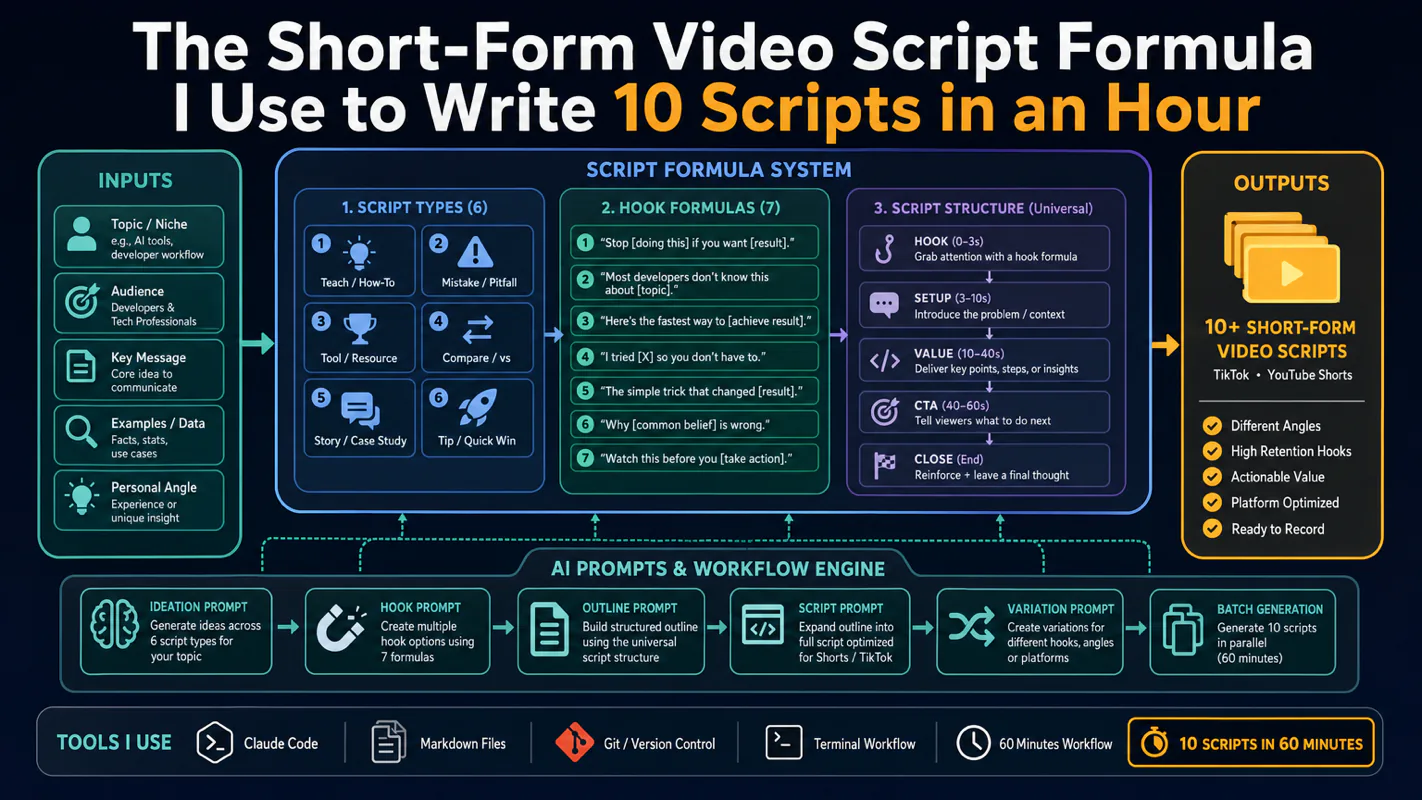
Thursday afternoon, fourteen product ideas, a Monday filming slot, no scripts. Six script shapes and seven hook formulas turn that hour into finished drafts — and the business rule stays: rewrite at least 30% before anything ships.
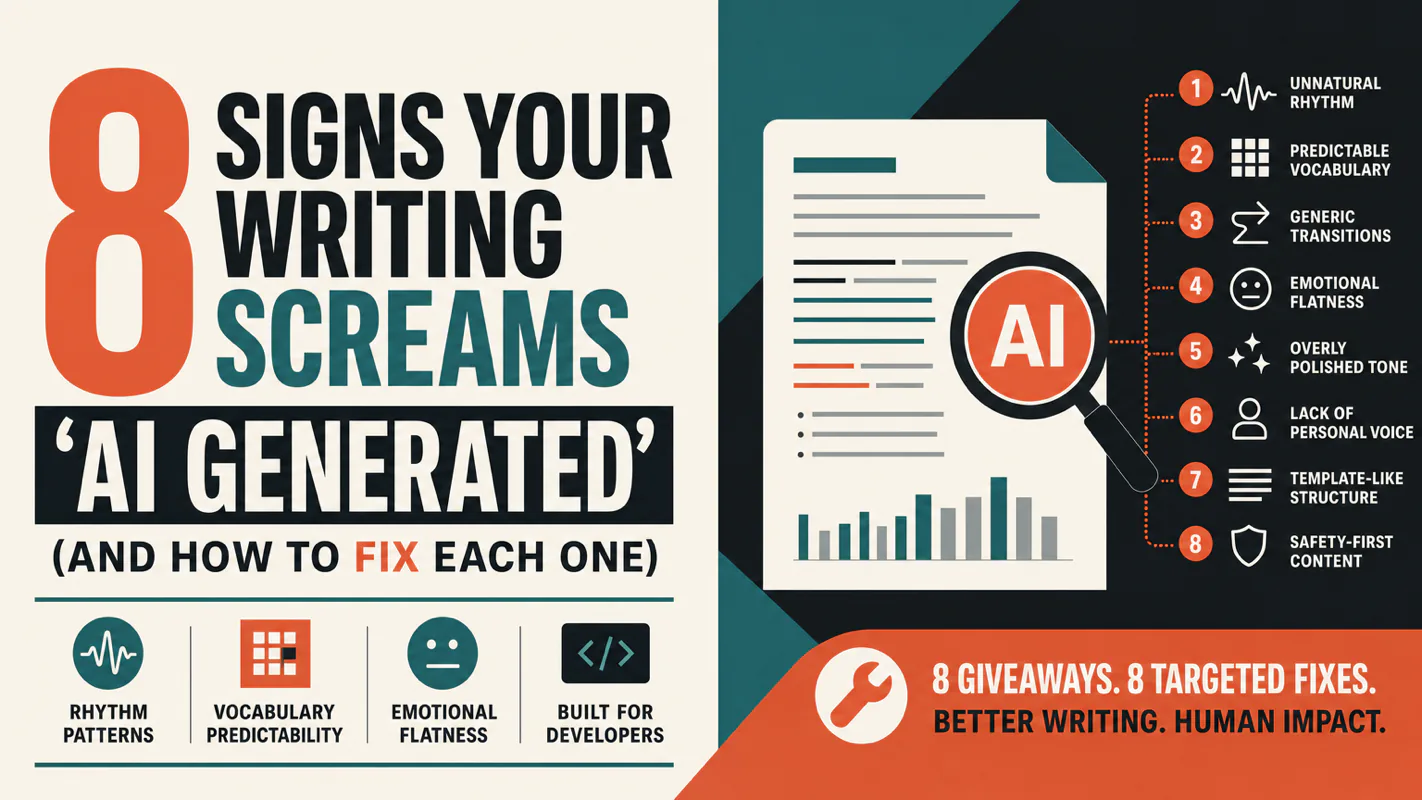
A detector score cannot survive a conversation with the freelancer it just cost three weeks of payment. What holds up is the specific thing on the page: rhythm, vocabulary, missing detail. Eight of them here, and the reason review stays human when you automate business processes.