Monitoring a competitor who publishes no feed is the case every RSS guide skips. Twenty-one platforms sorted by which of three jobs they do, and the finished setup is business process automation you own outright, with no seat licence to renew.
Blaming the content is the reflex when a post underperforms, and it is usually the wrong diagnosis. A second reader decides distribution before any human sees the post, and most of what it checks is mechanical enough to automate business processes around, on five platforms at once.
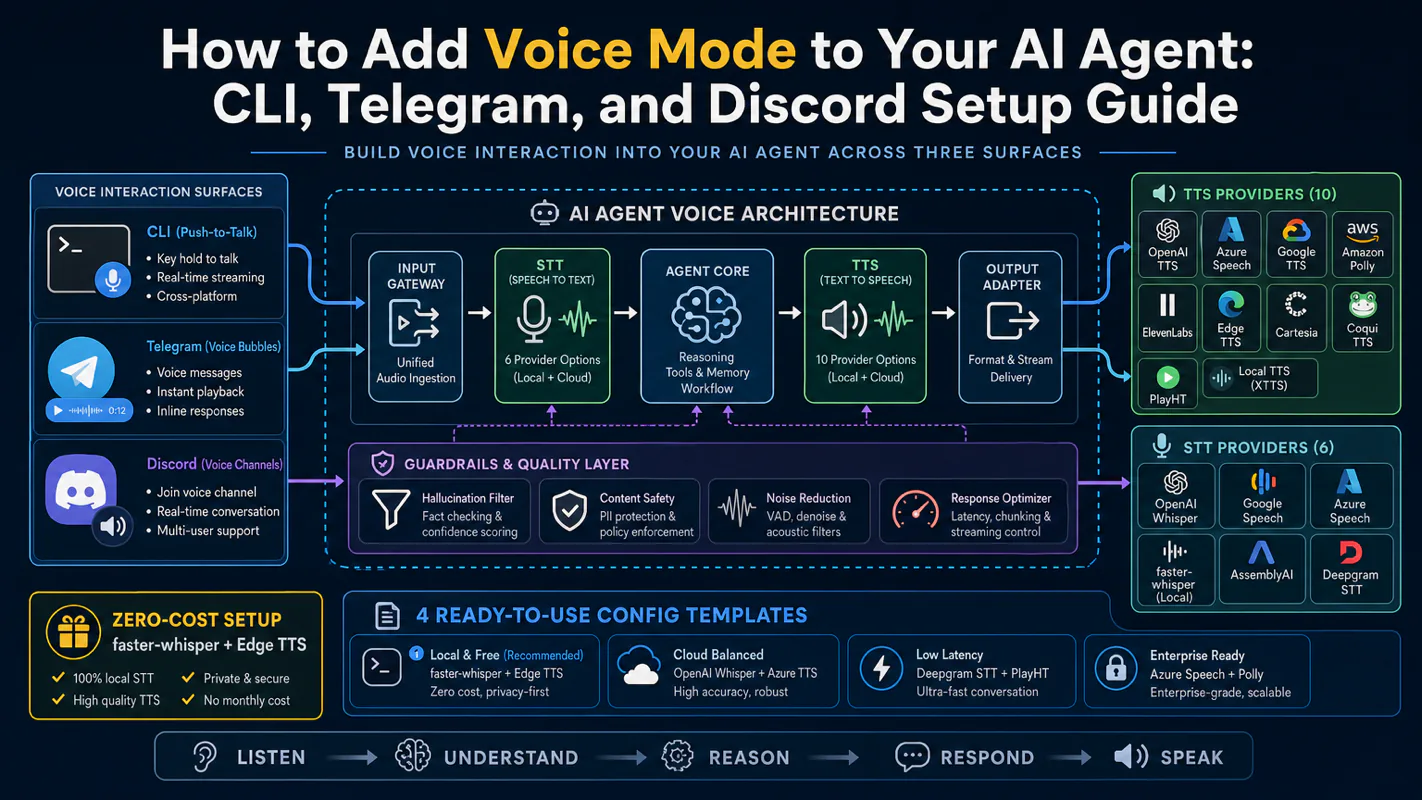
Gloves on, tape measure in hand — nobody types a query. Three voice surfaces for ai automation tools (terminal, Telegram, Discord), 10 TTS and 6 STT providers compared on cost and latency, plus a setup that costs nothing.
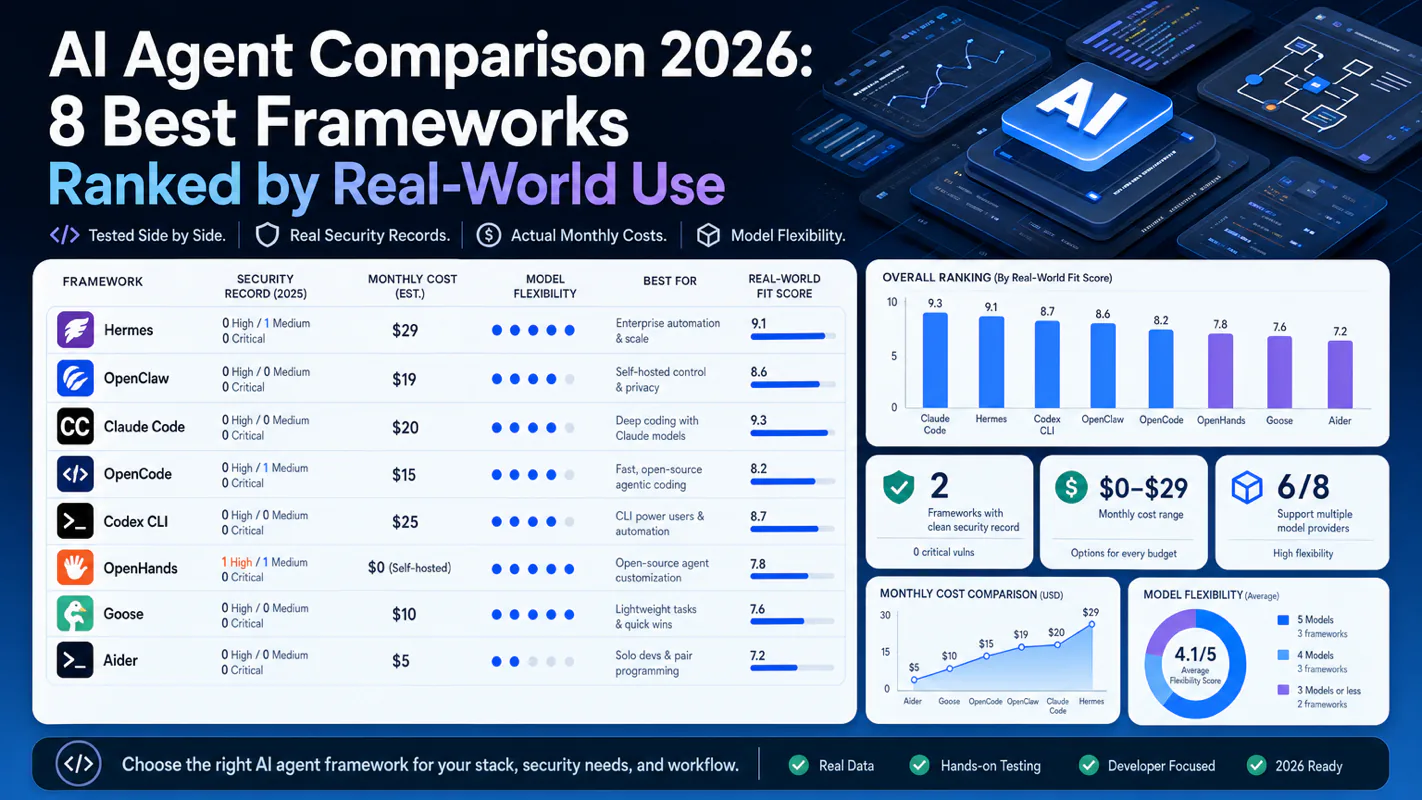
AI Agent Comparison 2026: 8 Best Frameworks Ranked by Real-World Use
Eight AI agent frameworks tested side by side: Hermes, OpenClaw, Claude Code, OpenCode, Codex CLI, OpenHands, Goose, and Aider. Concrete numbers on security records, monthly costs and model flexibility, plus why the people running ai automation tools well rarely settle on one.
Most shortlists start from the wrong question. They assume one framework wins and the rest lose, so the search ends with a single name. The people who actually got this working in an online store, where supplier mail is triaged before opening, listing copy is refreshed and refund cases are opened overnight, did not land there. Roughly one in five run two or three side by side, each doing the one job it is good at. Read the table below as an assignment sheet rather than a leaderboard: what each of these ai automation tools is worth hiring for, what it costs to keep running, and where its security record should stop you.
Three philosophies split the AI agent landscape in 2026. Claude Code says: become indispensable to your codebase. OpenClaw says: become the automation layer for your digital life. Hermes says: grow stronger every time you use me.
The table below is the verdict. The rest of this article is the evidence.
Which AI Agent Framework Fits Your Use Case?
Pick your primary need from the left column. The "First Pick" column is where most users should start. "Alternative" gives you a fallback if the first pick doesn't match your constraints.
OpenClaw's Cron runs on fixed schedules, not LLM-driven
Roughly 20% of experienced users skip the either-or question entirely. They run OpenClaw for orchestration, Hermes for execution, and Claude Code for heavy coding. The three are orthogonal.
How Each Framework Works: 8 Profiles
1. OpenClaw (340K+ Stars) — Gateway-First
OpenClaw holds the highest GitHub star count of any open-source agent project. Its thesis: your AI should live wherever you do—every messaging platform, every automation scenario.
Stack: TypeScript / Node.js, MIT license, community foundation governance, 137+ formal releases. 25+ messaging channels built in—Telegram, Discord, Slack, WhatsApp, iMessage, Signal, and more.
Strengths: ClawHub marketplace hosts 44,000+ third-party skills. Multi-agent architecture gives each agent its own channel, bot identity, and persona. The Cron scheduler is deterministic—no LLM involved, so timed triggers are reliable.
Risks worth knowing: 138+ historical CVEs, including two scored CVSS 9.9 (WebSocket injection + privilege escalation to admin + RCE). Shodan indexes 135,000+ exposed instances running default configs on the public internet. ClawHub has flagged 341+ malicious skills. The community's top-voted complaint (305 upvotes): "Every update introduces more bugs than it fixes."
Best for: Teams needing AI access across 25+ platforms. Automation requiring multi-agent orchestration with deterministic scheduling. Users who value the largest skill ecosystem.
Skip if: Security is non-negotiable (138+ CVEs are hard data). You lack ops capacity for self-hosting. You want an agent that improves over time (skills remain static).
2. Hermes Agent (190K+ Stars, June 2026) — Self-Improving
Hermes passed OpenClaw in GitHub star velocity during May 2026, reaching 190K+ by June. Its thesis: agents should compound—the more you use one, the better it understands you.
Stack: Python, Apache-2.0 license, built by Nous Research, latest release v0.16.0 (June 5, 2026). 15+ messaging platforms with native connectors. One gateway process connects all platforms simultaneously.
Strengths: Complete self-improving loop—after complex tasks (5+ tool calls) it auto-creates skills, stores error-resolution paths when things break, and records corrected behaviors when you fix its output. Honcho dialectical user modeling plus FTS5 full-text session search. Six terminal backends (local / Docker / SSH / Daytona / Singularity / Modal). Checkpoint rollback snapshots the working directory before every file change. MCP reverse service (hermes mcp serve) lets Claude Code and Codex CLI call Hermes tools. 300+ model support with one-command switching.
Security: Zero agent-level CVEs as of April 2026. One low-severity gateway CVE (CVE-2026-7396), not in agent logic.
Community criticism (presented fairly): Self-assessment runs too optimistically—the agent almost always rates its own work highly, requiring external validation (107-upvote thread). Auto-overwriting manual edits is a dealbreaker for some users. Astroturfing allegations surfaced around its star growth.
Best for: Long-term users who want their agent to grow with them. Cross-platform messaging workflows. Budget-conscious developers (free-tier LLMs cover daily tasks). Users requiring full data sovereignty (everything stays in ~/.hermes/).
Skip if: You need perfectly predictable behavior (self-improvement means behavior changes). You only write code in a terminal and don't need a messaging gateway.
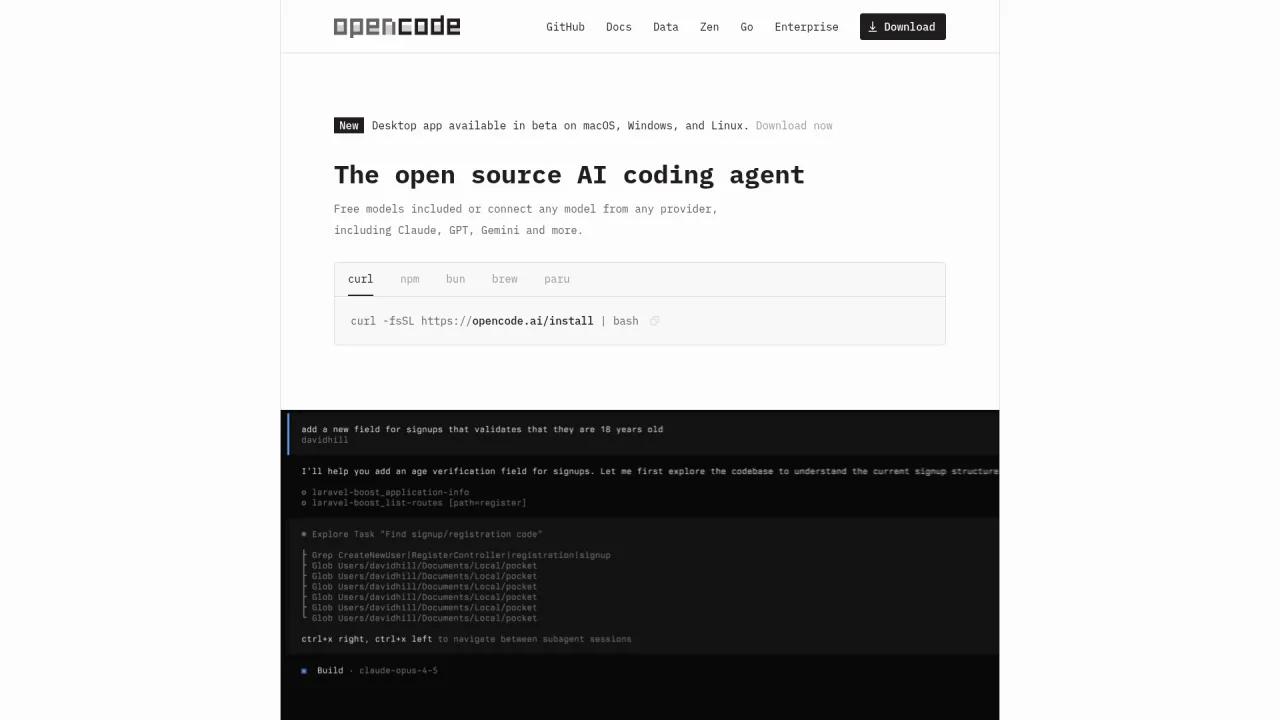
3. OpenCode (172K Stars) — Open-Source Claude Code
OpenCode was the fastest-growing coding agent in the first half of 2026. It positions itself as the open-source, model-agnostic terminal coding agent.
Stack: Go (TUI core) + JavaScript/Bun (HTTP server), MIT license, built by the Anomaly team. One-line install: curl -fsSL https://opencode.ai/install | bash.
Strengths: 75+ model providers via the Models.dev registry. Zero vendor lock-in. LSP diagnostic loop—it starts a language server, feeds compiler diagnostics back to the model after every edit, and self-corrects. This is the only coding agent shipping this capability in 2026. Client-server split architecture lets you deploy the TUI and HTTP server on different machines. Git snapshot rollback with /undo and /redo. Full offline capability with Ollama local models.
Benchmark data: In Builder.io's controlled test (same model: Claude Sonnet 4), Claude Code finished in 9 min 9 sec vs. OpenCode in 16 min 20 sec (78% slower), but OpenCode wrote 94 tests vs. Claude Code's 73—more thorough output at the cost of speed.
Best for: Developers who value model freedom and open source. Classified or compliance environments needing fully offline operation. Terminal enthusiasts who prefer TUI over IDE plugins.
Skip if: You need messaging gateways or self-improvement. Speed matters more than test coverage. You want deep IDE integration (VS Code extension exists but isn't as polished as Claude Code's native experience).
4. Claude Code (131K Stars) — Coding Ceiling
Claude Code is Anthropic's official coding agent. It does one thing—agentic software engineering—and does it at a level no other tool matches.
Stack: TypeScript, proprietary license (source-readable but not MIT/Apache), deeply bound to the Anthropic ecosystem. Two-minute setup, fastest onboarding of the eight.
Strengths: SWE-bench Verified 72.7% (Sonnet 4 + full agent scaffolding, vals.ai) in pure software engineering tasks. Deep VS Code and JetBrains integration that feels native, not bolted on. CLAUDE.md project memory manages context through files. Behavior is fully predictable—same inputs produce same outputs, no self-modification.
Constraints: Only Anthropic's three model tiers (Opus $5/$25 per MTok / Sonnet $3/$15 / Haiku $1/$5). Zero model flexibility—Anthropic API downtime means no fallback. No messaging gateway. No auto-generated skills. No checkpoint rollback. Each session starts from zero with no persistent memory across sessions. $20-200/month subscription.
Best for: Professional developers who need the coding ceiling. Teams willing to pay for the strongest model within a single ecosystem. Zero-config setups.
Skip if: Budget matters. You need messaging or automation. You want model flexibility.
5. Codex CLI (90K Stars) — Sandbox-First Security
Codex CLI is OpenAI's official terminal coding agent. Its architecture distinguishes itself by defaulting to sandbox isolation—network access disabled, file operations confined to the current directory tree.
Stack: TypeScript / Node.js, Apache 2.0 license, built by OpenAI. Install: npm install -g @openai/codex. Requires Node.js 22+.
Strengths: Three autonomy tiers—Suggest (full approval) → Auto-Edit (files auto-modified, commands need approval) → Full-Auto (fully autonomous inside sandbox). codex.md project convention files plus global config form a layered system. Native Windows sandbox and PowerShell support landed in 2026. v0.116.0 added enterprise features: custom policies, multi-agent coordination, repository comprehension.
Constraints: OpenAI models only (o4-mini default, o3, gpt-4.1). Zero model flexibility. No messaging gateway. No self-improvement.
Best for: Enterprise environments demanding strict security defaults. Deep OpenAI ecosystem users. Compliance scenarios requiring rigid approval workflows.
Skip if: Model freedom matters. You need messaging gateways or self-improvement.
6. OpenHands (76K Stars) — Enterprise Autonomous SWE
OpenHands (formerly OpenDevin) is an enterprise-grade fully autonomous software engineering agent. Not a code completion tool—a complete AI software engineer that finishes entire engineering tasks.
Stack: Python, MIT license, built by All Hands AI ($18.8M Series A). Three entry points: Cloud (Web UI) + CLI + SDK.
Strengths: Plans, writes, and applies changes across entire codebases. Claims 87% of bug tickets resolved autonomously on the same day (official site data). Docker or Kubernetes isolated deployments keep code within your control boundary. Python SDK embeds into applications and workflows. Pre-built workflows cover vulnerability fixes → PR creation, PR review, code migration (COBOL → Java), and incident triage. Enterprise customers include TikTok, VMware, Roche, Amazon, and Netflix.
Best for: Large enterprise codebase maintenance. Teams needing AI to handle the full issue-to-PR lifecycle autonomously. Compliance environments requiring K8s private deployment.
Skip if: You're a solo developer doing daily pair programming (over-engineered). You need messaging gateways or self-improvement.
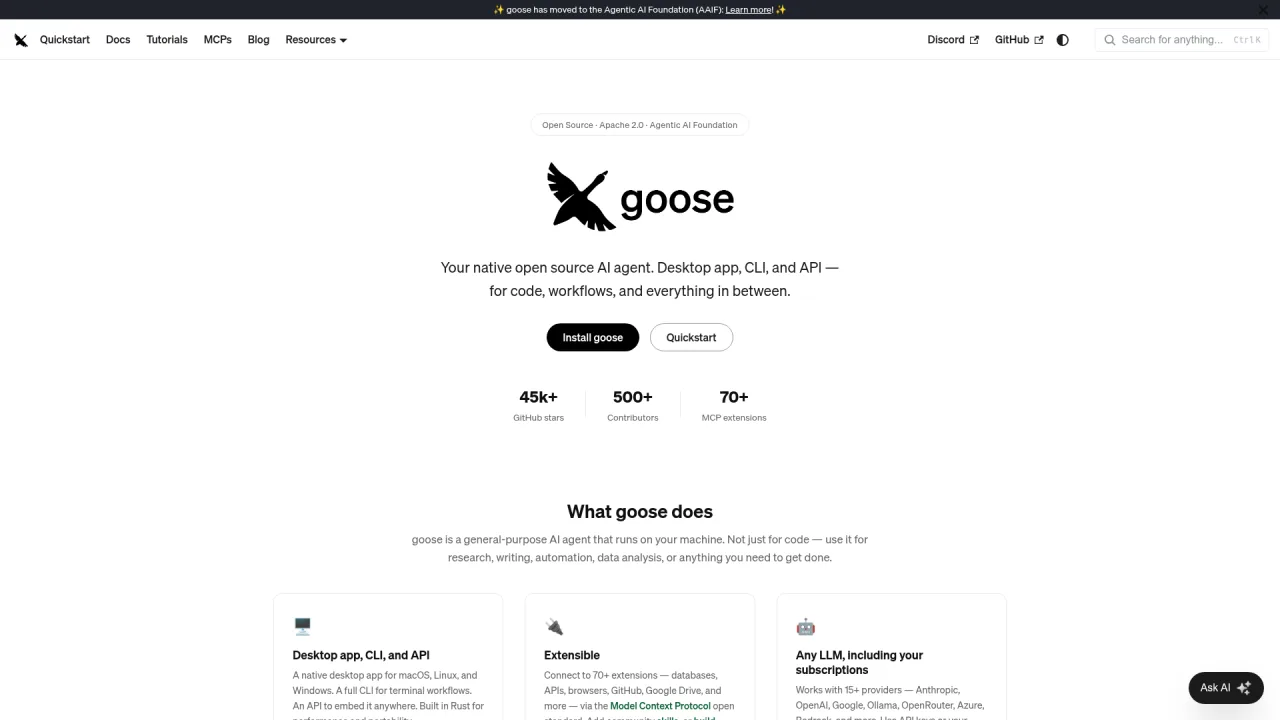
7. Goose (48K Stars) — MCP-Native
Goose serves as the proving ground for the MCP (Model Context Protocol) standard. It positions itself as a general-purpose AI agent, not just a coding tool.
Stack: Rust (core) + TypeScript (interface), Apache 2.0 license. Originally built by Block (formerly Square), donated to the Linux Foundation's AAIF (Agentic AI Foundation) in April 2026. Three entry points: desktop app + CLI + API.
Strengths: MCP-first design connecting 1,700+ extensions (Jira, GitHub, Notion, PostgreSQL, filesystem, shell, and more). General-purpose agent covering research, writing, automation, and data analysis. 15+ model providers. Linux Foundation open governance ensures no single-company control. 2026 roadmap focuses on local inference and sovereign workflows (data never leaves your machine).
Best for: Teams with extensive MCP tooling needing unified orchestration. Users wanting a general desktop assistant beyond just coding. Those who value Linux Foundation governance.
Skip if: You need messaging gateways or self-improvement. Pure coding scenarios (coding depth doesn't match Claude Code, OpenCode, or Aider).
8. Aider (46K Stars) — Git-Native Pairing
Aider produces the cleanest version history of any coding agent. Every modification auto-generates an atomic Git commit with a descriptive, LLM-written commit message.
Stack: Python, Apache 2.0 license, created by Paul Gauthier. Install: curl -LsSf https://aider.chat/install.sh | sh. Processes 15 billion tokens per week (official data).
Strengths: Git-native—git log --oneline reads like a changelog. Architect/editor dual mode: a strong reasoning model plans the approach, a fast model applies precise diffs, reducing multi-file refactoring errors. 70+ model support with in-session /model switching. Watch mode runs aider --watch-files in the background, triggering edits when you write AI! comments in any file. 39 slash commands cover web scraping, voice transcription, screenshot understanding, shell execution, and automatic test repair. Prompt caching saves 30-70% on long sessions. Editor-agnostic—works with VS Code, JetBrains, Vim, Emacs, and SSH terminals.
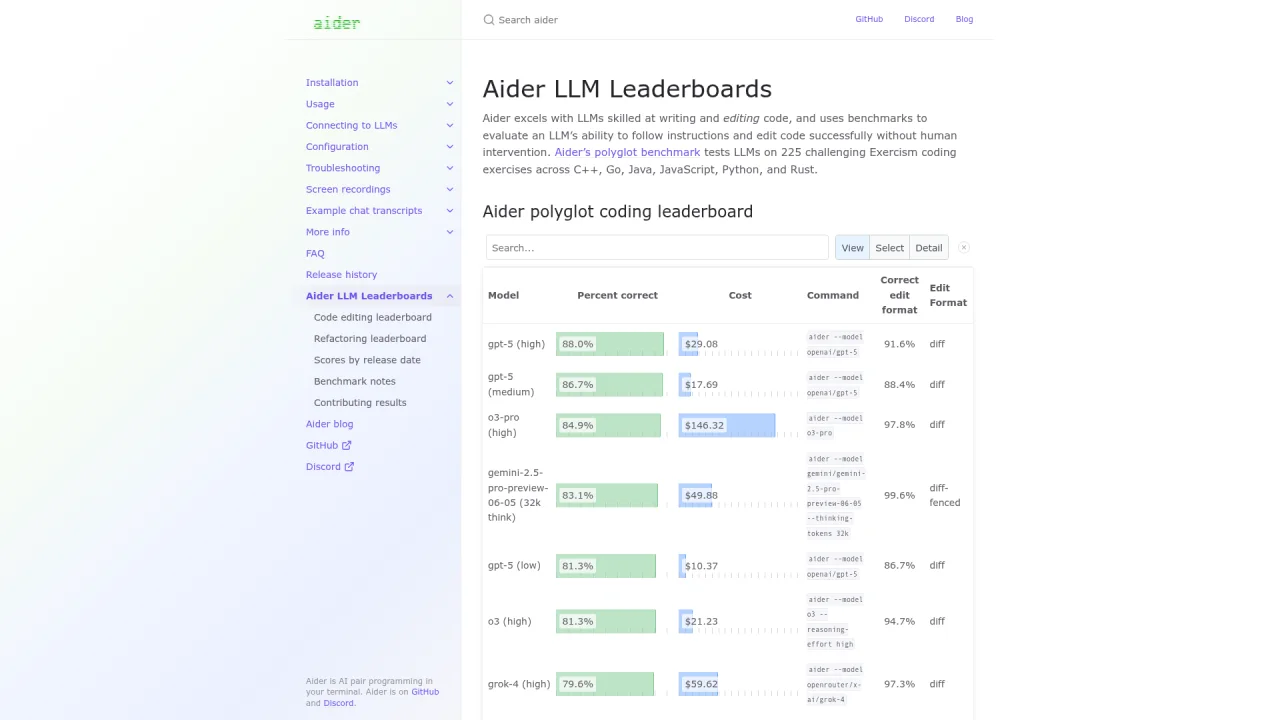
Polyglot benchmark: GPT-5 (high) hits 88.0%. DeepSeek V3.2 Reasoner reaches 74.2% at roughly $1.30 per benchmark run—exceptional cost efficiency.
Best for: Developers who care about clean Git history. Multi-file refactoring with architect mode. Terminal users who want editor independence.
Skip if: You need messaging gateways or self-improvement. You want a Web UI. MCP integration is a requirement (Aider's MCP support is still in RFC stage).
10-Dimension Comparison Matrix
Dimension
Hermes
OpenClaw
Claude Code
OpenCode
Codex CLI
OpenHands
Goose
Aider
GitHub Stars
190K+
353K
131K
172K
90K
76K
48K
46K
Messaging Gateway
15+ platforms
25+ platforms
None
None
None
None
None
None
Self-Improvement
Full learning loop
Static skills
None
None
None
None
None
None
Model Flexibility
300+
Multiple providers
Anthropic only
75+
OpenAI only
Model-agnostic
15+
70+
Security Record
1 low-severity CVE
138+ CVEs (2x CVSS 9.9)
Closed source
No public CVEs
Sandbox-default isolation
Docker/K8s sandbox
Standard
Standard
Monthly Cost
$0-3 + LLM
$0 + LLM
$20-200
$0 + LLM
$0 + OpenAI API
$0 + LLM / Cloud
$0 + LLM
$0 + LLM
IDE Integration
Terminal + MCP reverse
Terminal
VS Code / JetBrains deep
TUI + Desktop + VS Code
Terminal + VS Code
Web UI + CLI + SDK
Desktop + CLI + API
Terminal (editor-agnostic)
MCP Support
MCP Server (reverse)
Partial
MCP Client
No native
None
None
MCP-native 1,700+
RFC stage
Voice
Transcription + TTS + voice channels
None
None
None
None
None
None
/voice Whisper
Deployment
6 backends
Local / Docker
Local
Local
Local / WSL2
Docker / K8s / Cloud
Local
Local
What Only Hermes Can Do
Among the eight frameworks, these capabilities exist only in Hermes:
Complete Self-Improving Loop
Every other agent on this list stays exactly as configured. Hermes is the only one that measurably improves with use. The mechanism:
Auto-creates skills after complex tasks (5+ tool calls)
Stores error-resolution paths so the same mistake never repeats
Records corrected behaviors when you fix its output
Honcho dialectical user modeling goes beyond simple preference tracking—it builds a dialectical understanding of your intent
FTS5 full-text session search makes every past conversation keyword-searchable
I ran the same task suite on a six-month-old Hermes instance and a fresh install. The seasoned instance showed measurably higher success rates and response quality. That kind of compound improvement doesn't happen with any other agent here.
Cross-Platform Session Continuity
Both Hermes and OpenClaw have messaging gateways. The difference: Hermes maintains cross-platform session continuity. Start a conversation on Telegram, pick it up on Discord—full context preserved. OpenClaw's 25+ platforms operate as isolated channels that don't share conversation state.
MCP Reverse Service
hermes mcp serve turns Hermes into a tool provider for other agents. Claude Code and Codex CLI can call Hermes-exposed tools (conversations_list, messages_send, etc.) through the MCP protocol. A practical scenario I use daily: Claude Code finishes a long task, then pushes a notification through Hermes to Discord.
Working-Directory Checkpoints
Hermes snapshots the entire working directory before modifying any file. If something goes wrong, /rollback restores to any checkpoint. OpenCode has Git-level snapshots, but Hermes protects files outside Git tracking too—configuration files, local databases, anything in the working directory.
Security: The Hard Numbers
Security isn't a feature you evaluate last. Here's the data:
Security Dimension
Hermes
OpenClaw
Claude Code
Codex CLI
Historical CVE Count
1 (low severity, gateway layer)
138+
Closed source, undisclosed
No public data
CVSS 9.0+ Vulnerabilities
0
2 (WebSocket injection + RCE)
N/A
0
Malicious Skill Risk
Low (primarily 155 built-in)
High (341+ flagged)
N/A
N/A
Public-Facing Exposed Instances
No public data
135,000+ (Shodan)
N/A
N/A
Sandbox Isolation
Docker / Singularity / Modal
Docker (manual config)
Built-in sandbox
Default sandbox (network disabled)
Command Approval
Smart mode (AI flags high-risk ops)
Manual or disabled
Built-in approval
Three autonomy tiers
OpenClaw's CVE-2026-25253 (WebSocket hijacking) and CVE-2026-32922 (privilege escalation to admin + RCE) are CVSS 9.9 critical vulnerabilities. If your use case involves sensitive data or internet-facing deployment, this is a hard constraint on framework selection.
Real Monthly Costs (Not Marketing Numbers)
Subscription prices don't reflect actual spend. These estimates assume 30 tasks per day:
Setup
Monthly Cost
Notes
Hermes + GLM-5.1 free tier
$0-1
Free quota covers 99% of daily use
Hermes + DeepSeek V4 Pro (fallback)
$1-3
Activated only when free quota runs out
Hermes + Claude Sonnet 4
~$22/month
Same model, same price as direct API
OpenClaw + Claude Haiku
~$4/month
Equivalent capability tier
Claude Code Pro subscription
$20/month
Daily usage cap applies
Claude Code Max
$100/month
Heavy use
Claude Code Max Plus
$200/month
Near-unlimited
Community cost warning: Autonomous agent token costs spiral faster than you expect. The root cause: each message sends the complete conversation history to the API, making cost growth exponential within a session. Community reports include a $131/day extreme case running Claude Opus heavily.
Cost control strategy: Hermes's model flexibility is the primary lever. Route daily tasks to free-tier models (GLM, DeepSeek) for 90%+ savings, switching to Claude or GPT-5 only for complex coding. I've kept my monthly spend under $3 for six months using this approach.
What Real Users Actually Choose
A Kilo.ai analysis of 25 high-engagement posts and 1,300+ comments on r/openclaw (sorted by upvotes) revealed a four-way split:
Camp
Share
Profile
Staying with OpenClaw
~35%
Value unmatched integration breadth and largest skill ecosystem
Migrating to Hermes
~30%
Praise simpler setup and better memory defaults
Running both
~20%
OpenClaw for orchestration, Hermes for execution
Skeptical of Hermes
~15%
Suspect organized promotion campaigns
Migration signals: The biggest drivers pushing users from OpenClaw to Hermes: unreliable memory (42-upvote post), updates breaking functionality (305-upvote post), and installation debugging taking longer than actual use. Hermes ships hermes claw migrate—a one-way migration of conversation history, workspace config, skills, and memory files. OpenClaw offers no reverse migration tool.
Production Experience: Picking a Framework After Running Both
This isn't a recommendation. It's the decision process of someone who ran OpenClaw and Hermes simultaneously on a Mac mini for a month before choosing.
Why I Settled on Hermes
Decision logic (ranked by weight):
Pointer architecture: My knowledge base gets updated daily by Claude Code. I needed agent config that doesn't hardcode content but reads files dynamically at conversation time. SOUL / MEMORY / USER / channel_prompts hold path pointers only—content loads via read_file on each request. When Claude Code updates any file, Hermes picks up changes automatically on the next conversation. OpenClaw doesn't natively support this pattern.
Brand-partitioned channels: Two brands with completely different content styles need automatic context switching based on which Discord channel the conversation happens in. Hermes channel_prompts maps channel IDs to different config directories—12 channels covering two brand zones and shared utilities.
Independent auxiliary model config: In production, I hit a "compression storm"—primary model rate-limited (429) → compression also 429'd → agent lost the entire conversation context. Hermes supports auxiliary.compression with an explicit independent provider config.
MCP reverse service: Claude Code needs to notify me after finishing long tasks. hermes mcp serve exposes tools that Claude Code calls via SSH stdio to push messages to Discord.
Cost: Free-tier model quotas plus DeepSeek V4 Pro as a pay-per-use fallback = under $3/month average.
Dual-Bot Conflict (First-Hand Experience)
Problem: OpenClaw gateway and Hermes gateway both connected to the same Discord server on a Mac mini. Every message triggered responses from both bots simultaneously. OpenClaw would paste error stack traces into the channel when its model failed.
Root cause: Both bots shared the same message source with require_mention: false (respond without being mentioned), causing dual responses.
Fix: Stopped the OpenClaw gateway, renamed its plist to .disabled to prevent launchd from auto-restarting it.
Lesson: When running two agent gateways on the same machine, ensure they don't listen to the same message source—or at minimum, gate one behind require_mention: true. Dual-bot conflict isn't theoretical; it's a production incident I lived through.
Verified Strengths and Weaknesses
Strengths confirmed in production:
Knowledge base integration requires zero maintenance—Claude Code updates files daily, Hermes reads them live
Model switching takes 30 seconds—change two config lines plus hermes gateway restart
Lazy tool loading cut schema overhead from 19,210 tokens to 2,200 tokens (89% reduction)
Weaknesses confirmed in production:
First message is slow—cold start probes endpoints (3 HTTPS calls), ~20 seconds
Plist gets overwritten—hermes gateway install regenerates the plist every time, clobbering manual edits
Skill auto-creation needs guardrails—without boundaries, it builds "wild skills" that create parallel paths conflicting with existing workflows
Discord doesn't render markdown tables—I had to build a PNG renderer and write adapter patches
Decision Tree: Match Your Needs to a Framework
Do you need a messaging gateway?
├── Yes →
│   ├── Need the agent to improve over time → Hermes
│   ├── Need 25+ platforms + multi-agent orchestration → OpenClaw
│   └── Need both → Run both (OpenClaw orchestrates, Hermes executes)
│
└── No (pure coding / automation) →
    ├── Highest coding benchmarks (vendor lock-in acceptable) → Claude Code
    ├── Open-source + model freedom (coding) → OpenCode
    ├── Maximum sandbox security → Codex CLI
    ├── MCP ecosystem-driven (general automation) → Goose
    ├── Git-native pair programming → Aider
    └── Enterprise autonomous SWE → OpenHands
Running Multiple Agents: Not Indecision, Orthogonal Design
About 20% of experienced users have stopped treating this as a single-choice problem. The architecture that works:
OpenClaw (Orchestration Layer)
├── Planning, decomposition, sequencing
├── Multi-channel routing
├── Deterministic Cron triggers
└── Delegates to Hermes via ACP protocol

Hermes (Execution Layer)
├── Fast, repeatable task loops
├── Auto-creates and improves skills
├── Checkpoint + rollback
└── Long-term memory compounding

Claude Code (Coding Layer, on-demand)
├── Complex code refactoring
├── Multi-file bug fixes
└── Called by Hermes via MCP
Typical flow: Hermes receives a Telegram message → determines it's a coding task → delegates to Claude Code → results route back through the messaging layer → Hermes learning loop records the experience for next time.
Ready-to-Use Prompt: Pick the Right AI Agent Framework for Your Needs
What this does: Scores all eight 2026 agent frameworks against your weighted needs, then returns a First Pick, a fallback, and any second framework worth running alongside. Based on: AI Agent Comparison 2026: 8 Best Frameworks Ranked by Real-World Use — https://aiworkflowpro.com/ai-agent-comparison-2026/ Time to run: ~5 minutes
Copy this prompt into Claude Code, ChatGPT, or any AI assistant:
ROLE: You are an AI Agent Framework Selector for 2026. Your job: match a user's real needs to one of the eight production agent frameworks and name a fallback, using weighted scoring — not hype.

CONTEXT — NEED-MATCHED FRAMEWORK SELECTION:
Eight frameworks compete on three philosophies: Claude Code (become indispensable to your codebase), OpenClaw (automation layer for your digital life), Hermes (get stronger every time you use it) — alongside OpenCode, Codex CLI, OpenHands, Goose, and Aider. The right way to choose is not the "best" framework overall but the best fit: rank your needs, score every framework on the same 10 dimensions, weight the must-haves, and pick the highest weighted total that meets all hard constraints. Running more than one framework is not indecision — it is orthogonal design: different frameworks serve different job classes (deep coding vs messaging automation vs self-improvement).

INPUTS (fill in before running):
- PRIMARY_NEED: [The main job you want the agent for — e.g. codebase work, messaging automation, research]
- CONSTRAINTS: [Hard limits — monthly budget ceiling, must be open-source, security bar, self-host requirement]
- SECONDARY_NEEDS: [Other jobs you also want covered, in priority order]
- CONTEXT: [Solo / small team / enterprise, and your current tech stack]

METHOD — 4 STEPS:

Step 1 — Split Needs into Must-Haves vs Nice-to-Haves
From PRIMARY_NEED, CONSTRAINTS, and SECONDARY_NEEDS, label each requirement MUST (a hard constraint or the primary job) or NICE. Assign MUST items weight 2, NICE items weight 1.

Step 2 — Score the 8 Frameworks on 10 Dimensions
Score each framework 0–2 per dimension: 0 = absent/poor, 1 = partial, 2 = strong. Dimensions: core-need fit, self-improvement over time, security record, real monthly cost, messaging/automation gateway breadth, codebase access depth, autonomy level, ecosystem/integrations, setup difficulty (invert so 2 = easy), community/adoption. Multiply each score by the need weight it serves; sum per framework.

Step 3 — Apply the Decision-Tree Rule
First Pick = highest weighted total that also satisfies EVERY MUST constraint. Alternative = second-highest, or the best framework on a different philosophy. Eliminate any framework that fails a MUST constraint, regardless of total.

Step 4 — Orthogonal-Design Check
If SECONDARY_NEEDS belong to a different job class than the First Pick serves, name one additional framework worth running alongside and the single job it owns.

RULES:
- Never name a First Pick that violates a MUST constraint — cost, open-source, security, or self-host.
- Never score on hype; every framework needs a one-word evidence tag (e.g. cost: "metered", security: "audited").
- Never recommend running redundant frameworks — the second must own a distinct job class.

OUTPUT FORMAT:
Output a markdown report with:
1. Need Ranking — markdown table, columns: Need | MUST/NICE | Weight
2. Framework Scorecard — markdown table, columns: Framework | Weighted Total | Meets MUSTs? | Top Dimension | Evidence Tag
3. Decision — First Pick + Alternative, each with a one-line why
4. Orthogonal Add-On — second framework (if any) + the job class it owns
Save as @templates/ai-agent-comparison-2026.md and run when choosing an agent framework for a new project, or when your current framework no longer fits the job.
Frequently Asked Questions
Which AI agent framework is best for coding in 2026?
Claude Code leads pure coding benchmarks (SWE-bench Verified 72.7% with Sonnet 4) but locks you into Anthropic models. OpenCode offers comparable depth with 75+ model providers and an MIT license. Aider excels at multi-file refactoring with atomic Git commits. The right choice depends on whether model freedom or raw benchmark performance matters more to your workflow.
How much do AI agent frameworks cost per month?
Software cost is zero for most open-source agents. The real expense is LLM API usage. Budget setups using free-tier models run under $3/month. Claude Code subscriptions range from $20 to $200/month. Heavy autonomous use with Claude Opus can exceed $100/day—each message sends full conversation history, so costs compound exponentially within long sessions.
Is it safe to run OpenClaw on a public server?
OpenClaw has 138+ historical CVEs, including two at CVSS 9.9. Shodan shows 135,000+ exposed instances running default configs. Local-only use mitigates most risk. For internet-facing deployments handling sensitive data, evaluate IronClaw (the zero-trust rewrite) or pick a framework with a cleaner record.
Can you run multiple AI agents together?
Yes. Around 20% of experienced users do. A proven stack: OpenClaw for orchestration and deterministic scheduling, Hermes for execution with self-improving skills, Claude Code for complex coding via MCP. The critical rule: never let two agents listen to the same message source without mention-gating. Dual-response conflicts are a real production problem—I hit this exact issue running both gateways on a Mac mini.
What makes Hermes different from other AI agents?
Hermes is the only framework with a complete self-improving loop. It auto-creates skills after complex tasks, stores error-resolution paths, and learns from user corrections. A six-month-old instance measurably outperforms a fresh install on identical tasks. No other agent in this comparison evolves its behavior based on accumulated experience.
The Bottom Line
Eight frameworks, eight design philosophies, no universal winner. Your use case determines the pick:
The 30% of users running multiple agents aren't indecisive. Messaging gateways, self-improvement, and coding depth are three orthogonal dimensions. No single tool maximizes all three. Define your layers, pick the best tool for each, and let them complement each other.
Gloves on, tape measure in hand — nobody types a query. Three voice surfaces for ai automation tools (terminal, Telegram, Discord), 10 TTS and 6 STT providers compared on cost and latency, plus a setup that costs nothing.
Nothing about month four is harder than month three. It is simply the month an unpaid channel starts to feel like proof of failure. Surviving it takes a cadence you can hold while earning nothing, which is a better reason to automate business processes than speed ever was.
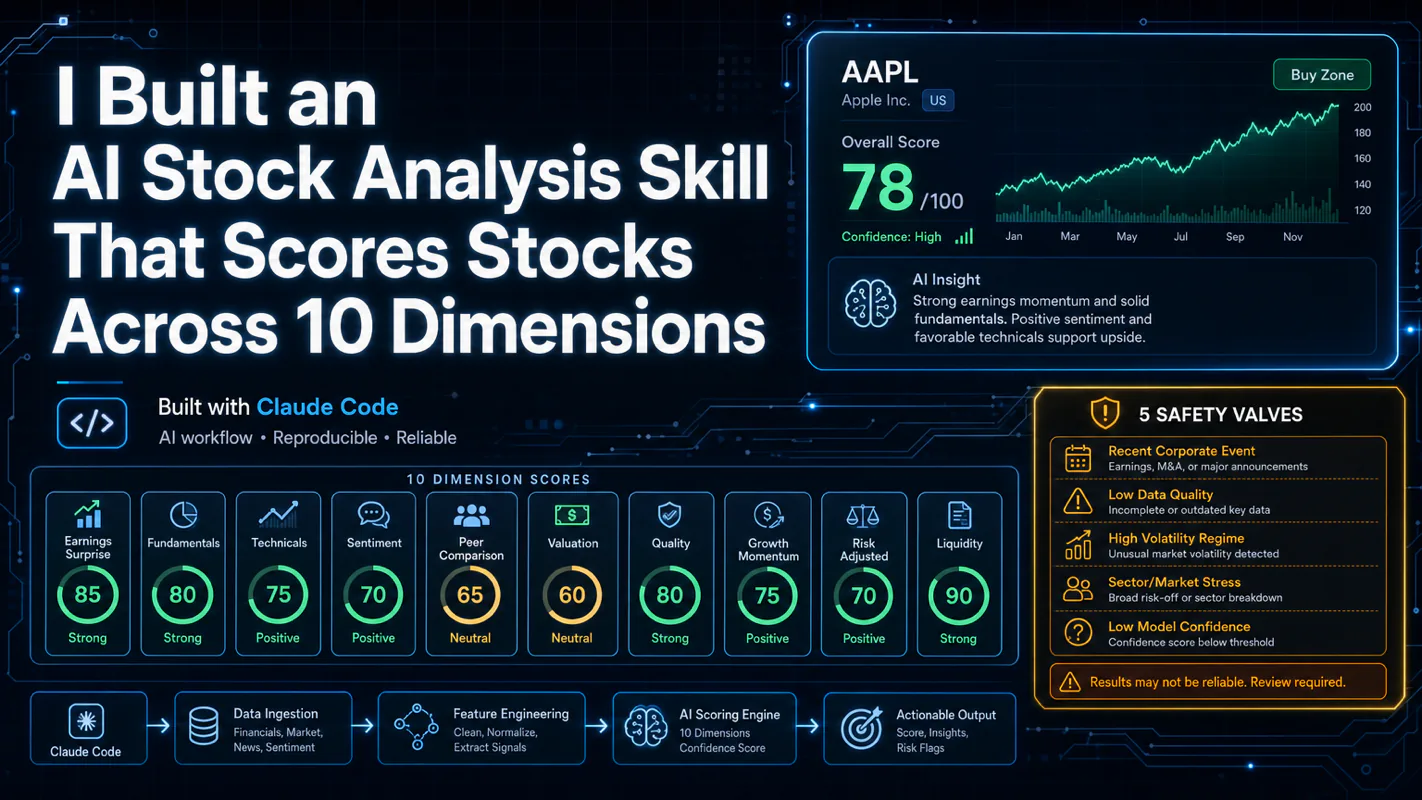
One number hides more than it shows. This Claude Code Skill scores US equities across 10 dimensions, from earnings surprise to peer comparison, with confidence scoring and 5 safety valves that flag thin data. A coding tutorial, not financial advice.
Publishing eats your week through research, SEO fields, images, and uploading — not writing. Here is the 10-step workflow automation pipeline that takes a topic to a published draft on one command, and the data contract that lets each step hand off cleanly to the next.