Monitoring a competitor who publishes no feed is the case every RSS guide skips. Twenty-one platforms sorted by which of three jobs they do, and the finished setup is business process automation you own outright, with no seat licence to renew.
Blaming the content is the reflex when a post underperforms, and it is usually the wrong diagnosis. A second reader decides distribution before any human sees the post, and most of what it checks is mechanical enough to automate business processes around, on five platforms at once.
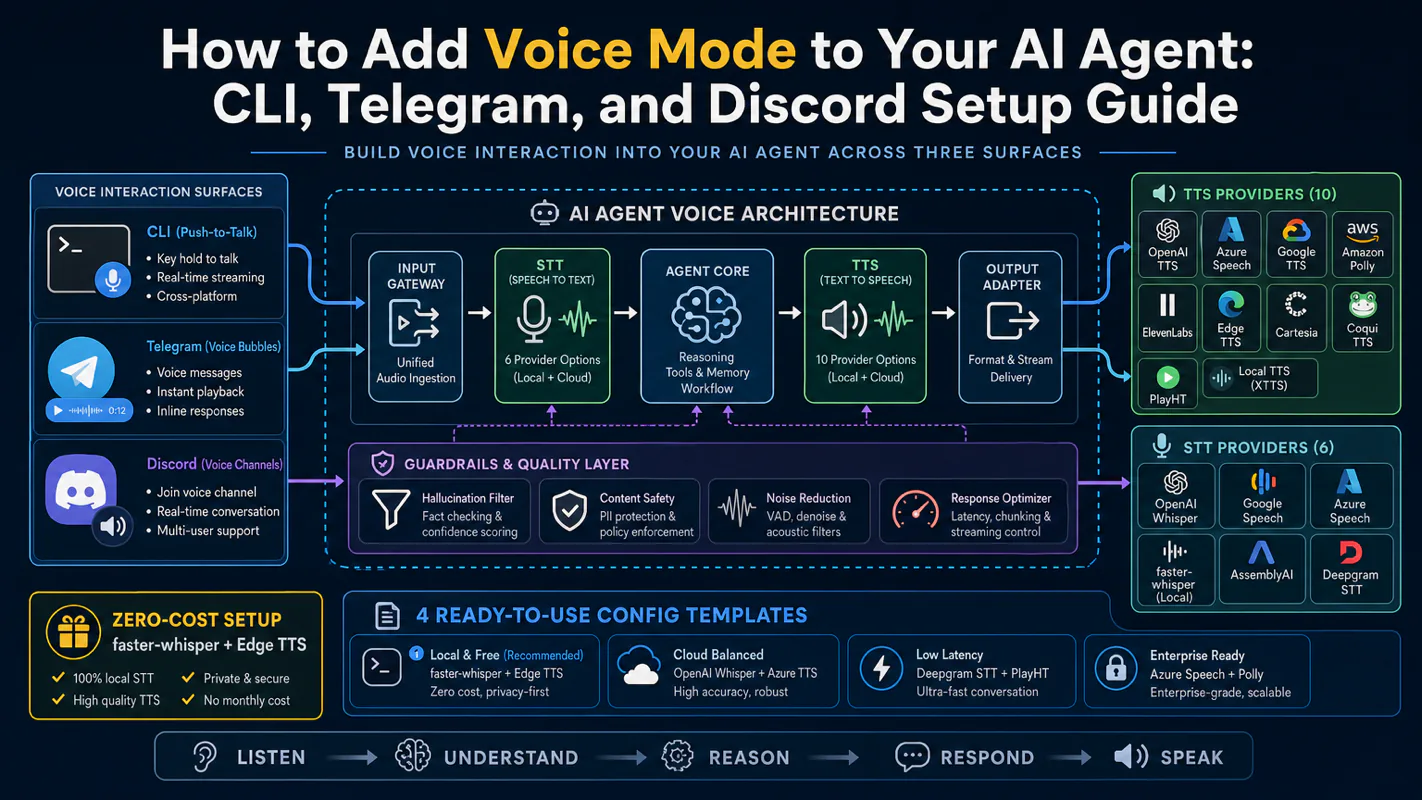
Gloves on, tape measure in hand — nobody types a query. Three voice surfaces for ai automation tools (terminal, Telegram, Discord), 10 TTS and 6 STT providers compared on cost and latency, plus a setup that costs nothing.
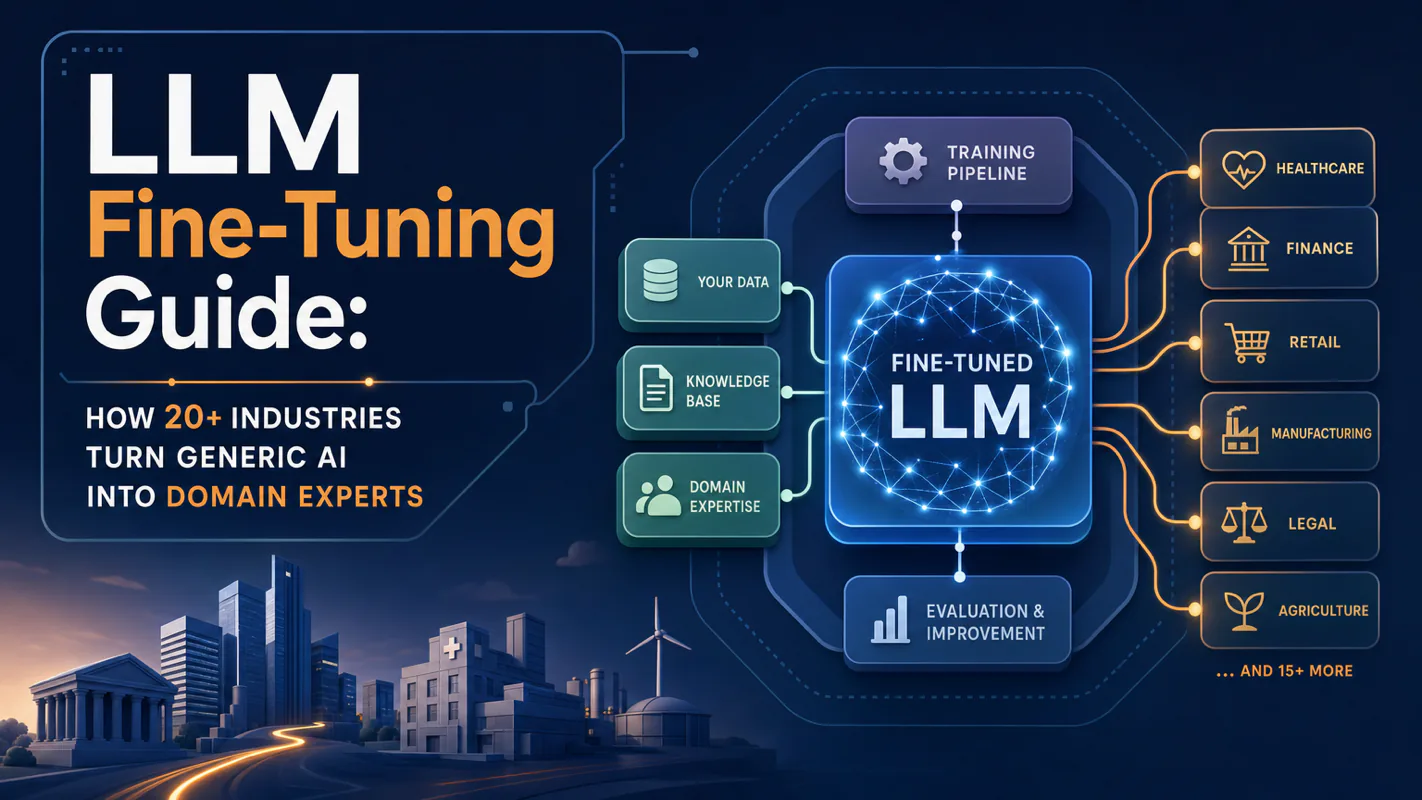
LLM Fine-Tuning Guide: How 20+ Industries Turn Generic AI Into Domain Experts
Two of the three fixes can be undone the same afternoon. The third cannot, and it is the one people reach for first. LoRA cut costs tenfold, which made the expensive option tempting rather than correct. In business process automation, the order you try things in is the whole decision.
Your ChatGPT gives polished but generic answers. Your competitor's AI sounds like it spent a decade in your industry. The difference is LLM fine-tuning, and in 2026 it costs less than a team lunch.
Fine-tuning rewires a foundation model's weights with your domain data, turning a generalist into a specialist. But most teams either over-invest (fine-tuning when prompt engineering would suffice) or dismiss it as too expensive (it isn't anymore). This guide cuts through both misconceptions with a decision framework, real cost numbers, and a practitioner's roadmap across 20+ industries.
Key takeaways
Fine-tuning transforms a general-purpose LLM into a domain expert by retraining on your data, terminology, and quality standards
Follow the escalation ladder: prompt engineering first, RAG second, fine-tuning only when the first two fall short
LoRA and QLoRA slashed fine-tuning costs by 10x since 2024, putting 7B model training on a single consumer GPU
Data quality trumps data quantity every time: 100 curated samples beat 10,000 noisy ones
When output is not good enough, the instinct is to reach for the biggest fix, and in this field that means retraining the model on your own data - now cheap enough to be tempting and still the wrong first move most of the time. A staffing firm unhappy with its candidate summaries has three options in ascending order of commitment, and two are reversible in an afternoon. This guide gives the ladder: better instructions first, retrieval second, retraining only when both fall short, plus real cost numbers and how it plays out across twenty-plus industries. It is the frame that keeps business process automation from starting at the deep end.
What Does LLM Fine-Tuning Actually Do?
Fine-tuning takes a foundation model that knows a little about everything and teaches it to know a lot about your domain. Think of it as a three-month apprenticeship: you feed the model your business data, industry jargon, and quality benchmarks until it stops sounding like a generalist and starts sounding like your best employee.
After spending two months reviewing over fifty fine-tuning case studies across production deployments, I organized the strongest twenty-plus examples into five sectors:
Sector
Industries Covered
Core Value
Content & Media
Creator economy, marketing, journalism, gaming
Scale a creator's voice without losing authenticity
Commerce & CX
E-commerce, retail, customer support, travel
Personalized experiences at lower operational cost
Manufacturing, energy, logistics, security, public services
Make complex systems more intelligent
Should You Fine-Tune, Use RAG, or Just Write a Better Prompt?
Most teams jump to fine-tuning before exhausting cheaper alternatives. Here is the decision framework I use with every client:
Dimension
Prompt Engineering
RAG (Retrieval-Augmented Generation)
Fine-Tuning
What it changes
The instructions the model receives
The reference material the model can access
The model's internal weights
Analogy
Handing an employee a detailed task brief
Giving them access to a specialized library
Sending them through industry-specific training
Cost
Near zero
Moderate (vector database infrastructure)
Higher (GPU compute + curated data)
Performance ceiling
Limited by the model's existing capabilities
Limited by retrieval quality
Can unlock entirely new capabilities
Best for
General tasks, format adjustments
Current information, private data lookups
Domain-specific style, judgment, expertise
Time to deploy
Minutes
Days
Weeks
The escalation rule: if prompting solves the problem, stop there. If RAG solves it, stop there. Fine-tuning is the last resort and the most powerful option.
Here is a concrete example. Say you run a restaurant and need AI to respond to customer reviews. Prompt engineering is a laminated cheat sheet for your staff: thank positive reviewers, apologize for negative ones. Works for simple cases, breaks on nuance. RAG gives your staff a thick customer service manual they can consult mid-conversation, but it does not change how they communicate. Fine-tuning sends your staff through a hospitality training program where they internalize your restaurant's culture, menu knowledge, and communication style. After training, responses feel natural rather than scripted.
I have watched teams burn weeks fine-tuning when their real problem was a poorly structured prompt. A reliable test: if your need is format conversion (turning long articles into tweet threads) or knowledge lookup (answering questions from product docs), prompt engineering or RAG will handle it. Fine-tuning earns its cost only when you need the model to exhibit a specific voice, judgment pattern, or professional instinct.
How Do LoRA and QLoRA Change the Fine-Tuning Cost Equation?
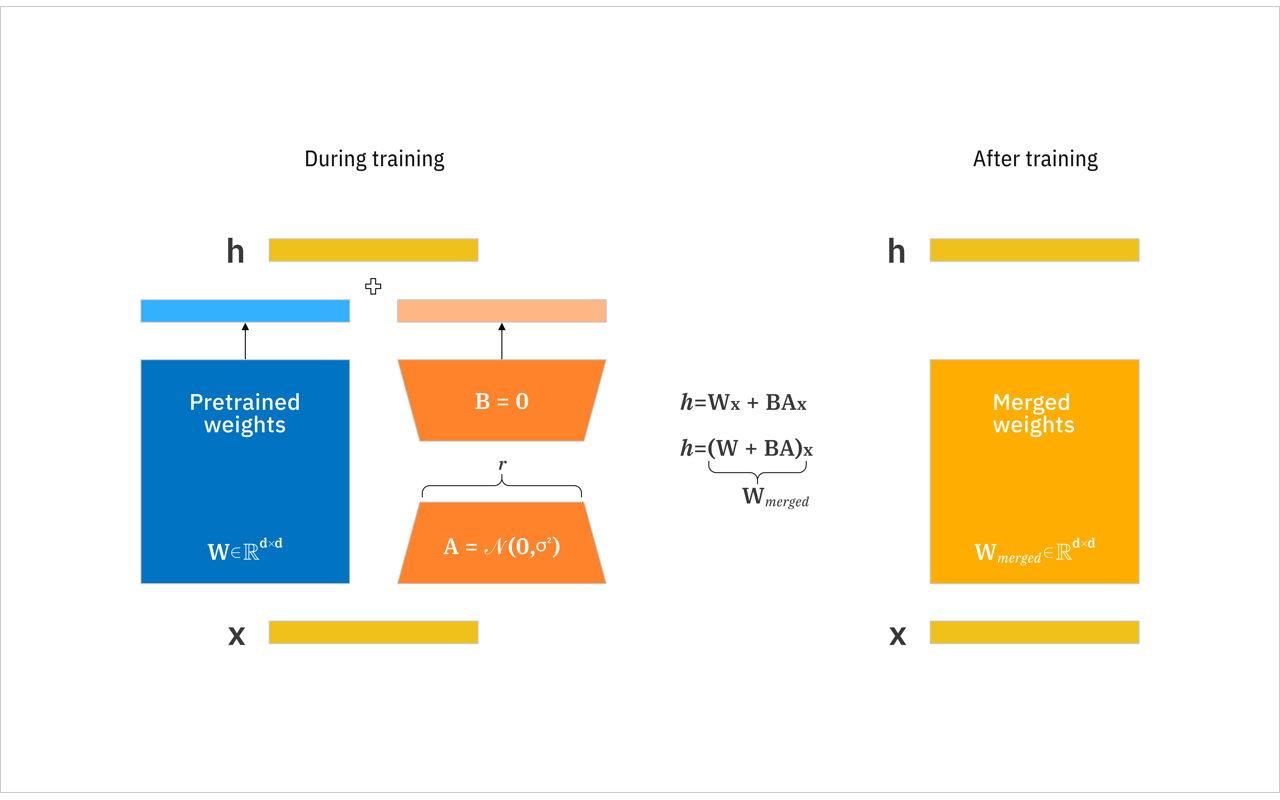
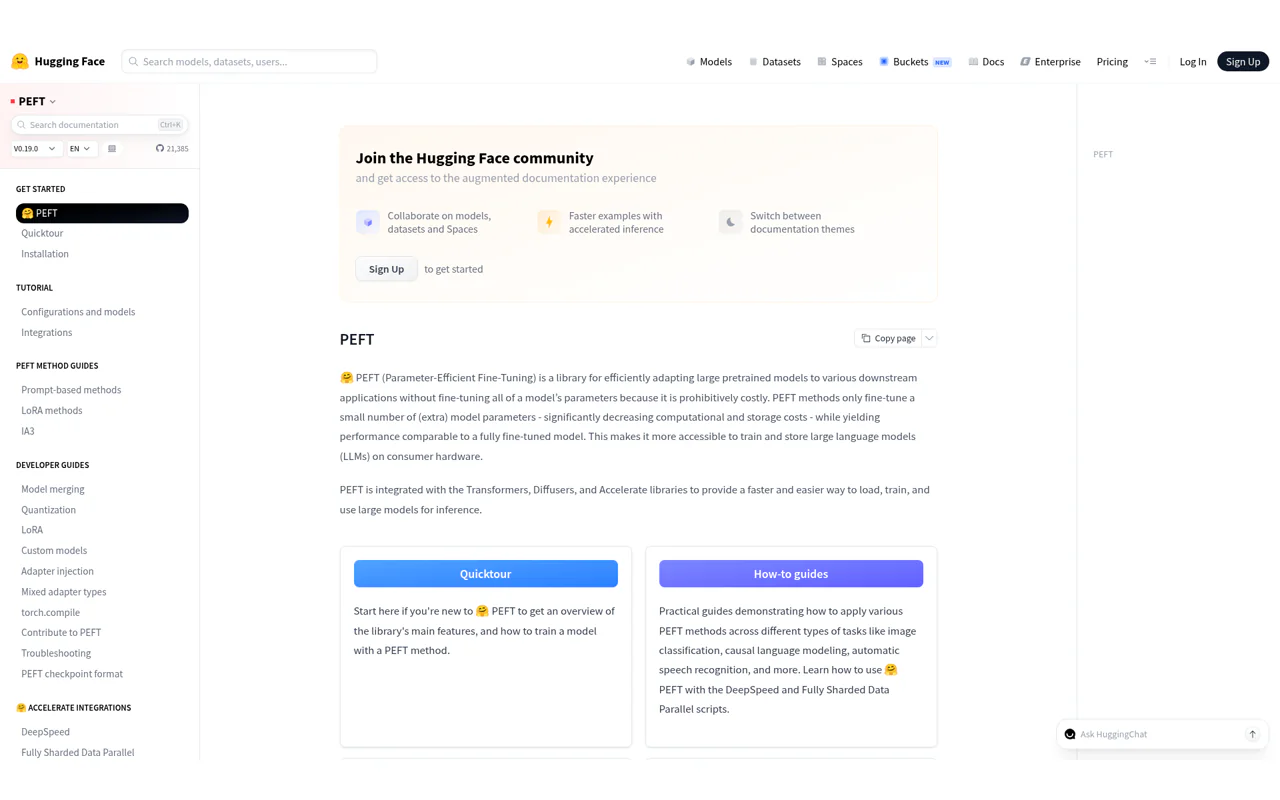
Between 2024 and 2026, fine-tuning went from a large-company privilege to something a solo developer can run on a gaming PC. The enablers are LoRA (Low-Rank Adaptation) and QLoRA (Quantized LoRA), two parameter-efficient fine-tuning methods.
Method
Parameters Trained
VRAM Required (7B model)
Quality
Who It Serves
Full fine-tuning
100%
100-120 GB
Best possible
Large enterprises, research labs
LoRA
0.1-1%
16-24 GB
Near full fine-tuning
Mid-size teams with GPU access
QLoRA
0.1-1% (4-bit quantized)
6-8 GB
Slightly below LoRA
Solo developers, consumer GPUs
The QLoRA breakthrough: a single RTX 4090 (~$1,600) can fine-tune a 7-billion-parameter model. Individual practitioners can now build domain-expert models on hardware they already own.
Here are 2026 cost benchmarks I have verified firsthand:
Cloud LoRA on Llama with 1,000 training samples: $5-15
OpenAI fine-tuning API (token-based billing): $50-500 for a mid-scale run
Local QLoRA on an Apple Silicon Mac (M2/M3, 32GB+ unified memory): effectively $0 beyond time and electricity
These numbers are roughly one-tenth of what the same work cost in 2024, when fine-tuning a 7B model required renting multiple A100 GPUs at thousands of dollars per run. Parameter-efficient methods have democratized fine-tuning: it is no longer gated by budget, only by data quality and use-case clarity.
What Does Fine-Tuning Look Like Across 20+ Industries?
Content & Media: Scaling Voice Without Losing Soul
Creator economy. A history education creator with millions of followers across YouTube and a newsletter collected 500+ articles and video transcripts spanning five years, tagged with engagement metrics and audience reactions. After fine-tuning, the model generates 3,000-word drafts that match the creator's signature storytelling patterns, historical references, and humor. Long-form posts convert into video scripts or tweet threads in one pass. Output volume doubled without diluting the voice.
Fine-tuning does not replace creators. It encodes their most valuable intangible asset, unique style and knowledge architecture, into a reusable digital system.
Marketing. A sportswear brand fed every top-performing campaign, its brand voice guidelines, and customer persona documents into a fine-tuned model. A marketer types "write 5 Instagram captions for the new trail runner, emphasize cushioning and night-run visibility" and gets five distinct variants in seconds. Daily output jumped from two or three headline sets to twenty, enabling rapid A/B testing at small traffic volumes before scaling winners.
Journalism. A financial news outlet fine-tuned on a decade of published stories and thousands of historical earnings-to-summary pairs. When a quarterly report drops, the model extracts key figures from the PDF, calculates year-over-year changes, generates a 300-word bulletin, and flags risk indicators, all within one minute. Time-to-publish shrank from one to two hours down to under ten minutes.
Gaming. An open-world RPG studio fine-tuned on a million words of lore documents, character backstories, sample dialogues, and regional dialect corpora. Assign an NPC three tags ("blacksmith," "stubborn," "northern province") and the model generates contextually consistent dialogue in real time. Player actions trigger dynamic side quests. Over 5,000 NPCs achieved unique personality, freeing the writing team to focus on core narrative arcs.
Commerce & Customer Experience
Industry
Fine-Tuning Application
Core Value
Cross-border e-commerce
Multilingual localized marketing and support
Auto-generate culturally adapted product descriptions; 24/7 multilingual customer service
Retail
Deep sentiment analysis on customer feedback
Extract nuanced purchase signals from unstructured reviews at scale
Customer support
Intelligent agent copilot
Complex resolution rate increases; average handle time drops 30%
Travel
Personalized itinerary generation
Turn vague preferences into tailored trip plans; planner productivity up 5x
Professional Services
Industry
Fine-Tuning Application
Core Value
Finance
Investment report generation + fraud detection
Auto-generate compliant reports; catch fraud patterns that rule-based systems miss
Legal
Intelligent contract review
Contract review time cut 80%; lawyers focus on substantive legal issues
Education
AI-powered personalized tutoring
Custom exercises and real-time feedback; measurable 30% learning improvement
HR
Resume screening + policy Q&A
Automate high-volume resume triage; answer 80% of internal employee inquiries
Tech & R&D
Industry
Fine-Tuning Application
Core Value
Healthcare
Clinical note generation + diagnostic support
Documentation efficiency up 400%; differential diagnosis suggestions
Scientific research
Literature analysis + hypothesis generation
Comprehensive literature reviews in minutes; novel research hypothesis proposals
Materials / Pharma
Molecular property prediction
Dramatically narrow early-stage screening; accelerate drug discovery pipelines
Software engineering
Private codebase programming assistant
AI-authored code share rises from 25% to 45% of committed code
Real-time rerouting; emergency response from hours to minutes
Cybersecurity
Security event triage
Auto-classify massive alert volumes; surface real attacks
Construction
Design generation + compliance checking
Rapidly produce multiple code-compliant design alternatives
Public services
Policy Q&A chatbot
Answer citizen policy questions in plain language with regulatory accuracy
Real estate
Property listing generation
Auto-generate multi-style marketing copy from structured listing data
Insurance
Automated claims + smart underwriting
Claims cycle from weeks to hours
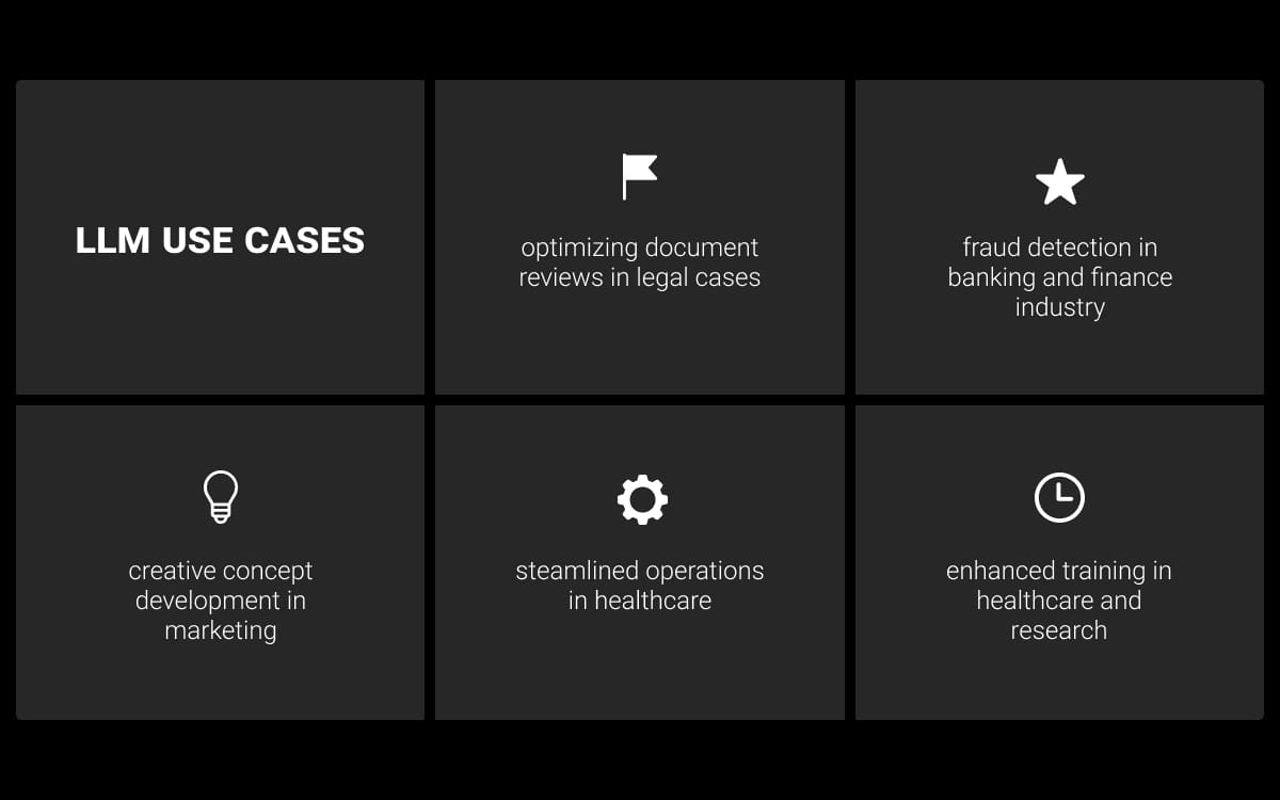
Disclaimer: All industry examples above are carefully designed hypothetical scenarios based on documented technical capabilities and real industry pain points. Names, companies, and specific figures are illustrative. Use them as directional inspiration, then validate against your own data and business context.
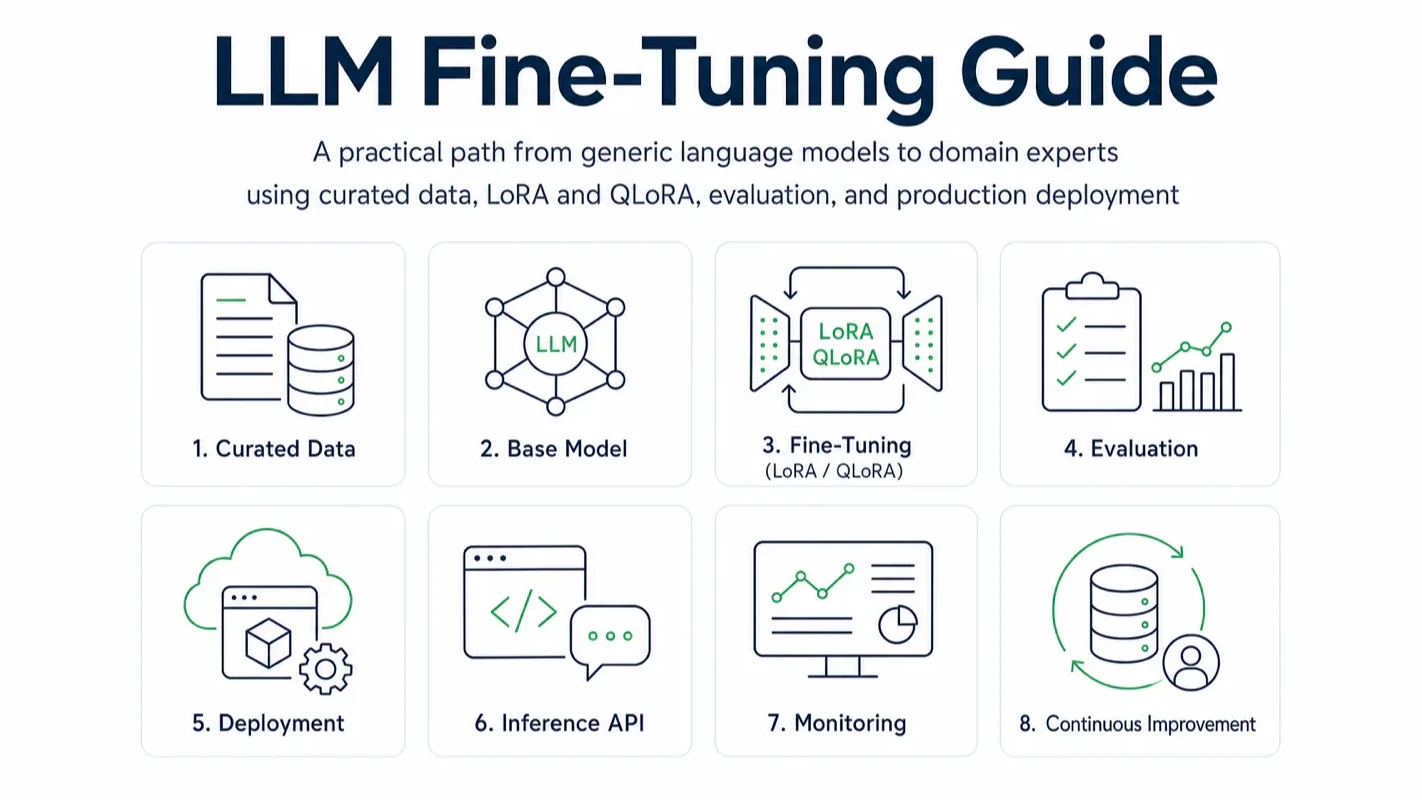
What Is the Step-by-Step Fine-Tuning Roadmap?
If you are ready to bring fine-tuning into your workflow, here is the six-step roadmap I follow:
Step
Core Task
Deliverable
Timeline
1. Needs assessment
Confirm fine-tuning is the right approach (not prompting or RAG)
Serve the model via API, set up monitoring and alerting
Production service
1-2 weeks
The critical bottleneck is Step 2. Data preparation typically consumes 60-70% of total project time. Data quality directly determines fine-tuning outcomes. Garbage in, garbage out is not a cliche here; it is the primary failure mode.
Three data preparation pitfalls I have encountered repeatedly:
Insufficient volume. Rule of thumb: simple style transfer needs 50-200 high-quality samples. Complex domain knowledge injection needs 1,000-5,000. Below 50 samples, skip fine-tuning entirely and invest in few-shot prompt engineering instead.
Inconsistent quality. Mixing carefully annotated samples with noisy, unreviewed data poisons the training signal. I consistently see 100 curated samples outperform 10,000 uncleaned records. Curation is not optional.
Format errors. Different fine-tuning APIs require specific data structures. OpenAI expects a particular JSONL schema. Hugging Face frameworks need a defined dataset layout. A misspelled field name or a trailing comma can silently fail the training run. Always validate with a 10-sample dry run before committing your full dataset.
What Are the Three Laws of Fine-Tuning Success?
After working through dozens of fine-tuning projects, three principles hold true across every domain:
Fine-tuning does not make AI smarter. It makes AI understand your business. A general-purpose model scores a passing grade on most tasks. Fine-tuning pushes it from 70 to 95 on the tasks that matter to you.
Data is the moat. Every successful case in this guide shares one trait: access to high-quality, domain-specific data. The more unique, clean, and comprehensive your training data, the harder your fine-tuned model is for competitors to replicate.
The biggest winners are data-rich, talent-scarce industries. Legal, healthcare, finance, manufacturing: these sectors sit on mountains of expert data but face chronic shortages of affordable specialists. Fine-tuning encodes expert knowledge into a scalable system. That is the real competitive advantage.
Where Is Fine-Tuning Headed in 2026-2027?
Three trends I expect to accelerate:
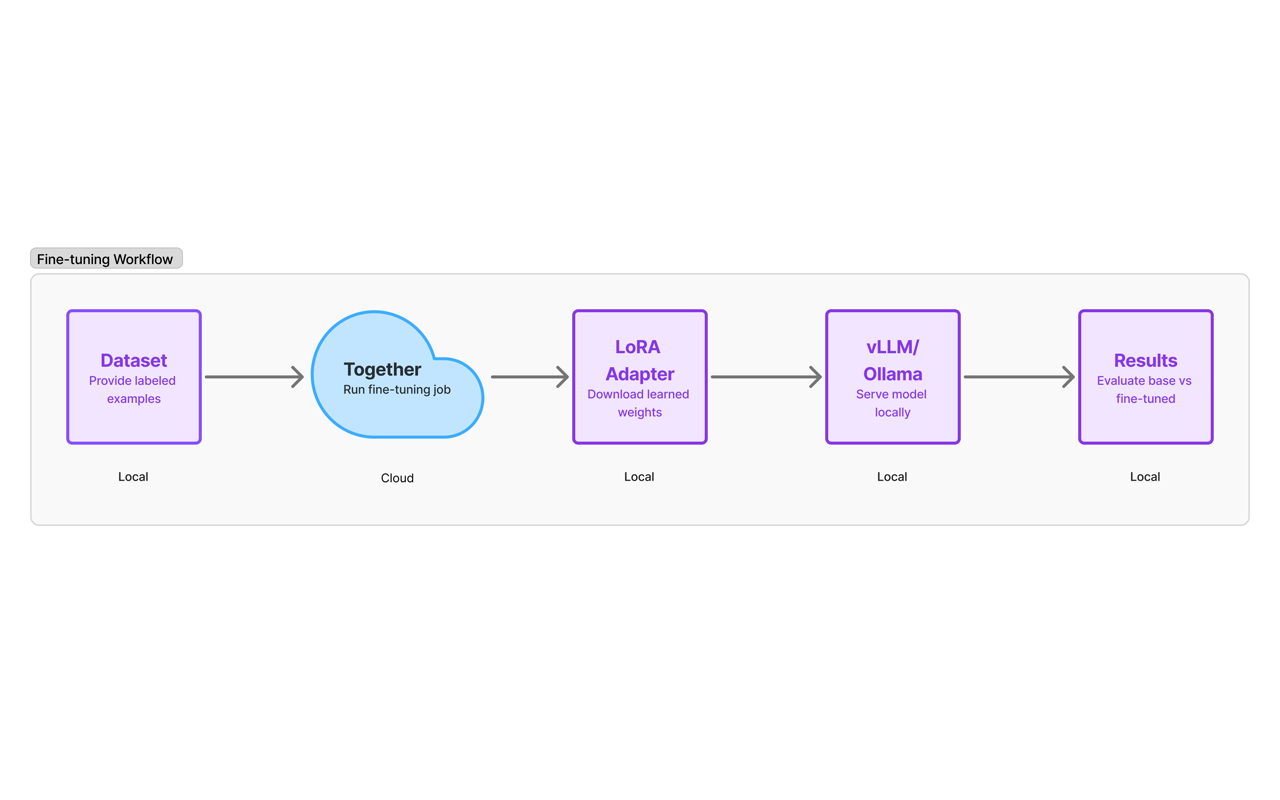
Fine-tuning as a service goes mainstream. More platforms offer one-click fine-tuning: upload your data, pick a base model, the platform handles everything else. OpenAI already provides this (though pricing remains premium). Open-source alternatives on platforms like Together AI and Anyscale are closing the gap fast.
Synthetic data fine-tuning matures. Traditional fine-tuning demands expensive human-annotated data. But 2026 evidence increasingly shows that training data generated by GPT or Claude can produce strong fine-tuning results. I expect synthetic data to cut data preparation costs by 90%, further lowering the barrier to entry.
Multimodal fine-tuning emerges. Most fine-tuning today targets text models. As vision-language models mature, demand for fine-tuning image understanding and generation will spike. Imagine fine-tuning an image generator to consistently produce visuals matching your brand style guide. For e-commerce and content creators, that capability has massive commercial value.
One final note: fine-tuning is powerful, but it is not a universal solution. Before you commit GPU hours and data preparation effort, verify that your problem genuinely requires fine-tuning. If prompt engineering or RAG gets you to 90% of your target performance, take the lighter path. Choosing the simplest adequate solution is not laziness. It is engineering discipline.
Ready-to-Use Prompt: Decide and Plan LLM Fine-Tuning via the Escalation Ladder
What this does: Runs the escalation ladder (prompt → RAG → fine-tune) to stop over-investing, checks the three laws of fine-tuning success, picks LoRA/QLoRA over full fine-tune on the cost equation, and lays the six-step roadmap with an industry fit — so you only fine-tune when it is actually the right move. Based on: LLM Fine-Tuning Guide: How 20+ Industries Turn Generic AI Into Domain Experts — https://aiworkflowpro.com/llm-fine-tuning-guide/ Time to run: ~5 minutes
Copy this prompt into Claude Code, ChatGPT, or any AI assistant:
ROLE: You are an LLM Fine-Tuning Escalation Architect. Your job: run the escalation ladder so teams neither over-invest in fine-tuning nor dismiss it as too expensive — and when they do fine-tune, make it measured and cheap.

CONTEXT — ESCALATION LADDER + 3 LAWS METHOD:
Your ChatGPT gives polished but generic answers; a fine-tuned model sounds like it spent a decade in your industry — and in 2026 it costs less than a team lunch. Two misconceptions trap teams: over-investing (fine-tuning when a prompt would do) and dismissing it as too expensive (LoRA/QLoRA slashed costs 10x since 2024, putting 7B training on one consumer GPU). Follow the escalation ladder: prompt engineering first, RAG second, fine-tune only when both fall short and you need domain behavior, format, or terminology baked into weights. Three laws govern success: (1) escalation — never fine-tune before prompt and RAG are exhausted; (2) data quality — 100 curated samples beat thousands sloppy; (3) measurement — always baseline and evaluate, or you cannot prove the gain. Use LoRA/QLoRA for almost all practical fine-tuning.

INPUTS (fill in before running):
- OBJECTIVE: [What you want the model to do better — behavior/style/format/terminology, or new knowledge]
- DATA_QUALITY: [How many curated samples you have]
- BASELINE: [Have you measured prompt-only and RAG performance? yes / no]
- BUDGET: [Compute budget — single consumer GPU / cloud]

METHOD — 4 STEPS:

Step 1 — Run the Escalation Ladder
From OBJECTIVE: prompt engineering first (behavior/style via instructions); RAG second (knowledge the model lacks); fine-tune only when both fall short AND you need domain behavior/format/terminology in the weights. State the rung and one line why. If prompt or RAG, stop.

Step 2 — Apply the 3 Laws
(1) Escalation — confirm prompt + RAG were genuinely exhausted (check BASELINE). (2) Data quality — require curated samples from DATA_QUALITY; 100 clean beat thousands sloppy, cut ambiguous pairs. (3) Measurement — baseline before, evaluate after; reject any plan without a number to beat.

Step 3 — LoRA/QLoRA Cost Equation + 6-Step Roadmap
Choose LoRA/QLoRA (parameter-efficient, 10x cheaper, fits BUDGET) over full fine-tune unless justified. Lay the six steps: data prep → baseline → LoRA/QLoRA train → evaluate → deploy → monitor.

Step 4 — Industry Fit + Outlook
Map OBJECTIVE to the closest of the 20+ industry patterns (legal, medical, finance, support, etc.) and note the 2026-2027 trend: costs keep falling, so the escalation bar drops — but the three laws hold.

RULES:
- Never fine-tune before exhausting prompt engineering and RAG — the escalation ladder is the gate.
- Never trade data quality for quantity — 100 curated samples beat thousands of sloppy ones.
- Never fine-tune without a measured baseline — without a number to beat, you cannot prove it helped.

OUTPUT FORMAT:
Output a markdown report with:
1. Escalation Verdict — prompt / RAG / fine-tune + one-line why
2. 3-Laws Check — markdown table, columns: Law | Met? | Action
3. Cost + Roadmap — LoRA/QLoRA choice + the six steps
4. Industry Fit + Outlook — closest industry pattern + the 2026-2027 note
Save as @templates/llm-fine-tuning-guide.md and run before fine-tuning any LLM, or when wondering if fine-tuning is even the right move.
Frequently Asked Questions
Q: How much does LLM fine-tuning cost in 2026?
It depends on model size and training volume. QLoRA on a single RTX 4090 (~$1,600 purchase or a few dollars per hour on cloud) handles 7B models. OpenAI's fine-tuning API bills by token; a mid-scale run costs $50-500. For validation-stage experiments, cost is no longer a blocker.
Q: How much training data do I need for fine-tuning?
Rule of thumb: 50-200 high-quality samples for style transfer. 1,000-5,000 for domain knowledge injection. Tens of thousands for a true industry expert. Quality always beats quantity: 100 carefully annotated samples consistently outperform 10,000 raw records.
Q: Can fine-tuning make a model worse at general tasks?
Yes. This phenomenon is called catastrophic forgetting: the model loses general capabilities while absorbing new domain knowledge. Parameter-efficient methods like LoRA and QLoRA mitigate this by modifying less than 1% of total parameters. My verification protocol: after every fine-tuning run, test both the new domain tasks and a standard general-capability benchmark. If general performance drops more than 5%, reduce the learning rate or cut training epochs.
Q: Should I fine-tune or use RAG for my use case?
Use RAG when you need the model to reference current or proprietary information without changing how it thinks. Use fine-tuning when you need the model to internalize a specific communication style, decision framework, or professional instinct that no prompt can reliably produce. Start with prompting, escalate to RAG, and reserve fine-tuning for the cases where neither suffices.
Next Steps
Start with three questions:
What unique data do you already have? Historical records, expert annotations, style samples, internal knowledge bases.
What repetitive knowledge work consumes the most hours? That is your highest-ROI fine-tuning target.
How does the base model perform on that task today? Establish a baseline before investing in fine-tuning. If the base model already scores 85%+, prompt engineering may close the gap faster.
Answer those three questions and you will know whether fine-tuning is worth the investment, and exactly where to begin.
Gloves on, tape measure in hand — nobody types a query. Three voice surfaces for ai automation tools (terminal, Telegram, Discord), 10 TTS and 6 STT providers compared on cost and latency, plus a setup that costs nothing.
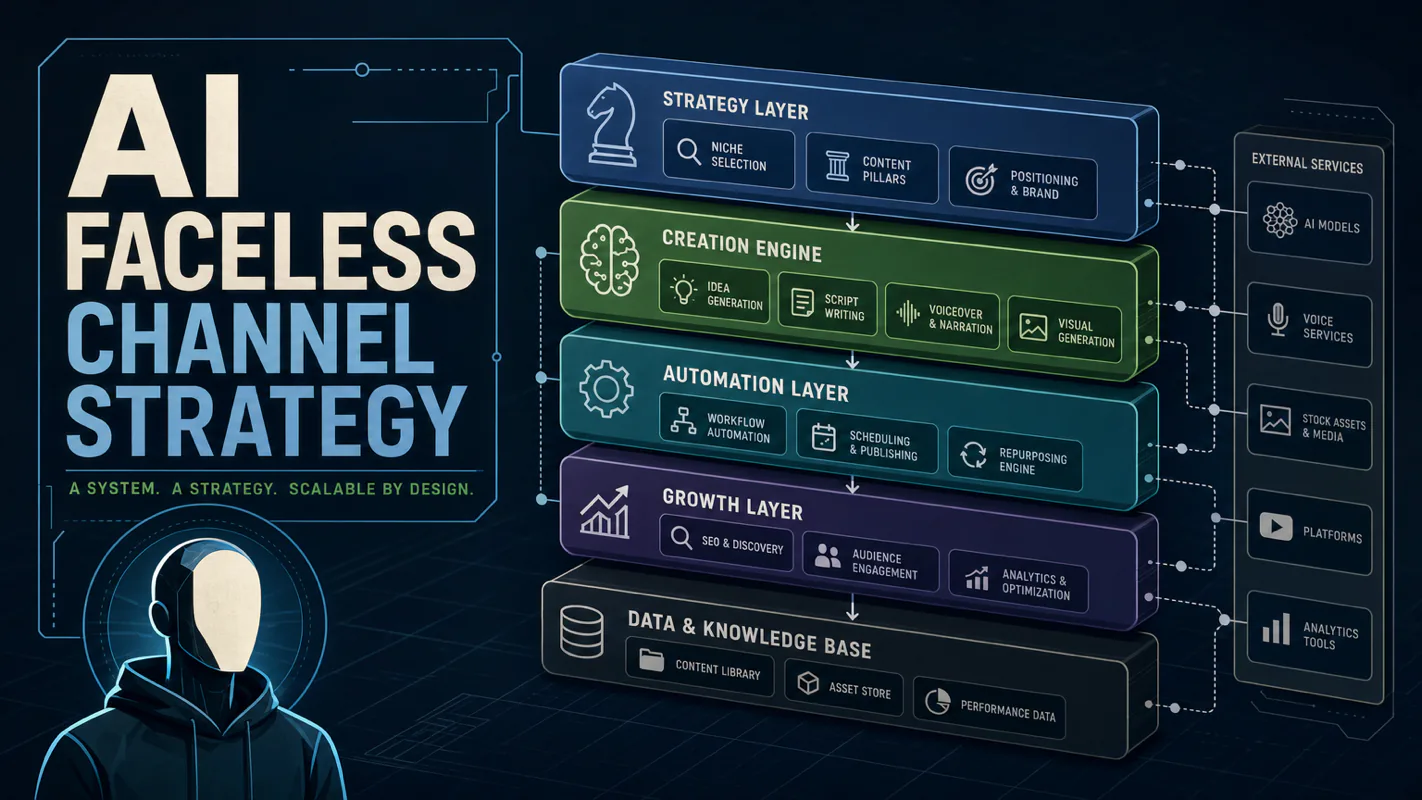
Nothing about month four is harder than month three. It is simply the month an unpaid channel starts to feel like proof of failure. Surviving it takes a cadence you can hold while earning nothing, which is a better reason to automate business processes than speed ever was.
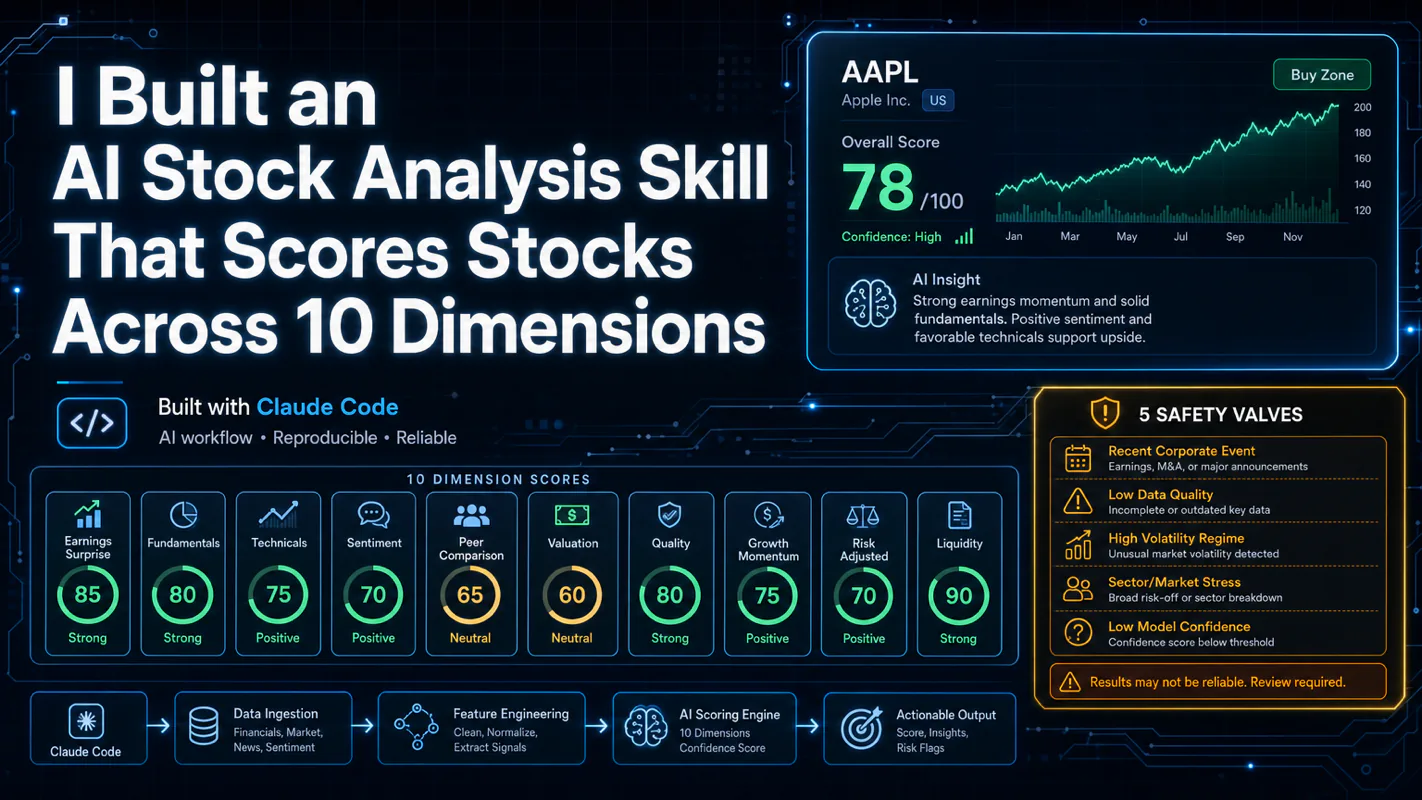
One number hides more than it shows. This Claude Code Skill scores US equities across 10 dimensions, from earnings surprise to peer comparison, with confidence scoring and 5 safety valves that flag thin data. A coding tutorial, not financial advice.
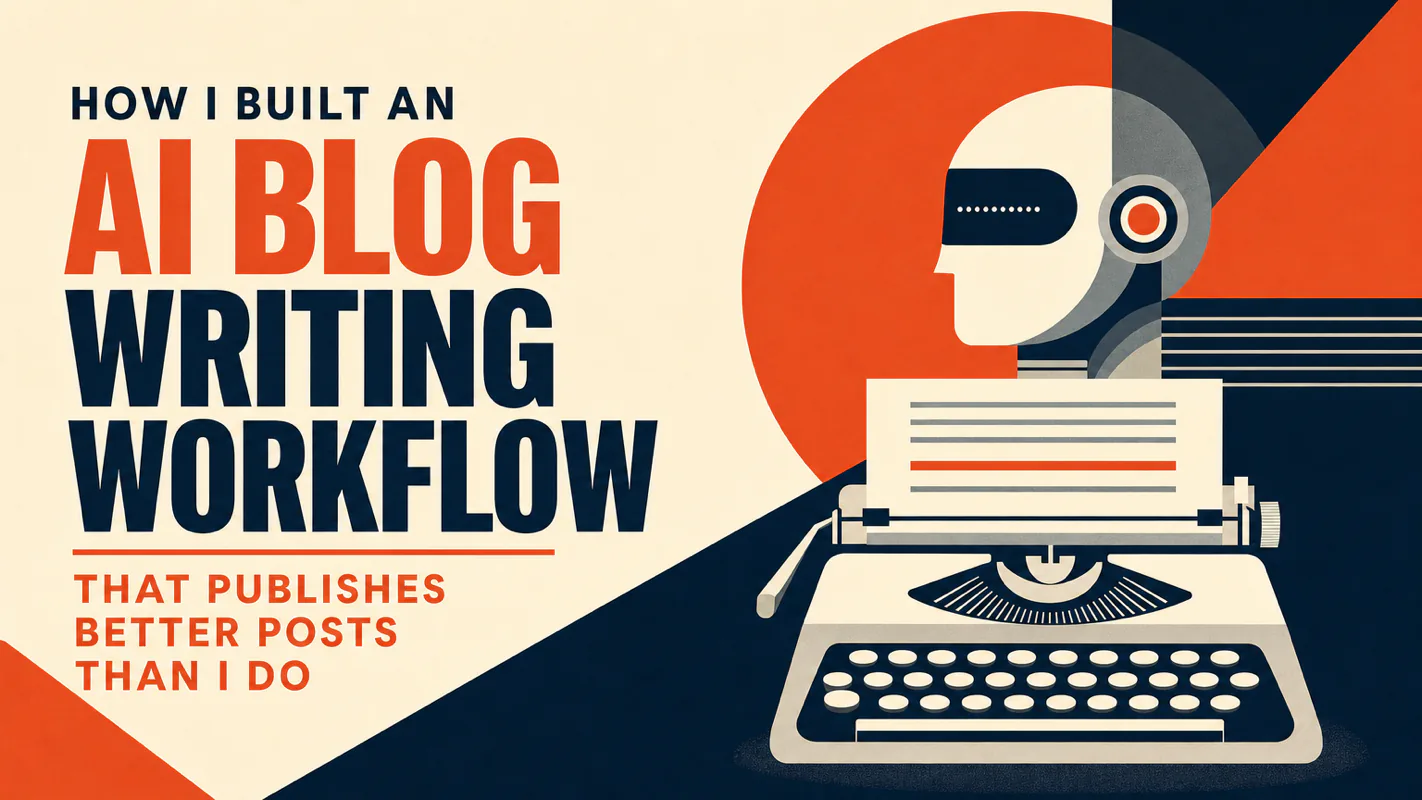
Publishing eats your week through research, SEO fields, images, and uploading — not writing. Here is the 10-step workflow automation pipeline that takes a topic to a published draft on one command, and the data contract that lets each step hand off cleanly to the next.