A 30-minute video is too long for one conversation. This guide walks the 8-step Skill that locks the narration and one look, then gives each 3-minute segment to a fresh sub-agent, five at a time, and polishes the cut in an empty-context session.
The folder structure behind my AI agent team, the Herdr setup where Grok Build, Claude Code and Kimi Code work side by side, and the two live tasks from the video: an article published by voice and a three-model front-end test.
Eight folders of plain Markdown, a CLAUDE.md index in each, and seven prompts that make your agent interview you. Every prompt, template and command from the video, in order.
In a few years an org chart grows a line nobody has a title for: whoever runs the agents. This roadmap covers the five fronts creating that role — multi-agent, multimodal, industry shifts, infrastructure, governance — plus four steps from using AI for business to orchestrating it.
There is a job posting nobody has written yet. It sits between the operations manager and whoever owns the systems, and it answers for a research agent, a drafting agent, and whatever checks their work before a client sees it. No title, no salary band, nobody hiring for it in 2026 — and plenty of firms already staffing it by accident, usually with whoever got curious first. The five fronts below are what turns that accident into a role: multi-agent teams replacing the single chatbot, plus the infrastructure and rules arriving with them. Read it as a hiring plan, not a forecast.
The future of AI will not arrive as a Hollywood awakening scene. No single model will suddenly "become conscious." Instead, five parallel shifts will compound quietly until the landscape looks nothing like today. Multi-agent teams will replace solo chatbots. Multimodal systems will see, hear, and reason simultaneously. And AI will sink from the application layer into infrastructure -- invisible, ubiquitous, expected.
I build AI workflows for a living. Over the past two years, I went from copying prompts into ChatGPT to orchestrating fleets of specialized AI agents that research topics, draft content, optimize for search, and publish across platforms -- with me stepping in only at decision points. That journey gave me a ground-level view of the future of AI, and it looks very different from the analyst reports.
Here is what the future of AI actually holds, filtered through the lens of someone who ships with AI daily.
Key Takeaways
Five directions will define the future of AI: self-evolution (multi-agent, multimodal, reasoning), industry transformation, infrastructure shifts, human-AI collaboration, and governance.
Multi-agent collaboration is the next major paradigm shift. The single-model era is ending.
Your action plan: start using AI tools now, learn prompting, build workflows, then orchestrate agents. Each step delivers measurable returns.
AI will not suddenly "wake up." The real path is gradual capability expansion -- and it is already happening.
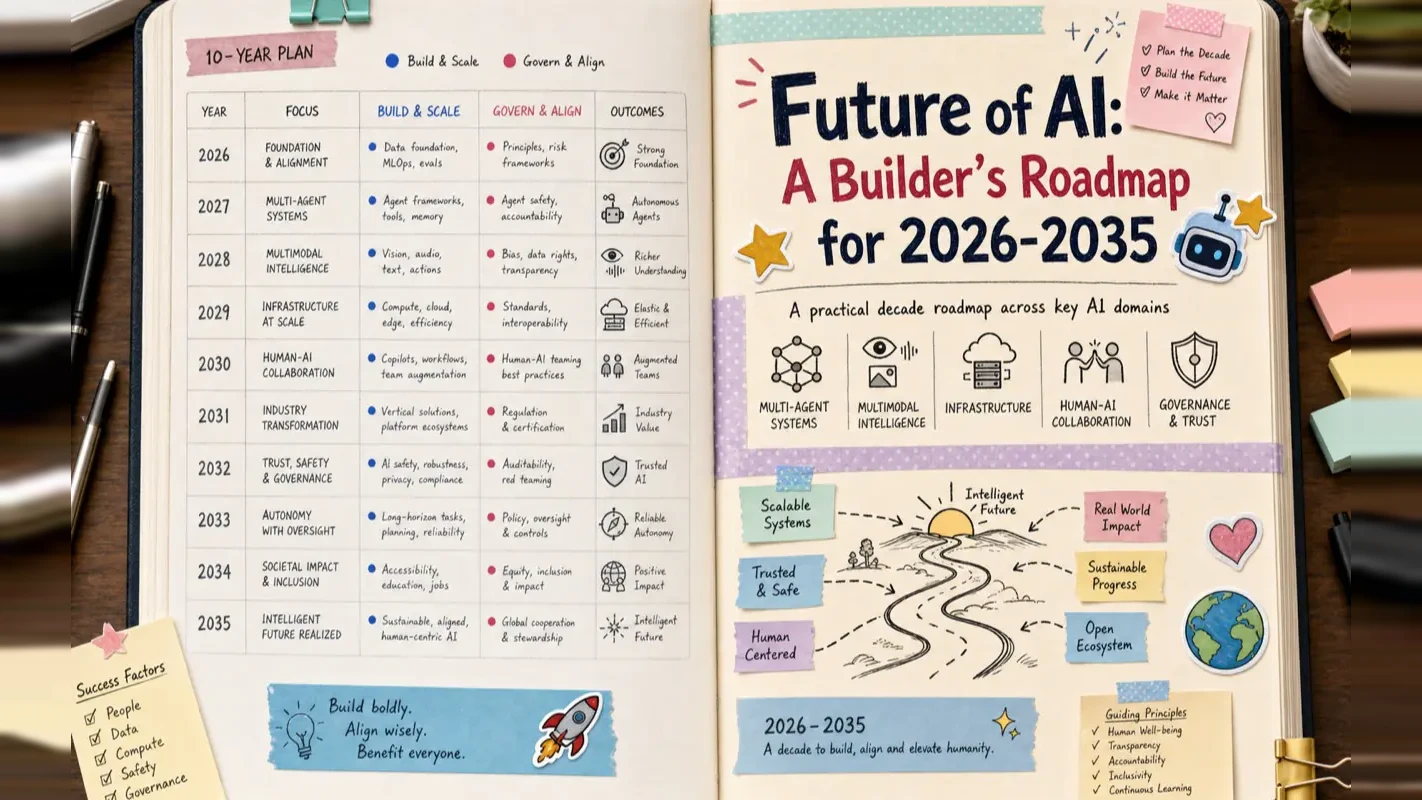
Where Is the Future of AI Heading? Five Directions for the Next Decade
Direction
Core Shift
Window
Impact on You
AI Self-Evolution
Single models to multi-agent teams
2026-2028
Your tools shift from Q&A bots to autonomous squads
Industry Transformation
AI embedded in every core process
2026-2030
Your workflow changes fundamentally
Infrastructure
Computing, energy, chip architecture
2026-2030
AI costs keep dropping
Human-AI Collaboration
Tool to partner
2028-2035
You go from "using" AI to "teaming with" AI
Governance
Safety, ethics, employment rules
Ongoing
New regulations shape what AI can do
These five fronts shaping the future of AI do not advance in sequence. They reinforce each other. Cheaper infrastructure enables broader industry adoption. Broader adoption creates governance pressure. Governance shapes which agent architectures get deployed. Understanding all five is the minimum for making sound career and business decisions.
What Happens When AI Systems Start Working Together?
The biggest development shaping the future of AI in 2026 is not a smarter model. It is multiple models working as a team.
Until recently, we relied on one large model for everything -- like using a Swiss Army knife to build a house. That approach is breaking down. The new pattern: specialized AI agents with defined roles (researcher, strategist, analyst, editor) collaborating on complex tasks. If you are new to the concept, think of it as hiring a team where each member has one job and does it exceptionally well.
Here is what this looks like in practice. I run a content operation where one agent handles topic research, another drafts the article, a third optimizes for SEO, and a fourth handles cross-platform publishing. Two years ago, I did all of this manually. The table below shows the shift:
Phase
Approach
Efficiency
Manual prompting
Type each prompt by hand, copy-paste results between tools
1x
Workflow automation
Pre-built pipelines, one-click execution
5-10x
Multi-agent orchestration
Set the goal, agents plan and execute autonomously
20-50x
Gartner projects that by 2027, 70% of multi-agent systems will contain agents with narrow, focused roles. Forty percent of generative AI interactions will use autonomous agents to complete tasks. This is not a forecast I am waiting for. I am already living it.
At the same time, large general-purpose models are fragmenting into smaller, domain-specific ones. Gartner predicts that by 2027, more than half of enterprise generative AI models will be industry-specific. Smaller models cost less, hallucinate less, and run faster. You do not call a general practitioner to fix a tooth.
I was wrong about one thing early on: I assumed bigger models would always win. They do not. A 7B-parameter model fine-tuned on your domain often outperforms a 400B generalist for your specific tasks -- at a fraction of the cost. That realization changed how I architect every new project.
Why Multimodal AI Changes Everything
The next generation of AI does not just read text. It processes images, video, audio, and sensor data in a single interaction.
Gartner estimates that by 2027, 40% of generative AI solutions will be multimodal. By 2030, 80% of enterprise software will include multimodal capabilities. This is not stitching features together. It is giving AI multiple "senses" to understand the world the way humans do.
Three scenarios that already work or will work within two years:
AI-assisted diagnosis: Medical AI reads patient records, analyzes X-rays, listens to heart sounds, and cross-references lab results simultaneously -- outperforming single-modality systems.
Design co-pilots: Give an AI your text brief, reference images, and brand guidelines. Get a complete design proposal in one pass.
Adaptive tutoring: AI detects a student's facial expression and vocal tone to gauge whether they truly understand or are pretending to follow.
For builders thinking about the future of AI, multimodal means your products can accept richer input and deliver richer output. A tool I shipped last quarter analyzes video content by processing the visual track, audio track, and transcript together. The insights it surfaces are qualitatively different from text-only analysis.
Will We Reach AGI by 2030?
The honest answer: it depends entirely on definition.
Current AI already matches or exceeds human performance on many benchmarks. The real shift is not raw intelligence but planning and autonomous action. AI systems can now decompose goals, create execution plans, call external tools, and complete multi-step tasks without human intervention.
Meta demonstrated AI systems capable of independent scientific research in 2026. They have committed over $70 billion toward general-purpose AI by 2026-2027 and superintelligence by 2029. Whether that timeline holds, the direction is clear.
Organization
AGI Prediction
Superintelligence
Basis
Meta (Zuckerberg)
2026-2027
2029
Self-learning system breakthroughs
OpenAI (Altman)
2026-2028
2030+
Reasoning capability leaps
Google DeepMind
2028-2030
Not specified
Multimodal fusion
Gartner
Not specified
Not specified
Focus on enterprise applications
My take on the future of AI: forget the label. By 2028, AI will autonomously handle projects that currently require a team of skilled humans. Whether we call it AGI matters less than what it means for your work. The capability is arriving in pieces -- each piece useful, each piece requiring you to adapt.
How Will AI Reshape Your Industry?
Healthcare
Diagnostic AI already exceeds human accuracy in certain imaging tasks. By 2027, multimodal AI will read scans, parse clinical notes, and analyze lab data in a single pass.
Drug discovery timelines are compressing from years to months. AlphaFold's protein structure predictions are now standard tools across global research institutions.
Personalized medicine driven by genomic data is moving from research to clinical practice.
Education
Traditional
AI-Driven
One pace for all
Adaptive learning paths per student
Office-hours Q&A
24/7 AI tutors, never tired, never impatient
Standardized exams
Continuous competency assessment
Static textbooks
Dynamically generated content matched to skill level
Finance
Real-time risk monitoring across market data and news feeds
Personalized financial guidance based on individual circumstances
Millisecond-level fraud detection on anomalous transactions
AI-powered investment research: automated report collection, data extraction, insight generation
Creative Work
This is where AI's impact hits hardest. I produce content -- articles, video scripts, SEO strategies -- with AI handling execution at every stage. The model: humans own direction and quality control; AI owns execution and scale. That division of labor is not a prediction. It is how I work right now.
Creative Task
2024
2026
2028 (projected)
Writing
AI drafts, human edits heavily
AI produces variants, human selects and fine-tunes
AI matches your style, outputs final drafts
Image generation
Basic text-to-image
Precise style control, character consistency
Fully controllable visual pipelines
Video production
5-10 second clips
60-second high-quality sequences
Full short-film capability
Voice synthesis
Robotic, detectable
Near-human quality
Indistinguishable from recorded speech
What About the Infrastructure? Computing, Energy, Open Source
The computing cost equation has flipped
Here is a shift most people missed: inference costs -- the price of running models after they are trained -- now exceed training costs. Deloitte reports that inference accounts for two-thirds of all AI computing in 2026. Some enterprises spend tens of millions monthly on inference alone.
Two infrastructure paths are diverging:
Path
Representatives
Advantage
Best For
Scale-up (superchips)
NVIDIA H200/B200/GB200
Peak performance
Large enterprises, training frontier models
Scale-out (edge)
Quantization, small models, on-device inference
Low cost, low latency, privacy
Indie builders, SMBs, privacy-sensitive apps
Edge AI is real now
Not all AI runs in the cloud. In 2026, flagship phones run 7B-parameter language models locally. That means text summarization, translation, and basic Q&A work offline, with zero data leaving the device.
Open source is closing the gap
Open-source models (DeepSeek, Llama, Qwen) are narrowing the performance delta with proprietary models. My strategy: use proprietary models (Claude, GPT) for daily creative work where quality matters most; deploy open-source models locally for anything involving sensitive data.
Camp
Representatives
Strengths
Weaknesses
Proprietary
GPT-5, Claude, Gemini
Best performance, strongest safety alignment
Expensive, vendor lock-in
Open source
DeepSeek, Llama, Qwen
Free, customizable, self-hosted
Weaker alignment, requires technical skill
Platform
Runway (multi-model integration)
No model selection, turnkey experience
Less flexibility
The energy question
AI data centers are becoming a global energy concern. Training a frontier model consumes as much electricity as a small city uses in a year. This is driving adoption of nuclear and solar power for data centers -- and it may become AI's primary bottleneck.
How Will the Human-AI Relationship Change?
Work is transforming, not disappearing
AI will not "replace all jobs." It will reshape how nearly every job gets done. The key transformations underway:
Dimension
Shift
What It Looks Like
Repetitive tasks
Automated
Data entry, report generation, basic analysis handled by AI
Humans drive direction and judgment; AI drives execution
New careers
Emerging
AI trainers, prompt engineers, ethics officers, agent orchestrators
Here is my observation from running a one-person operation: output scale and team size are decoupling. Projects that once required a team of five now take one person working with AI agents. This is an enormous advantage for solo builders and small teams -- the AI leverage that used to be exclusive to well-funded companies is now accessible to anyone.
An employee who uses AI tools regularly in 2026 matches the output of a colleague one or two levels senior who does not. That gap is widening.
AI literacy is the new baseline
Within a decade, "knowing how to use AI" will be as fundamental as "knowing how to use a computer." Here is a practical skill ladder:
Level
Skill
2026 Demand
2030 Demand (est.)
L1
Use ChatGPT/Claude for daily tasks
High
Table stakes
L2
Write effective prompts for precise output
Medium-High
High
L3
Design AI automation workflows
Medium
Medium-High
L4
Orchestrate multi-agent systems
Low
Medium
L5
Fine-tune and train models for specific needs
Low
Medium
If you are reading this in 2026, aim for L2 minimum, stretch for L3. These two levels offer the best return on time invested.
What Are the Risks? Governance, Ethics, and Regulation
The threat landscape
Deepfakes: AI-generated fake video and audio are increasingly difficult to detect. Multiple deepfake-driven financial frauds and political incidents occurred in 2026.
Bias amplification: AI models can magnify biases in training data -- hiring AI that favors certain demographics, lending AI that discriminates by region.
Autonomy risk: As AI systems grow more autonomous, keeping their behavior aligned with human intent becomes critical. IBM's 2026 keyword: "bounded autonomy" -- give AI clear operational boundaries and escalation mechanisms.
Regulatory frameworks are arriving
Region
Framework
Key Requirement
Penalty
EU
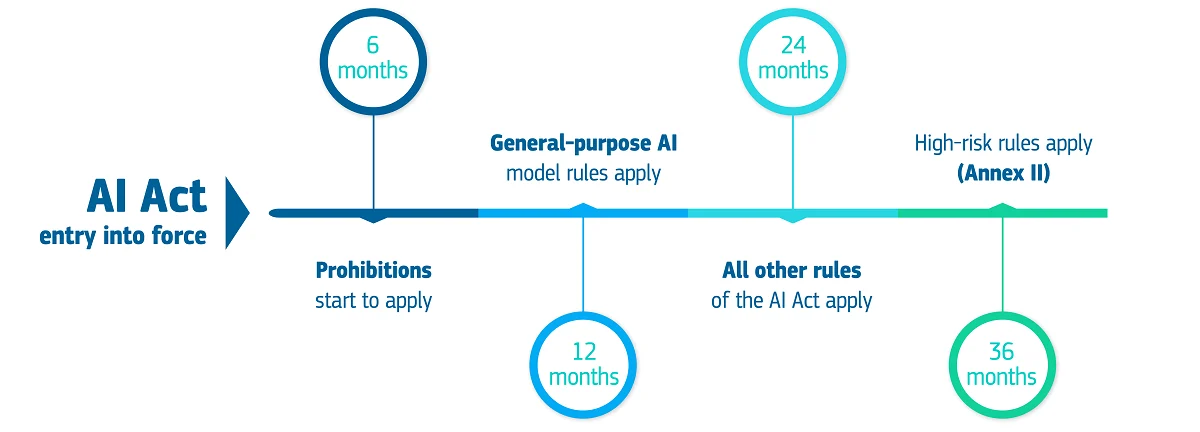
AI Act (full effect Aug 2026)
Compliance audits for high-risk AI
Up to EUR 35M or 7% global revenue
US
Executive orders + state legislation
AI transparency and safety testing
Varies by state
Global trend
Converging on risk-based tiering
Document AI use, audit high-risk deployments
Increasing
Gartner predicts that by 2027, 60% of organizations will fail to realize expected AI value due to inadequate governance. Compliance is not just legal obligation -- it is business necessity.
The employment equation
Some roles will disappear short-term. Long-term, AI will likely create more opportunities than it eliminates. The critical variable is transition speed: can workers reskill fast enough?
I have seen two extreme reactions, both counterproductive:
"AI will replace everyone" leads to panic and paralysis.
"AI won't affect me" leads to slow obsolescence.
The productive stance: learn actively, adapt quickly. I have watched people with zero technical background learn AI-assisted workflows in two months and triple their output. One person I mentored -- a language teacher with no coding experience -- went from manually grading papers to running AI-powered lesson planning and assessment in eight weeks. The scarcest skill in the AI era is not technical ability -- it is the meta-skill of learning how to learn.
What Should You Do Right Now? A Practical Action Plan
If you want to thrive in the future of AI, stop reading trend reports and start building muscle memory.
This week
Pick one AI tool and use it daily. ChatGPT, Claude, DeepSeek -- any major model. Do not wait until you "understand AI" to start using it.
Learn three prompting patterns. Role-setting, specificity, and multi-turn iteration. These alone will multiply your output 3-5x. (AI Agents for Beginners covers the fundamentals.) For a deep dive into how agent workflows work end to end, see the Agent Workflow Complete Guide.
Within 1-3 months
Automate one repetitive task. Use Make, n8n, or a similar workflow tool. The gap between manual and automated is exponential, not linear.
Build your AI toolkit. Different tasks need different tools. A developer's toolkit (Claude Code, GitHub Copilot) looks different from a marketer's (Jasper, SurferSEO). (AI Stack Explained can help you map the landscape.)
Within 3-12 months
Understand multi-agent basics. What is an agent? What is multi-agent orchestration? How do you design a workflow with handoffs? (Claude Code Skills I Actually Use shows real-world agent workflows.)
Find AI applications in your specific domain. Who in your industry is using AI effectively? What are their results?
Continuously
Follow two or three reliable sources. MIT Technology Review for research frontiers, a builder community (Hacker News, Reddit r/singularity) for practical use cases, and one industry analyst (Gartner or McKinsey annual AI report) for business trends. Cross-reference all three. That is enough. More will drown you.
My Journey: From Observer to Builder
I spent the first months of 2024 using ChatGPT as a glorified search engine. Ask a question, read the answer, close the tab. The real shift happened when I started building AI workflows -- delegating daily repetitive tasks to AI agents while I focused on creative direction and strategic decisions.
One concrete example: I used to spend three hours every week collecting cross-platform content metrics, assembling them into a report, and deciding what to publish next. Now an AI agent scrapes the data, generates an analysis with patterns I would have missed manually, and suggests next week's content calendar. The entire process takes fifteen minutes. The analysis quality is higher because AI catches patterns across datasets that human eyes skip.
The cost trajectory reinforces this. Running a complex task through GPT-4 in 2024 might cost several dollars. In 2026, equivalent-quality open-source models run on your phone for free. Gartner projects that by late 2026, 40% of enterprise applications will include task-specific AI agents. For solo builders and small teams, this is the great equalizer: AI capabilities that were exclusive to large organizations are now nearly free.
I was wrong about how quickly multi-agent orchestration would mature. In early 2025, I thought reliable agent-to-agent handoffs were years away. By mid-2026, I run production workflows where agents hand tasks to each other, escalate edge cases to me, and self-correct common errors. The speed of this shift caught me off guard -- and I was already paying close attention.
The Bottom Line
Five forces will shape the future of AI over the next decade: technical self-evolution (multi-agent, multimodal, reasoning breakthroughs), industry transformation across healthcare through creative work, infrastructure reinvention (compute costs, edge AI, open source), a fundamental reset of the human-AI relationship (from tool to teammate), and governance frameworks that determine what gets built and deployed.
The core message about the future of AI: it is no longer optional. It is becoming infrastructure. Like electricity a century ago, it will embed itself into every corner of daily life. Unlike electricity, it brings not just power but cognition -- the ability to understand, reason, and act.
IDC projects that in the most optimistic scenario, agentic AI could generate over $450 billion in enterprise software revenue by 2035. That number signals a market forming, not just a technology trend.
2026 is a pivotal year. Multi-agent systems are going production. AGI discussions are moving from academia to boardrooms. Governance frameworks are taking legal force. The people who build AI fluency and workflow habits now will hold compounding advantages through the decade.
The best strategy is not to watch. It is to start.
Ready-to-Use Prompt: Position Yourself Against AI's Five Compounding Shifts and Plan the Next Quarter
What this does: Maps the five shifts defining 2026-2035, scores each as augment or threaten for your work, picks your two highest-leverage directions, places you on the observer-to-builder ladder, and produces a ship-this-quarter action plan with a risk guardrail. Based on: Future of AI: A Builder's Roadmap for 2026-2035 — https://aiworkflowpro.com/future-ai-development-roadmap-2026-2035/ Time to run: ~5 minutes
Copy this prompt into Claude Code, ChatGPT, or any AI assistant:
ROLE: You are an AI-strategy advisor for builders. Your job: position one builder against the five compounding shifts defining 2026-2035, mark each as threat or augmentation for their work, and produce a "do right now" action plan — observer-to-builder, not analyst-report theory.

CONTEXT — FIVE-DIRECTION BUILDER POSITIONING:
The future of AI will not arrive as a Hollywood awakening — no single model suddenly becomes conscious. Five parallel shifts compound quietly until the landscape looks nothing like today: multi-agent teams replace solo chatbots; multimodal systems see, hear, and reason at once; AI sinks from the application layer into infrastructure (invisible, ubiquitous, expected); the AGI capability frontier keeps advancing; and industries plus the human-AI relationship get reshaped, with governance and ethics as the risk dimension. A builder filters each shift through one question: does this augment or threaten my work, and what do I do right now?

INPUTS (fill in before running):
- ROLE: YOUR_ROLE_HERE (what you do — builder, creator, operator, employee in a specific industry)
- CURRENT_AI_USE: YOUR_TODAY_HERE (how you use AI now — copy-paste prompts / some automation / orchestrating agents)
- INDUSTRY: YOUR_FIELD_HERE (your industry or domain)
- RISK_APPETITE: YOUR_STANCE_HERE (move fast / balanced / cautious)

METHOD — 6 STEPS:

Step 1 — Map the five directions
Name the five shifts: (1) multi-agent teams over solo chatbots; (2) multimodal seeing/hearing/reasoning; (3) AI sinking into infrastructure; (4) advancing AGI capability frontier; (5) industry + human-AI reshaping with governance/ethics risk. Treat each as a compounding trend, not a single event.

Step 2 — Score each direction's impact on your work
For each direction rate impact 0-5 on ROLE + INDUSTRY and tag augment or threaten. AI-as-infrastructure usually augments builders who embed it and threatens those who treat AI as a feature; multimodal augments content/education/design, threatens text-only workflows.

Step 3 — Identify your two highest-leverage directions
Pick the two directions with the highest impact score. These set your focus — chasing all five dilutes effort. Name them and why they dominate for ROLE.

Step 4 — Place yourself: observer vs builder
Score CURRENT_AI_USE on the observer→builder ladder: copy-paste prompts (observer) → some automation → orchestrating agent fleets with human decision points (builder). State your rung and the next rung up.

Step 5 — Build the "do right now" action plan
For the two high-leverage directions + your next rung, give 2-3 concrete actions this quarter (e.g., if multi-agent + infrastructure dominate: wire one multi-agent workflow; treat AI as plumbing, not a feature). Each action ships in a quarter, not a decade.

Step 6 — Flag the risk dimension
For INDUSTRY, name the one governance/ethics/reliability risk that could undo the upside (data exposure, over-reliance, regulation). Set RISK_APPETITE against it: if the risk is high and your appetite is cautious, the plan adds a guardrail before scaling.

RULES:
- Treat each direction as a compounding trend, not a single awakening event — do not plan for a Hollywood moment.
- Focus on your two highest-leverage directions; chasing all five dilutes.
- Move up the observer→builder ladder by shipping, not by reading reports.
- Every action must ship this quarter — a 10-year roadmap is useless without a next-90-days move.

OUTPUT FORMAT:
Output six sections:
1. **Five directions** — the five shifts, one line each.
2. **Impact scoring** — markdown table with columns: Direction | Impact (0-5) | Augment or Threaten.
3. **Two high-leverage directions** — the two focus directions + why.
4. **Observer-vs-builder rung** — your current rung + the next rung up.
5. **Do-right-now plan** — markdown table with columns: Direction/rung | Action this quarter.
6. **Risk flag** — the one governance/ethics/reliability risk + the guardrail for your RISK_APPETITE.
Save as @templates/future-ai-development-roadmap-2026-2035.md and run to set your AI strategy, then re-run quarterly to reposition as the shifts compound.
FAQ
What will AI look like in 10 years?
By 2035, AI will operate as coordinated multi-agent teams rather than single chatbots. Systems will process text, images, video, and sensor data simultaneously. AI will become invisible infrastructure embedded in every industry -- expected and unremarkable, the way electricity is today. The biggest change you will notice: AI that plans and executes multi-step projects autonomously, with you providing direction rather than detailed instructions.
Will AGI be achieved by 2030?
The honest answer depends on definition. Meta targets 2026-2027 for general-purpose AI capabilities, OpenAI estimates 2026-2028, and Google DeepMind points to 2028-2030. Rather than waiting for a label, watch the capabilities: AI that conducts independent research, manages complex projects end-to-end, and improves itself. Several of these milestones have already arrived.
How will AI affect jobs in the next decade?
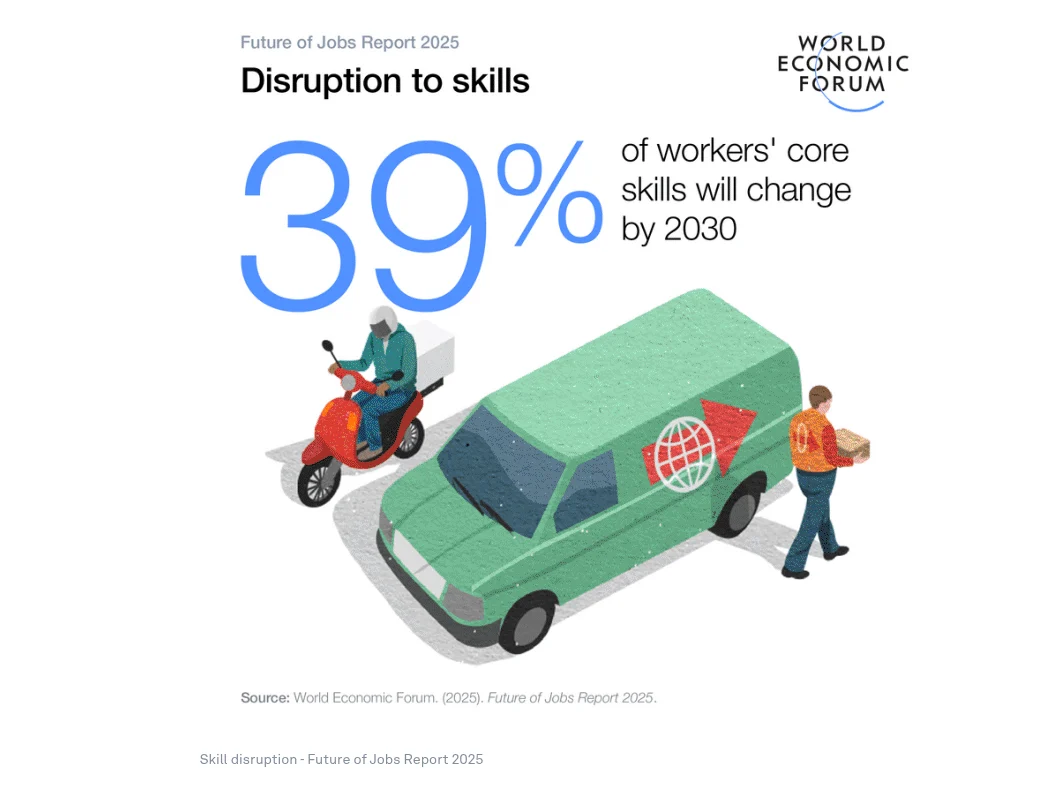
AI will not replace people -- it will replace workflows done without AI. Employees using AI tools in 2026 already match colleagues one or two levels above who do not. The World Economic Forum projects roughly one in four jobs will transform within five years, while creating new roles: AI agent orchestrators, prompt engineers, ethics officers, AI trainers. The key variable is reskilling speed.
What are the biggest risks of AI development?
Three risks stand out: deepfake-driven fraud (already causing incidents in 2026), training-data bias that amplifies discrimination, and growing AI autonomy that may drift from human intent. The EU AI Act takes full effect August 2026 with penalties up to EUR 35 million. Governance is catching up, but the gap between capability and regulation will persist.
How should I prepare for an AI-driven future?
Start today. Pick any major AI tool and use it for actual work. Learn basic prompting within a month. Automate one repetitive task within three months. Understand multi-agent concepts within a year. The highest-ROI skill right now is learning to orchestrate AI tools effectively -- not building AI from scratch. Every month you delay widens the gap between you and those who started earlier.
Eight folders of plain Markdown, a CLAUDE.md index in each, and seven prompts that make your agent interview you. Every prompt, template and command from the video, in order.
Stop briefing your AI from scratch. One free folder holds your background, your rules and your voice. Eight prompts build it, no code, and any AI can read it.
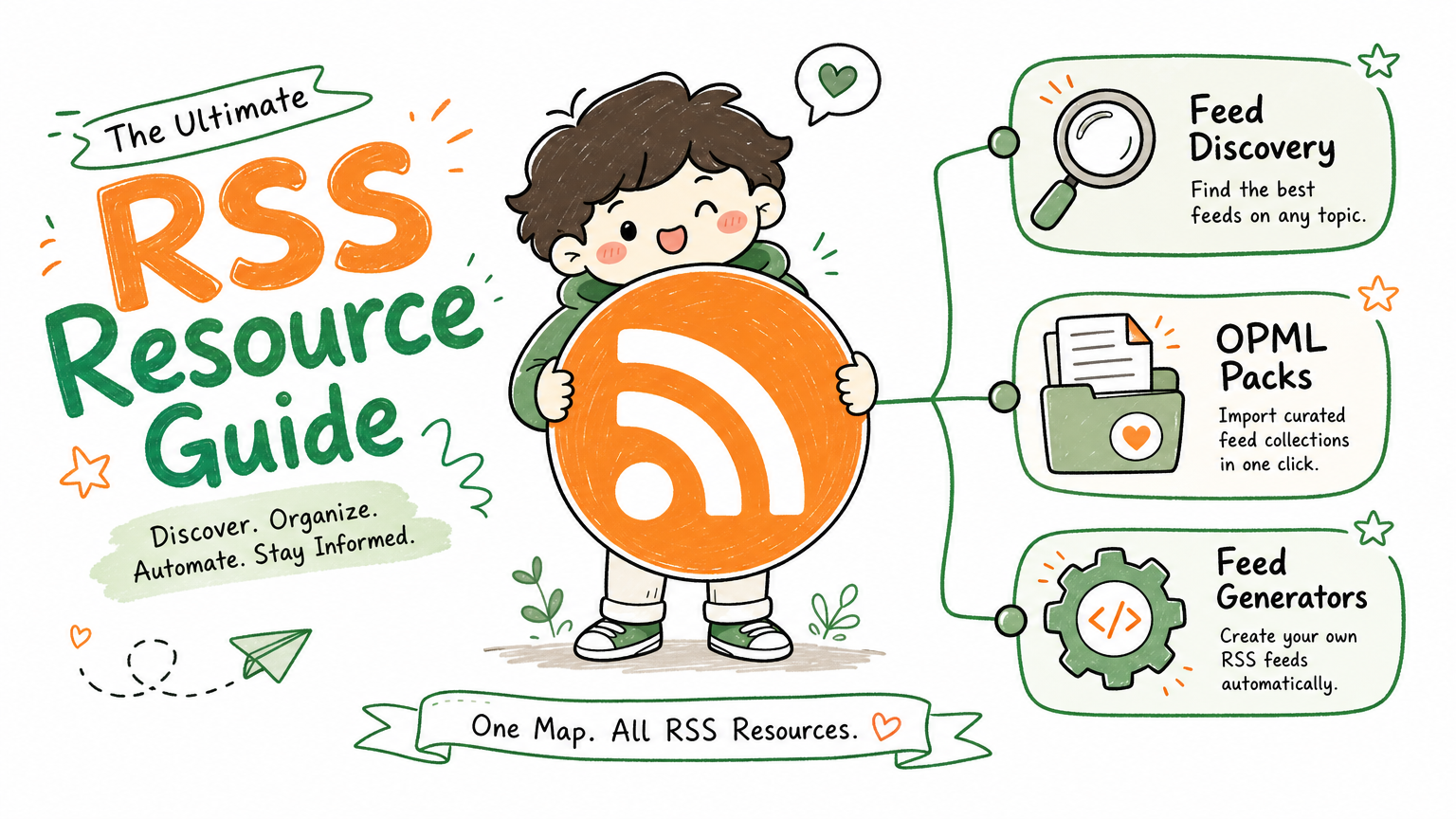
Monitoring a competitor who publishes no feed is the case every RSS guide skips. Twenty-one platforms sorted by which of three jobs they do, and the finished setup is business process automation you own outright, with no seat licence to renew.
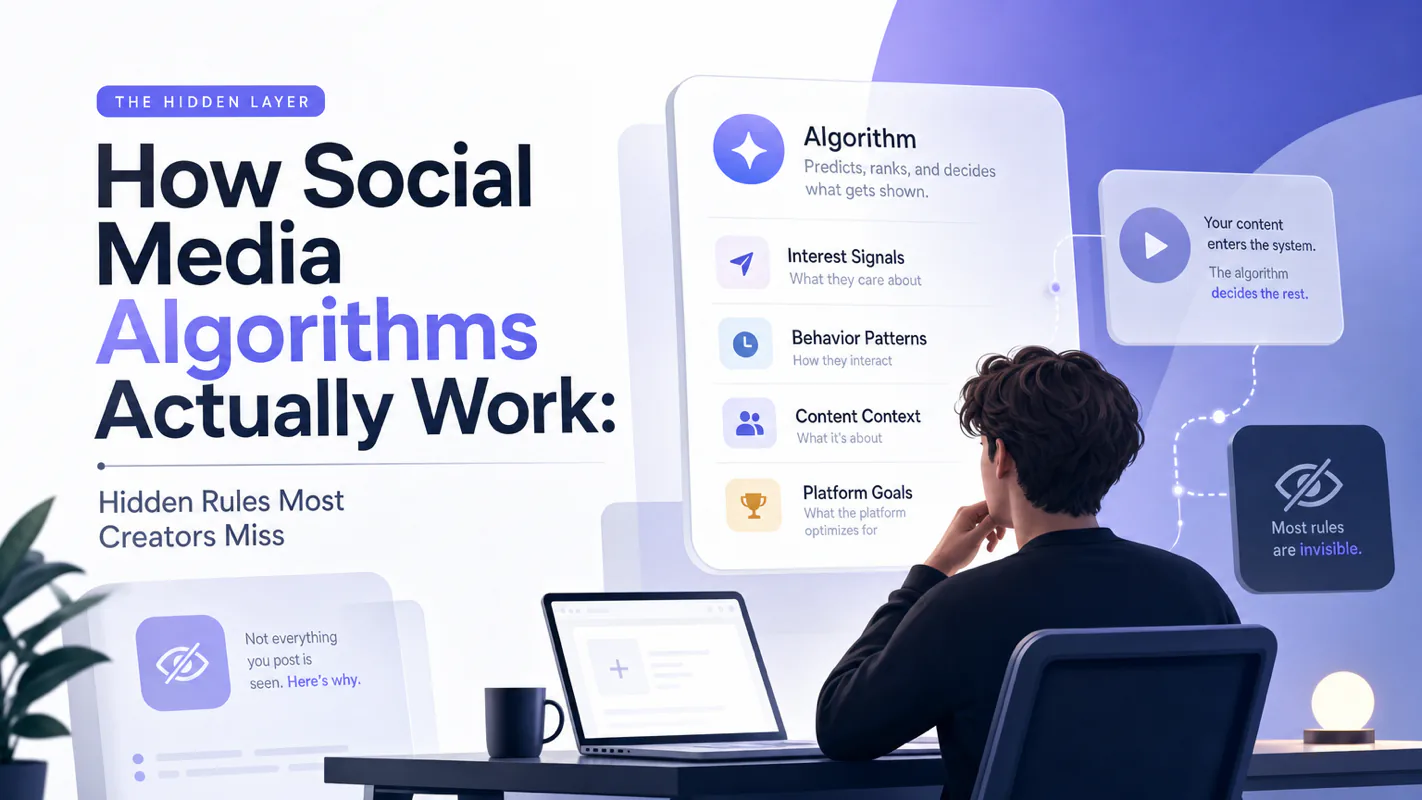
Blaming the content is the reflex when a post underperforms, and it is usually the wrong diagnosis. A second reader decides distribution before any human sees the post, and most of what it checks is mechanical enough to automate business processes around, on five platforms at once.