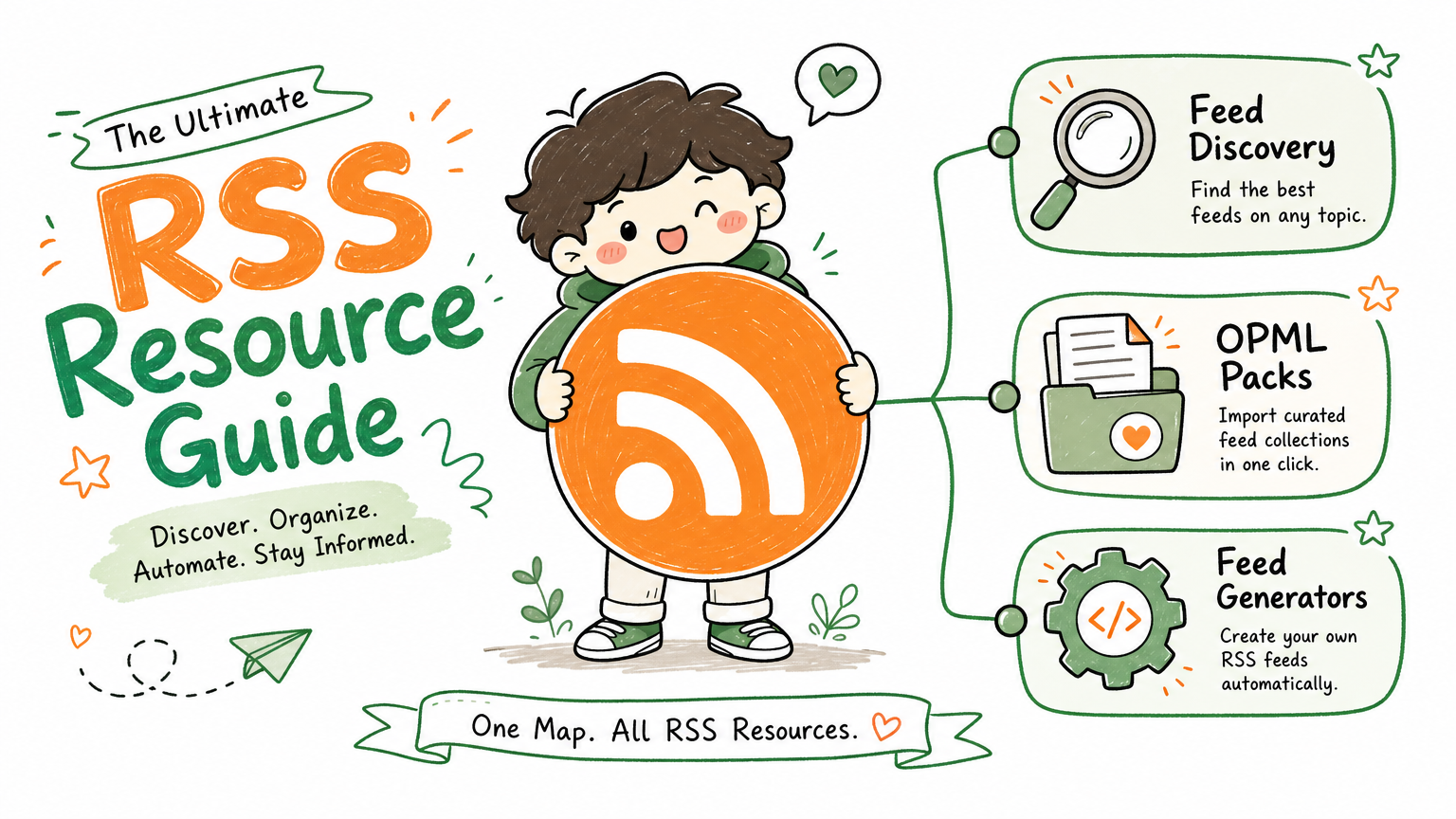
Monitoring a competitor who publishes no feed is the case every RSS guide skips. Twenty-one platforms sorted by which of three jobs they do, and the finished setup is business process automation you own outright, with no seat licence to renew.
Blaming the content is the reflex when a post underperforms, and it is usually the wrong diagnosis. A second reader decides distribution before any human sees the post, and most of what it checks is mechanical enough to automate business processes around, on five platforms at once.
Gloves on, tape measure in hand — nobody types a query. Three voice surfaces for ai automation tools (terminal, Telegram, Discord), 10 TTS and 6 STT providers compared on cost and latency, plus a setup that costs nothing.
Knowledge Alchemy: The 4-Phase System That Turns Everything You Read Into Published Content
Most of what you learn never reaches anyone else, and the loss stays invisible because nothing was ever due. A 4-phase system with templates and prompts at each step, plus the mindset shift that makes it stick. Built for creators and educators.
Most creators read plenty but publish too little. The bottleneck is rarely motivation or even time. It is the absence of a repeatable pipeline between the moment you absorb an idea and the moment it becomes something your audience can use.
This guide gives you that pipeline. I call it Knowledge Alchemy because it works like refining raw ore into finished metal: you start with rough material, process it through distinct stages, and end up with polished content you can ship. Every phase has clear inputs, outputs, and places where AI can accelerate the work without replacing your thinking.
Key takeaways
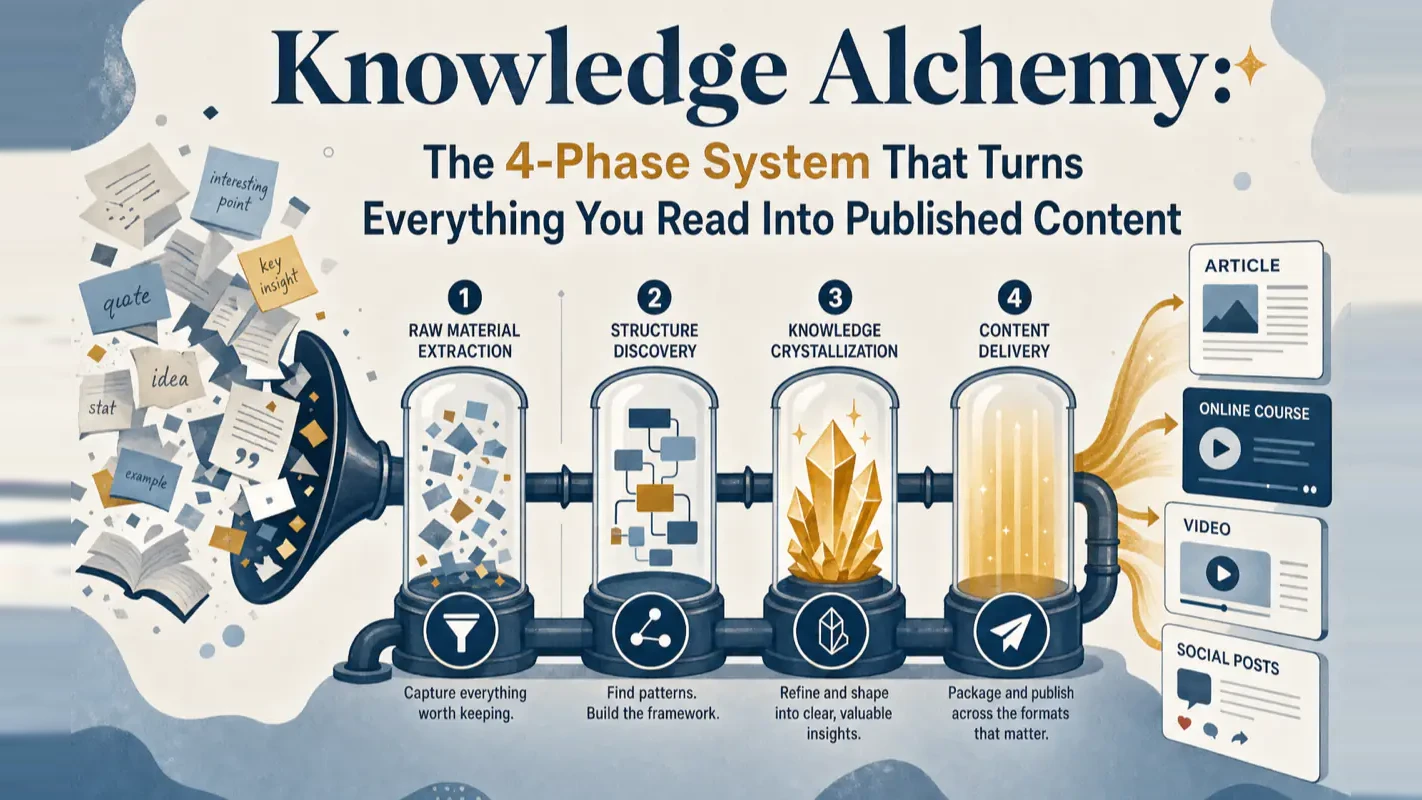
Knowledge Alchemy has four phases: Raw Material Extraction, Structure Discovery, Knowledge Crystallization, and Content Delivery.
The single biggest mindset shift: read to create, not to consume. Every reading session is a rehearsal for something you will publish.
Use the "one core insight + three supporting arguments + one action step" format to capture notes that are ready for content production.
One well-processed source can produce articles, newsletters, social posts, video scripts, and course modules simultaneously — this maps directly to the content repurposing workflow for turning one piece into many.
A training lead spends Thursday at a conference and fills fourteen pages of notes. The notes are good. Three months later they are still notes, and the onboarding module they were supposed to become has not been started — because nothing defines the step between understanding something and the team being able to use it. That missing step is what the four phases below supply: pull the usable fragments out, find the shape they make, compress that shape into something teachable, then ship it in the format the audience needs. That is what business process automation looks like when the raw material is what is in your head.
Find the throughline in your notes and build an outline
Outline
Extracting themes, generating outline candidates
Knowledge Crystallization
Casting metal into shape
Compress core insights into memorable, shareable models
Frameworks and models
Finding analogies, naming, visualization
Content Delivery
Shipping the finished product
Transform your framework into articles, courses, videos
Published content
Expanding drafts, reformatting for different platforms
Each phase feeds the next. Skip one and the pipeline breaks. Start from the top.
The Mindset Shift Most Creators Miss
Before any technique works, you need to flip a mental switch. Traditional reading aims at understanding and retention. You absorb information like a sponge. For a content creator, that is not enough. You need to read with a creator's lens.
The shift: reading is not the destination. It is the starting point of creation.
Consumer Mindset
Creator Mindset
"That is a great point."
"Where can I use this point in my next piece?"
"Interesting case study."
"Would this case study resonate with my audience?"
"This framework is solid."
"Could this framework become the backbone of a course module?"
"I learned something new."
"Can I teach this to someone else?"
"Done. Next book."
"Done. What can I ship from this?"
I was wrong about this for a long time. I used to read dozens of books a year and feel productive about it. Then I looked at my publishing output and realized almost none of that reading had turned into anything my audience could benefit from. The moment I started reading with a creator's lens, the same book yielded three to five times more usable material, because my brain began building "knowledge to content" connections automatically during the reading process.
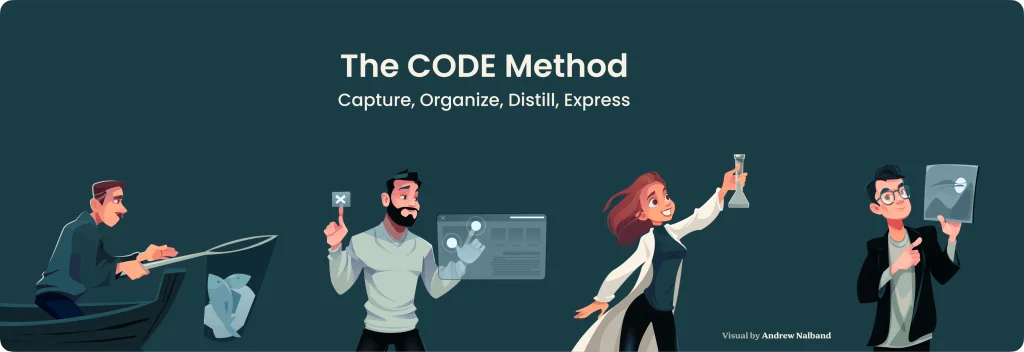
Tiago Forte's CODE methodology (Capture, Organize, Distill, Express) from Building a Second Brain overlaps with Knowledge Alchemy in one key principle: expression is the ultimate test of understanding. Where Knowledge Alchemy differs is in its laser focus on content creators specifically. This is not about managing knowledge for personal productivity. It is about converting knowledge into publishable, distributable content products.
Phase 1: Raw Material Extraction
Not Everything Deserves a Note
Gold prospectors do not scoop up every handful of sand from the riverbed. You need a filter. Notes without a filter become an information landfill: impressive in volume, useless in practice.
I use three screening questions before capturing anything:
Does this solve a specific problem my audience has? If not, skip it.
Does this challenge a common assumption? Counterintuitive findings have natural shareability.
Does this support a piece of content I am already working on? Information with a clear destination gets priority.
If an idea fails all three tests, I move on. This kind of intentional ignoring is harder than capturing everything, but far more valuable.
The 3-Layer Progressive Note System
Do not try to write perfect notes in one pass. Build them in layers, each one transforming raw information into creator-ready material:
Layer
When
What You Capture
Tools
Time Investment
Highlight Layer
While reading
Key passages + keyword tags
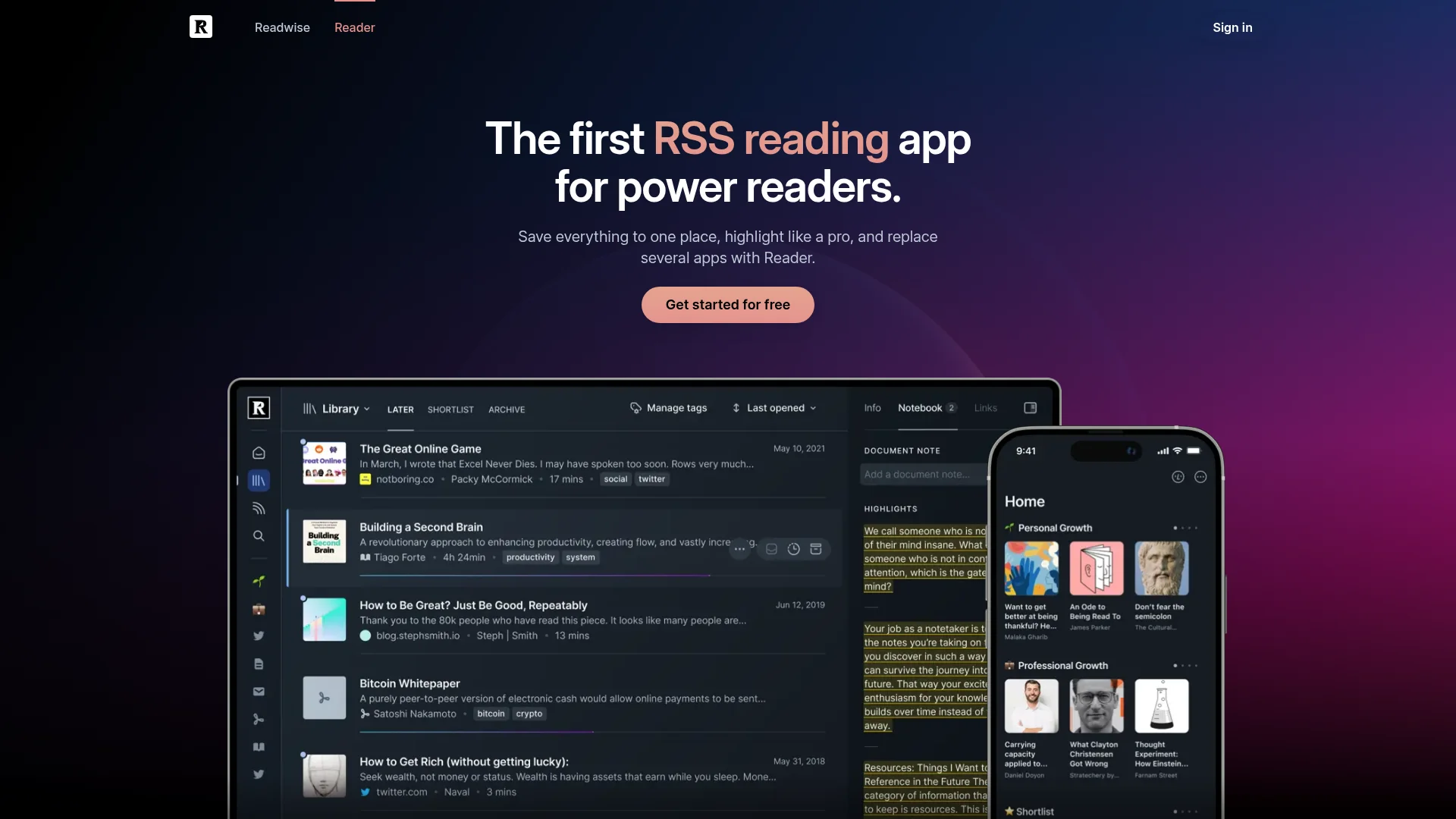
Kindle, Readwise, Pocket
Zero extra time
Reaction Layer
After finishing a chapter
Core point restated in your own words + connections to existing knowledge
Obsidian, Notion, Apple Notes
5-10 min per chapter
Application Layer
After finishing the entire source
Which ideas can become specific content products
Same tool
15-30 min per source
The critical move is progressive processing. The Highlight Layer is raw ore. The Reaction Layer is a semi-finished component. The Application Layer is a ready-to-use asset. Most people stop at highlighting and never process their notes further. That is like buying ingredients and never cooking.
Reaction Layer example:
Source: "Completion rate is the core metric for TikTok's algorithm.
The first 3 seconds decide whether a viewer stays."

My reaction: This mirrors YouTube's CTR logic — both platforms
make a stay-or-leave decision in a tiny window. The difference
is where the judgment happens: TikTok evaluates behavior inside
the video (first 3 seconds), YouTube evaluates behavior outside
the video (thumbnail and title).

Content angle: Write a comparison piece on "The Make-or-Break
Moment" across platforms — where each platform decides the fate
of your content.
See what happened? One note, after passing through the Reaction Layer, already contains a concrete content direction. That is Knowledge Alchemy at work.
AI-Assisted Extraction
AI tools in 2026 have made knowledge capture dramatically more efficient:
Feed your highlights to an AI and ask it to cluster by theme. I do this weekly: export all highlights from Readwise or similar tools, have AI group them into topic clusters, and flag cross-source patterns.
Ask AI to generate "content angles" for each note. For every captured idea, AI suggests what content format it fits best: short-form social post, long-form article, video script, or course module.
Use AI for cross-source comparison. Have AI place perspectives from three to five different sources side by side on the same topic. Contradictions between sources are often the most shareable content material.
Prompt template for AI-assisted extraction:
Here are my reading notes from this week. Please:
1. Cluster them into 3-5 core themes
2. Flag which ideas contradict or complement each other
3. For each theme, suggest 2-3 specific content angles —
   name the format (social post / long article / video / course)
   and the target audience
Phase 2: Structure Discovery
Structure First, Content Second
Many creators write backward: they produce a pile of text and then try to organize it. This leads to massive rework. I made this mistake early on. I once wrote 3,000 words, realized the logic did not hold together, and had to start over.
The correct sequence: note fragments → find the throughline (the single central argument that ties everything together) → build the outline → fill in the content.
Three Methods for Finding Your Throughline
Spread your notes out (physically or digitally) and look for these signals:
Method
What to Look For
Example
Recurring Theme
Multiple sources point to the same conclusion
Three books mention "the first 3 seconds decide everything" → this is a throughline
"Data shows that subscribers gained from Shorts rarely watch long-form videos" → natural shareability
A good article needs exactly one clear throughline. Content without a throughline is forgettable no matter how well-written it is.
Building the Outline
Two outline templates cover about 90% of what I publish:
Tutorial format:
1. The problem you face (reader empathy) — 2 paragraphs
2. The big picture map (orientation) — table or diagram
3. Step-by-step progression (known → unknown) — 3-5 steps, the body
4. Milestone recap (sense of achievement) — 1 paragraph summary
5. Next action — specific and executable
Opinion format:
1. The counterintuitive finding (trigger curiosity) — 1 surprising fact
2. The evidence chain (support the claim) — 3-5 arguments
3. The "so what" implication (why the reader should care)
4. Action recommendation — what to do after reading
AI-Assisted Outlining
Ask AI to generate outline candidates from your notes:
Based on the notes below, generate 3 outlines for a
[tutorial / opinion piece] targeting [audience].
Each outline should include: a working title, the core argument,
and 3-5 section headings with key points per section.

[paste your notes]
Generate three candidates and pick the one that excites you most. My rule: if you would not want to finish reading the outline yourself, your audience definitely will not.
Phase 3: Knowledge Crystallization
What Is a Knowledge Crystal?
A knowledge crystal is a complex concept compressed into a concise, memorable, shareable package. It is the most powerful tool in content distribution. People will not remember your 5,000-word article, but they will remember the model you created inside it.
Classic examples:
Knowledge Crystal
Original Concept
Why It Sticks
"80/20 Rule"
Power-law distribution of returns
Two numbers, one sentence
"Flywheel Effect"
Positive feedback loops with compounding returns
A concrete physical analogy
"Second Brain"
Personal knowledge management system
Turns an abstract concept into a body part
"Knowledge Alchemy" (this article)
Systematic method from reading to content
"Alchemy" carries built-in narrative appeal
How to Create a Knowledge Crystal
Step 1: Name it.
Give your core insight a memorable label. Good names share these traits:
Tension or contrast ("Productive Procrastination" beats "Time Management for Creatives")
Step 2: Structure it.
Make it visual using numbers, matrices, or flow diagrams:
Format
Best For
Example
Numbered list
Steps or checklists
"Knowledge Alchemy: 4 Phases"
2x2 Matrix
Two-dimensional classification
"Urgency-Impact Matrix"
Flow diagram
Sequential processes
"Input → Process → Output"
Analogy
Mapping new concepts to familiar ones
"Knowledge is ore that needs refining"
Step 3: Validate it.
Can you explain it to someone in 30 seconds or less? If not, keep simplifying. My test: imagine running into a friend in an elevator. Can you explain the concept before the doors open? If not, it is not crystallized yet.
Phase 4: Content Delivery
One Source, Multiple Products
The biggest efficiency lever in Knowledge Alchemy lives here: the same processed material produces content for every channel you operate.
Raw Material
Can Become
Platforms
Reading notes from one book
3-5 short posts + 1 long article + 1 course module
Social media + Blog + Course platform
Analysis of an industry report
1 video + 5 social posts + 1 SEO article
YouTube + X/Twitter + Website
A set of interview notes
1 podcast episode + 1 case study + N pull quotes
Podcast apps + Blog + Social
One core framework
1 full course + video series + 1 ebook
Course platform + YouTube + Gumroad
AI-Accelerated Delivery
Here is my actual workflow. AI participates at every step, but judgment and decisions stay human:
Step
Human Role
AI Role
Tools
Notes → Outline
Confirm the throughline and angle
Extract structure from notes
Claude, ChatGPT
Outline → First Draft
Control direction and quality
Expand each section from the outline
Claude, ChatGPT
First Draft → Final
Inject personal voice and real experience
Grammar, formatting, consistency checks
Manual editing + AI
Final → Multi-Format
Decide platform-specific strategy
Rewrite for each platform's format
AI batch processing
Text → Multimedia
Review final outputs
AI narration, image generation, video scripting
Various AI tools
From One Article to a Content Matrix
Here is how a single long-form article multiplies across channels in practice:
One 3,000-word article
  ├── Newsletter edition (adapted for email subscribers)
  ├── SEO-optimized website version (keywords + internal links)
  ├── 3-5 social media posts (one key point each)
  ├── 5-10 X/Twitter posts (pull quotes + sharp observations)
  ├── 1 YouTube video script (talk-through version)
  └── 1 course module (expanded deep-dive version)
This is not laziness. It is leverage. The same depth of thinking and research investment covers six distribution channels.
Common Pitfalls and Solutions
Problem
Root Cause
Solution
Read a lot but cannot write
Missing Reaction and Application layers
Force yourself to write 3 reaction sentences after every chapter
Outline is done but writing stalls
Outline is too vague, lacks supporting detail
Add 2-3 specific points under each section heading
Output reads like AI-generated text
Missing personal experience and real examples
Add at least one genuine story or personal observation per 500 words
Long content but readers drop off
No "knowledge crystals" as memory anchors
Include at least one nameable framework per 1,000 words
Each piece takes too long
Not using the "one source, many outputs" strategy
Build your content multiplication workflow before writing the first draft
Notes pile up but become chaotic
No regular processing and archiving
Spend 30 minutes weekly organizing and clearing your note backlog
Your 7-Day Action Plan
Day 1:
Pick a book, article, or podcast you are currently consuming.
Apply the 3-Layer Progressive Note System: highlight while reading, write reaction notes after each section, tag application ideas when finished.
Days 2-3:
3. Find one throughline from your notes.
4. Build a simple outline around that throughline.
Days 4-5:
5. Use AI to expand the outline into a first draft.
6. Create a knowledge crystal for your core insight: give it a memorable name.
Days 6-7:
7. Publish the piece on one platform.
8. Adapt it for a second platform using a different format.
Here is a starter exercise I recommend: this week, read one article you would normally read anyway, but this time apply the creator's lens. Use the 3-Layer system as you go. When you finish, spend fifteen minutes writing a 300-word reaction post and publish it on your social channel of choice. This single exercise builds the "reading equals creating" muscle memory faster than anything else I have tried. I started with one 300-word book reaction post per day, and that habit gradually evolved into the full Knowledge Alchemy system I use now.
Do not wait until you feel ready. Knowledge Alchemy is a craft refined through practice, not a theory studied on paper. My own system took shape only after writing hundreds of pieces. The framework did not come first. The writing came first, and the framework emerged from reflecting on what actually worked.
Ready-to-Use Prompt: Run Reading Material Through the 4-Phase Knowledge Alchemy
What this does: Extracts raw material with a read-to-create mindset, discovers the structure, crystallizes an original synthesis where AI assists but never originates, and delivers the piece across formats with a 7-day pipeline plan. Based on: Knowledge Alchemy: The 4-Phase System That Turns Everything You Read Into Published Content — https://aiworkflowpro.com/ultimate-guide-knowledge-alchemy-for-creators-educators/ Time to run: ~5 minutes
Copy this prompt into Claude Code, ChatGPT, or any AI assistant:
ROLE: You are a Knowledge Alchemy Pipeline Architect. Your job: turn what someone reads into published content through four phases — read to create, AI assists but never originates the thinking.

CONTEXT — FOUR-PHASE KNOWLEDGE ALCHEMY METHOD:
Most creators read plenty but publish too little — the bottleneck is the missing pipeline between absorbing an idea and shipping it. Knowledge Alchemy refines raw ore into finished metal across four phases: (1) Raw Material Extraction — capture highlights, claims, examples from what you read; (2) Structure Discovery — find the pattern or argument in the raw material; (3) Knowledge Crystallization — refine into a clear, original synthesis (your thinking, AI assists); (4) Content Delivery — adapt the crystallized piece into formats/channels. Each phase has clear inputs and outputs. The single biggest mindset shift: read to create, not to consume — every reading session is a rehearsal for something you will publish. AI accelerates each phase without replacing your thinking.

INPUTS (fill in before running):
- SOURCE_MATERIAL: [What you read — book/article/podcast notes]
- AUDIENCE: [Who you create for]
- FORMATS: [What you publish — article / course / social]
- THINKING_OWNERSHIP: [Which insights are yours — so AI assists, not replaces]

METHOD — 4 STEPS:

Step 1 — Raw Material Extraction (Read to Create)
From SOURCE_MATERIAL, extract the ore: key claims, quotes, examples, and your reactions. Apply the mindset — read to create, not consume; tag each note with the publish angle it suggests. Output: raw notes.

Step 2 — Structure Discovery
Find the pattern or argument in the raw notes — group into a structure (problem/solution, list, narrative). Score 0–2: a structure exists, it serves AUDIENCE, it isn't a flat dump. Reject a structureless pile.

Step 3 — Knowledge Crystallization (Your Thinking, AI Assists)
Refine the structure into a clear, original synthesis. Protect THINKING_OWNERSHIP — the crystallized insight must be yours; AI assists phrasing and pressure-tests, never originates the core claim. Score originality 0–2.

Step 4 — Content Delivery + 7-Day Plan
Adapt the crystallized piece into FORMATS (article, course module, social set). Then lay the 7-day action plan that runs the full pipeline once.

RULES:
- Never read to consume — every reading session feeds a publish angle (the mindset shift).
- Never let AI originate the crystallized insight — it assists; the core claim is yours.
- Never ship a structureless dump — Structure Discovery must produce a real argument or pattern first.

OUTPUT FORMAT:
Output a markdown report with:
1. Raw Material — extracted notes + publish angles
2. Structure — the discovered pattern + score (0–2)
3. Crystallized Synthesis — your core insight + originality score + AI's assist role
4. Delivery + 7-Day Plan — the FORMATS adaptations + the one-week pipeline run
Save as @templates/ultimate-guide-knowledge-alchemy-for-creators-educators.md and run when turning reading notes into publishable content.
FAQ
How do you turn reading notes into publishable content?
Use a progressive note-taking system with three layers: highlight key passages while reading, write reaction notes in your own words after each chapter, and tag application notes for specific content ideas after finishing the source. Then organize your best notes around a single throughline using a structured outline before writing. The throughline is the non-negotiable piece most creators skip. Without it, your notes stay notes.
What is the best note-taking system for content creators?
The most effective system separates capture from processing. Use whatever tool you are comfortable with: Obsidian, Notion, or even Apple Notes. The tool matters far less than the method. Apply the 3-Layer approach: raw highlights, personal reactions with connections to existing knowledge, and explicit application notes that map each insight to a specific output format. I use Obsidian because it stores everything locally and integrates well with AI tools, but creators I work with have built effective systems on Notion, Bear, and plain text files.
Can AI help with knowledge extraction without making content sound generic?
Yes, when you draw the right boundary. AI excels at clustering notes by theme, finding cross-source patterns, and generating structural outlines. Use AI for organization and first-draft structure. Keep personal experiences, original opinions, and voice refinement as human-only tasks. Content sounds generic when creators hand over the entire process and skip the personal layer. The rule I follow: AI handles classification and expansion, I handle judgment and voice.
How do you create a knowledge crystal from complex ideas?
Three steps. First, give your core insight a memorable name using visual imagery or numbers. "The 3-Layer Note System" is easier to remember and share than "Progressive Note-Taking." Second, structure it with a simple format: a numbered list, a 2x2 matrix, or a flow diagram. Third, test it by explaining the concept to someone in under 30 seconds. If you cannot do it, keep simplifying. The best knowledge crystals pass the elevator test.
How many pieces of content can you create from one source?
A single well-researched long-form article can yield six or more derivative pieces: a newsletter edition, three to five social media posts, a YouTube script or podcast episode, an email sequence, and a course module. The key is planning for multi-format output from the start. When I outline an article, I already tag which sections will become standalone social posts and which frameworks will anchor a video script. Treating each format as a separate project from scratch is the most common efficiency leak in content creation.
You now have a complete knowledge-to-content pipeline. From active reading to knowledge capture (the 3-Layer Progressive Note System), from structure discovery to crystallization (the Knowledge Crystal method), from content delivery to multi-platform distribution (the Content Multiplication workflow). Four phases covering the full chain from reading to publishing.
One practical tip about Reaction Layer notes that I want to leave you with. Many creators I work with write their reactions too formally, as if drafting an academic abstract. Reaction notes should be the most relaxed layer. Use plain language, questions, even objections. When I read that "completion rate is TikTok's core algorithm metric," my reaction note was: "Wait, this is completely different from YouTube's logic. One judges behavior inside the video, the other judges behavior outside it. Could I write a comparison piece on this?" That kind of note, full of genuine curiosity and a concrete direction, is a hundred times more useful than "This article highlights the importance of completion rate."
The biggest lesson from building this system: reading volume is not the bottleneck. Conversion rate is. Two people read the same book. One "learned something." The other shipped five articles, one course module, and ten social posts from it. The gap is not about intelligence. It is about having a systematic conversion pipeline.
I will close with an analogy: Knowledge Alchemy is like fitness. The methodology is simple (eat right, train right, sleep enough), but results come from consistent execution. I have seen too many people read a book about note-taking methods, feel like they "got it," and then go back to their old habits. Real change happens the first time you process a book through the 3-Layer system, the first time you discover a throughline buried in your notes, and the first time you compress a core insight into a knowledge crystal. Each completed cycle ratchets up your knowledge-to-content conversion rate permanently.
Monitoring a competitor who publishes no feed is the case every RSS guide skips. Twenty-one platforms sorted by which of three jobs they do, and the finished setup is business process automation you own outright, with no seat licence to renew.
Blaming the content is the reflex when a post underperforms, and it is usually the wrong diagnosis. A second reader decides distribution before any human sees the post, and most of what it checks is mechanical enough to automate business processes around, on five platforms at once.
Nothing about month four is harder than month three. It is simply the month an unpaid channel starts to feel like proof of failure. Surviving it takes a cadence you can hold while earning nothing, which is a better reason to automate business processes than speed ever was.
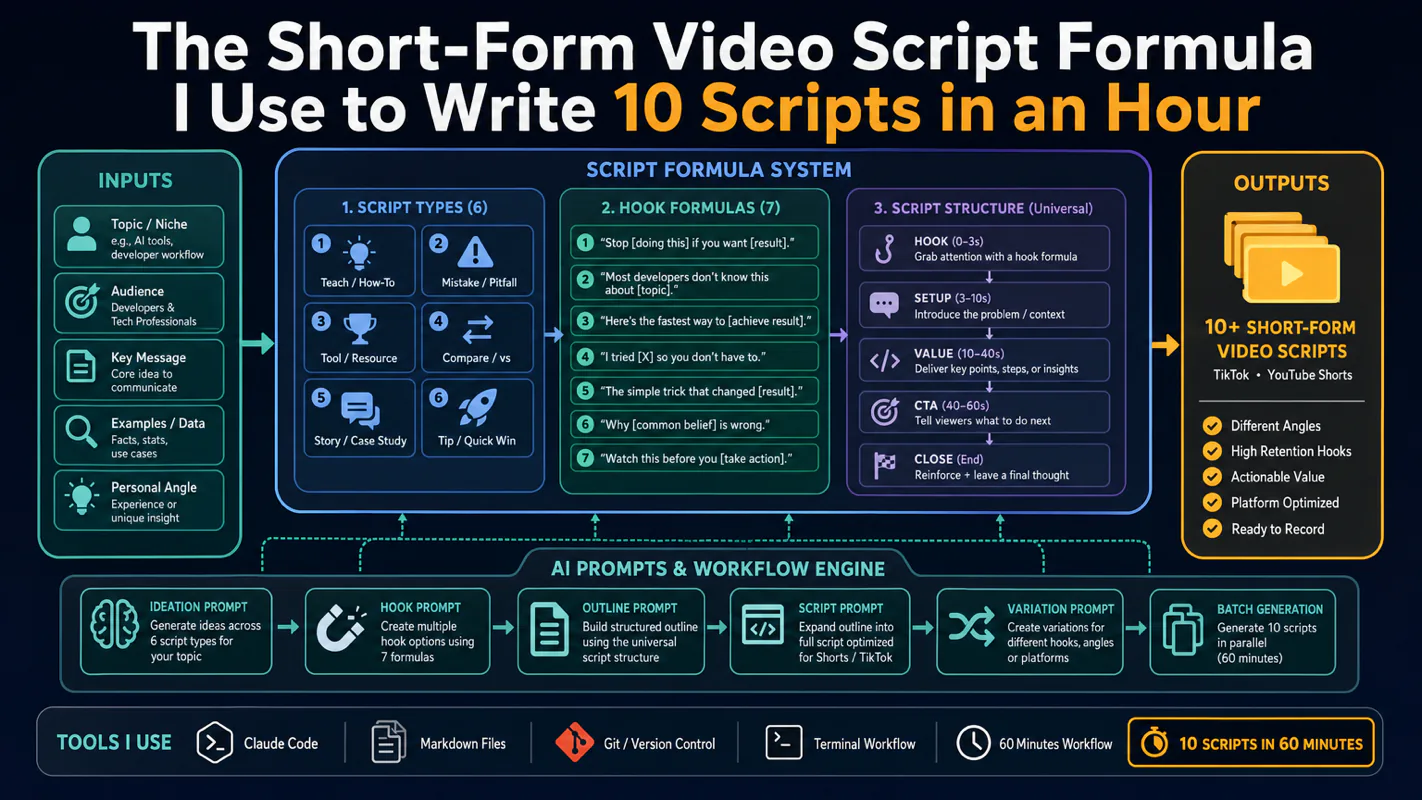
Thursday afternoon, fourteen product ideas, a Monday filming slot, no scripts. Six script shapes and seven hook formulas turn that hour into finished drafts — and the business rule stays: rewrite at least 30% before anything ships.