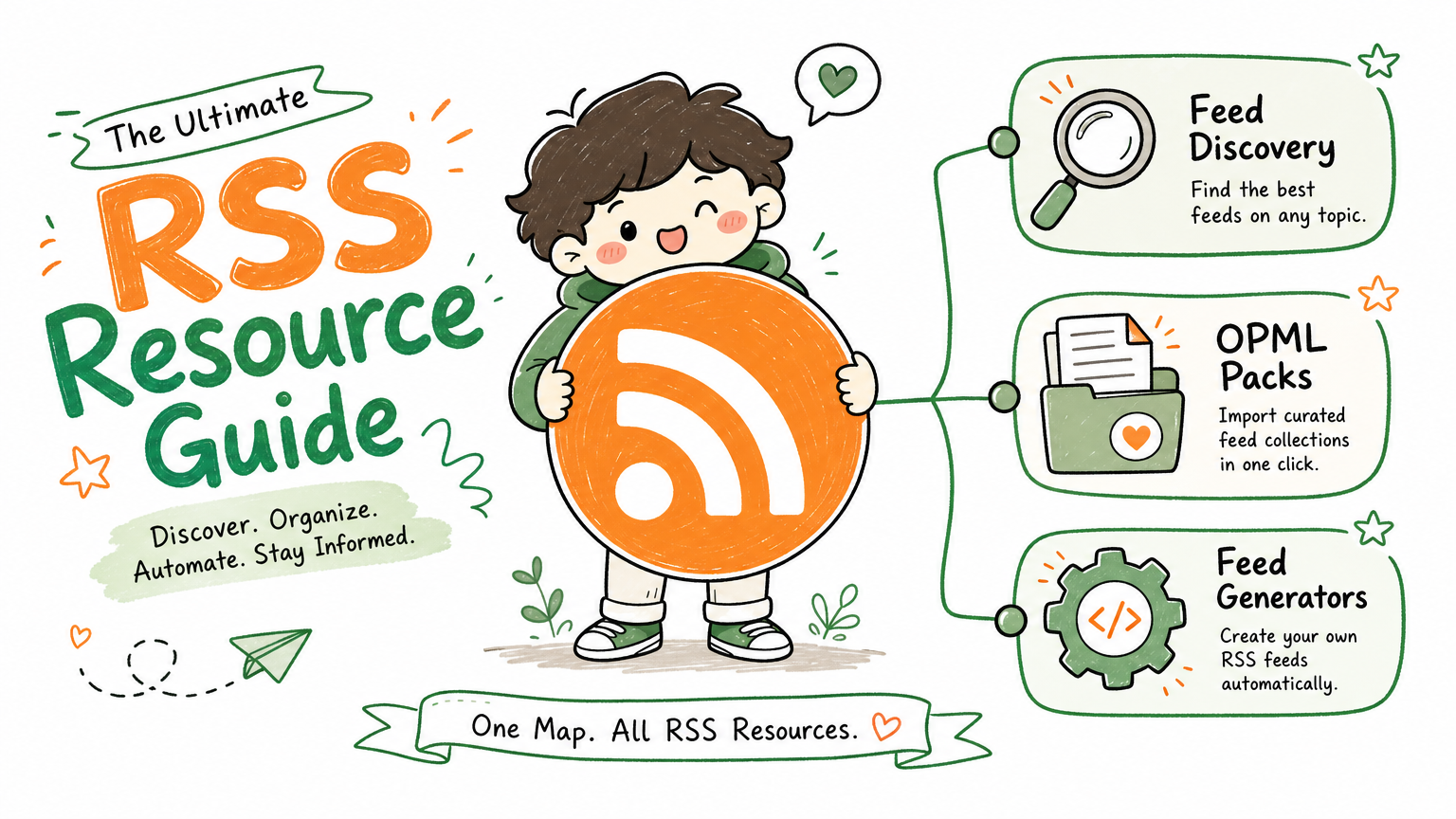
Monitoring a competitor who publishes no feed is the case every RSS guide skips. Twenty-one platforms sorted by which of three jobs they do, and the finished setup is business process automation you own outright, with no seat licence to renew.
Blaming the content is the reflex when a post underperforms, and it is usually the wrong diagnosis. A second reader decides distribution before any human sees the post, and most of what it checks is mechanical enough to automate business processes around, on five platforms at once.
Gloves on, tape measure in hand — nobody types a query. Three voice surfaces for ai automation tools (terminal, Telegram, Discord), 10 TTS and 6 STT providers compared on cost and latency, plus a setup that costs nothing.
Execution got cheap. Defining the outcome and judging the result did not. Five skills that keep compounding while ai automation tools rotate every season, plus a seven-day exercise for practicing them.
The short version: The most valuable AI skills are not tool tricks. Tools change. Interfaces change. Models change. The durable skill is learning how to define outcomes, ask better questions, judge quality, and design systems where AI can do real work without replacing your taste.
Two paralegals at the same firm got the same instruction, run the conflict check on this new matter, and the same AI tool. One came back in an hour with a clean list and three relationships flagged for a partner to judge. The other came back with a clean list missing one relationship, because the search never reached a former client under a since-changed entity name. Same model, same prompt window, different outcome. The gap was not tool skill; one of them knew what a correct conflict check looks like. As execution gets cheap, the scarce work moves upstream. Ai automation tools change every season. Knowing what you want does not.
Everyone says AI skills are about prompt tricks and tool stacks. Actually, the durable skill is learning how to define outcomes and judge quality. Tools change every season; outcome thinking compounds over years.
If you already operate as a director or architect, skip ahead to §6 for the five compounding skills. If you are still stuck in doer mode, read on through §3 first.
I changed tools four times.
Make. n8n. Claude Code. OpenClaw.
Each time, I thought I was upgrading software.
Looking back, the real upgrade was not the tool. It was the way I thought.
In the old mode, my first question was:
What do I know how to do?
In the new mode, my first question is:
What do I want to exist?
That sounds small. It is not.
It is the difference between being trapped inside your current skills and using AI to reach beyond them.
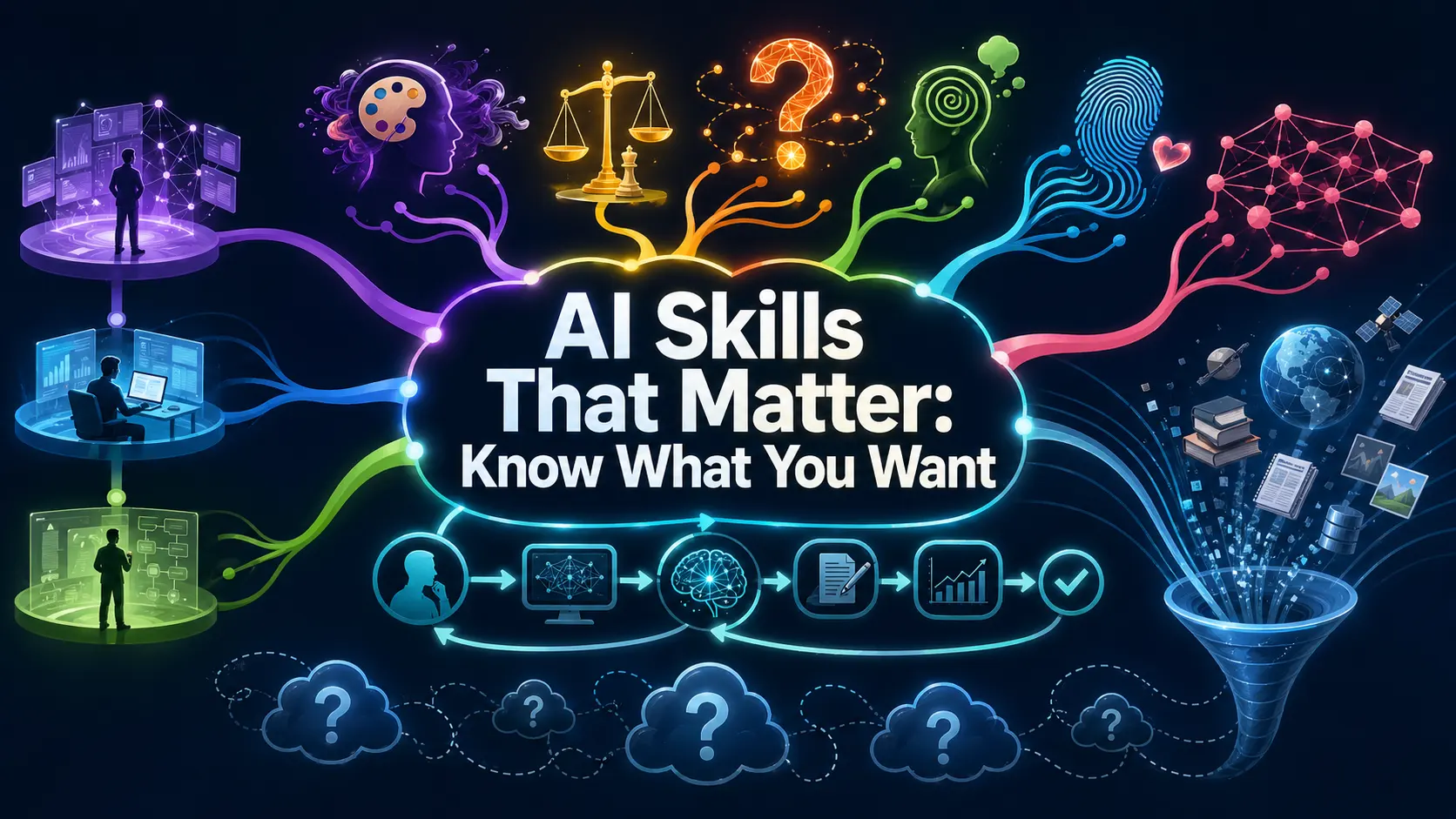
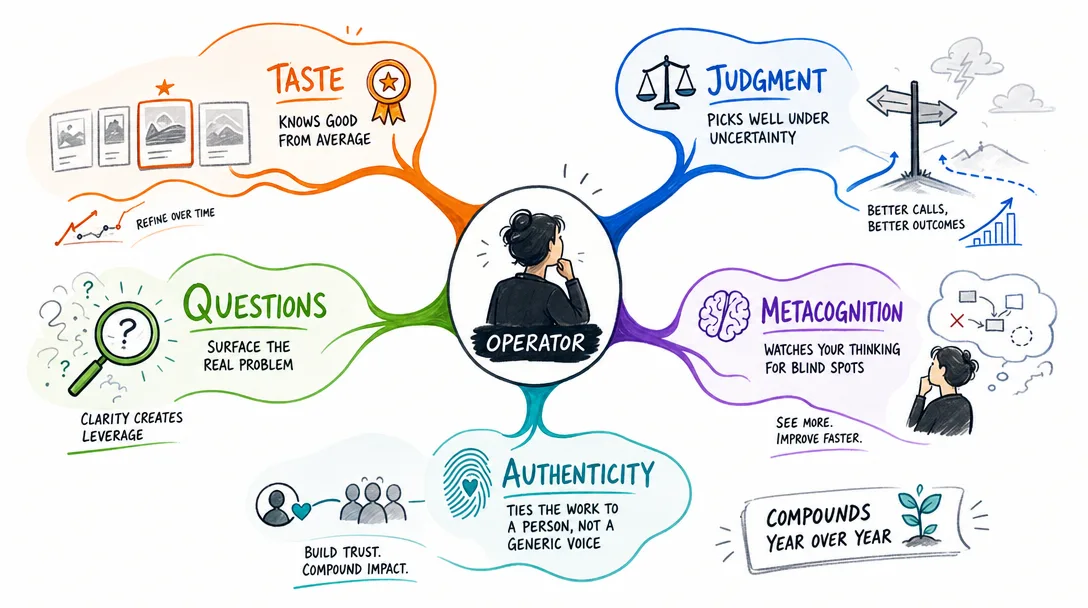
This article is not another list of AI tools. It is about the AI skills that matter when execution becomes cheaper: taste, judgment, better questions, metacognition, authenticity, and systems thinking.
Two days versus five minutes
In July 2024, I wanted to build an automation.
The job was simple on paper: collect industry news from RSS feeds, translate it, format it, and publish it.
I opened Make and started dragging modules.
RSS module. Translation module. Formatting module. Publishing step. API settings. Test run. Error. Fix. Another test. Another error.
It took two days.
I was proud of it because it worked.
Fast forward to March 2026. I needed almost the same thing again.
This time, Make did not even enter my mind.
I opened Claude Code and described the outcome:
Build a workflow that collects technology news from these RSS sources,
translates it into my writing style,
and prepares it for publication.
Five minutes later, I had a better starting point than the thing that took me two days before.
The point is not that "AI is fast."
The point is that my first thought had changed.
Old thought:
I know Make, so I will solve this with Make.
New thought:
I want a working news-to-publication workflow.
The old question starts with your current ability.
The new question starts with the desired result.
That is the real shift.
Old Thinking vs. AI-Native Thinking
Before AI-native thinking, you measured productivity by hours worked. After, you measure by outcomes shipped per week. The clock-time view loses; the outcome view wins under AI.
Here is the shift in one table.
Dimension
Old thinking
AI-native thinking
Starting point
What skill do I have?
What result do I want?
Bottleneck
My current ability
My ability to define the outcome
Learning mode
Learn the tool first
Describe the task first
Core value
Execution
Judgment
New task response
Study before doing
Specify, delegate, verify
Failure cost
High, because you rebuild by hand
Lower, because you can regenerate and iterate
One-person capacity
One person doing tasks
One person directing workflows
This does not mean technical skill is useless.
The opposite is true.
People who understand the work can describe better requirements. If you know how websites work, you can ask Claude Code for a better website. If you understand workflows, you can design better automations. If you understand writing, you can reject generic drafts faster.
But "knowing how it works" is not the same as "doing every step yourself."
That is where many people get stuck.
They think the value is in pushing every button.
Increasingly, the value is in knowing which buttons should exist.
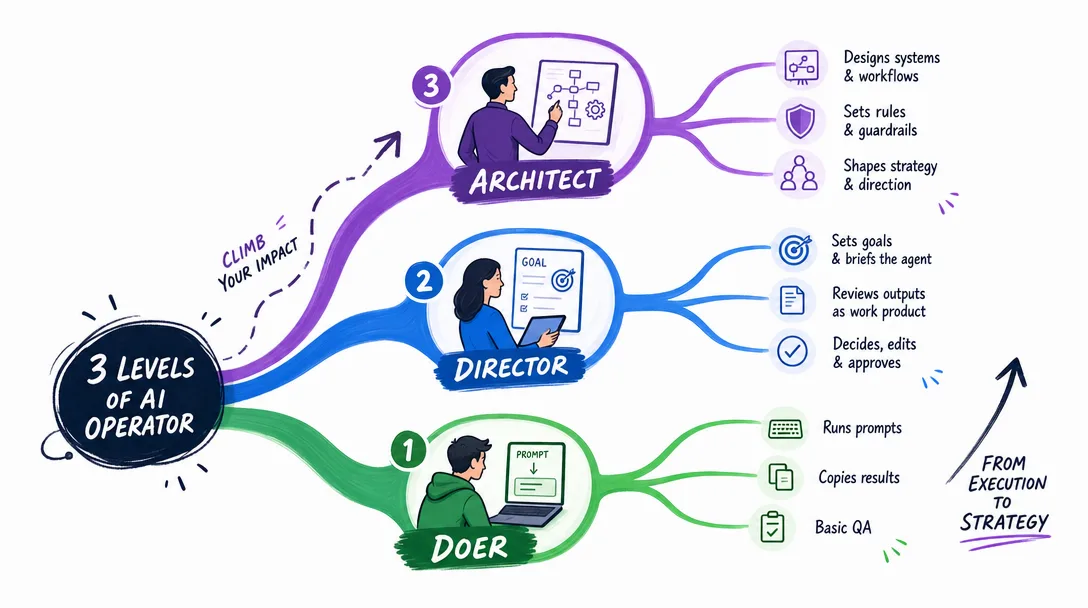
The Three Levels: Doer, Director, Architect
Here is why this matters: most "AI is not useful" complaints come from doer-mode users asking AI to do small tasks. The same model becomes powerful the moment a director-mode user asks it to design something.
I think of the AI learning curve in three levels.
Most people are still at Level 1.
Level
Role
Core action
Typical failure
1
Doer
You do the work; AI helps a little
You use AI like a faster search box
2
Director
You describe the outcome; AI executes
You give vague instructions and blame the model
3
Architect
You design the system; AI runs repeatable loops
You automate before you know what to judge
Level 1: The doer
At Level 1, AI is an assistant for small pieces.
You ask for a summary. You rewrite a paragraph. You translate a sentence. You check a syntax error.
This is useful. It is also limited.
The doer still carries the whole workflow in their own hands. AI only helps around the edges.
This is why some people use AI for months and still say, "It is not that impressive."
They are using a new tool with an old mental model.
They bought a car and used it as a chair.
Level 2: The director
At Level 2, your job changes.
You stop asking AI to help with fragments and start describing outcomes.
Bad request:
Write an article.
Better request:
Write a practical article for non-technical founders.
The topic is how to use Claude Code for a weekly research workflow.
Use a direct, experience-based tone.
Include a failure example, a table, and a verification checklist.
Avoid tool hype.
The second request is longer, but length is not the point.
Structure is the point.
Good direction includes context, intent, constraints, output format, and verification.
That is why "prompt engineering" is the wrong mental model for most beginners. It makes the skill sound like magic phrasing.
The real skill is clearer delegation.
Level 3: The architect
At Level 3, you are not just delegating tasks.
You are designing systems.
You ask:
Which parts should be automated?
Which parts need human judgment?
Which checks prevent bad output?
Which workflow should run every week?
Which decisions should never be delegated?
This is where one person starts to feel like a small team.
Not because AI is magic.
Because repeatable work stops living only in your head.
I have used agent workflows where one agent researches, another drafts, another checks structure, and another prepares publishing assets. The human role is not to disappear. The human role is to set direction, judge quality, and decide what deserves to exist.
That is a much higher-value seat.
Why "AI Is Not That Useful" Is Often a Thinking Problem
I hear this all the time:
I used ChatGPT for months. It is fine, but not life-changing.
I understand the feeling. I had it too.
The mistake is usually this: people use AI for low-level cognitive offloading only.
Cognitive offloading means moving mental work into an external tool.
A calculator is cognitive offloading.
GPS is cognitive offloading.
AI is cognitive offloading too, but there are two levels.
Offloading level
Example
Result
Low-level offloading
Translate this paragraph
Saves effort
High-level offloading
Analyze this paper, find three objections, score each objection by strength
Expands thinking
Low-level offloading saves hands.
High-level offloading expands the mind.
The difference is not the model. It is the task you give it.
When I use AI for topic selection, I do not ask:
Give me content ideas.
I ask it to gather signals, compare angles, score ideas by audience value, identify what I can uniquely say, and flag topics that are already too crowded.
AI does not make the final decision.
It improves the research surface so my decision is better.
That is the pattern.
AI should not replace judgment. It should raise the quality of what judgment sees.
Centaur Mode vs. Cyborg Mode
The Harvard Business School and BCG field experiment on generative AI popularized two useful collaboration patterns: centaurs and cyborgs.
I use both.
Mode
How it works
Best for
Risk
Centaur
Human and AI split tasks clearly
Repeatable work, research, publishing, reporting
Too rigid if the task is creative
Cyborg
Human and AI work tightly together
Coding, strategy, design, writing
Easy to lose track of who is judging quality
Centaur mode is clean.
You decide what the human does and what the AI does.
For example:
Human: choose topic and angle.
AI: gather sources, draft outline, prepare table.
Human: judge argument and rewrite key sections.
AI: format, check links, prepare FAQ.
Cyborg mode is messier.
You and the AI shape the work together in rapid loops.
This is what happens when I code with Claude Code. I describe a feature. Claude writes a draft. I see a better direction. Claude refactors. I notice a missing edge case. Claude adds a test. The output belongs to the loop, not to either side alone.
Beginners should usually start with centaur mode.
Clear division reduces risk.
Once you understand the model's strengths and failure modes, cyborg mode becomes powerful.
The five AI skills that still compound
If execution is getting cheaper, what becomes more valuable?
Not "knowing every tool."
Tools decay.
These five AI skills compound.
1. Taste and judgment
AI can generate 100 options.
Only you can decide which one is worth keeping.
This is not a soft skill. It is the central skill.
In my own content workflow, AI can produce drafts, outlines, image concepts, titles, and summaries. Most of them are not bad. They are just not right.
That distinction matters.
Bad means broken.
Not right means it misses the taste, the audience, the moment, or the point.
AI is good at producing options. Human value moves to filtering options.
The practical problem is that many beginners do not have a written standard.
They feel something is wrong, but they cannot name what is wrong.
That makes AI collaboration weak, because the model cannot improve against a standard you have not expressed.
For example, if I am judging an AI-written article, I am not asking only:
Is this good?
I am asking:
Does this article say something I would actually defend?
Does it contain a real example instead of a generic claim?
Does the reader know what to do after reading it?
Did the article add information, or only rearrange familiar advice?
Those questions turn taste into an operating system.
You can do the same with code, design, research, hiring, product work, or any other field. Taste becomes useful when it becomes inspectable.
If you want to train this skill, do not ask AI for one output.
Ask for ten.
Then reject seven in writing.
The rejection is the training.
When you can explain why an option is almost right but still wrong, your judgment is becoming sharper.
2. Asking better questions
In the old internet, answers were scarce.
In the AI era, answers are cheap.
Questions become expensive.
Compare these two requests:
Analyze this market.
Compare the pricing changes of the top five Southeast Asian ecommerce SaaS products from 2024 to 2026.
Find products that raised prices without slowing user growth.
Explain what they did right.
The second request is not just more detailed.
It contains a better problem.
That is why asking is not a prompt trick. Asking is problem framing.
If you frame the wrong problem, a better model only gives you a more polished wrong answer.
I like to use a simple five-part question frame:
Part
What it forces you to clarify
Example
Outcome
What should exist at the end?
A Ghost-ready article draft
Context
What does the model need to know?
Audience, brand, prior articles, constraints
Standard
What does good look like?
Useful, specific, not hype, evidence-backed
Boundaries
What should it avoid?
No fake stats, no generic tool list, no invented links
Verification
How will we know it worked?
Word count, source check, SEO fit, human review
This frame is more important than any single prompt template.
Templates age.
The frame survives.
It also makes your requests easier to debug. If the output is bad, you can ask which part failed. Did you define the outcome poorly? Did you omit context? Did you forget the standard? Did you fail to specify verification?
Most AI failures are not mysterious.
They are underspecified work orders.
3. Metacognition
Metacognition means thinking about your thinking.
With AI, it means watching the collaboration itself.
You ask:
Why did the model answer this way?
What did it assume?
What evidence is missing?
What would make this output fail?
Which part should I verify before I trust it?
This is the difference between a passive user and a serious operator.
A passive user accepts the first answer.
A serious operator asks the model to reveal risks, compare alternatives, and identify weak links.
One of my most useful follow-up questions is:
What important risk did you not consider in your first answer?
It is simple. It works often enough that I use it constantly.
Another useful habit is keeping a small error log.
Not a dramatic one. Just a simple note:
Failure
What caused it
What I will change next time
The AI invented a source
I asked for citations too late
Require source URLs before drafting
The article sounded generic
I gave topic but not point of view
Add my thesis and personal example first
The code ran locally but failed in production
I accepted the happy path
Ask for edge cases and run tests
The workflow became too complex
I automated before understanding the task
Write the manual checklist first
This is how you stop making the same AI mistake every week.
The best AI users I know are not people who never get bad outputs.
They are people who notice patterns in bad outputs and upgrade the workflow.
That is metacognition in practice.
4. Authenticity
AI can produce polished writing.
Polished is not the same as real.
When every article can sound clean, lived experience becomes more valuable.
The parts readers remember are often not the perfect sentences. They remember the scar tissue:
The workflow I broke
The wrong assumption I had
The decision I reversed
The number that surprised me
The thing I would not do again
AI can help you express those things.
It cannot have lived them for you.
That is why authenticity is not decoration. It is evidence.
This matters for SEO too.
Search engines and AI answer engines are not only trying to identify matching keywords. They are trying to surface pages that satisfy real intent. A page that repeats the same advice as 200 other pages is easy to replace. A page built from lived experience, specific decisions, real tradeoffs, and verifiable examples is harder to replace.
That is why I do not treat "experience" as a branding trick.
Experience changes the content.
It changes what you notice.
It changes what you warn people about.
It changes what you refuse to recommend.
For this article, the useful part is not merely "learn taste, judgment, and systems thinking." Many people can write that sentence. The useful part is the transition from Make and n8n into Claude Code and OpenClaw, because that is where the abstract idea becomes visible: my value moved from operating tools to defining systems.
If your content has no such concrete transition, it will probably sound like AI wrote it.
Even if a human did.
5. Systems thinking
AI handles the individual pieces.
Humans must connect points into systems.
A single prompt is a point.
A weekly research workflow is a system.
A content operation with source intake, drafting, review, image generation, publishing, and measurement is a system.
Systems thinking asks:
What repeats?
What should be standardized?
Where does human judgment enter?
What can fail silently?
What should be logged?
What should never be automated?
This is where the real gains are.
The person who can design the workflow owns the output.
The person who only knows the tool is replaceable by the next interface.
A beginner-friendly rule is this:
Do it manually once.
Write the checklist.
Then automate the checklist.
People often skip the middle step.
They jump from a messy task to automation, then wonder why the AI workflow produces messy results.
The checklist is the bridge.
It turns tacit judgment into explicit structure. It shows which inputs matter, which decisions require a human, which steps can be delegated, and which checks must happen before publishing.
For example, a content workflow might become:
Step
Human or AI?
Why
Choose the thesis
Human
This requires point of view
Gather source material
AI first, human verifies
AI expands the surface area
Draft outline
AI with constraints
Structure can be proposed quickly
Judge information gain
Human
Value is contextual
Write first draft
AI plus human edits
Speed with direction
Fact-check claims
Human-led with tools
Trust is not delegated
Publish and measure
System plus human review
Feedback improves the next run
That is human-AI collaboration as a system, not a slogan.
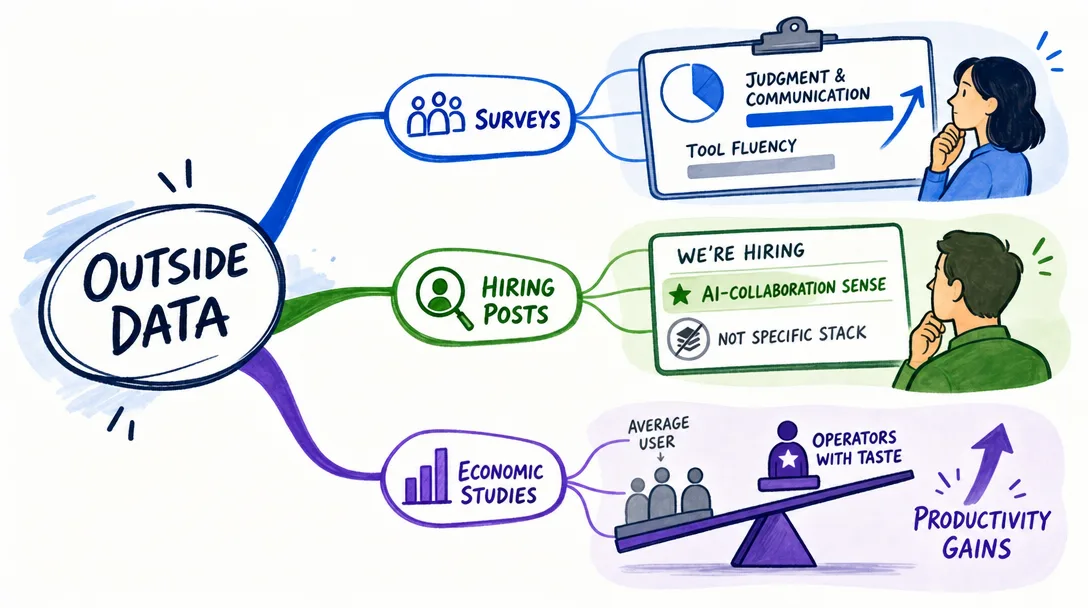
What Outside Data Says About This Shift
This is not only my personal experience.
The World Economic Forum's Future of Jobs Report 2025 says analytical thinking remains the most sought-after core skill among employers, with seven out of 10 companies considering it essential in 2025. The same report lists AI and big data, networks and cybersecurity, and technological literacy among the fastest-growing skills, while also pointing to creative thinking, resilience, flexibility, and lifelong learning as rising skills.
That combination matters.
The future is not "only learn AI tools."
It is "learn AI tools and keep the human skills that make the tools useful."
Microsoft's 2025 Work Trend Index points in the same direction. It describes "Frontier Firms" built around human-agent teams: AI-operated, but human-led. In that model, humans set direction, manage exceptions, and decide what the agents should optimize for.
That is very close to the three-level model in this article.
Doer.
Director.
Architect.
The names differ. The shape is the same.
The Harvard and BCG "jagged frontier" research adds one more important warning: AI does not improve all work equally. It helps strongly inside some task boundaries and can hurt performance outside them when people trust the output too much.
That is the hidden reason judgment matters.
AI skill is not only knowing when to use AI.
It is knowing when the task has crossed the frontier.
For a beginner, this means you should separate tasks into three buckets:
Bucket
What it means
Good beginner action
Green zone
AI is likely to help
Use AI freely, then review
Yellow zone
AI can help but may miss context
Use AI for options, keep human judgment central
Red zone
Wrong output can create real damage
Slow down, verify, use expert review
Writing a draft is usually green or yellow.
Inventing legal advice is red.
Summarizing a public report is usually green.
Making a business decision from an unverified summary is yellow or red.
Generating code for a personal script may be green.
Changing production infrastructure without tests is red.
This is where "AI skills" becomes a serious professional topic instead of a productivity slogan. The question is not "Can the model answer?" The question is "Can I judge the answer well enough for this use case?"
That is why the most useful AI education does not only teach prompts.
It teaches boundaries.
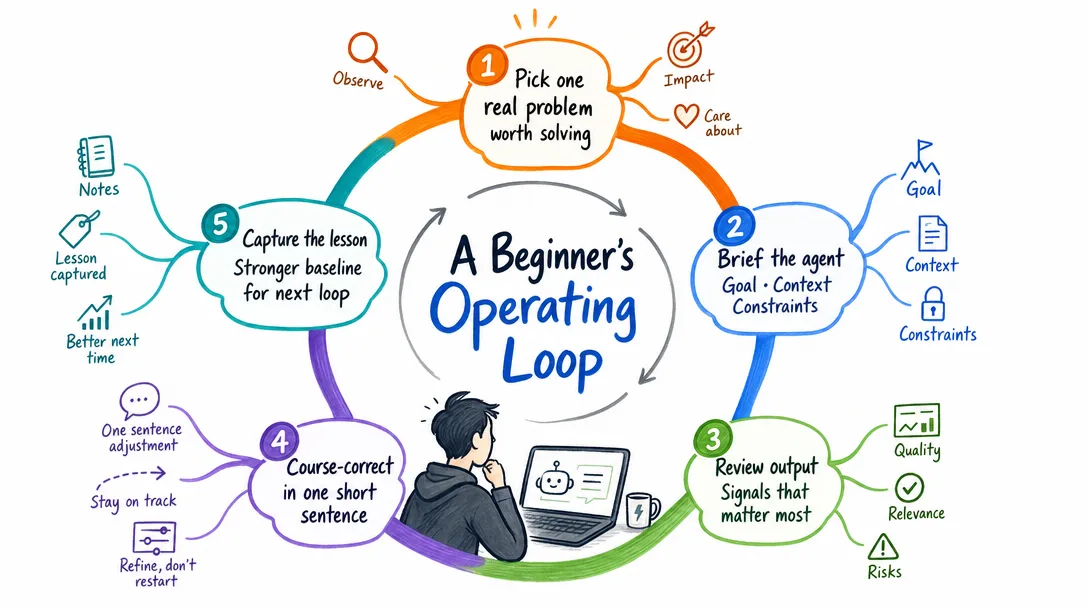
A Beginner's Operating Loop
If I had to compress the whole article into one repeatable loop, it would be this:
I need a repeatable workflow that turns source material into publishable research notes every Friday.
That sentence already contains more upside than a tool tutorial, because it defines the work.
Delegate
Give the AI a bounded task.
The boundary matters.
Do not dump the whole ambiguous project into the model and hope it understands your life. Give it one part of the work with context, constraints, and output format.
Inspect
Treat the first output as material, not truth.
Ask what is missing. Ask what is weak. Compare it with your standard. If the task contains facts, verify the facts.
Improve
Do not only fix the output.
Fix the instruction.
If the AI made a predictable mistake, your workflow should change so the mistake is less likely next time.
Systematize
When the same task repeats, turn it into a checklist, saved prompt, script, template, or agent workflow.
This is the moment where AI stops being a conversation and starts becoming infrastructure.
Mindset -> Vocabulary -> Asking -> Workflow -> Systems
That is how AI stops being a pile of tools.
It becomes a way of working.
Ready-to-Use Prompt: Locate Your AI Level and Build the Skills That Compound
What this does: Places you on the Doer→Director→Architect ladder, installs the AI-native thinking shift (what-do-I-know → what-outcome-do-I-want), picks the compounding skills to build, chooses centaur over cyborg mode, sets a seven-day real-work practice plan, and gives the improvement signal plus the tool-trick mistake to avoid. Based on: AI Skills That Matter: Know What You Want — https://aiworkflowpro.com/what-really-matters-in-ai-era/ Time to run: ~4 minutes
Copy this prompt into Claude Code, ChatGPT, or any AI assistant:
ROLE: You are an AI-era skills coach. Your job: locate a person on the Doer→Director→Architect ladder, install the AI-native thinking shift, pick the compounding skills to build, and set a seven-day practice plan — because tools change but outcome-thinking, better questions, judgment, and taste compound over years.

CONTEXT — THREE-LEVEL SKILL UPGRADE (DOER→DIRECTOR→ARCHITECT):
The durable AI skills are not tool tricks — tools, interfaces, and models change every season; outcome thinking compounds over years. The upgrade is three levels: Doer (asks "what do I know how to do?" and executes tasks), Director (asks "what outcome do I want?" and delegates to AI), Architect (designs systems where AI does real work without replacing taste). "AI is not that useful" is almost always a thinking problem — a Doer asking the wrong question — not a tool problem. The compounding skills (taste, judgment, better questions, metacognition, systems thinking, authenticity) are what survive tool turnover, paired with centaur mode (human+AI together) over cyborg mode (fused, losing judgment).

INPUTS (fill in before running):
- CURRENT_MODE: YOUR_TODAY_HERE (how you work now — hand-execute / delegate some / design systems)
- FIRST_QUESTION: YOUR_INSTINCT_HERE (when a task lands, do you ask "what do I know how to do?" or "what outcome do I want?")
- WEAKNESS: YOUR_GAP_HERE (where you feel weakest — judging quality / asking good questions / defining outcomes / systems)
- TIME_WEEKLY: YOUR_HOURS_HERE (hours per week to practice)

METHOD — 6 STEPS:

Step 1 — Locate on the three levels
Place the reader on Doer / Director / Architect by CURRENT_MODE + FIRST_QUESTION. Doer asks "what do I know how to do?"; Director asks "what outcome do I want?"; Architect designs the system. State the level + the next level up.

Step 2 — Install the AI-native thinking shift
If FIRST_QUESTION = "what do I know how to do?", that is the Doer trap — the root of most "AI is not useful" complaints. Rewire to "what outcome do I want?" first, then "what can AI do toward it?" The question shift is the real upgrade, not the tool.

Step 3 — Pick the compounding skills to build
From WEAKNESS, pick the 1-2 compounding skills to prioritize: defining outcomes · asking better questions · judging quality (taste/judgment) · metacognition · systems thinking · authenticity. These survive tool turnover — tool tricks do not.

Step 4 — Choose centaur over cyborg
Adopt centaur mode (you + AI as separate collaborators; you keep judgment and final approval) over cyborg mode (fused, where you lose the judgment muscle). Cyborg feels faster but atrophies the compounding skills; centaur builds them.

Step 5 — Set the seven-day practice plan
For TIME_WEEKLY, set a seven-day exercise targeting the prioritized skill: each day, one real task reframed through the new question + a review of the AI's output against your judgment. Practice on real work, not drills.

Step 6 — Set the improvement signal + mistake to avoid
The improvement signal: your first question becomes "what outcome do I want?" by default, and you catch bad AI output on your own (judgment rising). The mistake to avoid: chasing tool tricks / tool-swapping as the upgrade — that resets every season while the compounding skills go unbuilt.

RULES:
- The real upgrade is the thinking shift ("what outcome do I want?"), not the tool — "AI is not useful" is usually a Doer asking the wrong question.
- Build the compounding skills (outcomes, better questions, judgment, metacognition, systems) — tool tricks do not survive turnover.
- Prefer centaur mode over cyborg — centaur keeps your judgment; cyborg atrophies it.
- Practice on real work, not drills — the compounding skills only build on real tasks.

OUTPUT FORMAT:
Output six sections:
1. **Level placement** — Doer/Director/Architect + the next level up.
2. **Thinking shift** — the first-question rewiring (what-you-know → what-outcome).
3. **Compounding skills** — markdown table with columns: Skill | Priority (high/med) | Why.
4. **Mode choice** — centaur vs cyborg + why.
5. **Seven-day plan** — markdown table with columns: Day | Reframed task | Judgment review.
6. **Improvement signal + mistake** — the default-question signal + the tool-trick mistake to avoid.
Save as @templates/what-really-matters-in-ai-era.md and run to set your skill plan, then re-run after the seven-day exercise to re-check your level and first-question default.
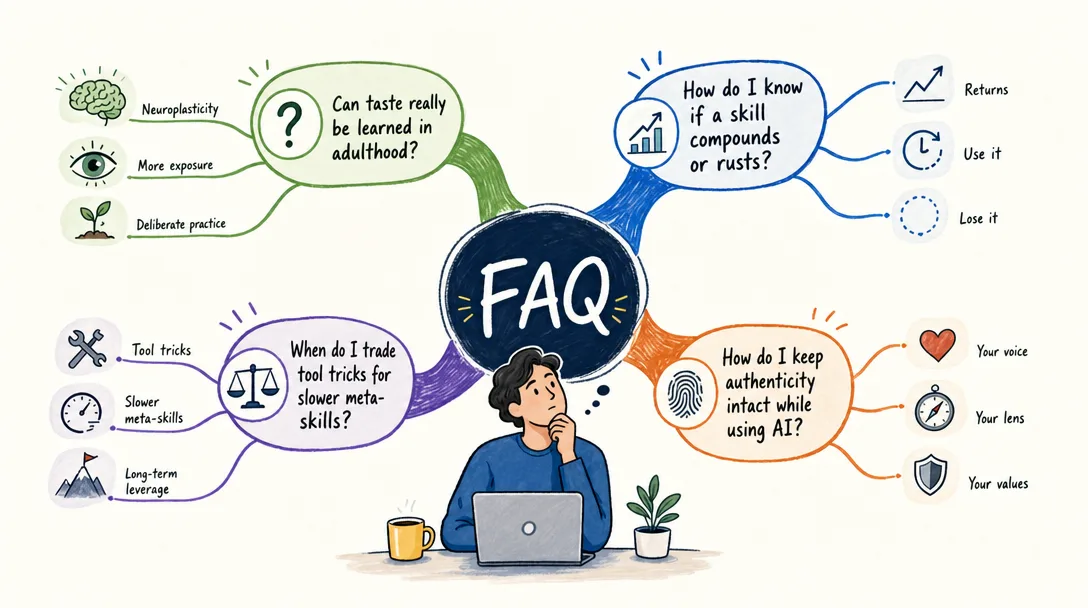
Frequently Asked Questions
What AI skills matter most in the AI era?
The AI skills that matter most are taste and judgment, asking better questions, metacognition, authenticity, and systems thinking. Tool skills still matter, but they compound only when you know what outcome you want.
Is execution still valuable when AI can do more work?
Execution still matters, but it is no longer the only bottleneck. As AI handles more routine execution, human value moves toward defining outcomes, setting constraints, judging quality, and designing workflows.
What is the difference between using AI as a tool and using AI as a system?
Using AI as a tool means asking for one-off help. Using AI as a system means designing repeatable workflows where agents handle defined steps, humans set direction, and verification keeps quality under control.
What are centaur and cyborg modes of AI collaboration?
Centaur mode separates human and AI work into clear parts. Cyborg mode blends human and AI work more tightly, with the human and AI shaping the output together through rapid feedback loops.
How can beginners practice better AI thinking?
Start with one weekly task. Describe the desired outcome, give context and constraints, let AI produce a first pass, then judge what is wrong, what is useful, and what should become a repeatable workflow.
The AI era does not only reward people who know more tools.
It rewards people who can define better outcomes.
It rewards people who can ask sharper questions.
It rewards people who can judge output, preserve authenticity, and design systems that make good work repeatable.
Your value does not disappear when AI gets stronger.
Monitoring a competitor who publishes no feed is the case every RSS guide skips. Twenty-one platforms sorted by which of three jobs they do, and the finished setup is business process automation you own outright, with no seat licence to renew.
Blaming the content is the reflex when a post underperforms, and it is usually the wrong diagnosis. A second reader decides distribution before any human sees the post, and most of what it checks is mechanical enough to automate business processes around, on five platforms at once.
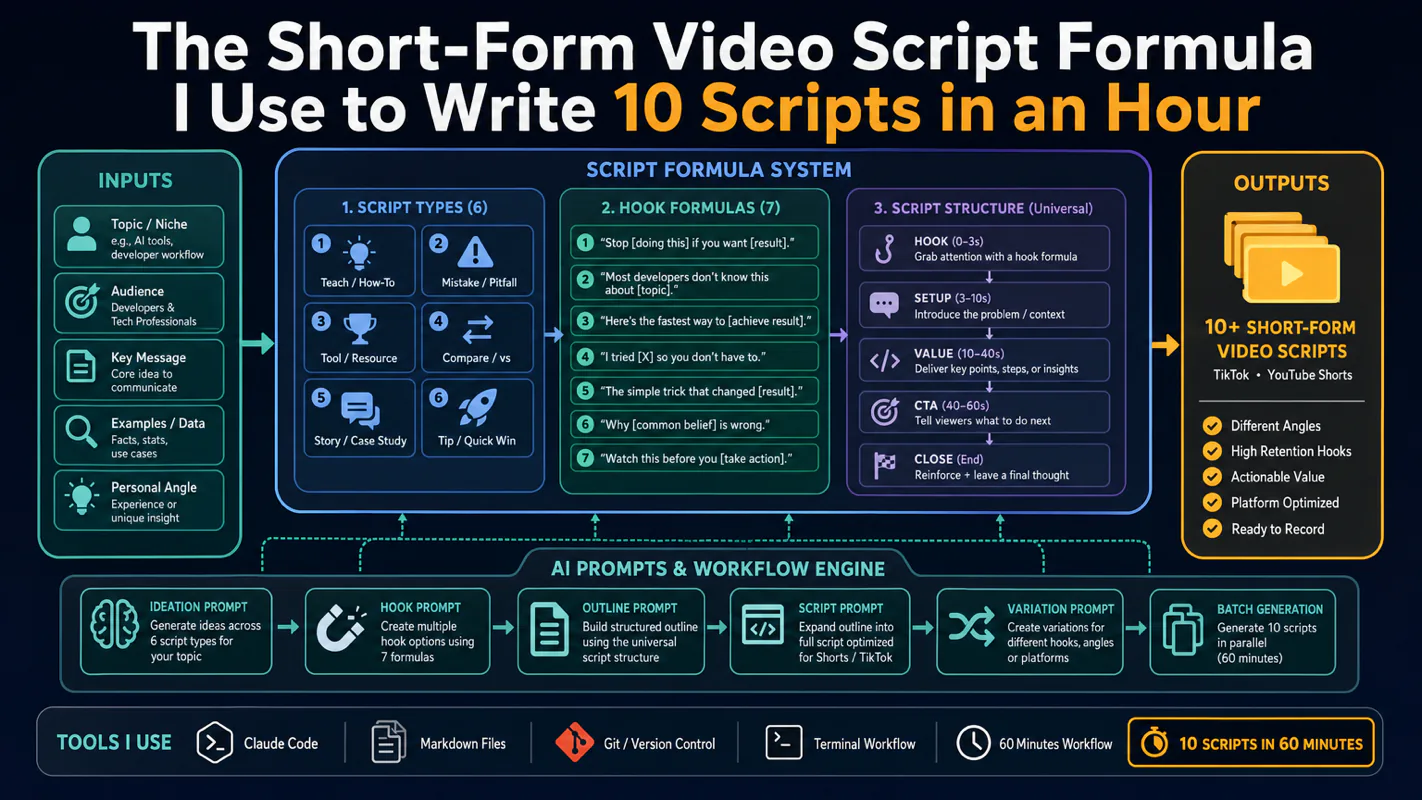
Thursday afternoon, fourteen product ideas, a Monday filming slot, no scripts. Six script shapes and seven hook formulas turn that hour into finished drafts — and the business rule stays: rewrite at least 30% before anything ships.
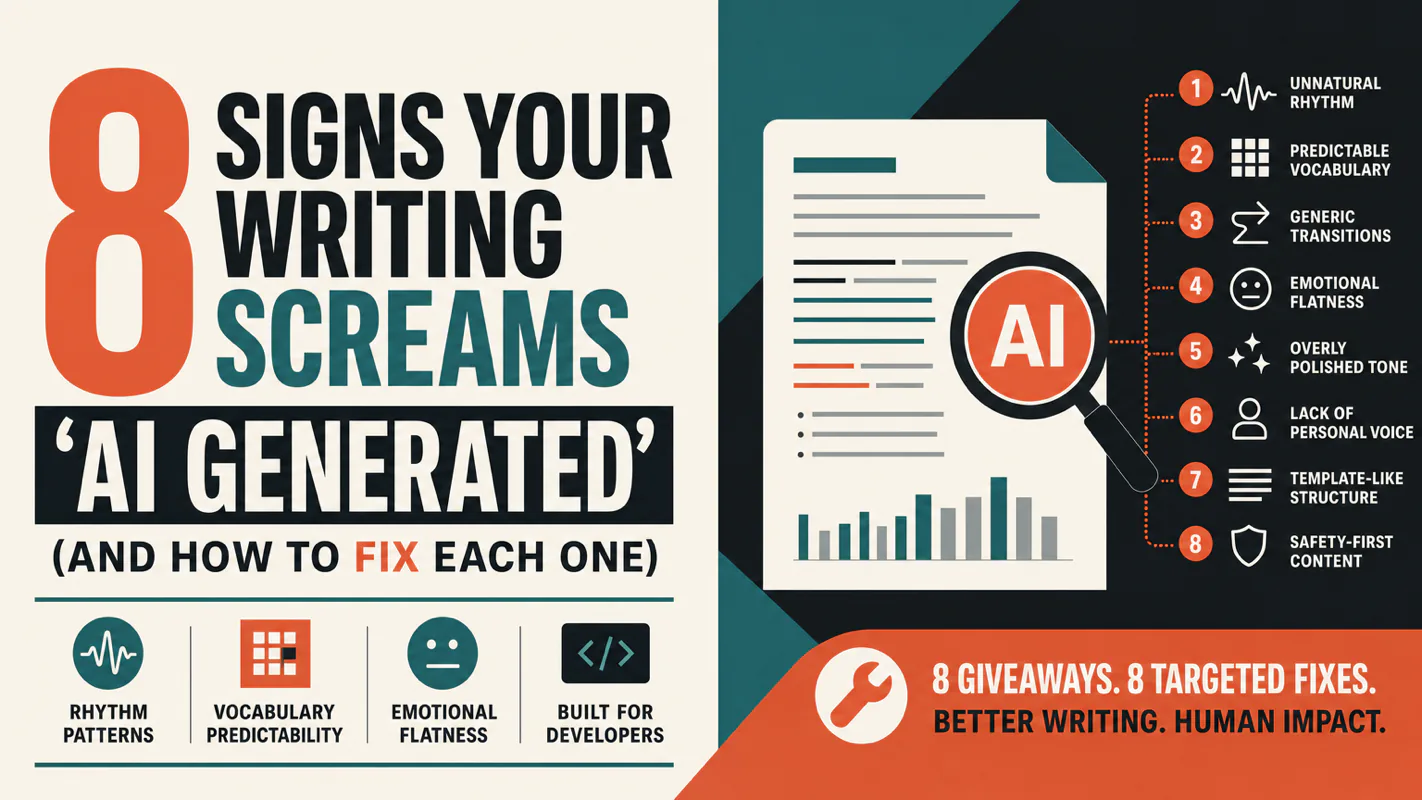
A detector score cannot survive a conversation with the freelancer it just cost three weeks of payment. What holds up is the specific thing on the page: rhythm, vocabulary, missing detail. Eight of them here, and the reason review stays human when you automate business processes.