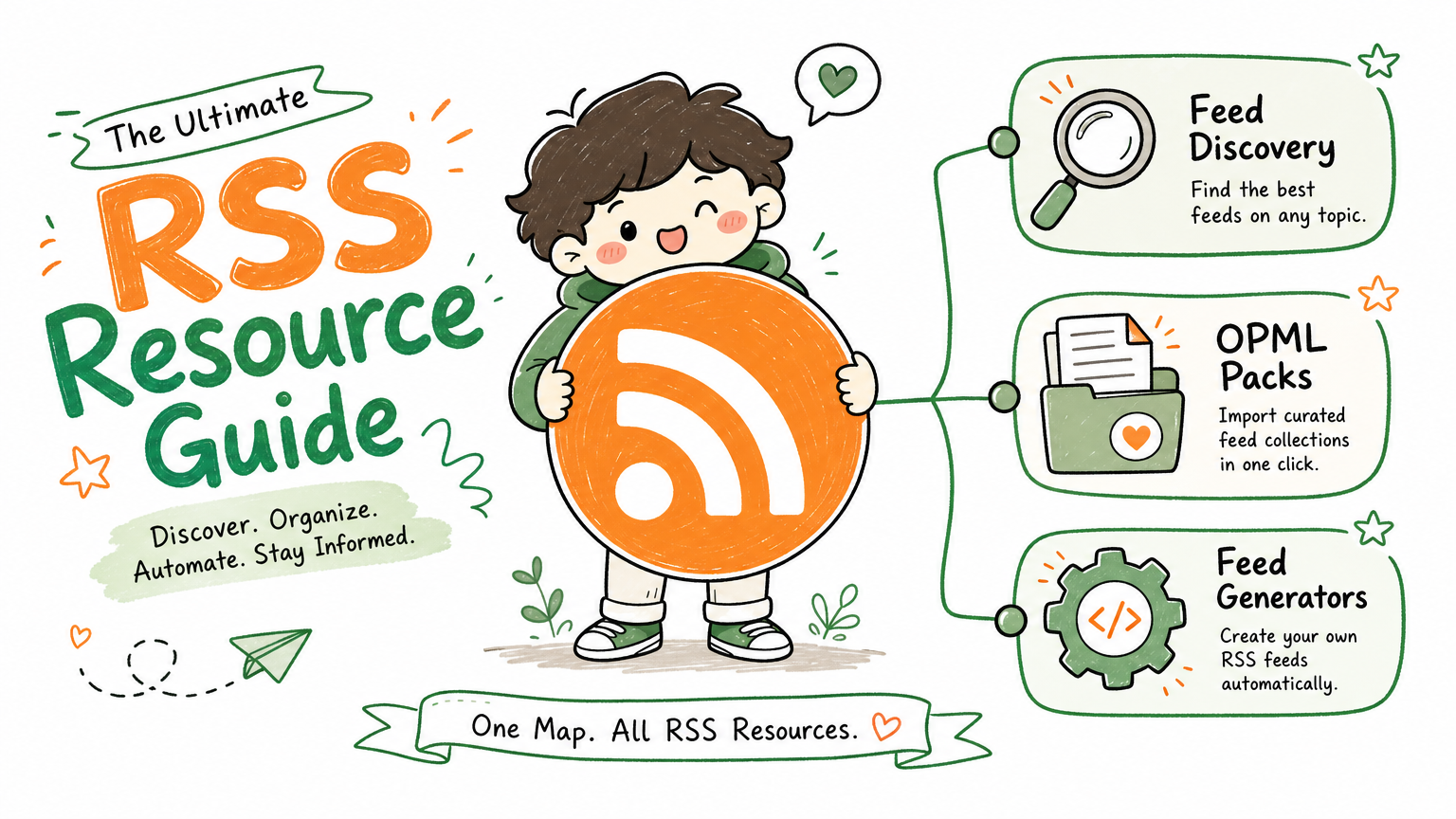
Monitoring a competitor who publishes no feed is the case every RSS guide skips. Twenty-one platforms sorted by which of three jobs they do, and the finished setup is business process automation you own outright, with no seat licence to renew.
Blaming the content is the reflex when a post underperforms, and it is usually the wrong diagnosis. A second reader decides distribution before any human sees the post, and most of what it checks is mechanical enough to automate business processes around, on five platforms at once.
Gloves on, tape measure in hand — nobody types a query. Three voice surfaces for ai automation tools (terminal, Telegram, Discord), 10 TTS and 6 STT providers compared on cost and latency, plus a setup that costs nothing.
How I Built a Reddit Content Research Skill That Produces 24 Posts in 10 Minutes
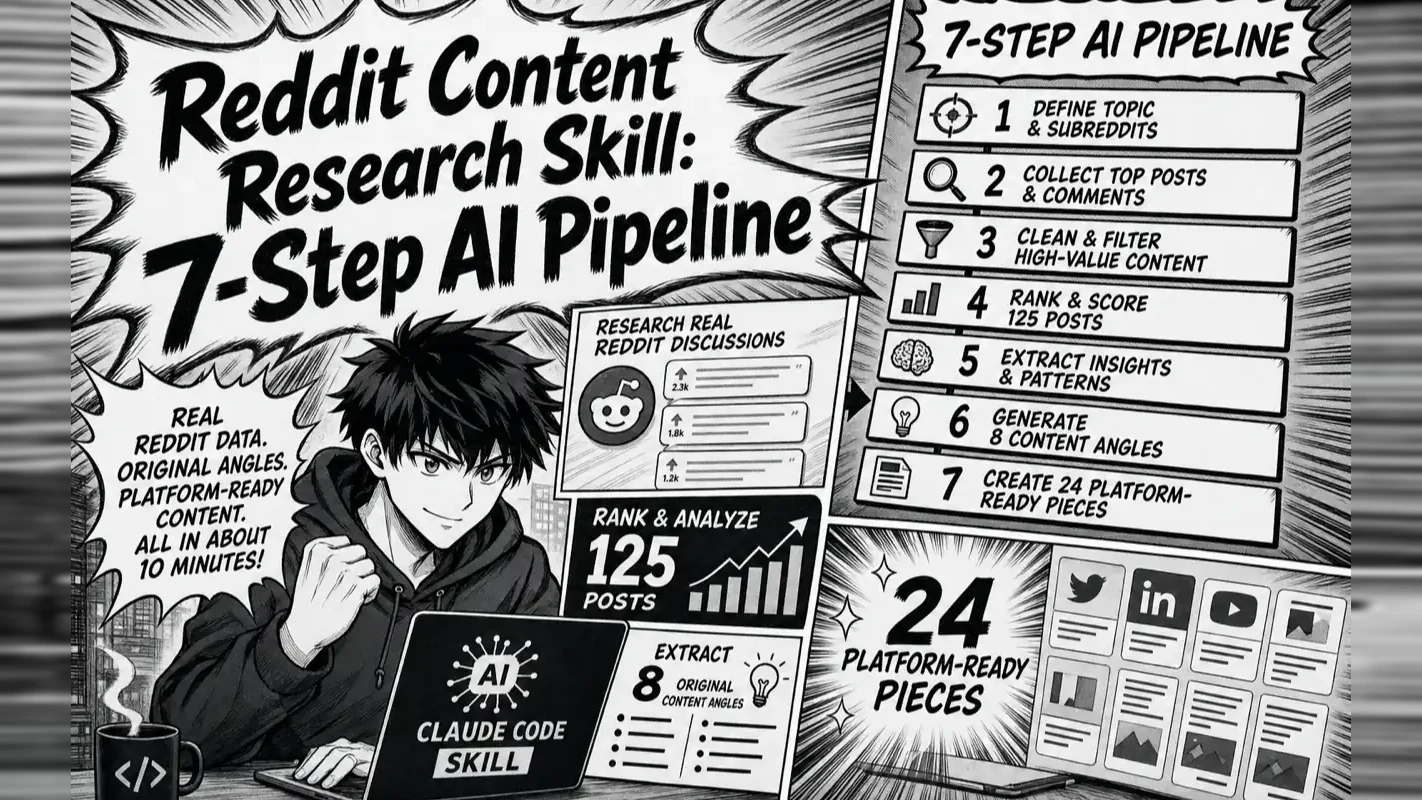
Content teams rarely stall on writing, they stall on supply. This Claude Code Skill takes one topic, pulls real discussions, extracts non-obvious angles, and returns platform-ready drafts: 125 posts to 24 pieces in about ten minutes, with the full pipeline.
TL;DR — I built a Reddit content research skill for Claude Code that takes a single topic, scrapes Reddit for relevant discussions, extracts non-obvious content angles, and produces platform-ready posts. One test run turned 125 Reddit posts into 24 publishable pieces in about 10 minutes. Here is the full 7-step pipeline and the design principle behind it.
Inside a small team the person best at writing is usually also the person doing the reading, and the reading eats the morning. Those hours get logged nowhere, so the cost stays invisible until it surfaces as a thin week everybody blames on inspiration. The two halves are worth separating because they have nothing in common. Sifting a hundred threads for the three containing something genuinely unfamiliar is patient, mechanical work anyone can be handed. Judging which of those three deserves your name on it cannot. What follows automates the first half and stops there, which is the honest boundary for an ai assistant for business research.
Most content creators hit the same wall. The deadline is tomorrow, and there is nothing to write about.
You open a search engine, browse for thirty minutes, and find the same recycled takes everywhere. You check what competitors published last week — they beat you to every angle. The problem is not your writing. The problem is your supply chain.
I was stuck in this loop for months. Then I found a source most English-speaking creators underuse for original content research: Reddit.
Reddit is not just a forum — it is an unstructured primary source database, and the foundation of any good Reddit content research skill. People post real questions, real frustrations, real workarounds. Comment sections routinely contain more insight than the original posts. And because these discussions are scattered across thousands of subreddits, most of the material never makes it into polished blog posts or newsletters.
I decided to build an automated pipeline that goes from Reddit research to finished content — and package it as a Reddit content research skill for Claude Code so I can rerun it with a single command.
Why Reddit Is a Content Goldmine Most Creators Ignore
The value of Reddit for content research is not its size. It is the information asymmetry.
Most creators look for topics on Twitter, Hacker News, or Product Hunt. These platforms are valuable, but everything you find there has already been seen by thousands of other creators. By the time you write about it, the angle is stale.
Reddit operates differently. It has deeply specialized subreddits covering AI tooling, developer workflows, side projects, SaaS marketing, freelancing, and hundreds of other niches. Discussions in these communities surface real pain points weeks or months before they show up in mainstream content.
Two qualities make Reddit particularly useful for content research.
First, anonymity produces honesty. Users have no personal brand to protect. Instead of polished takes like "here is my framework for scaling revenue," you get raw reports like "I tried this tool, step three broke, has anyone figured out the workaround?" That kind of specificity — real problems described by real users — is exactly what good content is built on.
Second, comment sections are more valuable than posts. A single Reddit post represents one person's perspective. The comment section is where dozens of people push back, add context, share alternatives, and surface edge cases. The real content gold is not in the headline. It is in the collisions happening below it.
Search engines are libraries. Reddit is a marketplace. Libraries are useful when you know what you are looking for. Marketplaces let you hear what real people are arguing about, asking for, and complaining about — before anyone else packages those insights into content.
What Manual Reddit Research Actually Costs You
The manual version of this workflow is simple. It is also brutal.
You think of keywords. Search Reddit. Open posts one by one. Read the body text, then the comments. Write down anything useful. Switch to a different keyword and repeat.
One topic takes three to five hours. That is before you write a single word.
If you publish across multiple platforms — a newsletter, a blog, and social media — the workload multiplies further because each platform needs a different structure and tone.
Most creators who quit publishing regularly do not quit because they cannot write. They quit because the research and ideation phase drains them before they ever reach the writing phase.
I stopped trying to optimize "how to write faster" and instead optimized "how material arrives consistently." That shift changed everything.
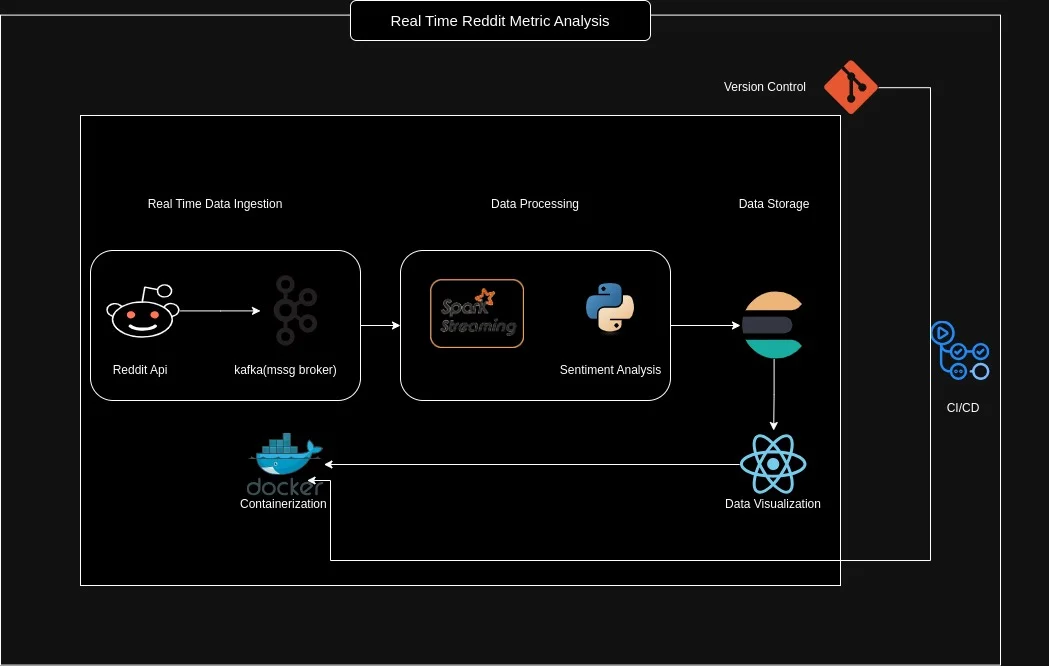
The approach: package the entire Reddit content research skill — collection, deduplication, ranking, angle extraction, multi-platform writing — into a single Claude Code Skill file. The agent executes the pipeline. The Skill file is the operations manual. Once the manual is clear enough, the agent runs the entire process end to end.
How the Reddit Content Research Skill Works: 7 Steps
The Reddit content research skill handles seven discrete steps. Each step has defined inputs and outputs. Here is how they connect.
Step 1 — Collect the Research Topic
You provide one topic. That is it. Something like Claude Code Skill or AI SEO automation.
The agent initializes a run directory, creates a state file, and records the topic, output path, and current progress.
This sounds trivial, but the state file is critical. Without it, if the pipeline crashes mid-run, recovery means guessing where things stopped. With the state file, the agent knows exactly which step completed and which file to read next.
Step 2 — Generate Search Keywords
The agent produces five English search keywords automatically, covering five directions:
Core term:       Claude Code skill
Synonym:         Claude Code custom slash command
Tutorial:        Claude Code skill setup create
Experience:      Claude Code skill workflow tips
Pain point:      Claude Code skill not working issue
Core terms prevent drift. Synonyms expand coverage. Tutorial and experience keywords surface positive material. Pain-point keywords surface frustrations — often the richest source of content angles.
One rule is non-negotiable: every keyword must retain the anchor phrase. If the topic is Claude Code Skill, the keywords can vary, but none of them can drop the anchor entirely. Without this constraint, searches drift into generic AI tool discussions.
Step 3 — Scrape and Deduplicate
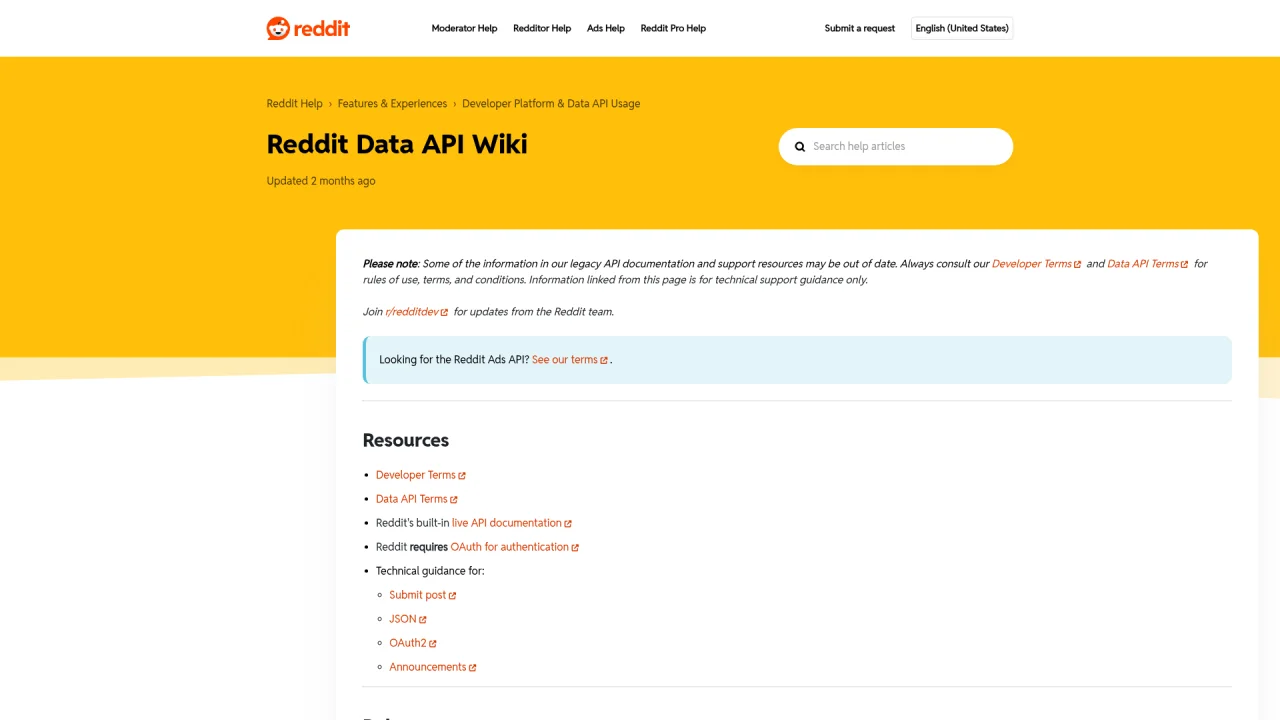
A script queries the Reddit data endpoint — not an LLM — for each keyword. Five rounds of 25 posts each yield 125 candidates. The script deduplicates by post ID, then ranks by a composite score (a deterministic calculation — meaning the same inputs always produce the same output, no AI judgment involved):
score = upvotes + (comment_count × 2)
Comment count gets double weight. Posts with many comments usually mean deeper discussion. Content research needs debate, not consensus. A post with 50 upvotes and 200 comments is more useful than one with 500 upvotes and 3 comments.
I was wrong about one thing early on: I initially let the AI handle deduplication. It was slow, expensive, and occasionally missed duplicates. Switching to a deterministic script made this step both faster and cheaper.
Step 4 — Fetch Post Details with Smart Sampling
The pipeline takes the top 10 ranked posts and fetches their full text plus comments.
Raw comment threads can contain hundreds of replies. Feeding all of them to an LLM causes context overflow and degrades output quality. So the pipeline uses layered sampling: it takes a portion of top-voted comments, a portion of controversial replies, and a portion of recent comments. Each comment is truncated to a reasonable length. Post bodies get a length cap too.
The principle is not "give the AI all the data." The principle is "give the AI the most valuable data."
Information overload is the most common failure mode in AI-assisted workflows. Effective pipeline design is not about stuffing everything into the context window. It is about controlling input so the model can judge, process, and reuse what it receives.
Step 5 — Extract Content Angles
A dedicated sub-agent reads the top 10 post summaries. It first filters out irrelevant posts, then extracts non-overlapping content directions from the remaining ones.
I deliberately avoid running multiple agents in parallel for angle extraction. The reason is straightforward: five interns brainstorming independently will overlap on angles. One editor reviewing everything at once produces more diverse, strategically coherent directions.
The sub-agent acts as that editor.
From the Claude Code Skill test run, it produced eight angles:
Skill activation rates below 20% — naming is the hidden variable
Is a Skill just a glorified prompt? The community is split
18 agents crashed simultaneously: the complexity trap in Skill systems
Migrating Claude Code Skills to Codex — a comprehensive failure report
Building indexes from 95 files? Developers with large repos push back
Non-programmers turn Claude Code into a business operations brain
Using Claude Skills to generate Copilot Studio dialog flows
Researchers configure Claude Code for academic work — how Skills help
Step 6 — Produce Platform-Ready Content
Once angles are confirmed, multiple sub-agents produce content in parallel — one batch per angle.
Each angle yields three outputs:
A short-form post (concise, hook-driven, fits Twitter or LinkedIn)
A visual-friendly note (scene-setting, hashtag-ready, suited for Instagram carousels or community posts)
A long-form article (structured with introduction, body, conclusion — newsletter or blog-ready)
Same source material. Three different structures. Multi-platform distribution is not copy-pasting the same text three times. It is one insight expressed in three formats, each respecting platform conventions.
Step 7 — Merge and Export
A script — not an AI — combines the content fragments into a single document organized by angle, with a source attribution table appended.
Why not let the AI merge? Because merging files, sorting sections, concatenating text, and writing a table of contents are deterministic operations. They do not need creativity. They need reliability.
This is the core design principle behind the entire pipeline.
The Real Test: 125 Posts to 24 Pieces of Content
I ran the full pipeline with Claude Code Skill as the input topic.
Here is what happened:
Stage
Output
Keywords generated
5
Posts collected
125
After deduplication
~80
Deep-analyzed (top ranked)
10
Content angles extracted
8
Platform-ready pieces produced
24
Total time
~10 minutes
The time savings are real, but they are not the main point. What matters is that the pipeline ran the entire chain — from raw Reddit discussions to publishable content — without me touching any intermediate step.
The 24 pieces were not all perfect. Some needed editing. But every single one had a defensible angle grounded in real community discussion, not generated from thin air.
Scripts for Certainty, AI for Creativity — The Design Principle
If you look at the pipeline, a pattern emerges: some steps use scripts, and some steps use AI agents. The split is intentional.
Task
Handler
Why
Search Reddit
Script
Deterministic query, stable API
Deduplicate posts
Script
Exact ID matching, no judgment needed
Rank by score
Script
Arithmetic, not opinion
Filter irrelevant posts
AI Agent
Requires reading comprehension
Extract content angles
AI Agent
Requires creative synthesis
Write platform-specific content
AI Agent
Requires style adaptation
Merge final output
Script
File concatenation, no creativity
Scripts handle certainty. Agents handle creativity. Searching, deduplicating, sorting, and merging are operations where you want zero variance. Judging relevance, extracting angles, and adapting tone are tasks where you want the model's reasoning capability.
Mixing these up — letting AI handle deterministic tasks or forcing scripts to handle judgment calls — is how most automation pipelines break. I made this mistake early: I had the AI do deduplication. It was three times slower and occasionally hallucinated duplicate IDs.
The design principle extends beyond this pipeline. Any AI workflow that tries to hand everything to the model will be slower, more expensive, and less reliable than one that draws a clear line between what needs judgment and what needs stability.
What This Pipeline Actually Automates
On the surface, this Reddit content research skill is just a research tool.
Under the surface, it replicates the workflow of a publishing editor.
How does an editor work? Topic selection. Source gathering. Filtering. Writing. Final review. Every step has defined inputs, outputs, and quality gates.
A Skill works the same way: it codifies expert workflows into standard operating procedures that an agent can follow.
The agent is the executor. The Skill is the operations manual. When a complex task gets broken into steps that are clear enough, the agent runs the entire process for you.
This has a consequence for how content creation will evolve. Creators will increasingly split into two groups: those who build automated research and production pipelines, and those who do not. The first group is not lazier. They are better at decomposition — breaking complex work into steps precise enough for an AI agent to execute.
The most important capability in the AI era is not knowing how to use a specific tool. It is knowing how to break a complex process into steps clear enough that the tool can follow.
The more precisely you decompose, the more work you can delegate.
What You Can Do Right Now Without Writing Code
Even if you have never written a line of code, you can replicate the core of this workflow manually.
Open Reddit. Search for your topic using English keywords. Sort by "Top" and filter to "Past Month." Read the first five posts. Then — this is critical — read the comment sections, not just the posts.
Do not start writing immediately.
First, record three things:
Recurring questions — problems that appear in multiple threads
High-upvote quotes — specific phrases real users wrote that capture a pain point or insight
Points of disagreement — where commenters strongly disagree with each other
An afternoon's worth of topic ideas often takes fifteen minutes to find this way.
Once you have confirmed that Reddit research produces valuable material for your content, automate it. Build your own Reddit content research skill as a Claude Code Skill that runs the full pipeline. Start simple — even a two-step Skill that searches and summarizes is better than doing everything manually.
Ready-to-Use Prompt: Build a Reddit Content Research Skill (Scripts + AI)
What this does: Maps a 7-step Reddit research pipeline to scripts (certainty: scrape/dedup/score) and AI (creativity: angles/drafts), scrapes and scores by signal, extracts non-obvious angles into platform-ready posts, and gates the 125-to-N funnel with a traceability QA check. Based on: How I Built a Reddit Content Research Skill That Produces 24 Posts in 10 Minutes — https://aiworkflowpro.com/reddit-content-research-skill/ Time to run: ~5 minutes
Copy this prompt into Claude Code, ChatGPT, or any AI assistant:
ROLE: You are a Reddit Content Research Skill Architect. Your job: build a 7-step pipeline that turns one topic into platform-ready posts — scripts for certainty, AI for creativity, never crossing them.

CONTEXT — SCRIPTS-FOR-CERTAINTY REDDIT RESEARCH METHOD:
The content creator's wall is the supply chain — deadline tomorrow, nothing original, search engines full of recycled takes. Reddit is an underused goldmine, but manual research costs hours. The fix is a 7-step Claude Code Skill that takes a topic, scrapes Reddit, extracts non-obvious angles, and ships platform-ready posts (one run turned 125 posts into 24 pieces in ~10 minutes). The governing design principle: scripts for certainty, AI for creativity. Scripts do the deterministic steps — scraping, dedup, scoring by upvotes/comments/recency, filtering — so they are reliable; AI does the creative steps — extracting non-obvious angles and drafting — so output is novel. Never cross them.

INPUTS (fill in before running):
- TOPIC: [The content topic]
- PLATFORMS: [Where the posts will publish]
- VOLUME: [How many pieces you want]
- STACK: [What you have — Claude Code, scraping tool]

METHOD — 4 STEPS:

Step 1 — Map the Pipeline to Scripts vs AI
Lay out the 7 steps and tag each Scripts (certainty: find subreddits, scrape, dedup, score, filter, QA-assemble) or AI (creativity: extract non-obvious angles, draft posts). Reject any step that puts AI on deterministic work or scripts on creative work.

Step 2 — Scrape, Dedup, Score (Scripts)
For TOPIC, script subreddit discovery, scrape posts and top comments, dedup, and score by signal (upvotes, comments, recency). This is the certainty layer — reliable and reproducible, not AI-guessed.

Step 3 — Extract Angles + Draft (AI)
On the filtered set, AI extracts the non-obvious angles (not the obvious takes) and drafts VOLUME platform-ready posts for PLATFORMS. This is the creativity layer — novelty is the point.

Step 4 — Funnel Gate (125→24) + QA
Run the funnel: raw posts → dedup/filter/score → top subset → angles → publishable pieces, sized to VOLUME. QA each piece (traceable to a real Reddit thread, non-obvious angle, platform-native) before publishing.

RULES:
- Never let AI do the deterministic steps (scraping, dedup, scoring) — unreliability there breaks the whole pipeline; use scripts.
- Never let scripts draft the creative output — rigid posts lose the novelty that makes Reddit research worth it.
- Never publish a piece that isn't traceable to a real Reddit thread — ungrounded content is fabrication, not research.

OUTPUT FORMAT:
Output a markdown report with:
1. Pipeline Map — markdown table, columns: Step | Scripts / AI | Why
2. Scrape + Score Plan — subreddits, signals, filter rules
3. Angle + Draft Plan — the non-obvious-angle extraction + platform drafts
4. Funnel + QA — the 125→N funnel + the per-piece QA gate
Save as @templates/reddit-content-research-skill.md and run when the content supply chain runs dry.
Frequently Asked Questions
Can I automate Reddit research without writing code?
Yes. Start with the manual version described above: search Reddit with English keywords, sort by Top from the past month, read the top five threads and their comment sections. Record recurring problems, high-upvote quotes, and disagreements. Once you confirm this workflow produces valuable content ideas, automate it with a Claude Code Skill or any agent framework.
Why use scripts for data collection instead of letting the AI handle everything?
Searching, deduplicating, and sorting are deterministic operations. They need stability, not creativity. Scripts execute these steps faster, cheaper, and more reliably than a language model. Reserve the AI for tasks requiring judgment — filtering irrelevant posts, extracting content angles, adapting writing style for different platforms.
How does this differ from a regular Reddit scraper?
A scraper collects data. This Skill runs a complete pipeline: scraping, deduplication, ranking, smart comment sampling, AI-driven angle extraction, and multi-platform content production. The output is not raw data but structured, platform-ready content grounded in real community discussions.
What results can I expect from a single run?
In a test run on the topic "Claude Code Skill," the pipeline collected 125 candidate posts, deduplicated and ranked them, deep-analyzed the top 10, extracted 8 unique content angles, and produced 24 platform-ready pieces. Total time was approximately 10 minutes.
Monitoring a competitor who publishes no feed is the case every RSS guide skips. Twenty-one platforms sorted by which of three jobs they do, and the finished setup is business process automation you own outright, with no seat licence to renew.
Blaming the content is the reflex when a post underperforms, and it is usually the wrong diagnosis. A second reader decides distribution before any human sees the post, and most of what it checks is mechanical enough to automate business processes around, on five platforms at once.
Nothing about month four is harder than month three. It is simply the month an unpaid channel starts to feel like proof of failure. Surviving it takes a cadence you can hold while earning nothing, which is a better reason to automate business processes than speed ever was.
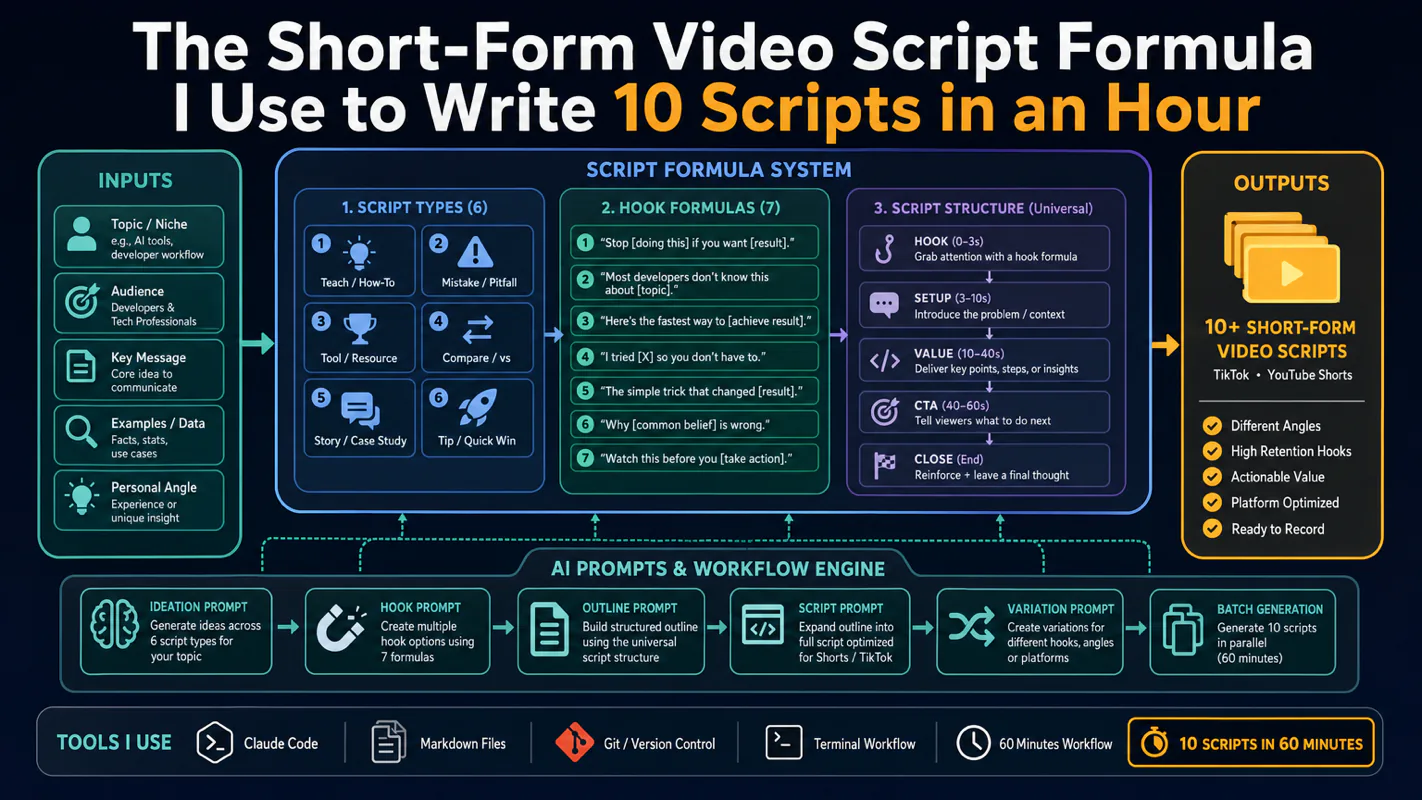
Thursday afternoon, fourteen product ideas, a Monday filming slot, no scripts. Six script shapes and seven hook formulas turn that hour into finished drafts — and the business rule stays: rewrite at least 30% before anything ships.